Best Travel Credit Cards of 2026
The Chase Sapphire Preferred ($95/yr) is the best first travel credit card of 2026: its 75,000 Ultimate Rewards welcome bonus (after $5,000 spend) is worth about $1,350 in transfer value, with access to Hyatt, United, and 12 other partners. If you want lounge access, the Capital One Venture X ($395, effectively ~$95 after a $300 travel credit and 10,000 anniversary miles) is the better premium pick.
On this page▾

Quick Answer
Chase Sapphire Preferred ($95/yr) is the strongest first travel card: 75,000 UR points after $5,000 spend = ~$1,350 in transfer value, with access to Hyatt, United, and 12 other partners. If you want lounge access and your effective fee can hit $95 after credits, Capital One Venture X is the better upgrade.
A "travel card" is shorthand for a card whose points convert into airfare, hotel nights, or both — usually via airline and hotel transfer partners rather than a fixed-cents-per-point redemption portal. Three variables determine the right pick: how much you already spend on travel and dining, whether you'll actually use the credits attached to a $395+ annual fee, and which loyalty programs match where you live and fly.
We track 90+ US cards every week. These eight are the ones we'd put in a friend's wallet today, ordered from "best first card" to "premium status play."
Top picks
| Tier | Card | Annual fee | Best for |
|---|---|---|---|
| Best overall | Sapphire Preferred | $95 | First serious travel card; pairs with Freedom Unlimited |
| Best premium under $400 | Venture X | $395 ($95 net) | Lounge access + travel credit refund the fee |
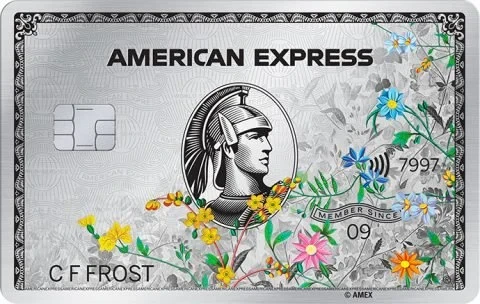
| Best transferable | Amex Platinum | $895 (~$200 net) | Centurion lounges + Hilton/Marriott Gold |
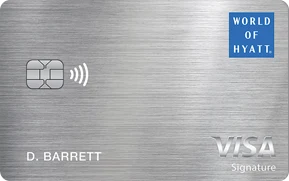
| Best for hotels | World of Hyatt | $95 | One night = $300+ at top Hyatts |
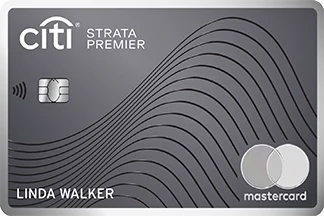
| Best new-to-Citi | Strata Premier | $95 | 3× on gas, groceries, travel; transfers to Choice |
| Best for renters | Bilt Blue | $0 | Earn points on rent with no fee |
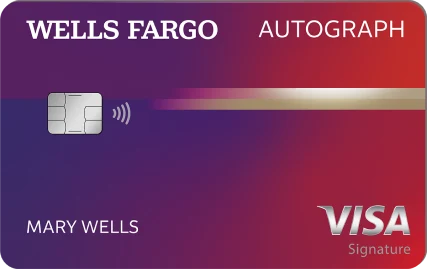
| Best no-fee travel | Autograph Journey | $0–$95 | 3× travel, no foreign-transaction fee |
| Best business | Ink Preferred | $95 | 100K UR for $8K/3mo |
1. Sapphire Preferred — best first travel card
Welcome bonus: 75,000 Ultimate Rewards after $5,000 in 3 months → about $1,350 in travel value at current transfer ratios.
Why it wins. Ultimate Rewards is the most flexible US points currency. Eleven airline and three hotel partners — including World of Hyatt (the strongest hotel award chart in the game), United, Singapore KrisFlyer, and Air Canada Aeroplan. The $95 fee buys you 3× on dining, 2× on travel, a $50 annual hotel credit through Chase Travel, and trip-cancellation/baggage-delay insurance that punches well above the price.
Where it falls short. You'll outgrow the 1× cap on non-bonus spend within a year. Pair it with the Freedom Unlimited ($0 AF, 1.5× everywhere) and you have a two-card combo that earns at least 1.5× on every dollar and pools points into one transferable balance.
Subject to Chase 5/24 — if you've opened 5+ personal cards in 24 months across any issuer, Chase will auto-deny. See the 5/24 guide.
2. Venture X — best premium card under $400
Welcome bonus: 75,000 miles after $4,000 in 3 months → ~$1,300 transferred to partners like Air Canada or Wyndham.
Why it wins. The $395 fee is functionally $95: you get a $300 Capital One Travel credit that auto-applies to any flight or hotel booked in the portal, plus 10,000 anniversary miles ($100+ value). That's net $95 for unlimited Priority Pass lounge visits with two guests, Capital One Lounges in DFW/IAD/DEN/LAS, and a 10× return on hotels booked in their portal.
Where it falls short. Capital One transfer partners are weaker than Chase or Amex for premium-cabin redemptions — no domestic airline transfer at 1:1, and Hyatt is missing. If you fly United/Delta/Hyatt domestically, prefer Sapphire Reserve or Amex Platinum instead.
3. Sapphire Reserve — best for power users who'll use the credits
Welcome bonus: 100,000 Ultimate Rewards + $500 Chase Travel credit after $6,000/3mo.
Why it's complicated. Chase repriced the Reserve to $795/yr in mid-2025. The math now requires you to actually use the $300 travel credit, the $300 dining credit, the $250 Apple One/sports credit, and the Priority Pass + Sapphire Lounge access. Used in full, those credits exceed the fee — but only if you would have spent that money anyway.
Best for: travelers who fly twice a quarter, eat at high-end restaurants regularly, and want the same UR transfer partners as the Preferred. If you can't see yourself burning every credit, stay on Sapphire Preferred at $95.
4. Amex Platinum — best lounge + status play
Welcome bonus: up to 175,000 Membership Rewards after $12,000 in 6 months — Amex personalizes this offer, so your number may be lower. Estimated value: $1,500+.
Why it wins. Five lounge programs in one card: Centurion (the best US lounge network), Delta Sky Club when flying Delta, Priority Pass (restricted to lounges, not restaurants since 2019), Plaza Premium, and Escape. Add automatic Hilton Honors Gold + Marriott Bonvoy Gold status, $200/yr Uber credit (broken into monthly $15/$35), $200 airline incidental credit, and a $200 hotel credit on Fine Hotels & Resorts bookings.
Where it falls short. $895 list fee is real, and most credits are split into monthly micro-credits that are easy to forget. Coupon-book grumbling is justified — track the credits in a spreadsheet or you'll burn $300+ a year.
Strongest for: business travelers who fly multiple US carriers in a year, eat at FHR-eligible hotels, and want auto-status with two hotel chains.
5. World of Hyatt — best hotel card
Welcome bonus: up to 60,000 World of Hyatt Points — 30,000 after $3,000 in 3 months, plus up to 30,000 more by earning 2× on up to $15,000 of spend in your first 6 months.
Why it wins. Hyatt has the best hotel award chart in the US — Category 1 nights start at 3,500 points, Category 4 (think Hyatt Regency, Hyatt Place, Andaz) is 12,000–20,000, and top-tier all-inclusives top out at 45,000. Compare to Marriott where a mid-tier property is 50K+ and IHG where dynamic pricing means anything mid-week is 90K+.
The card itself gives one free night at any Category 1–4 property each anniversary year (worth $200–$500) and 5 elite-qualifying nights toward Hyatt status. The $95 fee is cheaper than one night at a typical Hyatt Place. Full Hyatt award chart guide →
6. Strata Premier — best alternative to Chase
Welcome bonus: no publicly verified offer right now — the elevated promotion ended 31 July 2026 and we have not confirmed a replacement on Citi.com. Check the issuer before applying.
Why it wins. Citi rebuilt this card in 2024 with 3× on flights, hotels, gas stations, EV charging, supermarkets, and restaurants — that's the broadest 3× category set on any $95 card. ThankYou points transfer 1:1 to Choice Privileges, Wyndham, JetBlue, Avianca, Singapore, Air France/KLM, Etihad, and Turkish Miles & Smiles. The Choice transfer is the sleeper play — 5,000 ThankYou → 10,000 Choice → a Cambria/Ascend night in major US cities.
Where it falls short. No domestic airline transfer at 1:1 (Choice and Wyndham work for hotels; for flights you're stuck with international partners). Use it for category spend, transfer for the trip you've planned.
7. Bilt Blue — best no-fee travel card
Welcome bonus: None on signup, but points on rent — the only US card that lets you pay your landlord with a credit card and earn rewards (up to 100,000 points/yr).
Why it wins. Zero annual fee. 1× rent, 2× travel, 3× dining, plus a 5× Rent Day promotion on the 1st of every month. Bilt transfers 1:1 to 17+ partners including Hyatt, American Airlines, Air Canada, United, Hilton, and Marriott. There's literally no other free card that hits Hyatt at 1:1.
Where it falls short. No welcome bonus. You earn points slowly compared to a 75K-bonus card — Bilt is a long-game card you keep alongside your bonus chase.
8. Ink Preferred — best business travel card
Welcome bonus: 100,000 Ultimate Rewards after $8,000/3mo → about $2,000 in transfer value.
Why it wins. Best business signup bonus in points-per-dollar terms. 3× on travel, shipping, internet/cable/phone, and ad spend (Google/Facebook) up to $150K/yr. Cell phone insurance with $1,000 reimbursement per claim — pays for the card by itself if you ever crack a screen.
Eligibility: any sole-proprietor business qualifies. Side hustle income (rideshare, freelancing, eBay flipping, content creation) counts — just use your SSN and the business name. Subject to Chase 5/24 but business cards don't count toward your 5/24 count, only against it.
How to pick
Use this decision tree:
- Have you opened 5+ personal cards in 24 months? → Start with a non-Chase card: Capital One Venture X or Citi Strata Premier.
- Will you stay in hotels more than 6 nights a year? → Add World of Hyatt. The single free night exceeds the fee.
- Do you rent? → Add Bilt for free. Pay rent with it.
- Do you spend $5K+/yr on flights or restaurants? → Sapphire Reserve or Amex Platinum, depending on which loyalty programs match your routes.
- Run any side business? → Ink Preferred earns 100K with the same 75–80K mental effort as a personal card.
You don't need all of these. Two cards covers 90% of the value: one transferable points card (Sapphire Preferred or Venture X) + Bilt for rent. Add a hotel card if you stay >10 nights/yr.
Real Use Case
50,000 Hyatt points = 2 nights at Park Hyatt Tokyo (rack rate $800–$1,200/night). You earn those 50K by transferring Chase UR at 1:1 — meaning $3,333 in dining spend on Sapphire Preferred (3×) generates exactly that balance at $0.015/pt = $750 portal value vs $1,600+ in actual hotel nights. Transfer always wins.
Citi Strata Premier grocery math: $500/month on groceries × 3× = 1,500 ThankYou/month → 18,000/year → $270 at 1.5¢/pt, or transfer to Turkish Miles & Smiles for a one-way business class redemption worth $800+.
Decision Framework
- Spend >$500/month on dining + travel → Sapphire Preferred earns $270+/yr in 3× categories alone; fee pays for itself
- Spend <$3K/year on travel, fly 4+ flights → Venture X ($300 travel credit covers all portal bookings; net $95)
- Pay rent >$1,500/month → add Bilt at $0 fee = 18,000 points/year just on rent, transferable to Hyatt
- Hyatt hotels >6 nights/year → World of Hyatt card ($95 fee < 1 free night value at any Category 4 property)
- Side business spending >$8K over 3 months → Ink Business Preferred first (100K UR vs 75K on personal cards)
Common mistakes
- Chasing welcome bonuses past 5/24. Once you cross that threshold, you lock yourself out of Chase — the issuer with the best transfer partners. Sequence carefully.
- Closing cards before the first anniversary. Chase, Amex, and Capital One can claw back welcome bonuses if you close within 12 months. Downgrade or product-change instead.
- Letting credits expire. Amex Platinum's monthly $15 Uber credit only stacks within the month. If you don't use it by the 30th, it's gone.
- Confusing portal redemptions with transfers. Chase Travel gives you 1.25–1.5¢/point. Transferring those same points to Hyatt or Air Canada routinely gets you 3¢+. Always price the transfer first.
The cards above are the foundation. Once you have two or three, sit on them for 18 months — let your credit score stabilize, your statement history build, and your next welcome bonus be a meaningful one. When you are ready for that next application, our roundup of the best credit card sign-up bonuses shows which offers are currently at their peak.
Compare deeper
- Side-by-side comparison: The Platinum Card from American Express vs Chase Sapphire Reserve
- Side-by-side comparison: The Platinum Card from American Express vs Ink Business Preferred
- Side-by-side comparison: Ink Business Preferred vs Chase Sapphire Reserve
- Side-by-side comparison: The Platinum Card from American Express vs Chase Sapphire Preferred
More compare matchups
- Compare head-to-head: The Platinum Card from American Express vs Chase Sapphire Reserve
- Compare head-to-head: The Platinum Card from American Express vs Ink Business Preferred
- Compare head-to-head: Ink Business Preferred vs Chase Sapphire Reserve
- Compare head-to-head: The Platinum Card from American Express vs Chase Sapphire Preferred
- Compare head-to-head: The Platinum Card from American Express vs Citi Strata Premier Card
- Compare head-to-head: The Platinum Card from American Express vs Capital One Venture X Rewards Credit Card
- Compare head-to-head: Chase Sapphire Preferred vs Chase Sapphire Reserve
- Compare head-to-head: The Platinum Card from American Express vs Wells Fargo Autograph Journey Card
Get weekly card offer alerts
Sunday digest of elevated bonuses. One email, zero spam.
Cards mentioned in this guide



Frequently asked questions
What is the best travel credit card in 2026?
How much is the Chase Sapphire Reserve fee in 2026?
Is the Amex Platinum worth $895 a year?
Does the Bilt Mastercard really let you earn points on rent?
What credit score do I need for a premium travel card?
Related guides
Related news

airlines · Jun 2, 2026
Credit Card Transfer Bonuses Mid-2026: H1 Drought Recap

industry · Jun 2, 2026
Travel Rewards Devaluations 2026: Every Major Loyalty Program Change This Year

airlines · Jun 2, 2026
Aeroplan 2026: SQC Status and June 1 Devaluation

industry · Jun 2, 2026
Biggest Credit Card Changes 2026: Mid-Year Retrospective