Bilt Palladium vs Chase Aeroplan
Bilt Rewards vs Aeroplan — Bilt Palladium vs Chase Aeroplan — here's what separates them. Bilt Palladium transfers to World of Hyatt; Chase Aeroplan does not.
Quick Answer
For first-year value (welcome bonus plus tracked annual credits, minus the annual fee), Chase Aeroplan comes out ahead at ~$1,135 at a lower $95 annual fee vs $495. Chase Aeroplan sits in Aeroplan; Bilt Palladium sits in Bilt Rewards. The right pick still depends on which credits and category multipliers fit your spending pattern — full breakdown below.
Our Verdict
Chase Aeroplan wins for most people.
Chase Aeroplan's $95 annual fee is $400 less than Bilt Palladium, yet still delivers ~$1,135 in first-year value vs ~$1,030 for Bilt Palladium.
Exception: Chase Aeroplan's lead only holds if you actually fly Air Canada regularly — for everyone else, Bilt Palladium's transferable points are the safer pick.
Choose Bilt Palladium if…
- →You want 1:1 transfers to World of Hyatt — Chase Aeroplan can't do that.
- →You want transferable points: Bilt Rewards moves to 10+ airline and hotel partners.
- →Airport lounge access matters to you — it unlocks Priority Pass.
- →You'll actually use its statement credits (~$850/yr tracked).
Choose Chase Aeroplan if…
- →You fly Air Canada regularly — first checked bag free, a boost toward 25K Status pay for themselves at the gate.
- →You want the lower annual fee: $95 vs $495 for Bilt Palladium.
Chase Aeroplan
Highest first-year value among the 2 cards you're comparing — $1,135 after annual fee.
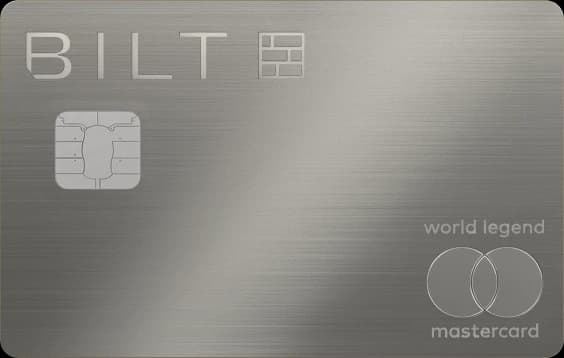
Bilt
Bilt Palladium
Annual Fee
$495/yr
Signup Bonus
50,000 Bilt Rewards
Bonus Value
~$1,100
Benefits Value
~$425/yr
Spend Req.
$4,000 / 3mo
Rewards Currency
Bilt Rewards
Network
Mastercard
Card Type
Personal
Benefits
✈️ travel credit
Lyft Credit
$120/yr
Global Entry / TSA PreCheck Credit
$30/yr
🏨 hotel credit
Bilt Travel Hotel Credit
$400/yr
🏛️ lounge
Priority Pass Select
$300/yr
⭐ status
Bilt Gold Hotel Status
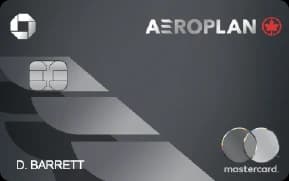
Chase
Chase Aeroplan
Annual Fee
$95/yr
Signup Bonus
75,000 Aeroplan Points
Bonus Value
~$1,050
Benefits Value
~$180/yr
Spend Req.
$4,000 / 3mo
Rewards Currency
Aeroplan
Network
Visa
Card Type
Personal
Benefits
🛫 airline credit
Free Checked Bag
$60/use
⭐ status
Aeroplan 25K Status Boost
$100/yr
🛡️ insurance
Trip Cancellation/Interruption Insurance
$200/yr
Quick winners by category
The fast answer if you came here looking for one specific thing.
Best for Travel
Bilt Palladium
Has a dedicated travel credit and stronger travel-category earning.
Best for Dining
Bilt Palladium
Stronger dining category multiplier for everyday restaurant spending.
Best for Lounge Access
Bilt Palladium
Stronger lounge network (Priority Pass) than the other card's United Club (day passes).
Best for Transfer Partners
Bilt Palladium
Bilt Rewards has 10+ transfer partners — better redemption flexibility.
Best for Beginners
Chase Aeroplan
Lower $95 annual fee makes the math safer for newer cardholders.
Best Overall Value
Chase Aeroplan
~$1,135 of first-year value after annual fee — wins the math.
Best for Premium Travel
Bilt Palladium
Premium hotel credits, top-tier lounge access, and travel insurance built in — the luxury-travel pick.
Best for Hyatt Transfers
Bilt Palladium
Transfers points to World of Hyatt 1:1 — the highest-CPP redemption in the points game. Bilt Rewards owns this advantage.
What it's worth for your spending
Estimated first-year value (welcome bonus + benefits − annual fee) for four common spending profiles.
Year-one value = welcome bonus + tracked benefits + estimated points value from spending − annual fee. Points valued at 1.5¢ each (transferable) or 1¢ each (cashback). Real-world value depends on how you redeem.
Side-by-side: every spec that matters
Higher value highlighted in green per row.
Who should get the Bilt Palladium?
- ✓You're a frequent traveler willing to absorb a $495 annual fee for premium credits and lounge access.
- ✓Travel is one of your top 3 spending categories and you want to earn faster on flights, hotels, and ride-shares.
- ✓You book aspirational hotels and want elite status, suite upgrades, and resort credits without earning them through stays.
- ✓You fly enough that airport lounge access alone justifies the annual fee.
- ✓You take 10+ flights a year and want Centurion / Priority Pass / Sapphire / Capital One Lounge access — not just the marketing line, but actually visiting lounges.
- ✓You enjoy stacking multipliers, calendaring statement credits, and treating your wallet like a small portfolio — the extra cognitive load is worth real $ to you.
- ✓You're already over 5/24 — Chase approvals are unlikely for now, so Amex / Cap One / Citi cards are the realistic next move.
Who should get the Chase Aeroplan?
- ✓You're comfortable with a $95 annual fee in exchange for stronger earning and welcome bonus value.
- ✓Travel is one of your top 3 spending categories and you want to earn faster on flights, hotels, and ride-shares.
- ✓Groceries are a major monthly line item and you want grocery-specific earning.
- ✓You fly a specific airline 4+ times per year and want elite-style perks (free bags, priority boarding).
- ✓You fly enough that airport lounge access alone justifies the annual fee.
- ✓You're under Chase 5/24 (≤ 4 new personal cards in the last 24 months) — that window is precious, so prioritise the Chase application now.
Break-Even Analysis
At what annual spend does one card permanently beat the other?
Below break-even
Chase Aeroplan
wins on fixed value
Break-Even Spend
$17,000
annual card spend
Above break-even
Bilt Palladium
wins on multipliers
Below ~$17,000/yr in total annual card spend, Chase Aeroplan wins on ongoing value — its $95 annual fee + ~$180/yr in realistically usable benefits (credits counted at ~50% of face value) starts ahead. Above ~$17,000/yr, Bilt Palladium's stronger category multipliers compound faster and overtake Chase Aeroplan's fixed advantage. Year-one bonus math heavily favours Chase Aeroplan regardless of spend.
Break-even calculated on year-2+ ongoing value (benefits + earning − annual fee). Year-one welcome bonus math is separate — see the value scenarios table above.
Frequently asked questions
Which has a better welcome bonus, Bilt Palladium or Chase Aeroplan?
Bilt Palladium currently has the stronger offer: 50,000 Bilt Rewards (~$1,100 value) after $4,000 spend in 3 months, vs 75,000 Aeroplan Points (~$1,050) after $4,000 in 3 months for Chase Aeroplan. Welcome offers change frequently — verify the current offer on the issuer's application page before applying.
Is the Bilt Palladium worth the $495 annual fee?
For first-year cardholders the answer is usually yes — the welcome bonus (~$1,100) and statement credits alone typically cover the $495 fee several times over. After year one, the math depends on your spending patterns. Use our Annual Fee Calculator with your actual numbers to verify before renewing.
Is the Chase Aeroplan worth the $95 annual fee?
For first-year cardholders the answer is usually yes — the welcome bonus (~$1,050) and statement credits alone typically cover the $95 fee several times over. After year one, the math depends on your spending patterns. Use our Annual Fee Calculator with your actual numbers to verify before renewing.
Can I have both the Bilt Palladium and the Chase Aeroplan?
Yes — these cards are from different issuers (Bilt and Chase), so holding both is fine. Each card has its own welcome bonus and benefits with no overlap rules between the two issuers. One sequencing tip: Chase Aeroplan is subject to Chase 5/24, so if you're close to the limit, apply for it first.
Which is better for Air Canada flyers — Chase Aeroplan or Bilt Palladium?
If you fly Air Canada several times a year, Chase Aeroplan is built for you: first checked bag free, a boost toward 25K Status. Those perks only pay off on Air Canada flights, though. If your travel is spread across airlines, Bilt Palladium is the stronger pick — its Bilt Rewards points transfer to 10+ airline and hotel partners instead of being locked into Aeroplan Points.
Which card is better for transferring points to Hyatt?
Bilt Palladium transfers to World of Hyatt at 1:1 through its Bilt Rewards ecosystem — one of the highest-CPP redemptions in the points game. Chase Aeroplan doesn't transfer to Hyatt — Aeroplan has no Hyatt partnership.
Which card has better airport lounge access?
Bilt Palladium unlocks Priority Pass; Chase Aeroplan unlocks United Club (day passes). Both give you a real lounge experience, but the networks don't overlap — pick the card whose lounge footprint fits the airports you actually fly through.
Which card has the better overall value?
Based on first-year math (welcome bonus + tracked statement credits − annual fee), Chase Aeroplan comes out ahead at ~$1,135 of net value vs ~$1,030 for the other card. After year one, the better card for YOU depends on how naturally you'll use the credits and category bonuses.
Does Chase's 5/24 rule affect approval for these cards?
Yes — Chase Aeroplan is issued by Chase, so the 5/24 rule applies. If you've opened 5 or more cards in the last 24 months, Chase will likely deny your application. Bilt Palladium is issued by Bilt and isn't subject to 5/24.
Which card has more transfer partners?
Bilt Palladium wins on raw partner breadth — 10 transfer partners vs 0 for Chase Aeroplan. More partners means more routing flexibility for award flights and hotel redemptions. That said, partner *quality* often matters more than partner *count*: a single great partner (e.g. Hyatt at 1:1) can outweigh a dozen weak ones.
How does CreditPoints compare Bilt Palladium and Chase Aeroplan?
Every comparison uses the same fixed methodology: welcome offer value (bonus × current points valuation minus AF), category earning rates, annual fee vs benefit math, transfer-partner depth + redemption value, lounge tier, travel protections, and foreign transaction handling. Card facts come from issuer pages (verified via Playwright on the "Last reviewed" date), card-program award charts, and TPG monthly valuations. Nothing on this page is paid-placement — the Quick Winners, Real-World Scenarios, and Comparison Table are deterministic outputs from the data, not editorial opinion.
How often is the information on this comparison updated?
The comparison data regenerates on every site build (typically multiple times per week as offers change). Welcome offer terms, annual fees, and category multipliers are verified against issuer pages and refreshed as part of the catalog. Welcome bonuses, annual fees, and benefits can change at any time at the issuer's discretion — always confirm current terms on the issuer's application page before applying. The "Last reviewed" date in the trust strip below shows the most recent manual methodology + data-source audit.
Alternatives Worth Considering
If neither card is quite right, these are the next closest options.

Capital One
Venture X
Amex
Amex Green
Looking beyond these two cards?
Ready to apply?
Click through to the issuer's secure application page. Welcome bonus offers are confirmed at the time of approval, not at click time.
Bilt
Bilt Palladium
Welcome: 50,000 Bilt Rewards · ~$1,100 est. value
Chase
Chase Aeroplan
Welcome: 75,000 Aeroplan Points · ~$1,050 est. value
Run your own numbers
These calculators use the same data this comparison runs on — plug in your spending and see net value.
How we compare these cards
Every pair on CreditPoints is evaluated against the same fixed set of criteria, regenerated on every build from verified card-level data. Nothing in this section changes based on who you are or how you got here.
Factors we evaluate
- •Welcome offer value (bonus points × current valuation, minus annual fee)
- •Earning rates per spend category (dining, travel, groceries, gas, base)
- •Annual fee vs benefit math (statement credits + perks priced to value)
- •Transfer partner depth + redemption flexibility (programs, ratios, sweet spots)
- •Lounge access (network tier, guest policy, in-airport coverage)
- •Travel protections (trip cancellation, baggage, rental-car CDW, cell phone)
- •Hotel and airline benefits (free nights, status, elite-night credits)
- •Foreign transaction fees + chip+PIN support for international use
How we evaluate rewards programs
We score transferable-points ecosystems (Chase UR, Amex MR, Citi TY, Capital One Miles, Bilt) by partner count + redemption value at each partner's sweet spot. Co-brand programs are evaluated against the loyalty program's published award chart and the realistic point earn rate from typical category spend.
How we evaluate transfer partners
Transfer-partner quality outranks transfer-partner quantity. A single 1:1 partner with strong sweet spots (Hyatt via Chase UR, ANA via Amex MR) often beats a dozen 2:1 partners with little redemption upside.
How we evaluate annual fees
An annual fee is justified only when the card's first-year value (welcome bonus + activated credits + benefits) clearly exceeds the AF for the typical reader profile. Our four spending scenarios (beginner, everyday, traveler, premium) show whether the math works for your situation.
How we evaluate travel benefits
Statement credits are priced at face value only when the activation barrier is low (broad-merchant credits, auto-redeem credits). High-friction credits (single-vendor, expiring monthly, claim-required) are discounted because most cardholders don't capture them.
Recommendations on this page are intended as educational guidance and are not financial advice. Always confirm current offer terms on the issuer's site before applying.
Last reviewed
2026-09-16
Data sources
Issuer pages (verified via Playwright on this date), TPG monthly valuations, public award charts.
Methodology
Editorial note: CreditPoints may earn a commission when you apply through some of the links on this page, but the side-by-side ranking, Quick Winners and Real-World Scenarios are algorithmic and identical for all readers. We never accept payment to change ordering.
Related guides
Long-form context on the cards and programmes in this comparison.
United MileagePlus: The Complete 2026 Program Guide
Why MileagePlus is the strongest US-domestic Star Alliance program for Chase UR holders — Excursionist Perk discontinuation explained, Polaris transcons at 35-45K, Star Alliance partner backup.
Read
Does Bilt Card 2.0 Require 5 Transactions? (2026 Guide)
Bilt killed the original card in February 2026 and replaced it with three new ones — Blue, Obsidian, and Palladium — that now earn on mortgage payments too. Here's exactly how the new system works, how much you need to spend, and which card is right for you.
Read
British Airways Avios: The Complete 2026 Program Guide
The only oneworld currency with 1:1 inbound from FIVE US flexible-currency programs (Amex/Chase/Citi/Cap1/Bilt) — Cathay business at 70K, short-haul economy at 4-9K, the YQ surcharge problem.
Read
Hyatt Award Chart 2026: 3,000–75,000 Points by Category
The last great fixed award chart in US hotels — eight categories, five demand tiers (Lowest to Top) since May 20, 2026, and the redemptions that consistently print 3¢+ per point.
Read
Compare with other cards
Popular comparisons among the same audience.
Get weekly card offer alerts
Sunday digest of elevated bonuses. One email, zero spam.