Delta Gold vs Delta Reserve
Both earn Delta SkyMiles — Delta Gold vs Delta Reserve — here's what separates them. The key question: does Delta Reserve's $650 annual fee earn back enough over Delta Gold's $150?
Quick Answer
For first-year value (welcome bonus plus tracked annual credits, minus the annual fee), Delta Gold comes out ahead at ~$885 at a lower $150 annual fee vs $650. The right pick still depends on which credits and category multipliers fit your spending pattern — full breakdown below.
Our Verdict
Delta Gold wins for most people.
Delta Gold's $150 annual fee is $500 less than Delta Reserve, yet still delivers ~$885 in first-year value vs ~$863 for Delta Reserve.
Exception: Delta Reserve may be worth it if you're a frequent traveler who will max out its lounge access and premium credits year over year.
Choose Delta Gold if…
- →You want the lower annual fee: $150 vs $650 for Delta Reserve.
- →You're maximising the welcome bonus right now (~$960 vs ~$600).
Choose Delta Reserve if…
- →Airport lounge access matters to you — it unlocks Delta Sky Club (unlimited).
- →You'll actually use its statement credits (~$1,825/yr tracked).
Delta Gold
Highest first-year value among the 2 cards you're comparing — $885 after annual fee.
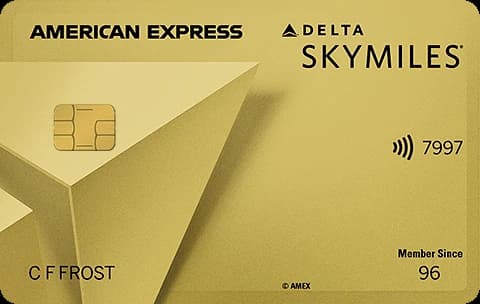
Amex
Delta Gold
Annual Fee
$150/yr
Signup Bonus
80,000 Delta SkyMiles
Bonus Value
~$960
Benefits Value
~$75/yr
Spend Req.
$3,000 / 6mo
Rewards Currency
Delta SkyMiles
Network
Amex
Card Type
Personal
Benefits
🛫 airline credit
First Checked Bag Free
$70/use
Priority Boarding
$50/yr
20% Inflight Savings
$30/yr
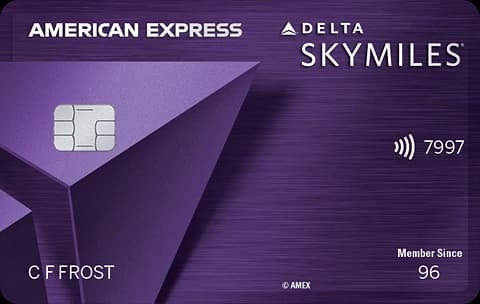
Amex
Delta Reserve
Annual Fee
$650/yr
Signup Bonus
50,000 Delta SkyMiles
Bonus Value
~$600
Benefits Value
~$913/yr
Spend Req.
$10,000 / 6mo
Rewards Currency
Delta SkyMiles
Network
Amex
Card Type
Personal
Benefits
✈️ travel credit
Rideshare Credit
$120/yr
🍽️ dining credit
Resy Restaurant Credit
$240/yr
🛫 airline credit
Annual Companion Certificate
$500/yr
First Checked Bag Free
$70/use
Priority Boarding
🏛️ lounge
Delta Sky Club Access
$695/yr
Amex Centurion Lounge (Delta flyers)
$200/yr
⭐ status
MQD Boost
Quick winners by category
The fast answer if you came here looking for one specific thing.
Best for Travel
Delta Reserve
Wins on the full premium-travel stack — travel credit + hotel credit + lounge network + comprehensive travel insurance — all under one annual fee.
Best for Dining
Delta Reserve
Dedicated dining credit plus strong restaurant earning multiplier.
Best for Lounge Access
Delta Reserve
Includes Delta Sky Club (unlimited) access — the other card has none.
Best for Beginners
Delta Gold
Lower $150 annual fee makes the math safer for newer cardholders.
Best Overall Value
Delta Gold
~$885 of first-year value after annual fee — wins the math.
Best for Premium Travel
Delta Reserve
Premium hotel credits, top-tier lounge access, and travel insurance built in — the luxury-travel pick.
Biggest Credit Stack
Delta Reserve
Bigger statement-credit stack (~$540/yr in tracked credits) — high ceiling if you use them.
What it's worth for your spending
Estimated first-year value (welcome bonus + benefits − annual fee) for four common spending profiles.
Year-one value = welcome bonus + tracked benefits + estimated points value from spending − annual fee. Points valued at 1.5¢ each (transferable) or 1¢ each (cashback). Real-world value depends on how you redeem.
Side-by-side: every spec that matters
Higher value highlighted in green per row.
Who should get the Delta Gold?
- ✓You travel or dine out enough that a $150 fee pays back via credits and category multipliers.
- ✓You eat out regularly and want bonus points on restaurants worldwide.
- ✓You fly a specific airline 4+ times per year and want elite-style perks (free bags, priority boarding).
- ✓You're already over 5/24 — Chase approvals are unlikely for now, so Amex / Cap One / Citi cards are the realistic next move.
Who should get the Delta Reserve?
- ✓You're a frequent traveler willing to absorb a $650 annual fee for premium credits and lounge access.
- ✓You fly a specific airline 4+ times per year and want elite-style perks (free bags, priority boarding).
- ✓You book aspirational hotels and want elite status, suite upgrades, and resort credits without earning them through stays.
- ✓You fly enough that airport lounge access alone justifies the annual fee.
- ✓You take 10+ flights a year and want Centurion / Priority Pass / Sapphire / Capital One Lounge access — not just the marketing line, but actually visiting lounges.
- ✓You enjoy stacking multipliers, calendaring statement credits, and treating your wallet like a small portfolio — the extra cognitive load is worth real $ to you.
- ✓You're already over 5/24 — Chase approvals are unlikely for now, so Amex / Cap One / Citi cards are the realistic next move.
Break-Even Analysis
At what annual spend does one card permanently beat the other?
Below break-even
Delta Reserve
wins on fixed value
Break-Even Spend
$112,500
annual card spend
Above break-even
Delta Gold
wins on multipliers
Below ~$112,500/yr in total annual card spend, Delta Reserve wins on ongoing value — its $650 annual fee + ~$913/yr in realistically usable benefits (credits counted at ~50% of face value) starts ahead. Above ~$112,500/yr, Delta Gold's stronger category multipliers compound faster and overtake Delta Reserve's fixed advantage. Year-one bonus math heavily favours Delta Gold regardless of spend.
Break-even calculated on year-2+ ongoing value (benefits + earning − annual fee). Year-one welcome bonus math is separate — see the value scenarios table above.
Frequently asked questions
Which has a better welcome bonus, Delta Gold or Delta Reserve?
Delta Gold currently has the stronger offer: 80,000 Delta SkyMiles (~$960 value) after $3,000 spend in 6 months, vs 50,000 Delta SkyMiles (~$600) after $10,000 in 6 months for Delta Reserve. Welcome offers change frequently — verify the current offer on the issuer's application page before applying.
Is the Delta Gold worth the $150 annual fee?
For first-year cardholders the answer is usually yes — the welcome bonus (~$960) and statement credits alone typically cover the $150 fee several times over. After year one, the math depends on your spending patterns. Use our Annual Fee Calculator with your actual numbers to verify before renewing.
Is the Delta Reserve worth the $650 annual fee?
For first-year cardholders the answer is usually yes — the welcome bonus (~$600) and statement credits alone typically cover the $650 fee several times over. After year one, the math depends on your spending patterns. Use our Annual Fee Calculator with your actual numbers to verify before renewing.
Can I have both the Delta Gold and the Delta Reserve at the same time?
Yes — Amex allows holding both Delta Gold and Delta Reserve simultaneously. Each card has its own welcome bonus and statement credits, so they don't conflict. Amex's welcome bonus eligibility rules may require waiting between applications; check current policy before applying for the second card. Remember two Amex rules: each card's welcome bonus is once per lifetime, and Amex typically approves at most 2 credit cards per 90 days (charge cards follow separate rules).
Which card is better for transferring points to Hyatt?
Neither card transfers points to World of Hyatt. Only Chase Ultimate Rewards, Bilt Rewards and the co-branded World of Hyatt card transfer to Hyatt at 1:1. To stack Hyatt points without leaving these two ecosystems you'd need to add a Chase Sapphire or Bilt card alongside.
Which card has better airport lounge access?
Delta Reserve includes Delta Sky Club (unlimited). Delta Gold doesn't include lounge access — you'd need to pay for it separately or upgrade to a premium card.
Which card has the better overall value?
Based on first-year math (welcome bonus + tracked statement credits − annual fee), Delta Gold comes out ahead at ~$885 of net value vs ~$863 for the other card. After year one, the better card for YOU depends on how naturally you'll use the credits and category bonuses.
Which card has the easier minimum spend requirement?
Delta Gold has the easier bar — $3,000 in 6 months — vs $10,000 in 6 months for Delta Reserve. Don't manufacture spend just to hit a higher threshold — if you can't reach it through normal spending, the card isn't the right fit right now.
How does CreditPoints compare Delta Gold and Delta Reserve?
Every comparison uses the same fixed methodology: welcome offer value (bonus × current points valuation minus AF), category earning rates, annual fee vs benefit math, transfer-partner depth + redemption value, lounge tier, travel protections, and foreign transaction handling. Card facts come from issuer pages (verified via Playwright on the "Last reviewed" date), card-program award charts, and TPG monthly valuations. Nothing on this page is paid-placement — the Quick Winners, Real-World Scenarios, and Comparison Table are deterministic outputs from the data, not editorial opinion.
How often is the information on this comparison updated?
The comparison data regenerates on every site build (typically multiple times per week as offers change). Welcome offer terms, annual fees, and category multipliers are verified against issuer pages and refreshed as part of the catalog. Welcome bonuses, annual fees, and benefits can change at any time at the issuer's discretion — always confirm current terms on the issuer's application page before applying. The "Last reviewed" date in the trust strip below shows the most recent manual methodology + data-source audit.
Alternatives Worth Considering
If neither card is quite right, these are the next closest options.

Capital One
Venture X
Bank of America
Atmos Summit

Looking beyond these two cards?
Ready to apply?
Click through to the issuer's secure application page. Welcome bonus offers are confirmed at the time of approval, not at click time.
Amex
Delta Gold
Welcome: 80,000 Delta SkyMiles · ~$960 est. value
Amex
Delta Reserve
Welcome: 50,000 Delta SkyMiles · ~$600 est. value
Run your own numbers
These calculators use the same data this comparison runs on — plug in your spending and see net value.
How we compare these cards
Every pair on CreditPoints is evaluated against the same fixed set of criteria, regenerated on every build from verified card-level data. Nothing in this section changes based on who you are or how you got here.
Factors we evaluate
- •Welcome offer value (bonus points × current valuation, minus annual fee)
- •Earning rates per spend category (dining, travel, groceries, gas, base)
- •Annual fee vs benefit math (statement credits + perks priced to value)
- •Transfer partner depth + redemption flexibility (programs, ratios, sweet spots)
- •Lounge access (network tier, guest policy, in-airport coverage)
- •Travel protections (trip cancellation, baggage, rental-car CDW, cell phone)
- •Hotel and airline benefits (free nights, status, elite-night credits)
- •Foreign transaction fees + chip+PIN support for international use
How we evaluate rewards programs
We score transferable-points ecosystems (Chase UR, Amex MR, Citi TY, Capital One Miles, Bilt) by partner count + redemption value at each partner's sweet spot. Co-brand programs are evaluated against the loyalty program's published award chart and the realistic point earn rate from typical category spend.
How we evaluate transfer partners
Transfer-partner quality outranks transfer-partner quantity. A single 1:1 partner with strong sweet spots (Hyatt via Chase UR, ANA via Amex MR) often beats a dozen 2:1 partners with little redemption upside.
How we evaluate annual fees
An annual fee is justified only when the card's first-year value (welcome bonus + activated credits + benefits) clearly exceeds the AF for the typical reader profile. Our four spending scenarios (beginner, everyday, traveler, premium) show whether the math works for your situation.
How we evaluate travel benefits
Statement credits are priced at face value only when the activation barrier is low (broad-merchant credits, auto-redeem credits). High-friction credits (single-vendor, expiring monthly, claim-required) are discounted because most cardholders don't capture them.
Recommendations on this page are intended as educational guidance and are not financial advice. Always confirm current offer terms on the issuer's site before applying.
Last reviewed
2026-10-04
Data sources
Issuer pages (verified via Playwright on this date), TPG monthly valuations, public award charts.
Methodology
Editorial note: CreditPoints may earn a commission when you apply through some of the links on this page, but the side-by-side ranking, Quick Winners and Real-World Scenarios are algorithmic and identical for all readers. We never accept payment to change ordering.
Related guides
Long-form context on the cards and programmes in this comparison.
Delta SkyMiles: The Complete 2026 Program Guide
Why Delta SkyMiles is the only US-major airline with exclusive Amex MR 1:1 transfer access — Delta One transcons at 50-75K, Sky Club lounge access, no expiration policy.
Read
Delta SkyMiles Gold Amex Review 2026
Best entry-level Delta card. Free first bag saves $70+ per round trip, 2x on Delta and restaurants, $0 first year then $150/year. The math works if you fly Delta 2+ times/year with checked luggage.
Read
Delta SkyMiles Platinum Amex Review 2026
Mid-tier Delta card with included companion certificate (no spend required), 3x on Delta and hotels, MQM boosts toward Medallion status. $350/year makes sense for status chasers and travelers who fly with a companion.
Read
Delta SkyMiles Reserve Amex Review 2026
Premium Delta card with unlimited Sky Club access, 3x SkyMiles on Delta, first+second bags free, and companion certificate in any cabin. Worth $650/year for Diamond Medallion chasers and Sky Club regulars.
Read
Compare with other cards
Popular comparisons among the same audience.
Get weekly card offer alerts
Sunday digest of elevated bonuses. One email, zero spam.