Atmos Rewards (formerly Alaska Mileage Plan): The Complete Program Guide
Alaska Mileage Plan is now Atmos Rewards, the combined Alaska Airlines and Hawaiian Airlines programme: Mileage Plan members became Atmos Rewards members on 20 August 2025, HawaiianMiles members transitioned on 1 October 2025, and balances converted at one mile to one point. Miles are now called points and elite-qualifying miles are status points. The two redemptions this programme was famous for were repriced on 1 August 2026, when Cathay Pacific and JAL awards moved from the flat distance chart to dynamic pricing with a saver floor, so the old JAL First at 70,000 and Cathay business at 50,000 are historical rather than current. Bilt Rewards is still the only US flexible currency that transfers in at 1:1; Amex Membership Rewards, Chase Ultimate Rewards, Citi ThankYou and Capital One miles cannot reach it. The distance-based structure, the free stopover on one-way awards, the Hawaiian network and the monthly Atmos Members Day drop all survive.
On this page▾

Topic Collection
Part of the Transfer Partners Collection
Explore all 71 articles
Quick answer
Alaska Mileage Plan is now called Atmos Rewards, and the two redemptions this programme was famous for were repriced on 1 August 2026. If you arrived here looking for JAL First at 70,000 or Cathay Pacific business at 50,000, those were real, and they are history. What survives is still worth holding: a distance-based partner chart, a free stopover on one-way awards, the Hawaiian network, and a monthly promo drop.
TL;DR: Atmos Rewards is the combined Alaska Airlines and Hawaiian Airlines loyalty programme. Mileage Plan members became Atmos Rewards members on 20 August 2025; HawaiianMiles members transitioned on 1 October 2025; balances converted at one mile = one point. Miles are now called points, and elite-qualifying miles are status points. Bilt Rewards remains the only US flexible currency that transfers in at 1:1 — Amex Membership Rewards, Chase Ultimate Rewards, Citi ThankYou and Capital One miles all do not. On 1 August 2026 Cathay Pacific and JAL awards moved from the flat distance chart to dynamic pricing with a saver floor.
What happened to Mileage Plan
The programme was not discontinued; it was renamed and merged.
| Date | What changed |
|---|---|
| September 2024 | Alaska Airlines completed its acquisition of Hawaiian Airlines |
| 20 August 2025 | Mileage Plan members became Atmos Rewards members |
| 1 October 2025 | HawaiianMiles members transitioned into Atmos Rewards |
| — | One Mileage Plan or HawaiianMiles mile converted to one Atmos Rewards point |
The vocabulary changed with it. What you used to call miles are points; what you used to call elite-qualifying miles are status points. Most published guidance — including plenty written after the rebrand — still says "Alaska miles", and it means the same unit. This guide keeps the old programme name in its address because that is what people still search for, but the current product is Atmos Rewards.
Key takeaway: nothing was taken away by the rename itself. The rename matters because it makes almost everything written before it look current when it is not.
The 1 August 2026 repricing
This is the part that actually cost you something.
Alaska announced that Cathay Pacific and JAL awards would move from the flat distance-based chart to dynamic pricing from 1 August 2026. Alaska's own framing was that the lowest level would stay at the chart price while demand-based pricing pushed most awards higher; analysts at the time expected typical Cathay business to settle in the 75,000–90,000 range against a previous 50,000, roughly a 50–80% increase for non-promo dates.
The prices this guide used to headline, stated plainly as history:
| Historical (before 1 Aug 2026) | Price then |
|---|---|
| Cathay Pacific business, US → Hong Kong | 50,000 miles one-way |
| Cathay Pacific business, US → Bangkok / SE Asia | 50,000 miles one-way |
| JAL First, US → Tokyo | 70,000 miles one-way |
Do not quote those as current. They describe a chart that stopped governing those two partners in August.
What we can and cannot tell you about Cathay and JAL today
We would rather be straight about this than publish a confident number.
What is verified: the mechanism changed on 1 August 2026, from a flat published price to dynamic pricing with a saver floor. The floor means the old chart number can still appear — it is now a rare best case rather than the going rate.
What is not verified: a single current price. Secondary sources disagree with each other and several are themselves stale. Post-change, reputable programme guides quote figures around 75,000 points for Cathay business and 90,000 for JAL First from the West Coast band, while observed bookings on some JAL routes have run considerably higher. We are reporting that spread rather than picking a number out of it, because picking one would be inventing a chart price that the programme does not publish.
What to do about it: price the specific award, on the specific date, before you move a single point in. Transfers into Atmos are one-way, and a number you remember from a blog post is not a number you can book against.
Key takeaway: the honest answer to "what does Cathay business cost now" is a range and an instruction, not a figure.
What still works
The programme is weaker than it was and still not ordinary.
- The distance-based structure. Partner awards price against distance flown, including connections, rather than against the cash fare. Where that still applies it is genuinely unusual in 2026, and it is what lets a long redemption stay cheap when a cash fare spikes.
- The free stopover. Atmos still permits a stopover on a one-way award — up to 14 days at a partner hub on international one-ways, per current programme guides — which turns one redemption into two destinations. Most US programmes allow stopovers only on round trips.
- Partners that were not part of the August change. Qantas business US–Australia and Korean Air Apex Suites North America–Seoul continue to be quoted on the distance chart at 55,000 and 50,000 respectively. They were not named in the repricing, but confirm live pricing before transferring rather than assuming a chart still applies.
- The Hawaiian network. Hawaiian routes sit inside Atmos rather than beside it, which broadened the North America–Hawaii and Hawaii-connecting redemption map considerably.
- Atmos Members Day. A monthly drop on the first Wednesday at 9 a.m. Pacific: curated member-only award prices. The June 2026 edition included Mexico City from 7,500 points against a 12,500–17,500 standard rate, and Tahiti at 20,000 one-way. Availability is deliberately narrow and skewed to West Coast gateways, but this is now the most reliable outsized value in the programme.
Access: still Bilt, still the only route
This has not changed and it is the constraint that decides whether the programme is available to you at all.
- Bilt Rewards transfers to Atmos at 1:1. It is the only US flexible currency that does.
- Amex Membership Rewards does not. Neither does Chase Ultimate Rewards.
- Citi ThankYou does not. Neither do Capital One miles.
- Marriott Bonvoy transfers at 3:1 with a 5,000-point bonus per 60,000 transferred.
- There is no workaround. A large flexible balance somewhere else does not help you here.
Decision framework
- You already earn Bilt points on rent: the bridge exists and holding an Atmos balance costs you nothing extra. This is the clean case.
- You fly Alaska or Hawaiian routes: the co-brand is the straightforward path, and the programme's core is unaffected by the August change.
- You came for Cathay or JAL premium cabins: the case is much weaker than the internet still says. Price the award before committing to the strategy, not after.
- You would acquire Bilt specifically for this: think harder than you would have in 2025. The redemption that justified it was repriced.
- You hold Chase or Amex points and nothing else: they do not reach Atmos, and no indirect route is worth constructing.
Common mistakes
- Quoting the 50,000 Cathay or 70,000 JAL numbers as current. They stopped governing on 1 August 2026.
- Reading pre-rebrand guidance as current. Most published Alaska content predates either the rename or the repricing, and often both.
- Transferring Bilt points speculatively. One-way, and the targets moved.
- Assuming Amex or Chase can reach it. They cannot.
- Transferring a token amount to "stop points expiring". Atmos points do not expire from inactivity — see below.
- Searching under the old programme name only. The current product is Atmos Rewards.
Related credit cards
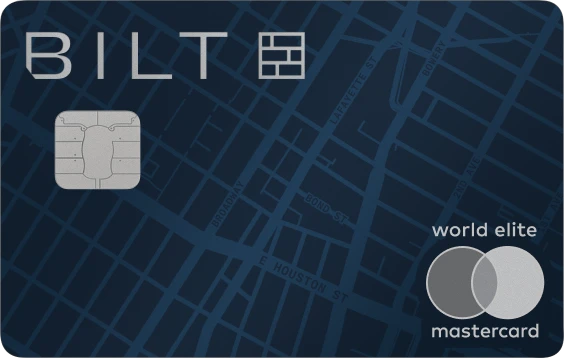
- Bilt Blue Card — the only 1:1 Atmos transfer route, at a $0 annual fee.
- Atmos Rewards Ascent Visa Signature (Bank of America) — the $95 co-brand.
- Atmos Rewards Summit Visa Infinite (Bank of America) — the $395 premium co-brand.
Related content
- The post-devaluation read: Atmos Rewards sweet spots after the repricing — what is left, in detail.
- Currency hub: Bilt is the access programme; see Chase Ultimate Rewards program guide 2026 and Amex Membership Rewards program guide 2026 for the currencies that do not reach Atmos.
- Oneworld adjacent: American AAdvantage program guide 2026 · British Airways Avios program guide 2026
- Context: The devaluations of 2026 — where the August repricing sits in the year.
- Hotel cornerstones: World of Hyatt guide · Hilton Honors guide · Marriott Bonvoy guide
Get weekly card offer alerts
Sunday digest of elevated bonuses. One email, zero spam.
Cards mentioned in this guide

Frequently asked questions
Is Alaska Mileage Plan still called Mileage Plan?
Can I still book JAL First at 70,000 or Cathay business at 50,000?
Which credit cards transfer to Atmos Rewards?
Does the free stopover still work?
Do Atmos Rewards points expire?
Is Atmos Rewards still worth building a balance in?
Related guides
Rewards Programs
How to Transfer Bilt Rewards to World of Hyatt (2026 Guide)
7 min
Rewards Programs
Best Ways to Book Hawaii Hotels with Points (Hyatt, Marriott, Hilton)
10 min
Rewards Programs
Flying Blue: The Complete 2026 Program Guide
11 min
Rewards Programs
World of Hyatt: The Complete 2026 Program Guide
12 min
Related news

bilt · Jun 2, 2026
Bilt Rent Day June 2026: TAP 25-125% Bonus Explained

bilt · Jun 2, 2026
Bilt 2.0 at 6 Months: What Worked, What Backfired

airlines · Jun 9, 2026
AA Blocks Partner Awards, Alaska Guts Charts, and a 7,500-Mile Promo: What Matters Now

chase · Jun 10, 2026
Chase Hyatt Transfer Ratio 4:3: What It Means for Sapphire Preferred and Ink Business Preferred