Capital One Quicksilver vs Citi Double Cash: Flat-Rate Showdown (2026)
Quicksilver (1.5% flat, no FTF) vs Citi Double Cash (2% flat, 3% FTF): which no-fee cash back card wins? The answer depends entirely on whether you travel internationally.
On this page▾

Both cards are no-annual-fee flat-rate cash back cards — but one earns 33% more cash back on every purchase, and the other charges nothing when you swipe abroad. That single trade-off decides this comparison.
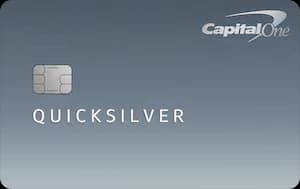
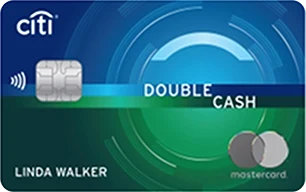
The no-annual-fee flat-rate cash back category is one of the most crowded in the market, and Quicksilver vs Double Cash is the contest that comes up most often — see our best cash back cards roundup for the full landscape. Quicksilver earns an unlimited 1.5% on every purchase. Citi Double Cash earns an unlimited 2% on every purchase (technically 1% when you buy plus 1% when you pay your bill). Both cards have no annual fee, no category tracking, and no rotating activations to manage. On pure US spending, they are the same type of card — but Citi earns more. The catch: Citi Double Cash charges a 3% foreign-transaction fee on every international purchase, while Quicksilver charges nothing. For people who travel or shop internationally, that 3% fee can erase the earn-rate advantage entirely.
This is a rare comparison where the right answer depends almost entirely on one behavior: do you make purchases outside the United States or in foreign currencies?
Quick answer
For US-only spending, pick Citi Double Cash — its 2% rate beats Quicksilver's 1.5% on every transaction, and the difference compounds across all your spending. For international spending or travel, pick Capital One Quicksilver — the 3% foreign-transaction fee on Citi Double Cash erases its earn advantage the moment you swipe abroad, and Quicksilver's no-FTF policy means you keep 1.5% everywhere. Many people who primarily spend in the US would do well to keep Citi Double Cash and reach for Quicksilver (or a dedicated travel card) whenever they leave the country.
TL;DR: Capital One Quicksilver has no annual fee, earns 1.5% unlimited cash back on every purchase, and charges no foreign-transaction fee. Citi Double Cash has no annual fee, earns 2% unlimited cash back on every purchase (1% at purchase + 1% when paid), and charges a 3% foreign-transaction fee on non-US transactions. On $10,000 of US annual spend, Citi Double Cash earns $200 vs Quicksilver's $150 — a $50 difference. Citi also allows conversion to Citi ThankYou Points and transfer to travel partners if you hold a Citi Strata Premier. Both require good to excellent credit (typically 670+ FICO).
At a glance
| Feature | Capital One Quicksilver | Citi Double Cash |
|---|---|---|
| Annual fee | $0 | $0 |
| Earn rate | 1.5% unlimited | 2% unlimited |
| Foreign-transaction fee | None | 3% |
| Reward type | Cash back | Cash back (or ThankYou Points) |
| Transfer partners | None | Via Citi Strata Premier: 18+ partners |
| Minimum credit score | Good (670+) | Good-Excellent (680+) |
| Welcome bonus | Yes (one-time) | Sometimes offered |
| Travel insurance | Basic | Basic |
| Cell phone protection | No | No |
| Purchase protection | Yes | Yes |
| Return protection | No | No |
| 0% intro APR | Yes (purchases) | Yes (balance transfers) |
Earn rate: the 2% vs 1.5% math
This is the core of the comparison. On every dollar spent in the US:
- Citi Double Cash earns 2 cents
- Capital One Quicksilver earns 1.5 cents
That is a 33% difference in earn rate on every transaction. The gap compounds across total spending volume:
| Annual US spend | Quicksilver (1.5%) | Citi Double Cash (2%) | Difference |
|---|---|---|---|
| $5,000 | $75 | $100 | $25 |
| $10,000 | $150 | $200 | $50 |
| $20,000 | $300 | $400 | $100 |
| $30,000 | $450 | $600 | $150 |
At $10,000 of US annual spend — a realistic number for a primary credit card — Citi earns $50 more per year than Quicksilver. That is not a massive gap in absolute terms, but it is a consistent, compounding advantage on every single transaction, forever, with no effort required.
The reason this matters over time: a flat earn-rate difference on a no-fee card accumulates every year you hold it. Over five years at $10,000/year of US spending, the Citi card earns $250 more in total than Quicksilver. Over ten years, $500 more. For a card you hold for decades, the higher earn rate is the dominant factor — unless you travel internationally.
The foreign-transaction fee: where Quicksilver pulls ahead
Citi Double Cash charges a 3% foreign-transaction fee on purchases made outside the US or in non-USD currencies. That includes:
- International travel (hotels, restaurants, transportation abroad)
- Online purchases from foreign merchants
- Shopping with US-based merchants who process payments through foreign banks
On a $2,000 international vacation, the Citi Double Cash foreign-transaction fee would be $60. The Double Cash earn on that same spend would be $40. Net result: Citi effectively costs you money on international purchases — earning 2% but charging 3%, for a net -1% outcome on overseas spend.
Quicksilver earns 1.5% on those same international purchases and charges nothing. Net result: a 1.5% gain.
The crossover math: if more than roughly 43% of your annual spending is outside the US, Quicksilver's no-FTF policy makes it the higher-total-value card — even though it earns less on domestic purchases. For most US-based cardholders who travel occasionally, the majority of spend is still domestic, so Citi wins overall. But for frequent international travelers, Quicksilver is unambiguously the better card.
The Citi ThankYou Points upgrade path
Citi Double Cash has a feature Quicksilver lacks: if you also hold a Strata Premier, your Double Cash rewards convert to Citi ThankYou Points and become transferable to 18+ airline and hotel partners, including Air France-KLM Flying Blue, Turkish Airlines Miles&Smiles, Singapore Airlines KrisFlyer, and Wyndham Rewards. This transforms the Double Cash from a pure cash-back card into a 2x ThankYou Point earner — and ThankYou Points transferred to airline partners can be worth 1.5-2+ cents each, making the effective earn rate 3-4% on every purchase when redeemed for premium flights.
This upgrade path is meaningful. If you are building a Citi ecosystem and hold a Strata Premier, the Double Cash becomes significantly more valuable — not just a flat 2% card but a 2x points card with transferable value. Quicksilver earns cash back only and has no equivalent upgrade path within Capital One's ecosystem (note: Capital One Venture and Venture X earn transferable miles, but Quicksilver is a separate product in the cash-back family).
Capital One Quicksilver's other advantages
Beyond the no-FTF policy, Quicksilver has a few additional features worth noting:
No minimum redemption. Quicksilver has no minimum cash-back redemption threshold — you can cash out any amount. Citi Double Cash also has no minimum for statement credits, though some redemption formats have a $25 minimum.
Simpler statement: Quicksilver's 1% + 0.5% split (it is a flat 1.5% but sometimes described as 1.5% earned at purchase) vs Double Cash's 1% + 1% (1% at purchase, 1% when you pay) is irrelevant in practice but worth knowing: Citi's "1% when you pay" requirement means carrying a balance delays earning the second 1%.
No foreign-transaction fee on all international spend makes Quicksilver a legitimate travel companion for casual international travelers who want one simple card that works everywhere.
Which card for specific use cases
Best for maximizing US cash back with no annual fee: Citi Double Cash. The 2% flat rate beats Quicksilver on every domestic transaction and the fee difference (both $0) is irrelevant.
Best for international travelers: Capital One Quicksilver. The Citi Double Cash's 3% FTF eliminates its earn-rate edge on all foreign-currency spend, making Quicksilver the superior choice for anyone who travels internationally even occasionally.
Best as a catch-all in a points ecosystem: Citi Double Cash (if you hold Citi Strata Premier). Two ThankYou Points per dollar on every purchase, transferable to airline partners, is exceptional value for a no-fee card.
Best for simplicity with one card globally: Quicksilver. A single card with 1.5% everywhere in the world, no annual fee, and no FTF is genuinely simple.
Best for balance-transfer needs: Citi Double Cash offers a strong introductory 0% APR on balance transfers (currently 18 months, check current offer), making it the preferred choice for anyone carrying a balance from a high-APR card.
Should you hold both?
Yes, this is a valid strategy. Citi Double Cash for all US purchases (2% beats 1.5%) and a no-FTF travel card — either Quicksilver (see the Capital One Quicksilver full review) or a dedicated travel card like Venture — for international spend. If you already hold a Capital One Venture or Venture X, you may not need Quicksilver at all: those cards earn 2x transferable miles on everything with no FTF, which is strictly better than Quicksilver's 1.5% cash back in almost every scenario.
The main reason to hold Quicksilver alongside Citi Double Cash is simplicity: one card for international, one for domestic, both with no annual fee.
Who needs neither card
If you spend significantly on bonus categories (dining, travel, groceries), you are leaving money on the table with either card — and the Citi Double Cash full review dives deeper into when Double Cash fits into a broader points setup. A Sapphire Preferred (3x dining, 2x travel), Amex Gold (4x dining + 4x groceries), or Savor (4% dining + entertainment) would earn far more on categorized spend than either flat-rate card. The Quicksilver and Double Cash are best suited for cardholders who want simplicity, have non-categorized spend, or need a catch-all companion to a more complex primary card.
Bottom line
If you only spend in the US, Citi Double Cash is the better card — it earns 2% vs 1.5% on every single purchase, and that 33% earn-rate premium compounds into meaningful extra cash back over time. If you're considering adding a no-fee travel upgrade to the Quicksilver, the Capital One VentureOne review covers the no-fee miles alternative. And the Capital One ecosystem guide explains how these cards interact within Capital One's broader rewards family. If you travel internationally or make foreign-currency purchases regularly, Capital One Quicksilver is the better card — its no-foreign-transaction-fee policy makes it net-positive on international spend where Citi Double Cash goes net-negative. The ideal setup for most people: Citi Double Cash as the domestic default, and a no-FTF card (Quicksilver or a dedicated travel card) for anything outside the US.
Get weekly card offer alerts
Sunday digest of elevated bonuses. One email, zero spam.
Cards mentioned in this guide

Frequently asked questions
Does Citi Double Cash or Capital One Quicksilver earn more cash back?
Does Capital One Quicksilver have a foreign-transaction fee?
Can Citi Double Cash earn transferable points?
Which card is better if I primarily spend in the United States?
Should I get both Quicksilver and Citi Double Cash?
Related guides
Related news

airlines · Jun 2, 2026
Credit Card Transfer Bonuses Mid-2026: H1 Drought Recap

amex · Jun 25, 2026
Amex Platinum vs Schwab Platinum: the same $895 card, with a cash-out

chase · Jun 10, 2026
Chase Hyatt Transfer Ratio 4:3: What It Means for Sapphire Preferred and Ink Business Preferred

chase · Jun 10, 2026
Chase to Virgin Atlantic: 30% Transfer Bonus — Book Delta Business Class for 18,000 Points