Best Cash Back Credit Cards of 2026
The best cash back credit cards of 2026 offer between 1.5% and 6% back on everyday spending. For flat-rate simplicity, the Wells Fargo Active Cash and Citi Double Cash both pay 2% on everything with no annual fee. For maximizers, category cards go higher: Chase Freedom Flex earns 5% on rotating quarterly categories, Citi Custom Cash pays 5% on your top spending category, and the Amex Blue Cash Preferred earns 6% at U.S. supermarkets (up to $6,000/year). The right pick depends on your top categories and whether you prefer simplicity or optimization.
On this page▾

Quick answer
The best cash back credit cards of 2026 offer between 1.5% and 6% back on everyday spending. For flat-rate simplicity, the Active Cash and Double Cash both deliver 2% on everything. For maximizers, the Blue Business Cash category-focused cards and Freedom Flex rotating 5% categories can push effective returns well above 3%.
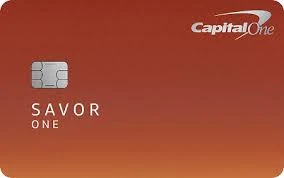
TL;DR: The top cash back credit cards in 2026 include the Wells Fargo Active Cash (2% flat on all purchases), Citi Double Cash (2% — 1% when you buy + 1% when you pay), Chase Freedom Unlimited (1.5% base + 3% dining and drugstores), Chase Freedom Flex (5% on quarterly rotating categories up to $1,500), Citi Custom Cash (5% on your top spending category up to $500/month), Capital One SavorOne (3% on dining and entertainment, no annual fee), and Amex Blue Cash Preferred (6% at U.S. supermarkets up to $6,000/year, $95 annual fee). The best choice depends on your primary spending categories and whether you prefer simplicity or optimization.
Top picks at a glance
| Card | Best for |
|---|---|
| Active Cash | Flat 2% on everything — zero thinking required |
| Double Cash | 2% flat + easy pairing with Citi ThankYou ecosystem |
| Freedom Unlimited | 1.5% base + elevated dining and drugstore rewards |
| Freedom Flex | 5% rotating categories for quarterly maximizers |
| Custom Cash | Automatic 5% on your single highest-spend category |
| SavorOne | 3% dining and entertainment with no annual fee |
| Amex EveryDay | 6% at U.S. supermarkets for heavy grocery spenders |
Flat-rate cards: the case for simplicity
Flat-rate cash back cards are built on one premise: every dollar you spend earns the same rate, no matter the merchant, no matter the time of year. There are no activation requirements, no rotating categories to track, and no spending caps that force you to slow down.
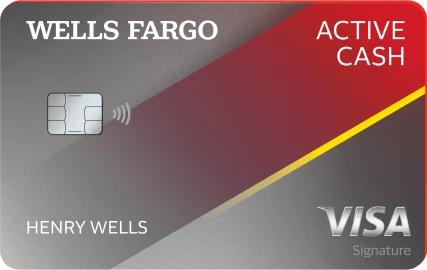
The Active Cash is the gold standard in this category. It pays an unlimited 2% cash rewards on all purchases with no annual fee. New cardholders also receive a welcome offer of $200 cash rewards after spending $500 in the first three months — one of the lowest spend thresholds among 2% cards. The card earns "cash rewards" that can be redeemed as a statement credit, check, or deposit to a Wells Fargo account.
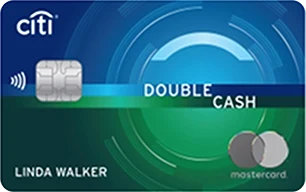
The Double Cash works slightly differently: you earn 1% when you make a purchase and another 1% when you pay the bill, totaling 2%. This structure subtly rewards on-time, in-full payment behavior. More importantly, the Double Cash earns Citi ThankYou Points if you also hold the Citi Strata Premier — meaning your 2% flat rate can be converted into transferable points worth potentially 1.5–2 cents each, dramatically increasing the card's ceiling value. The full Citi Double Cash review walks through the best redemption paths.
Who should get a flat-rate card?
- People who don't want to think about categories
- Those with diverse spending with no dominant category
- Beginners building their credit card foundation
- Anyone who wants a reliable catch-all card to pair with category cards
The main trade-off is opportunity cost: in categories like groceries or dining, category-specific cards routinely beat 2% by 2–4x. But for purchases that don't fit any bonus category — hardware stores, insurance payments, medical bills — a 2% flat card is often the best available option.
Category cards: earning 3%–6% on targeted spending
Category cards sacrifice breadth for depth. Instead of earning 2% everywhere, they deliver 3%, 5%, or even 6% in specific spending areas — with the understanding that you'll earn less (often 1%) outside those categories.
The Amex EveryDay is the star for grocery spenders. It pays 6% cash back at U.S. supermarkets on up to $6,000 in purchases per year (then 1%), plus 6% on select U.S. streaming subscriptions, 3% at U.S. gas stations, and 3% on transit. The $95 annual fee is the key variable — more on that math in the next section.
The Custom Cash takes a different approach with elegant automation: it pays 5% cash back on your highest spending category each billing cycle, up to $500 in spending (earning $25 maximum in that category). The 5% applies automatically to whichever of ten eligible categories — restaurants, gas stations, grocery stores, select travel, select transit, select streaming, drugstores, home improvement stores, fitness clubs, or live entertainment — you spend the most in that month. This makes it uniquely adaptable without any action required from you.
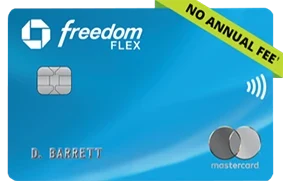
The Freedom Flex pays 5% on up to $1,500 in quarterly rotating categories (which must be activated each quarter), 5% on Chase travel portal bookings, 3% on dining and drugstores, and 1.5% on everything else. Chase's rotating categories historically have included grocery stores, gas stations, PayPal, Amazon, wholesale clubs, streaming services, and more. The card has no annual fee, and when paired with a Chase Sapphire card, the cash back converts to Ultimate Rewards points. When Amazon or PayPal is the active category, it doubles as one of the best credit cards for online shopping.
The SavorOne earns 3% on dining, entertainment, popular streaming, and grocery stores (excluding Walmart and Target) with no annual fee. "Entertainment" is defined broadly: movie theaters, sporting events, concerts, amusement parks, tourist attractions, and aquariums. For people who regularly go out or entertain at home, this card captures a wide swath of lifestyle spending at 3%. The full Capital One Savor review covers its dining sweet spots in detail.
Annual fee math: does the Amex Blue Cash Preferred pay off?
The Amex EveryDay carries a $95 annual fee. The question isn't whether $95 is a lot — it's whether the elevated rewards justify the fee compared to a no-fee alternative.
The breakeven calculation:
The best no-fee alternative for groceries is a 2% flat-rate card like the Active Cash. The Blue Cash Preferred earns 6% at U.S. supermarkets; the Active Cash earns 2%. The difference is 4 cents per dollar.
To break even on the $95 fee from grocery rewards alone:
- $95 ÷ $0.04 = $2,375 in annual U.S. supermarket spending
- That's roughly $198/month at supermarkets
The average American household spends approximately $5,200/year on groceries. At that level:
- Blue Cash Preferred earns: $312 (on the $6,000 cap — you'd need $6K+ to hit the cap)
- Wells Fargo Active Cash earns: $104 on the same $5,200
- Advantage: $208, minus $95 fee = $113 net annual benefit
The math gets even more favorable when you factor in 6% on streaming services and 3% at gas stations. A typical household paying $50/month in streaming ($600/year) gains another $24 over a 2% card. Add $1,200/year in gas at 3% vs 2% = another $12/year.
Total annual advantage (typical household): $149 net after fee
The Blue Cash Preferred makes financial sense for most households spending $200+/month at U.S. supermarkets. Below that threshold, a no-fee 2% card wins.
Chase Freedom ecosystem: stacking for maximum value
One of the most powerful strategies in cash back optimization is building a complementary card stack. Chase's Freedom cards are purpose-built for this.
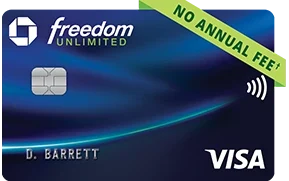
The Freedom Unlimited earns 1.5% on general purchases, 3% on dining and at drugstores, and 5% on Chase Travel portal bookings. Its primary role in a stack is as the catch-all card that beats a standard 2% card on dining (3% vs 2%) while providing decent baseline rewards everywhere else.
The Freedom Flex layers on top with rotating 5% categories. When Chase activates grocery stores as a quarterly category (which happens periodically), the Flex becomes the go-to grocery card that rivals the Blue Cash Preferred — without the annual fee, albeit with the $1,500/quarter cap.
A two-card no-annual-fee stack:
- Freedom Flex for 5% rotating categories + 3% dining
- Active Cash for everything else at 2%
Upgrade path with Chase Sapphire: Adding a Sapphire Preferred or Sapphire Reserve to the stack converts all Freedom earnings from cash back to Ultimate Rewards points transferable to airlines and hotels. At 1.5–2 cents per point, this can double the effective value of your Freedom card earnings. Not sure which Sapphire to anchor the stack? Our Sapphire Preferred vs Sapphire Reserve comparison breaks down the fee and point-value math.
Best pairing combos for 2026
Strategic pairing lets you cover your major spending categories at elevated rates while using a flat-rate card as the universal fallback.
The no-fee maximizer combo:
- Custom Cash — 5% on your top category automatically
- SavorOne — 3% dining, entertainment, groceries
- Active Cash — 2% on everything else Combined effective rate on typical household spending: ~2.8–3.2%
The grocery + dining power combo:
- Amex EveryDay — 6% groceries, 6% streaming, 3% gas
- Freedom Unlimited — 3% dining, 1.5% everything else Best for households spending $300+/month on groceries
The rotating category optimizer:
- Freedom Flex — 5% rotating categories (activated quarterly)
- Custom Cash — 5% on your second-highest category
- Double Cash — 2% catch-all (pairs with Citi Strata for points) Most reward potential but requires active management
The simple two-card setup:
- Amex EveryDay — elevated bonus categories
- Double Cash — 2% on everything the Amex doesn't cover Lower cognitive load, strong grocery rewards, good all-around baseline
Comparison table: key specs side by side
| Card | Base Rate | Top Rate | Annual Fee | Top Category Cap |
|---|---|---|---|---|
| Active Cash | 2% everywhere | 2% | $0 | None |
| Double Cash | 2% everywhere | 2% | $0 | None |
| Freedom Unlimited | 1.5% | 3% dining | $0 | None |
| Freedom Flex | 1% | 5% rotating | $0 | $1,500/quarter |
| Custom Cash | 1% | 5% top category | $0 | $500/month |
| SavorOne | 1% | 3% dining/entertainment | $0 | None |
| Amex EveryDay | 1% | 6% supermarkets | $95 | $6,000/year |
What cash back cards don't do well
Cash back cards are excellent tools for most everyday spending, but they have real limitations worth acknowledging before committing.
No path to outsized redemption value. A 2% cash back card earns exactly 2 cents per dollar — always. Travel rewards cards, by contrast, can deliver 3–6 cents per dollar when points are transferred to airline or hotel partners. If you travel at least once or twice a year and are willing to learn how to use transferable points, the ceiling for travel cards is substantially higher.
Spending caps reduce predictability. The Custom Cash's 5% is capped at $500/month, the Freedom Flex's 5% is capped at $1,500/quarter, and the Amex EveryDay's 6% stops at $6,000/year at supermarkets. Heavy spenders in those categories quickly hit the caps and earn only 1% on excess spending — sometimes making a flat-rate card the better option at volume.
Category restrictions can be arbitrary. "U.S. supermarkets" on the Blue Cash Preferred excludes Walmart, Target, and wholesale clubs like Costco and Sam's Club. "Dining" definitions vary by issuer. Always verify that your preferred merchants code correctly in the bonus category before relying on elevated earnings.
Bottom line
For most people, the best starting point is a no-annual-fee 2% card — either the Active Cash or Double Cash — as a foundation, then layering a category card like the Custom Cash or SavorOne on top. Households spending $200+/month at U.S. supermarkets should run the numbers on the Amex Blue Cash Preferred, where the $95 fee typically pays for itself several times over. The best cash back setup is usually two to three complementary cards — not one perfect card. If you're just starting out, the best cashback cards for newcomers guide explains how to build your wallet from scratch, and no-annual-fee options offers a broader comparison of zero-cost cards.
Get weekly card offer alerts
Sunday digest of elevated bonuses. One email, zero spam.
Cards mentioned in this guide
Frequently asked questions
What is the best flat-rate cash back credit card in 2026?
Is the Amex Blue Cash Preferred worth the $95 annual fee?
What is the difference between Chase Freedom Flex and Chase Freedom Unlimited?
How does the Citi Custom Cash 5% category work?
What spending counts as "dining" on cash back credit cards?
Can I pair the Citi Double Cash with other Citi cards to get more value?
Do Walmart and Costco purchases qualify for grocery cashback?
How many cash back cards should I have at once?
Are cash back rewards taxable income?
What is the best cash back card for someone with no credit history?
Related guides
Related news

chase · Jun 9, 2026
Chase Disney Inspire Visa Launch: $99 AF, $400 Welcome — Is It Worth a 5/24 Slot?

chase · Jun 2, 2026
Chase 20% Flying Blue Bonus May 2026: Retrospective

chase · Jun 2, 2026
Chase Sapphire Reserve 150K Welcome Offer 2026
chase · Jun 2, 2026
Chase Ultimate Rewards 2026: Cash-Back + Points Boost