Amex Gold vs Citi Strata Premier vs Chase Sapphire
There is no universal winner among these three mid-tier transferable-points cards — the right one depends on your spend. Amex Gold ($325 AF) wins for dining and US groceries (4x each, groceries up to $25K/year), but only if you use its monthly credits. Citi Strata Premier ($95 AF) wins on breadth — 3x on dining, groceries, gas, and air travel plus 10x on portal hotels. Chase Sapphire Preferred ($95 AF) is the pick for transferable-points beginners because it is the only one here that transfers 1:1 to World of Hyatt.
On this page▾

Three transferable-points cards. Annual fees from $95 to $325. The mid-tier travel-card decision most points-game readers actually need before they touch a Sapphire Reserve or Amex Platinum.
This is the comparison most points-game beginners skip past — and the one that ends up costing them $300-$700 of annual value because they picked the wrong "first transferable-points card." Amex Gold at $325 AF, Citi Strata Premier at $95 AF, and Chase Sapphire Preferred at $95 AF all earn transferable points, all sit in the $95-$325 mid-tier, and all win a specific spend profile. There is no universal winner.
The honest answer: this is a dining-vs-portal-vs-transit decision, not a single card decision. Below are the math for three traveler profiles, the credits that pay back vs the ones that look good on paper, the once-per-lifetime traps on each, and a four-question framework that lands you on one card. For the premium-tier ($395+) equivalent of this decision — Venture X vs CSR vs Amex Platinum — see that pillar; this guide is its mid-tier counterpart.
Quick answer
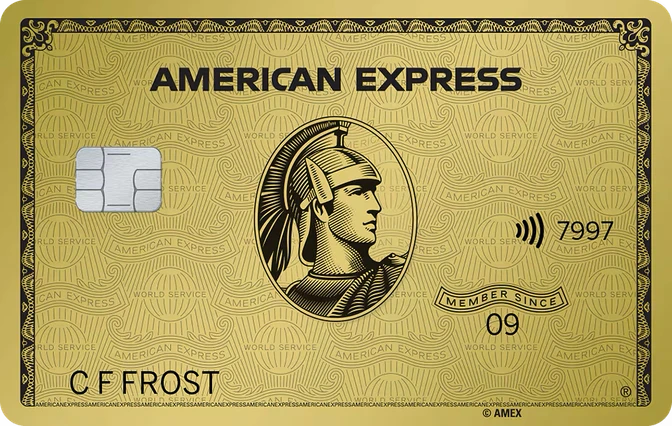
Amex Gold wins for dining and U.S. grocery earn. $325 AF (after the 2026 refresh from $250), 4× on dining worldwide, 4× on U.S. groceries up to $25K/year, and $424 of theoretical credits ($120 Uber + $120 dining + $84 Dunkin + $100 Resy). Math works if you spend $8K+/year combined on dining + groceries AND you'll use the monthly credits. Without realistic credit realisation, the $325 AF eats most of the earn benefit.
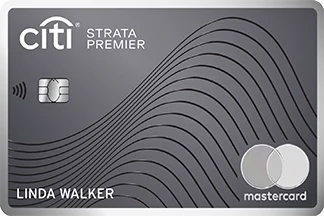
Citi Strata Premier wins on broad-category coverage at $95 AF. 10× on hotels and car rentals booked through Citi Travel, 3× on dining + groceries + gas + air travel (all booked direct). The breadth is unique — no other card at this AF earns 3× on five categories simultaneously. Loses on partner depth: no Hyatt transfer (huge), no United transfer.
Chase Sapphire Preferred wins for transferable-points beginners with Hyatt ambitions. $95 AF, 5× on Chase Travel, 3× on dining + online groceries + streaming, 2× on direct travel, $50 hotel credit, and the only card here that transfers 1:1 to World of Hyatt — typically the highest cents-per-point redemption in the points game.
At a glance
| Amex Gold | Citi Strata Premier | Chase Sapphire Preferred | |
|---|---|---|---|
| Annual fee | $325 | $95 | $95 |
| Welcome bonus (cash value) | ~$1,200 (60K MR) | ~$1,000 (75K TY) | ~$750 (60K UR) |
| Minimum spend | $4,000 / 6 mo | $4,000 / 3 mo | $4,000 / 3 mo |
| Dining earn | 4× worldwide | 3× restaurants worldwide | 3× restaurants worldwide |
| U.S. groceries earn | 4× (cap $25K/yr) | 3× supermarkets | 3× online groceries only |
| Streaming earn | — | — | 3× |
| Gas earn | — | 3× gas | — |
| Air travel earn | 3× (booked through Amex Travel) | 3× direct booking | 2× direct, 5× Chase Travel |
| Hotel earn — portal | 2× via Amex Travel | 10× via Citi Travel | 5× via Chase Travel |
| Hotel earn — direct | 1× | 1× | 2× direct |
| Car rentals — portal | — | 10× via Citi Travel | 5× via Chase Travel |
| Transferable to Hyatt 1:1 | No | No | Yes |
| Transfer partners total | 20 (Air France/KLM, Aer Lingus, Aeromexico, Air Canada Aeroplan, ANA, Avianca, British Airways, Cathay, Delta, Emirates, Iberia, JetBlue, Qantas, Qatar Airways, Singapore, Virgin, Choice, Hilton, Marriott, Leaders Club) | 11 (Air France, Avianca, Cathay, Choice, Emirates, Etihad, EVA, JetBlue, Singapore, Thai, Wyndham) | 14 (Aer Lingus, Air Canada, Air France/KLM, British Airways, Iberia, JetBlue, Singapore, Southwest, United, Virgin, Hyatt, IHG, Marriott, Wyndham) |
| Chase 5/24 gate | No | No | Yes |
| Once-per-lifetime SUB | Yes (personal Gold family) | Citi 48-month language | Chase 48-month language |
The 10× on Citi Travel and 5× on Chase Travel are eye-catching but conditional on portal bookings. If you primarily book direct with Hilton or Marriott (for elite-status earning), the headline 10× and 5× numbers collapse to the 3× direct rate on Citi and 2× direct on CSP. Math below.
How the mid-tier earn rates actually compare
The three cards optimise for different spend profiles. Here's the per-category breakdown showing which earn rate wins each bucket:
Dining (worldwide): Amex Gold (4×) beats both 3× alternatives. For $8K/year of dining spend, the 1× extra multiplier = 8,000 MR ≈ $120/year of additional value. That's meaningful but not enough to overcome the $230 AF delta vs CSP/Strata alone — needs credits to close the gap.
U.S. groceries: Amex Gold (4× up to $25K) beats Citi Strata Premier (3× supermarkets) beats CSP (3× online-only). For most readers spending $4K-$6K/year on groceries, Gold's edge is ~$80-$120/year. CSP's online-only restriction is the killer — physical grocery store spend on CSP earns 1×.
Streaming: CSP is the only card here with 3× streaming. Worth ~$30-$60/year on typical streaming spend.
Gas: Citi Strata Premier is the only card here with a 3× gas category. Worth $30-$90/year on typical gas spend ($1K-$3K/year).
Hotels via portal: Citi Strata Premier (10×) > CSP (5× via Chase Travel) > Amex Gold (2× via Amex Travel). On $3K/year of portal hotel bookings, Strata earns 30K TY ≈ $390, CSP earns 15K UR ≈ $225, Gold earns 6K MR ≈ $90. But portal-only — direct bookings to chains for elite credit collapse this gap.
Air travel: Citi Strata Premier (3× direct) beats CSP (2× direct, 5× portal) on direct flights, but loses on portal. Amex Gold's 3× only applies on Amex Travel portal bookings.
Who this card is for
Amex Gold is for you if you spend $6,000+/year on dining and another $4,000+/year on groceries (so the 4× categories accrete meaningfully), you'll consistently use the $120 Uber + $120 dining + $84 Dunkin + $100 Resy credits monthly (otherwise the $325 AF is brutal), and you want access to the broader Amex MR transfer partner list (Air France for Europe, ANA for Japan-via-Star-Alliance, Hawaiian via Hawaiian transfer). Skip if you eat at home and don't UberEats.
Citi Strata Premier is for you if you book travel mostly direct with airlines/hotels (3× direct travel beats CSP's 2× direct), you have ≥$3K/year of gas spend (only card with the 3× gas category), you book some hotel/rental nights through a travel portal (10× via Citi Travel beats every alternative), and you don't need Hyatt transfers as your endgame. Citi's transfer partner list is thinner than Chase or Amex — best for non-Hyatt redemptions.
Chase Sapphire Preferred is for you if you're under Chase 5/24, you're a World of Hyatt loyalist (the 1:1 transfer is the single highest-value redemption in the points game — see Hyatt award chart 2026), you'll book at least $2K/year through Chase Travel (5× there), and you eventually want to build the full Chase Sapphire Trifecta (CSP + CFU + CFF).
Who should avoid each
Skip Amex Gold if your dining + grocery spend is under $5,000/year combined OR you won't track the monthly $10 Uber, $10 dining, $7 Dunkin credits. The credit calendar is the difference between Gold being worth $400/year and Gold being worth $50/year. Calendar-blind users routinely report Gold as "not worth it" — and they're right, for their realisation rate.
Skip Citi Strata Premier if Hyatt redemptions are your endgame. Strata's TY points do not transfer to Hyatt at any ratio. The Choice Privileges transfer (1:2) can yield 0.5-0.9¢/point at off-the-radar properties, but it's not Hyatt-tier. Also skip if your travel is all booked direct — Strata's 10× portal rate is its single biggest pull, and you don't get it on direct bookings.
Skip Chase Sapphire Preferred if you're over 5/24. CSP is auto-denied. The hard inquiry from a denied application damages your credit profile and burns your "next application" slot. Also skip if you don't book through Chase Travel — the 5× portal earn is CSP's marquee category, and direct travel only earns 2×.
Three real-world scenarios with full math
A methodology note: I value MR at 1.5¢, TY at 1.4¢, UR at 1.5¢ — the realistic blended rates for casual-to-moderate transfer users. Premium redemptions push these to 2-3¢ but require specific airline programs and saver-award availability.
Scenario A — Dining-heavy NYC, no business
Profile: Maya, NYC, 3 round-trip flights/year, 2 hotel stays. $36,000/year card spend (breakdown: $9K dining + delivery, $5K groceries, $3K travel, $19K everything else). Under 5/24.
Recommended: Amex Gold. The dining + grocery 4× on $14K of combined spend is the engine.
| Amex Gold | Citi Strata Premier | Chase Sapphire Preferred | |
|---|---|---|---|
| Welcome bonus | $1,200 | $1,000 | $750 |
| $9K dining @ 4×/3×/3× | 36K MR ≈ $540 | 27K TY ≈ $378 | 27K UR ≈ $405 |
| $5K groceries @ 4×/3×/0× | 20K MR ≈ $300 | 15K TY ≈ $210 | 5K UR ≈ $75 (not online) |
| $3K travel @ 1×/3×/2× | $45 | $126 | $90 |
| $19K everything else @ 1× | $285 | $266 | $285 |
| Realised credits | $300 (Uber + dining + Dunkin) | $0 | $50 (hotel credit) |
| Annual fee | −$325 | −$95 | −$95 |
| Year 1 net | ~$2,345 | ~$1,885 | ~$1,560 |
| Year 2 net (no SUB) | ~$1,145 | ~$885 | ~$810 |
Amex Gold wins Year 1 by $460 and Year 2 by $260. The 4× dining/grocery delta on $14K of spend is worth $360/year — enough to overcome the $230 AF premium AND deliver value beyond it.
Verdict for Maya: Amex Gold. The 4× categories match her spend profile. She doesn't have the travel volume to justify CSP's Hyatt path (she'd only have 30K UR/year to transfer).
Scenario B — Travel-skewed Dallas, gas-heavy commuter
Profile: Daniel, Dallas, 8 round-trip flights/year, 5 hotel stays. $54,000/year card spend (breakdown: $4K dining, $3K groceries, $4K gas, $5K direct travel, $4K portal hotel bookings, $34K everything else). Under 5/24. American Airlines flyer (not Hyatt loyal).
Recommended: Citi Strata Premier. The 3× gas + 10× portal hotel + 3× direct travel combo matches Daniel's spend profile.
| Amex Gold | Citi Strata Premier | Chase Sapphire Preferred | |
|---|---|---|---|
| Welcome bonus | $1,200 | $1,000 | $750 |
| $4K dining @ 4×/3×/3× | $240 | $168 | $180 |
| $3K groceries @ 4×/3×/0× | $180 | $126 | $45 (1×) |
| $4K gas @ 0×/3×/0× | $0 | $168 | $0 |
| $5K direct travel @ 0×/3×/2× | $0 | $210 | $150 |
| $4K portal hotel @ 0×/10×/5× | $0 | $560 | $300 |
| $34K everything else @ 1× | $510 | $476 | $510 |
| Realised credits | $200 (partial Uber + dining) | $0 | $50 (hotel credit) |
| Annual fee | −$325 | −$95 | −$95 |
| Year 1 net | ~$2,005 | ~$2,613 | ~$1,890 |
| Year 2 net (no SUB) | ~$805 | ~$1,613 | ~$1,140 |
Citi Strata Premier wins Year 1 by $608 and Year 2 by $808 — driven by the gas, direct-travel, and 10× portal hotel categories. The breadth of Strata's 3× categories matches Daniel's diversified spend better than Gold's narrow dining/grocery focus or CSP's portal-heavy structure.
Verdict for Daniel: Citi Strata Premier. The 10× on Citi Travel portal bookings alone earns $560/year on his $4K hotel portal spend.
Scenario C — Hyatt-loyal SF urbanite
Profile: Jordan, San Francisco, 12 round-trip flights/year, 8 hotel stays (3-4 Park Hyatt nights via points), $66,000/year card spend (breakdown: $6K dining, $4K groceries, $2K streaming, $6K travel direct, $4K Chase Travel portal, $44K everything else). Under 5/24. World of Hyatt loyalist with annual aspirational Park Hyatt redemption.
Recommended: Chase Sapphire Preferred. The Hyatt 1:1 transfer is the redemption engine — none of the other cards reach it.
| Amex Gold | Citi Strata Premier | Chase Sapphire Preferred | |
|---|---|---|---|
| Welcome bonus | $1,200 | $1,000 | $750 |
| $6K dining @ 4×/3×/3× | $360 | $252 | $270 |
| $4K groceries @ 4×/3×/online-only | $240 | $168 | $60 (1× physical) |
| $2K streaming @ 0×/0×/3× | $0 | $0 | $90 |
| $6K direct travel @ 0×/3×/2× | $0 | $252 | $180 |
| $4K portal travel @ 0×/10×/5× | $0 | $560 | $300 |
| $44K everything else @ 1× | $660 | $616 | $660 |
| Hyatt transfer arbitrage (1 × 4-night Park Hyatt redemption: 100K UR → $2,800 of hotel value, instead of $1,500 at 1.5¢) | $0 | $0 | +$1,300 (delta over portal redemption) |
| Realised credits | $200 | $0 | $50 |
| Annual fee | −$325 | −$95 | −$95 |
| Year 1 net | ~$2,335 | ~$2,753 | ~$3,565 |
| Year 2 net (no SUB) | ~$1,135 | ~$1,753 | ~$2,815 |
CSP wins by $812 in Year 1 and $1,062 in Year 2 — almost entirely on the Hyatt transfer arbitrage. Without that single redemption per year, CSP is the worst card of the three for Jordan. With it, CSP is the clear winner.
Verdict for Jordan: Chase Sapphire Preferred. The Hyatt 1:1 redemption alone delivers ~$1,300/year of incremental value vs. the same UR cashed out via Chase Travel. The 5× Chase Travel category catches her portal spend.
Common mistakes
1. Buying Amex Gold for the welcome bonus then not using the monthly credits. The $120 Uber, $120 dining, $84 Dunkin, $100 Resy credits drop in $10/$10/$7/$8 monthly increments. Forgetting a month doesn't bank for later — it's lost permanently. Gold-holders who track these credits realise ~$400/year of value; Gold-holders who don't realise ~$80/year. The $325 AF is the same.
2. Booking through Citi Travel for the 10× rate without checking direct prices. Citi Travel often shows 10-30% higher rates than booking direct at major chains. The 10× earn is real but the price premium often eats the benefit. Always price-shop before committing.
3. Holding CSP but not opening the Freedom cards. CSP alone captures the transfer engine but loses the 1.5× catch-all (CFU) and the 5× quarterly rotating (CFF). Solo CSP is fine; CSP-trifecta is meaningfully better. See Chase Sapphire Trifecta 2026 for the full system.
4. Closing CSP within 12 months to "save" the $95 AF. Chase claws back the welcome bonus. The right move if AF doesn't justify Year 2: product-change to Chase Freedom Unlimited or Flex. Keeps account history, keeps UR transfer pool intact (via any remaining Sapphire), no AF.
5. Earning Amex Gold SUB and re-applying years later expecting the bonus again. Personal Gold is once-per-lifetime by Customer ID. Once earned, never again. Apply for Amex Business Gold for a separate SUB if you have business activity.
6. Counting CSP's $50 hotel credit before earning it. The $50 statement credit triggers on Chase Travel portal bookings only. If you book all hotels direct, the credit never lands — and you've effectively paid $145 AF instead of $95.
7. Treating "transferable points" as fungible across the three cards. They're not. MR doesn't transfer to Hyatt (CSP territory). UR doesn't transfer to Air France with the same ratio as MR. TY doesn't transfer to United. Pick your card based on your actual transfer endgame, not the abstract "points are points" framing.
Decision framework
Q1: Are you a World of Hyatt loyalist or aspirational Hyatt redeemer?
- Yes → Chase Sapphire Preferred (only one with Hyatt 1:1 path). If over 5/24, see Chase 5/24 Workaround.
- No → Q2.
Q2: Do you spend $6,000+/year on dining + groceries combined AND will you use the $300+ of monthly Amex credits?
- Yes → Amex Gold. The 4× categories pay off only with that spend volume.
- No → Q3.
Q3: Do you book travel mostly direct (not through portals) AND have $3K+/year of gas spend?
- Yes → Citi Strata Premier. Best on direct flights, only card with 3× gas.
- No → Q4.
Q4: Do you book at least 30-40% of your travel through a portal?
- Yes, Chase Travel → CSP (5× portal).
- Yes, Citi Travel → Strata Premier (10× portal hotels).
- No (all direct) → Strata Premier (3× direct travel + gas is the broadest direct-booking earn structure).
Run your own math
For first-year + ongoing value math: Annual Fee Calculator. Plug your real spend split and credit-realisation assumption to see which card wins your profile.
For points valuation across redemption paths: Points Calculator. Stress-tests the assumption that you'll actually transfer points to a high-value partner.
For broader card discovery: Card Finder walks 8 questions and surfaces the cards that fit your profile across all issuers.
Frequently asked questions
Which mid-tier transferable-points card is best for beginners? Default to Chase Sapphire Preferred if you're under 5/24, primarily for the 1:1 Hyatt transfer path. Default to Citi Strata Premier if you're over 5/24, primarily for the broader category coverage at the same $95 AF. Default to Amex Gold only if you spend $6,000+/year on dining + groceries combined and will use the monthly credits — otherwise the $325 AF is hard to justify at the mid-tier.
Is Amex Gold worth $325 AF after the 2026 refresh? Math-dependent. The $324 of theoretical credits ($120 Uber + $120 dining + $84 Dunkin + $100 Resy = $424 actually after Resy was added) roughly offsets the AF if fully realised. The 4× dining + groceries on $10K-$15K of qualifying spend adds $300-$500 of real value. So Gold can net $300-$600/year of value for the right user. Wrong user: $50-$150/year.
Can I transfer Citi ThankYou Points to Hyatt? No. Citi TY does not partner with Hyatt at any ratio. The closest hotel transfer is Choice Privileges at 1:2 (so 20K TY = 40K Choice points) for off-the-radar Choice/Cambria/Ascend properties. For Hyatt-tier value, you need Chase UR or Bilt points.
Does Chase Sapphire Preferred earn 3× on online groceries from any merchant? Yes, but only on merchants Chase classifies as "online grocery." This includes Whole Foods, Instacart, Walmart Grocery delivery, Amazon Fresh, and most direct grocery-store online ordering. Excludes physical store purchases (those earn 1× on CSP) and meal-kit services like HelloFresh (which earn 1× as well).
Should I get Amex Gold or Chase Sapphire Preferred for first transferable-points card? Depends on spend profile. For dining-heavy spenders ($6K+/year on dining): Amex Gold. For travel-heavy spenders booking through Chase Travel or wanting Hyatt redemptions: CSP. For most readers spending under $4K/year on dining and not specifically Hyatt-loyal: CSP at $95 is the safer bet.
How is Citi Strata Premier different from the old Citi Premier? Strata Premier (launched 2024) is the renamed/refreshed Citi Premier card. Same $95 AF. Added 10× on Citi Travel portal bookings (new), kept the 3× on restaurants/groceries/gas/air. The Premier is a discontinued name — applications now go to Strata Premier.
Can I have all three cards at once? Yes. No cross-issuer family rules. Combined AF: $515 ($325 + $95 + $95). Justifiable only if you'll capture welcome bonuses across all three within 18 months ($2,950 combined) AND if your spend pattern uses each card's strongest category. Most readers run one or two of these cards, not all three.
When should I upgrade from a mid-tier card to a premium card (CSR or Amex Platinum)? When your annual travel volume crosses the threshold where the premium card's credits + multipliers exceed the AF delta. For CSR ($795 AF vs CSP $95 = $700 delta): you need ≥$8K/year of Chase Travel portal spend AND realised credits + lounge access. For Amex Platinum ($895 AF vs Amex Gold $325 = $570 delta): you need consistent Centurion Lounge usage at a hub airport AND high credit realisation. See Venture X vs CSR vs Amex Platinum for the premium-tier decision math.
Sources reviewed
- Amex Gold card terms and benefits guide (American Express, accessed June 2026) — $325 AF, 4× dining/U.S. groceries, $424 in credits breakdown
- Citi Strata Premier benefits page (Citibank, accessed June 2026) — 10× Citi Travel, 3× dining/groceries/gas/air, 11 transfer partners
- Chase Sapphire Preferred benefits and rewards page (Chase, accessed June 2026) — $95 AF, 5× Chase Travel, Hyatt 1:1 transfer, $50 hotel credit
- World of Hyatt award chart (Hyatt, accessed June 2026) — Park Hyatt Tokyo peak rate 25,000 points/night (Cat. 7), confirming 100K UR = 4 nights at ~$800-1,200/night rack rate
- The Points Guy valuation table (May 2026) — MR $0.015, UR $0.015, TY $0.014 used in all scenario math above
Last updated: 2026-06-10
Where to go from here
For card-by-card detail: Amex Gold, Citi Strata Premier, Chase Sapphire Preferred.
For pair comparisons with live numbers: Amex Gold vs Chase Sapphire Preferred, Chase Sapphire Preferred vs Citi Strata Premier, Amex Gold vs Citi Strata Premier.
For the premium-tier counterpart of this decision: Venture X vs CSR vs Amex Platinum — same decision-tree structure, one tier up.
For ecosystem strategy: Chase Sapphire Trifecta 2026 extends CSP into a 3-card system; Amex Trifecta 2026 does the same for Amex Gold.
For approval mechanics: Chase 5/24 Rule Explained and Chase 5/24 Workaround Strategy cover the over-5/24 path that takes CSP off the table.
For redemption strategy once you have a transferable-points stash: 100K Chase Points: $1,000 or $3,000? and Hyatt Award Chart 2026 cover the transfer-arbitrage math.
Get weekly card offer alerts
Sunday digest of elevated bonuses. One email, zero spam.
Cards mentioned in this guide




Frequently asked questions
Which mid-tier transferable-points card is best for beginners?
Is Amex Gold worth $325 AF after the 2026 refresh?
Can I transfer Citi ThankYou Points to World of Hyatt?
Does Chase Sapphire Preferred earn 3× on online groceries from any merchant?
Should I get Amex Gold or Chase Sapphire Preferred as my first transferable-points card?
How is Citi Strata Premier different from the old Citi Premier?
Can I have all three cards (Gold + Strata + CSP) at once?
When should I upgrade from a mid-tier card to a premium card (CSR or Amex Platinum)?
Related guides
Strategy
Venture X vs Chase Sapphire Reserve vs Amex Platinum: Which Premium Card Earns Its Fee in 2026?
13 min
Card Roundups
Best Credit Cards for Commuters and City Transit 2026
10 min
Rules & Mechanics
Primary vs Secondary Rental Car Coverage: Which Cards Give You Primary
9 min
Rewards Programs
Flights to Hawaii on Points: Every Program That Works from the Mainland
11 min
Related news

bilt · Jun 2, 2026
Bilt Palladium vs CSR vs Amex Platinum 2026 ($495/$795/$895)

airlines · Jun 2, 2026
Credit Card Transfer Bonuses Mid-2026: H1 Drought Recap

airlines · Jun 2, 2026
Aeroplan 2026: SQC Status and June 1 Devaluation

industry · Jun 2, 2026
Travel Rewards Devaluations 2026: Every Major Loyalty Program Change This Year
Cards in this ecosystem




Considering switching?