Chase Trifecta 2026: Sapphire + 2 Freedoms (Full Math)
The Chase Trifecta is one Chase Sapphire card (Preferred or Reserve) plus the no-annual-fee Chase Freedom Unlimited and Freedom Flex. The Freedoms earn 1.5–5x, and you route their points into the Sapphire to unlock 1:1 transfers to partners like Hyatt and United. Apply for the Sapphire first while under 5/24, then add the Freedoms. Anchor with the $95 Chase Sapphire Preferred unless you spend heavily through Chase Travel and will use the Reserve credits.
On this page▾
Last updated: June 2026.
Three Chase cards. One Ultimate Rewards account. Up to 8× back on travel, 5× on rotating quarterly categories, and 1.5× on absolutely everything else — if you route every dollar of spend through the right card.
The Chase Sapphire Trifecta is the most-copied points-game playbook in the US — and the most botched. Most readers hold the three cards, charge spend the way they always have, and capture maybe 40% of the available Ultimate Rewards earn. The trifecta only works if every card plays a specific role, and if your points get pooled into the premium Sapphire before they ever transfer to a partner.
This is the full 2026 playbook — after Chase's spring refresh pushed Sapphire Reserve to $795 AF, kept Sapphire Preferred at $95, and left Freedom Unlimited and Freedom Flex untouched at $0. Three traveler profiles with full math. The application order that captures all three welcome bonuses without burning your Chase 5/24 slots. The spend allocation that hits 6-7× blended earn. And the seven mistakes that quietly cost the average trifecta-holder $500–$1,200 per year.
Quick answer
The Trifecta is two no-AF Freedoms plus one Sapphire. Pick the Sapphire that matches your travel volume:
Sapphire Preferred + Freedom Unlimited + Freedom Flex — $95 total AF. The canonical trifecta. Best for travelers booking $4,000–$8,000/year through Chase Travel who want full transfer-partner access without the premium-credit calendar. CSP carries the transfer engine; the two Freedoms feed it raw Ultimate Rewards.
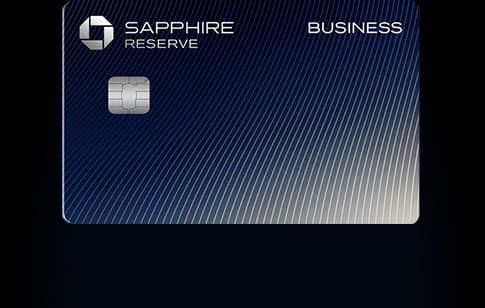
Sapphire Reserve + Freedom Unlimited + Freedom Flex — $795 total AF. Only makes sense if you'll book ≥$8,000/year through Chase Travel (8× back via CSR), use both the $300 travel credit AND the new $500 Edit by CSR luxury-hotel credit, and value Sapphire Lounge access at your hub airport (NYC JFK T4, BOS, LAS, PHX, IAH, HKG and expanding).
The real point of the trifecta isn't holding all three cards. It's routing every dollar to the highest-earning UR card and then transferring those pooled points to a partner that values them above 1.5¢ each. Without the transfer step, you're capturing about half the available value. The math is below.
At a glance
| Sapphire Preferred | Sapphire Reserve | Freedom Unlimited | Freedom Flex | |
|---|---|---|---|---|
| Annual fee | $95 | $795 | $0 | $0 |
| Welcome bonus (cash value) | ~$940 (75K UR) | ~$1,500 (100K UR — down from the best-ever 150K on June 15, 2026) | ~$200 cash | ~$200 cash |
| Minimum spend | $5,000 / 3 mo | $6,000 / 3 mo | $500 / 3 mo | $500 / 3 mo |
| Chase Travel (portal) earn | 5× | 8× | 5× | 5× |
| Dining | 3× | 3× direct | 3× | 3× |
| Travel direct (non-portal) | 2× | 3× | 1× | 1× |
| Online groceries | 3× | — | — | — |
| Streaming | 3× | — | — | — |
| Catch-all earn | 1× | 1× | 1.5× | 1× |
| Rotating quarterly 5× | No | No | No | Yes ($1,500 cap) |
| Transfers to Hyatt | 4:3 from Oct 1, 2026 (1:1 until then) | 1:1 always | Only after pooling to Sapphire | Only after pooling to Sapphire |
| Chase 5/24 gate | Yes | Yes | Yes | Yes |
CSP and CSR look similar on Chase Travel because both earn the multiplier through the portal. The 8× vs. 5× delta only matters if your Chase Travel spend is high enough that the difference outweighs the $700 AF gap. Math on that below in Scenario C.
Trifecta earn-rate cheat sheet
| Spend category | Best trifecta card | Earn |
|---|---|---|
| Chase Travel portal | CSR (or CSP) | 8× / 5× |
| Flights & hotels (direct) | CSR (or CSP) | 4× / 2× |
| Dining & takeout | any of the three | 3× |
| Rotating quarterly bonus | Freedom Flex (activated) | 5× (≤$1,500/qtr) |
| Online groceries / streaming | Sapphire Preferred only | 3× |
| Everything else | Freedom Unlimited | 1.5× |
How the trifecta actually works
Three rules govern the system. Get these right and the trifecta earns; get any one wrong and you're holding a worse version of just-the-Sapphire.
Rule 1: Use each card for its highest-earning category. Period.
- Dining: any Sapphire or Freedom (all 3×) — but use Freedom Flex if dining is the current quarter's 5× bonus
- Online groceries: Sapphire Preferred only (3×; CSR dropped this category in 2026)
- Streaming: Sapphire Preferred only (3×)
- Rotating quarterly category: Freedom Flex (5× up to $1,500 of spend per quarter)
- Chase Travel portal bookings: CSR if you have it (8×), otherwise CSP (5×)
- Direct flights/hotels: CSR (3×) or CSP (2×)
- Everything else: Freedom Unlimited (1.5×)
Rule 2: Pool all points into the Sapphire before transferring. Freedom UR points are not directly transferable to airlines and hotels. You move them to the Sapphire account first (free, instant, through the Chase Ultimate Rewards portal), then transfer from there to partners. If you only hold a Freedom (no Sapphire), your "UR points" are just 1¢-per-point cashback — you lose the 1:1 Hyatt transfer entirely. Once pooled, see the Chase Ultimate Rewards transfer partners guide for every airline and hotel program you can move points to.
Rule 3: Always check transfer math before redeeming through Chase Travel. Chase Travel now runs on dynamic Points Boost pricing: without a Boost offer, portal redemptions pay just 1.0¢/UR (Boost offers cap at "up to 1.5¢" on CSP and "up to 2.0¢" on CSR). Hyatt transfers regularly deliver 2-4¢/UR on aspirational redemptions — though note that CSP and Ink Preferred transfers to Hyatt move from 1:1 to 4:3 (October 1, 2026 for existing holders; already live for new CSP applicants), while the CSR keeps 1:1; see the CSP Hyatt 4:3 strategy guide. Transfer is almost always the better redemption for hotel stays at Park Hyatt, Andaz, and Alila properties. See the Hyatt award chart for property-by-property math, the step-by-step on how to transfer Chase points to Hyatt, and the broader playbook on how to redeem UR for maximum value.
Who this trifecta is for
The CSP Trifecta ($95 AF) is for you if you're under Chase 5/24, you have $40,000–$80,000 of annual card-trackable spend, you cook at home sometimes (so the 3× online groceries category catches some of your spend), and you value transferable points for occasional aspirational redemptions (1-2 Hyatt or partner redemptions per year). The CSP carries the transfer engine. The two Freedoms feed it raw UR.
The CSR Trifecta ($795 AF) is for you if you book at least $8,000 of travel per year through Chase Travel (so the 8× multiplier outpaces the $700 AF delta vs. CSP), you'll genuinely use the $300 travel credit AND the $500 Edit by CSR luxury-hotel credit annually (combined: $800 of credits you have to actually spend on a portal booking and a luxury Hyatt/Hilton/Marriott Edit-eligible property), and your home or hub airport has a Sapphire Lounge by The Club.
Skip the trifecta entirely if you're not actively earning a welcome bonus on at least two of the three cards in the next 18 months. The whole point of three applications is the ~$1,340 of combined welcome bonus value ($200 + $200 + $940 for CSP variant) or ~$1,900 for the CSR variant at the current 100K offer. If you've already burned the welcome bonus on one of the three, the trifecta still works, just with one less SUB.
Who should avoid each card
Skip Sapphire Preferred if you're over Chase 5/24. CSP is auto-denied. Even at exactly 5/24, the hard inquiry from a denied application damages your credit profile and burns your "next application" slot.
Skip Sapphire Reserve if you book all your travel direct with airlines/hotels (no Chase Travel). The 8× multiplier on portal only earns when you book through the portal — and Chase Travel's inventory is shallower than Booking or Expedia for non-luxury hotels. If you always price-match through Hilton.com or only book the cheapest Hyatt house property, you'll never earn the 8× and the credit math falls apart.
Skip Freedom Unlimited if you already hold a Sapphire — actually, no, you shouldn't skip it. The 1.5× catch-all is the workhorse of the trifecta. Drop CFU and your trifecta-eligible spend on uncategorized buckets (insurance premiums, online subscriptions, anything not dining/travel) drops from 1.5× to 1×. That's worth ~$250–$400/year for a typical trifecta holder. Get CFU.
Skip Freedom Flex if you genuinely won't track rotating quarterly bonuses. The 5× quarterly category ($1,500 cap per quarter = up to $300 cashback/year if you max it) requires opt-in each quarter and category-aware spending. People who forget to activate the bonus capture closer to $50/year instead of $300.
Three real-world scenarios with full math
A methodology note before scenarios: we use 1.5¢/UR as the realistic blended-value rate (most UR redemptions land between Chase Travel at 1.25-1.5¢ and Hyatt at 2-3¢). Your actual value varies — adjust via the Points Calculator for your redemption mix.
Scenario A — Casual traveler, just under 5/24
Profile: Maya, NYC, 3 round-trip flights per year, 2 luxury hotel stays. $36,000/year card spend (breakdown: $5K travel through Chase Travel, $4K dining, $3K online groceries, $24K everything else). Currently 3/24. Has no Chase cards yet.
Recommended: CSP only first. Add the Freedoms in year 2 once she's seen if she'll actually use the system.
Why? The full trifecta requires opening 3 cards in close succession, pushing her to 6/24 within months. That kills future Chase applications for 2+ years. CSP alone captures the transfer engine + 5× Chase Travel + 3× dining + 3× online groceries.
| CSP only | Full Trifecta (Year 1) | |
|---|---|---|
| Welcome bonus | $940 | $940 + $200 + $200 = $1,340 |
| Earn on $5K Chase Travel @ 5× | 25K UR ≈ $375 | 25K (CSP) |
| Earn on $4K dining @ 3× | 12K UR ≈ $180 | 12K (CSP) |
| Earn on $3K online groceries @ 3× | 9K UR ≈ $135 | 9K (CSP) |
| Earn on $24K everything else | 24K (CSP @ 1×) ≈ $360 | 36K UR (CFU @ 1.5×) ≈ $540 |
| Annual fee | −$95 | −$95 |
| Year 1 net | ~$1,705 | ~$2,025 |
| Year 2 net (no SUB) | ~$955 | ~$875 (post-SUB, AF the same) |
The full trifecta delivers $320 more in Year 1 (welcome bonuses are most of the delta). But Maya is now at 5/24 for the next 24 months. If she wants any Chase Ink Business card down the line, she's blocked from CSP/CSR refreshes for 2+ years. If she wants the CSR upgrade in 2027, she's still blocked.
Verdict for Maya: CSP only this year. Add CFU + CFF in year 2 if her spend grows or if she's stopped pursuing Chase cards.
Scenario B — Frequent traveler, optimised earner
Profile: Daniel, Dallas, 8 round-trip flights/year, 5 hotel stays including 1–2 luxury annually. $66,000/year card spend (breakdown: $8K Chase Travel, $6K dining, $4K online groceries, $48K everything else). World of Hyatt loyalist. Currently 2/24.
Recommended: Full CSP Trifecta — applied over 5–6 months to capture all three welcome bonuses without crossing 5/24 too fast.
| CSP alone | Full CSP Trifecta | |
|---|---|---|
| Combined welcome bonuses | $940 | $1,340 |
| $8K Chase Travel @ 5× | 40K UR ≈ $600 | 40K |
| $6K dining @ 3× | 18K UR ≈ $270 | 18K |
| $4K online groceries @ 3× | 12K UR ≈ $180 | 12K |
| $48K everything else | 48K (CSP @ 1×) ≈ $720 | 72K UR (CFU @ 1.5×) ≈ $1,080 |
| Annual fee | −$95 | −$95 |
| Year 1 net | ~$2,425 | ~$3,415 |
| Year 2 net (no SUB) | ~$1,675 | ~$2,265 |
The trifecta delivers ~$1,000 more in Year 1 and ~$590 more annually after Year 1. The CFU's 1.5× catch-all on $48K is the engine — that single multiplier delta on his uncategorised spend is worth $360 over the CSP's 1×. The two no-AF cards pay for themselves on Day 1.
But here's the angle that turns Daniel's $2,265 of Year-2 UR into more value: he transfers his pooled UR to Hyatt for a 4-night Park Hyatt Tokyo stay. At Hyatt Category 6 pricing (20K–40K per night under the May 2026 five-tier chart), call it ~25K points × 4 nights = 100K UR for $2,800 worth of hotel — a 2.8¢/UR redemption. If he's holding Year-2 UR earnings of 151K ($2,265 at 1.5¢), the Park Hyatt redemption converts that to ~$4,200 of hotel value. The trifecta's real value isn't the cashback math — it's the transfer arbitrage. See the 100K Chase points deep dive for redemption-by-redemption math.
Verdict for Daniel: Full CSP Trifecta. Application sequence: CSP first (largest SUB), CFU ~30 days later, CFF ~30 days after CFU. Total: ~5 months to hit 4/24, leaving room for one more Chase card later (like Ink Business Preferred — see the Chase 5/24 Workaround for how business cards don't count toward 5/24).
Scenario C — Premium-spend trifecta optimiser
Profile: Jordan, San Francisco, 12 round-trip flights/year, 8 hotel stays (4 luxury including 1–2 Park Hyatt-tier properties), $90,000/year card spend (breakdown: $12K Chase Travel, $8K dining, $4K online groceries, $66K everything else). Already holds CSP. Wants CSR. Currently 4/24.
Recommended: Product-change CSP → CSR (not a new application — preserves 5/24 status), then add CFU and CFF in Year 2. If you're weighing the tradeoffs, see upgrade CSP to CSR or apply fresh.
| CSR Trifecta (Year 1) | CSP Trifecta (counterfactual) | |
|---|---|---|
| Welcome bonuses | $0 (product change, no new SUB) + Freedoms in Year 2 | $0 + Freedoms in Year 2 |
| $12K Chase Travel @ 8× CSR / 5× CSP | 96K UR ≈ $1,440 | 60K UR ≈ $900 |
| $8K dining @ 3× | 24K UR ≈ $360 | 24K |
| $4K online groceries @ 3× CSP / 0 CSR | 0 | 12K UR ≈ $180 |
| $66K everything else @ 1× (no CFU yet) | 66K UR ≈ $990 | 66K |
| Travel credits realised | $300 + $500 Edit (1.5 stays) = $800 | $0 |
| Sapphire Lounge value (when available at SFO) | $300 (10 visits × $30) | $0 |
| Annual fee | −$795 | −$95 |
| Year 1 net | ~$3,095 | ~$2,029 |
The CSR Trifecta beats CSP Trifecta by ~$1,000 in Year 1 for Jordan. But notice what's doing the work: $540 from the 8× vs. 5× Chase Travel delta on $12K, plus $800 of credits she actually uses. The lounge value is real ($300) but only if her hub gets the Sapphire Lounge — SFO is on the late-2026 roadmap, not yet live. Until then, she captures Priority Pass value instead — maybe $150 instead of $300.
Verdict for Jordan: CSR Trifecta — but ONLY because her Chase Travel spend is ≥$10K and her credit-realisation rate is high. If she dropped to $5K Chase Travel, the math flips back to favouring the CSP variant.
Common mistakes
1. Holding the trifecta but using a non-Chase card for groceries. Every dollar at online groceries (Whole Foods, Instacart, Walmart Grocery, etc.) earns 3× on CSP. If you instinctively swipe Amex Gold (4×), you've optimised within Amex but lost the ability to pool into Chase UR for the Hyatt redemption. Either commit to Chase or to Amex — splitting hurts both ecosystems.
2. Earning Freedom Flex 5× and forgetting to activate the quarterly bonus. CFF's 5× requires opt-in each quarter through the Chase app or Ultimate Rewards portal. Forgetting drops you from $75 cashback ($1,500 × 5%) to $15 ($1,500 × 1%). Set a calendar reminder for the 1st of each quarter — Jan, April, July, October.
3. Treating Freedom UR points as if they're directly transferable. They are not. Until you pool the Freedom points into a Sapphire account, they're cash-redeemable at 1¢/point. Transfer-eligibility comes from holding an active Sapphire. If your CSP is closed or product-changed away, your Freedom points lose the transfer path.
4. Booking through Chase Travel for the credit before checking total cost. The CSR's $300 travel credit triggers on Chase Travel bookings — but Chase Travel often shows higher prices for the same room than the issuer site or Booking. The $300 credit is real, but if you overpay by $400 to get it, you've lost $100. Always price-shop. Especially for Hyatt direct.
5. Closing CSP within Year 1 to "save" the AF. Chase claws back the welcome bonus if you close within 12 months of opening. Even after 12 months, the $95 AF is non-refundable past the 30-day post-renewal window. The right move if you can't justify Year-2 AF: product-change to a Freedom card. Keeps the account history and your UR transfer pool intact.
6. Carrying a CFU/CFF balance. The Freedom cards have variable APRs in the high 20s. The 1.5× cashback is destroyed by even one month of carrying a $1,000 balance at 28% APR. Pay in full or skip the card.
7. Forgetting that Chase personal cards count toward 5/24. Personal CSP, CSR, CFU, and CFF all count. Three personal Chase cards = 3 of your 5/24 slots. The exception: Chase Ink Business cards (Preferred, Cash, Unlimited) don't report to personal credit and don't count toward 5/24. The Chase 5/24 workaround guide details how to stack 3-4 Ink cards on top of the personal trifecta for combined ~$3,000 of welcome bonuses without 5/24 impact.
Decision framework
If you want one clear answer after reading this guide, walk these four questions in order.
Q1: Are you under Chase 5/24?
- Yes → Go to Q2.
- No → Stop. CSP and CSR are auto-denied at 5/24+. Consider the Amex Trifecta or the Capital One Venture X, both 5/24-immune.
Q2: Do you book at least $8,000/year of travel through Chase Travel?
- Yes, and you'll use the $300 + $500 credits → CSR Trifecta. Apply CSR first.
- No → Go to Q3.
Q3: Do you do online grocery ordering (will use the 3× online-grocery category)?
- Yes → CSP Trifecta. CSP has 3× online groceries; CSR dropped this category in 2026.
- No → Go to Q4.
Q4: Do you have $40K–$80K of annual card spend?
- Yes → CSP Trifecta. The 1.5× CFU on $25K+ of uncategorised spend is the workhorse.
- No (under $30K spend) → CSP alone. Three cards for $30K of spend is over-engineering. Open just CSP and add Freedoms later.
Run your own math
The Annual Fee Calculator lets you plug your real spend breakdown into the CSP vs CSR vs Freedom multipliers and see your Year-1 + Year-2 nets. The Points Calculator converts UR balances to dollar-per-redemption-path so you can stress-test the Hyatt-transfer assumption.
For a wider shortlist beyond the Chase ecosystem, the Card Finder walks eight questions and surfaces the cards that fit your spend profile.
Frequently asked questions
Should I get CSP or CSR for the trifecta? Default to CSP at $95 unless you book ≥$8,000/year through Chase Travel AND will use both the $300 + $500 credits. The 8× vs 5× delta on $8K of travel = ~$216/year of extra earn. That's not enough to outweigh the $700 AF delta on its own. The credits ($800 if both maxed) plus the lounge access are what make CSR work for premium-spend travelers. See the CSP vs CSR comparison page for the full spec-by-spec side-by-side.
In what order should I apply for the three cards? CSP or CSR first (largest welcome bonus, longest spend window). Then CFU 30–45 days later. Then CFF 30–45 days after CFU. Three applications over 3–5 months keeps you under Chase's velocity radar and stacks all three SUBs. Don't apply for all three in one day — Chase's risk algorithms flag rapid trifecta applications and may deny the third.
Can I have CSP and CSR at the same time? No. Chase enforces a "no two consumer Sapphire cards" family rule. You can product-change between them or close one to apply for the other (with a 48-month bonus-eligibility wait between SUBs).
Do Freedom UR points expire? No, as long as you have an active Sapphire account they're pooled into. If you close all Sapphire cards, Freedom UR converts to cashback at 1¢/point but doesn't expire under standard Chase terms.
Can I get the Trifecta if I'm over 5/24? No. All three personal Chase cards are 5/24-gated. The only Chase cards exempt from 5/24 are the Ink Business series — see Chase 5/24 Workaround Strategy for the business-card playbook.
Does the Trifecta pair with Chase Ink Business cards? Yes — and it's the optimal extension. Ink Business Preferred earns 3× on travel, shipping, internet/cable/phone, and advertising (up to $150K), Ink Business Cash earns 5× on office supplies + internet/cable/phone (up to $25K), and Ink Business Unlimited earns 1.5× flat on business spend. All Ink UR pools with personal UR in the same account. Adding two Ink cards to a CSP Trifecta can earn ~$3,000–$4,000 in welcome bonuses over a 12-month window.
Is the Chase Trifecta still worth it after the 2026 refresh? Yes for CSP Trifecta — the $95 AF is unchanged, the welcome bonus is at the high end of its historical range, and the transfer-partner mix (Hyatt, United, Southwest, Air France, Aer Lingus, British Airways, JetBlue, Marriott, IHG, Aeroplan, Virgin) is intact. CSR Trifecta got more expensive ($795 AF, up from $550) but also more credits ($300 travel + $500 Edit = $800 of potential offsets). Math depends on your travel volume — see Scenario C.
Should I get the Trifecta or the Amex Trifecta? Different decision. Chase trifecta wins if: you're under 5/24, you're a Hyatt loyalist, you prefer fewer high-fee cards (CSP-only variant). Amex trifecta wins if: you're over 5/24, you spend heavily on dining ($8K+/year), you want Centurion Lounges, or you can absorb the ~$1,015 combined AF stack. Compare the two systems side-by-side in Amex Trifecta 2026.
Bottom Line
The Chase Trifecta wins because the two no-fee Freedom cards do the earning (1.5–5x) and the Sapphire does the transferring (1:1 to United and most partners; Hyatt moves to 4:3 from CSP after Oct 1, 2026, while CSR keeps 1:1). For most people the $95 Chase Sapphire Preferred is the right anchor — upgrade to the Reserve only if you book heavily through Chase Travel and will use its credits. Apply for the Sapphire first, stay under 5/24, and route every Freedom point into the Sapphire before you transfer.
Where to go from here
For card-by-card detail: Sapphire Preferred, Sapphire Reserve, Freedom Unlimited, Freedom Flex, and Ink Business Preferred (the natural fourth-card extension).
For side-by-side pair comparisons: Sapphire Preferred vs Sapphire Reserve, Freedom Unlimited vs Freedom Flex, CSR vs Amex Platinum.
For ecosystem deep-dives: the Chase issuer hub catalogues every active Chase card with current offers and Chase-specific rules (5/24, 1/30, 2/30, 48-month bonus, product-change paths). The Hyatt program hub covers the World of Hyatt redemption side — most of the trifecta's transfer-arbitrage value lands here.
For deeper redemption strategy: 100K Chase Points: $1,000 or $3,000? covers the redemption math, and the Hyatt award chart 2026 lists the actual properties where 2–4¢/UR redemptions live.
Get weekly card offer alerts
Sunday digest of elevated bonuses. One email, zero spam.
Cards mentioned in this guide







Frequently asked questions
Chase Sapphire Preferred vs Citi Premier — which is the better trifecta anchor?
Is the Chase Trifecta good for beginners?
Should I get CSP or CSR for the Chase Trifecta?
In what order should I apply for the three Trifecta cards?
Can I hold both Chase Sapphire Preferred and Chase Sapphire Reserve at the same time?
Do Freedom Unlimited and Freedom Flex points expire?
Can I get the Chase Trifecta if I’m over 5/24?
Does the Trifecta work with Chase Ink Business cards?
Is the Chase Trifecta still worth it after the 2026 refresh?
Chase Trifecta or Amex Trifecta — which is better?
Which 3 cards make up the Chase Trifecta?
Do I need a Sapphire card to make the Freedom cards worth it?
Related guides
Strategy
Your First Year with Chase: A 12-Month Beginner Roadmap
11 min
Strategy
How to Redeem Chase Ultimate Rewards for Maximum Value (2026)
12 min
Strategy
Chase Ink Business Cards Guide (2026): Which Ink Card to Get + the 5/24 Workaround
17 min
Strategy
Chase 5/24 Workaround: 3 Legit Ways to Get Approved in 2026 (+1 That Fails)
13 min
Related news

chase · Jun 2, 2026
Chase 20% Flying Blue Bonus May 2026: Retrospective

chase · Jun 2, 2026
Chase Ultimate Rewards 2026: Cash-Back + Points Boost

chase · Jun 10, 2026
Chase Hyatt Transfer Ratio 4:3: What It Means for Sapphire Preferred and Ink Business Preferred

chase · Jun 10, 2026
Chase to Virgin Atlantic: 30% Transfer Bonus — Book Delta Business Class for 18,000 Points
Cards in this ecosystem

Considering switching?