Are Points Transfers Reversible? Transfer Rules for Every Major Program
No. Chase, Amex, Citi, Capital One and Bilt all state that transfers to loyalty partners are final, and no major airline or hotel program sells points back into a bank currency. What can often be undone is a booking rather than a transfer: many programs let you cancel an award and redeposit the points, but they return to the airline or hotel account, never to your bank. Amex additionally charges an excise tax offset fee of $0.0006 per point, capped at $99, on transfers to US airline programs. The practical rule is to confirm the exact award first, transfer the exact number of points needed, and book immediately.
On this page▾

Topic Collection
Part of the Transfer Partners Collection
Explore all 81 articles
No. Not at Chase, not at Amex, not at Citi, Capital One or Bilt. Every major transfer partnership runs one direction only, and once your points land in an airline or hotel account there is no published process for getting them back. This is the single most consequential rule in the hobby, and the one most likely to cost a beginner a five-figure points balance.
Quick answer
Points transferred from a bank to a loyalty program cannot be moved back. Chase, Amex, Citi, Capital One and Bilt all state that transfers are final. There is no reversal button, no support queue that undoes it as a matter of course, and no fee you can pay to unwind it. What can sometimes be undone is a booking, not a transfer: many airline and hotel programs let you cancel an award and redeposit the points, but they go back to the airline account, not to your bank. Plan accordingly, and never transfer before you have confirmed the exact award you intend to book.
- Bank to airline or hotel: one-way, final
- Airline or hotel back to bank: does not exist at any major issuer
- Cancelling an award: often possible; points return to the loyalty program
- Moving points between your own accounts: program-specific, sometimes allowed
- Amex extra cost: $0.0006 per point on US airline transfers, capped at $99
💡 Pro tip — Transfer the exact number of points the award requires and not one more. A buffer of a few thousand points sounds prudent and is the most common way people end up with a permanently stranded balance in a program they will never use again.
Program by program
| Currency | Reversible? | What the terms say |
|---|---|---|
| Chase Ultimate Rewards | No | Transfers to travel partners are final; the receiving account must be in the cardholder's name |
| Amex Membership Rewards | No | Transfers cannot be reversed; a $0.0006 per point excise tax offset fee, capped at $99, applies to US airline transfers |
| Citi ThankYou | No | Transfers to participating loyalty programs are final |
| Capital One miles | No | Transfers to partners are final |
| Bilt Rewards | No | Transfers to partners are final |
| Marriott Bonvoy to airlines | No | One-way, and priced at 3:1 |
| Airline or hotel back to any bank | Not offered | No major program sells points back into a bank currency |
The pattern is consistent enough to treat as a law: flexible currencies flow outward. That is exactly why they are valuable, and exactly why moving them is a commitment rather than a step.
Key takeaway: the flexibility of a bank point is spent at the moment you transfer it, not at the moment you book.
What "final" means in practice
Three separate things are worth separating here.
- The transfer itself. Final. The points leave your bank balance and appear in a loyalty account, and no published process returns them.
- The booking made with those points. Often reversible. Most programs let you cancel an award ticket or hotel stay and redeposit the points, sometimes free and sometimes for a fee that varies by program and by how close to departure you are.
- The points once redeposited. They sit in the loyalty program. A cancelled Aeroplan booking returns Aeroplan points, not Chase points.
So a wrong booking is usually recoverable and a wrong transfer usually is not. That asymmetry is why the correct order is search, confirm, transfer, book, and never transfer speculatively.
The near-exceptions people misremember
| Thing people think is a reversal | What it actually is |
|---|---|
| Cancelling an award and getting points back | A redeposit into the loyalty account, not a return to the bank |
| Moving points between two of your own program accounts | Some programs allow it; it does not cross back into bank currency |
| Family pooling or points sharing | A transfer within one program, usually between household members |
| Amex "returning" points after a failed transfer | A failed transfer never left, typically due to a name mismatch |
| Marriott moving points to a partner airline | Still one-way, and at a 3:1 rate |
The last row is worth dwelling on. A hotel-to-airline transfer feels like a second chance because your points moved once already, but it is another one-way door, and a poorly priced one.
Why transfers fail, and what happens then
A failed transfer is different from a reversed one. Transfers most often fail because the loyalty account name does not match the bank account name, because the loyalty account number was mistyped, or because the account is new and not yet eligible to receive a transfer.
When a transfer fails outright, the points normally stay where they were. The dangerous case is a transfer that succeeds into the wrong place: an account belonging to a family member, or a program you confused with a similarly named one. That is not a failure, and it is not reversible.
Both risks come down to the same habit: check the account number and the name on it before you confirm, every single time.
How to never need a reversal
- Confirm the award first. Search the flight or stay, note the exact points price, and only then move anything.
- Transfer the exact amount. No buffer.
- Verify the destination account. Number and name, both.
- Know the transfer speed. Instant for most Chase and Amex partners, days for some; a slow partner plus a scarce seat is how people get stranded.
- Book immediately. The seat is not held while the transfer processes.
- Do not transfer for a bonus alone. A 30 percent transfer bonus on points you have no plan for is a 100 percent loss of flexibility for a 30 percent gain in one currency.
If you already transferred by mistake
There is no reliable undo, so the useful question is what those points can now do.
- Look for any redemption in that program, including short-haul awards, that beats the alternative of the balance sitting idle.
- Check whether the program has hotel or partner redemptions you had not considered.
- Check whether the program allows household pooling, so the balance joins someone else's and becomes usable sooner.
- Watch the expiry rules. Some programs expire points after a period of inactivity, and a stranded balance is by definition inactive.
- Treat it as tuition. The cost is real, but the habit it teaches is worth more than the balance.
Common mistakes
- Transferring before finding availability. The origin of nearly every stranded balance.
- Adding a buffer. Extra points do not come back.
- Transferring to chase a bonus. Bonuses reward points you were about to use anyway.
- Assuming support will fix it. There is no published reversal process at any major issuer.
- Confusing redeposit with reversal. Cancelling a booking returns loyalty points, never bank points.
- Sending points to a partner's account. The name on the loyalty account must match the cardholder.
Editor's take
We think the irreversibility of transfers is under-taught relative to how expensive it is. Sweet-spot articles describe the destination in detail and mention the one-way door in a clause, when the door is the part that determines whether a beginner keeps their flexibility or loses it. Our rule is blunt: a transfer is a purchase. Treat the decision to move 60,000 points into an airline account with the same seriousness you would treat spending $900, because that is roughly what you are doing and it is equally final.
Related reading
- How to book an award flight, step by step — the order that makes reversals unnecessary
- Chase Ultimate Rewards transfer partners — where Chase points can go
- Amex Membership Rewards transfer partners — the same for Amex, including the airline fee
- Transfer bonuses explained — when a bonus is worth acting on
- Award availability explained — why the seat you saw yesterday is gone
- Chase travel portal vs transfer partners — the alternative that keeps your flexibility
Get weekly card offer alerts
Sunday digest of elevated bonuses. One email, zero spam.
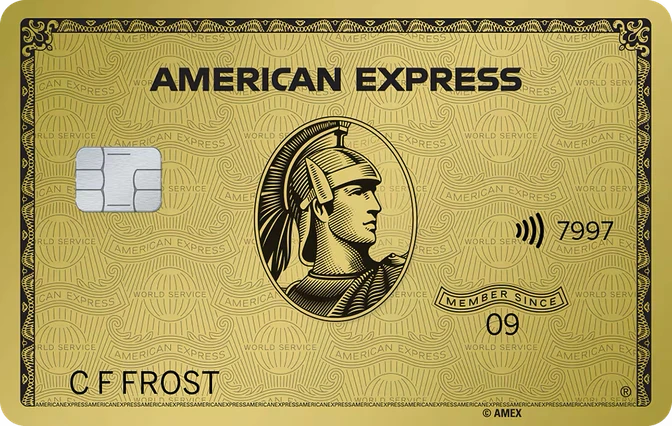
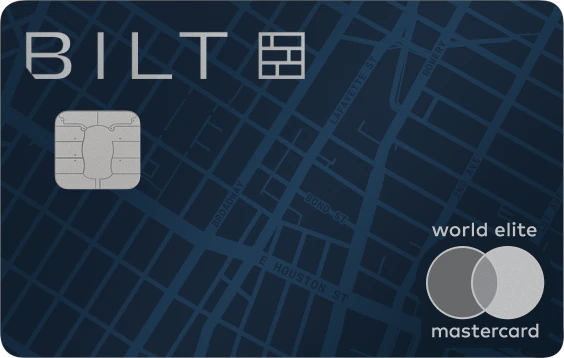
Cards mentioned in this guide


Frequently asked questions
Can I transfer points back from an airline to my credit card?
If I cancel an award ticket, do my points go back to Chase?
I transferred points by mistake. What are my options?
Why did my points transfer fail?
Should I transfer points to capture a transfer bonus?
Related guides
Rules & Mechanics
How to Book an Award Flight: The Complete Step-by-Step for Beginners
9 min
Rewards Programs
Chase Ultimate Rewards Transfer Partners 2026
15 min
Rewards Programs
Amex Membership Rewards Transfer Partners: The Full 2026 List and Values
12 min
Rules & Mechanics
Transfer Bonuses Explained: When 20-30% Extra Actually Changes the Math
9 min
Related news

airlines · Jun 2, 2026
Credit Card Transfer Bonuses Mid-2026: H1 Drought Recap

airlines · Jun 2, 2026
Flying Blue Promo Awards June 2026: Best Europe Deal?

airlines · Jun 2, 2026
Aeroplan 2026: SQC Status and June 1 Devaluation

industry · Jun 2, 2026
Travel Rewards Devaluations 2026: Every Major Loyalty Program Change This Year