Transfer Bonuses Explained: When 20-30% Extra Actually Changes the Math
A transfer bonus boosts the ratio at which bank points convert into a partner currency — a 25% bonus turns 1:1 into 1:1.25. It only creates real value when you have a specific award already priced and available; never transfer speculatively, bonus or not.
On this page▾

Topic Collection
Part of the Transfer Partners Collection
Explore all 71 articles
A 30% transfer bonus sounds like free points, and sometimes it is. But a bonus only changes the math if you already had a specific, priced award lined up in a program that prices well — pile it onto a program with bad award availability or inflated dynamic pricing, and 30% more of a bad deal is still a bad deal.
Transfer bonuses are one of the few places in this hobby where issuers hand you a real, quantifiable edge. They're also where speculative transfers go to die as stranded points. Below: how bonuses are announced and how long they run, which currencies bonus most and why that shifts year to year, the arithmetic that tells you whether a bonus matters, and two worked examples — one where a bonus flips a decision, one where it doesn't.
Quick answer
A transfer bonus temporarily boosts the ratio at which your bank points convert into an airline or hotel currency — a 25% bonus turns a 1:1 transfer into 1:1.25, so 10,000 bank points become 12,500 partner miles instead of 10,000. Bonuses typically run 1-3 weeks, are announced with little notice, and only create real value when you have a specific award already priced and available — never transfer speculatively, bonus or not.
- Effective ratio = base ratio × (1 + bonus%): a 1:1 ratio at a 30% bonus becomes 1:1.3
- Bonuses run most often on airline and hotel partners with excess transferable-point liability, not the partners cardholders want most
- The gap a bonus closes is the cost of the award in points, not the announced bonus percentage — always convert back to a per-point cash value before deciding
💡 Pro tip — Before transferring during any bonus, confirm award availability on the partner's own site first. The bonus is worthless if the seat or room isn't there when your points land.
Key takeaway: a transfer bonus is a discount on a specific purchase, not a reason to acquire inventory. If you don't have the award priced and available, the bonus changes nothing.
How transfer bonuses are announced, and how long they run
Banks announce transfer bonuses two ways: a public promotion pushed through email/app notifications to the whole cardholder base, or a targeted, account-specific offer visible only in your online banking dashboard. Targeted offers usually carry the larger percentages — worth checking your account directly rather than trusting a public tracker.
Duration is short by design — most bonuses run one to three weeks, occasionally extended if the issuer wants to move more balance before a quarter-end. A handful of programs run recurring, near-annual windows tied to a partner's own promotional calendar. None of this is scheduled publicly in advance — there's no calendar you can plan a redemption around six months out.
Key takeaway: bonuses appear with days, not months, of notice, and the best ones are often account-specific. Check your own transfer page before assuming a public tracker has the full picture.
Which currencies bonus most often — and why that keeps shifting
The frequency ranking among the four major transferable-point issuers moves year to year, and betting on last year's pattern is a common mistake.
American Express Membership Rewards has historically run bonuses more often than any competitor — sometimes several campaigns a year across roughly 20 partners, in the 15-40% range. That cadence isn't fixed: MR bonus activity has gone through long stretches of near-silence, then returned in bursts. Don't assume Amex "always" has something running.
Citi ThankYou Points bonuses less predictably but still regularly — typically 20-30% offers on individual partners, often for two-to-four-week windows, frequently targeted rather than public.
Capital One miles run bonuses less often than Amex or Citi, usually 10-25% on a rotating subset of airline partners.
Chase Ultimate Rewards was historically the most conservative of the four, but that reputation is outdated — Chase has run a meaningful number of transfer bonuses in recent years, some reaching well above 50%. Treat "Chase never bonuses" as a stale assumption, not a rule.
The practical lesson isn't which issuer to expect a bonus from — it's that the ranking changes, so the discipline has to be the same regardless of which currency you hold: confirm the award, do the math, then check whether a bonus is live.
Key takeaway: no issuer has a permanent lock on "most generous with bonuses." Build your redemption plan around the award you want, then treat any bonus that shows up as a bonus — not the other way around.
The arithmetic of an effective transfer ratio
Every transfer bonus is really just a multiplier on the standard ratio, and the only number that matters is what it does to your cost per point of the award, not the headline percentage.
Formula: Effective ratio = base ratio × (1 + bonus%)
A 1:1 base ratio at a 30% bonus becomes 1:1.3 — 10,000 bank points yield 13,000 partner points. If the award costs 100,000 partner miles, you now need 76,923 bank points instead of 100,000 (100,000 ÷ 1.3) — a 23% reduction in points required for the identical seat or room.
To decide whether that's worth acting on, convert to cash value: take the award's retail price, divide by the bank points required after the bonus. A flight retailing at $3,200 and costing 76,923 MR points after a 30% bonus is 4.16 cents per point — well above the roughly 1-2 cents most cash-back baselines deliver. Without the bonus, the same $3,200 flight at 100,000 points is 3.2 cents per point — still solid, but the bonus is what pushes it from "good" to "worth locking in now."
Key takeaway: a 30% bonus doesn't mean "30% more value" — it means roughly 23% fewer points needed for the same award. Always finish the calculation in cents-per-point before deciding it's worth acting on.
Why you should never transfer speculatively — even during a bonus
The single most common way points get wasted is transferring during a bonus window without a booked, priced, available award waiting on the other end.
Transfers are one-way and irreversible on every major program. Once bank points become airline or hotel currency, they're subject to that program's expiration policy, devaluation risk, and whatever award availability actually exists on your dates. A 30% bonus is meaningless if the only seats left are in a cabin you don't want, on dates that don't work, or don't exist at all.
⚠️ Biggest mistake — Transferring into a program during a bonus because "the ratio won't be this good again," without confirming a specific bookable award first. Partner charts with thin, unpredictable availability routinely leave bonus-chasers holding points with nothing to book.
The right sequence: search live award availability first, confirm the exact date and cabin exist, calculate cents-per-point with and without the bonus, then transfer — ideally within the same session, since availability can vanish in minutes.
Key takeaway: the bonus is the last step, not the first. Confirm the seat or room exists before you touch the transfer button — a 30% bonus into stranded points is a 100% loss.
Worked example: a bonus that flips the decision
Setup: You hold 80,000 Amex Membership Rewards points from card spend and a welcome bonus. You've found a confirmed business-class award priced at 100,000 partner airline miles, retailing at $3,400 cash for the identical seat and dates.
Without a bonus: You're 20,000 MR points short of the 100,000 needed, and would have to wait months to earn the gap while the seat may vanish.
With a 25% transfer bonus: Your 80,000 MR points transfer at 1:1.25, yielding exactly 100,000 partner miles — the award clears with your existing balance, today, seat still open. Value: $3,400 ÷ 80,000 = 4.25 cents per point, roughly 3-4x a typical cash-back baseline.
Why it flips the decision: the bonus closed a real point gap that would otherwise have forced you to wait or walk away from a confirmed seat — converting "not enough points" into "exactly enough," on an award already priced and wanted.
Key takeaway: bonuses matter most when they close a specific points gap on an award you can book immediately — not as a general reason to accumulate more of a currency.
Worked example: a bonus that doesn't change anything
Setup: Citi ThankYou Points runs a 25% transfer bonus into a partner known for thin premium-cabin award availability and a history of high fuel surcharges on long-haul routes. You have 60,000 TY points and no specific trip booked, but the headline "25% off" feels too good to pass up.
The trap: you transfer speculatively, landing 75,000 partner miles. Searching award space, the only business-class inventory on realistic dates carries $650 in carrier-imposed surcharges, and the cheapest usable award is 95,000 miles — still 20,000 short even after the bonus. The points now sit in a program with a documented history of poor same-day availability and no transfer-back option.
Why it doesn't flip anything: the 25% bonus discounted a purchase you hadn't confirmed you could make. A bonus can't fix insufficient availability, high surcharges, or an unclear travel date — it only discounts the points cost of an award that already clears those bars. Locked out of a booking, the "bonus" points sit stranded until you force a suboptimal redemption or let them expire.
Key takeaway: a good bonus percentage into a program with bad availability or high surcharges is still a bad deal. Price the actual trip — including surcharges — before transferring, bonus or not.
Decision framework: is this transfer bonus worth acting on?
| Situation | Verdict |
|---|---|
| You have a confirmed, priced award and the bonus closes a real points gap | Transfer now — the bonus converts a maybe into a booking |
| You have >150% of the points the award requires already, bonus or not | Skip the bonus rush — you don't need the extra ratio to book |
| No specific award identified, but the currency "seems useful" | Never transfer — bonuses expire before speculative plans firm up |
| Target program has a history of thin availability or high surcharges on your route | Verify actual bookable inventory first; a bonus doesn't fix bad award economics |
| Effective cents-per-point after the bonus clears 2x your card's cash-back baseline | Strong signal to act, assuming availability is confirmed |
If you're planning a Hawaii trip on points, transfer bonuses into Hyatt or the major US airlines are worth watching specifically for that itinerary — but the same rule applies: confirm the room or seat on your actual dates before any bonus enters the decision.
For the mechanics of each transfer relationship, see the Chase Ultimate Rewards transfer partners guide, Citi ThankYou Points transfer partners, and Capital One transfer partners deep dive. Deciding whether to transfer at all versus book through a portal? Chase Travel portal vs. transfer partners breaks down that trade-off, and best credit cards for transfer partners covers which cards unlock these transfers. Specific-partner mechanics are covered in guides like transferring Amex MR to British Airways Avios and transferring Citi ThankYou Points to Avianca LifeMiles.
Key takeaway: run every bonus through the same three checks — confirmed availability, real points-gap math, and cents-per-point after the bonus — before you touch the transfer button. The discipline doesn't change; only the ratio does.
Disclosure: CreditPoints may receive compensation if you click through and are approved for cards mentioned in this article. We only recommend products we believe deliver genuine value to readers. See our editorial policy for details.
Get weekly card offer alerts
Sunday digest of elevated bonuses. One email, zero spam.
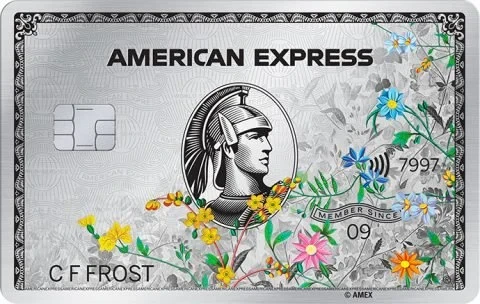
Cards mentioned in this guide




Frequently asked questions
How much extra value does a 30% transfer bonus actually add?
Which loyalty currency offers transfer bonuses most often?
Should I transfer points speculatively if a bonus looks too good to pass up?
How long do transfer bonuses typically last?
What cents-per-point value should I look for before acting on a transfer bonus?
Related guides
Related news

airlines · Jun 2, 2026
Credit Card Transfer Bonuses Mid-2026: H1 Drought Recap

airlines · Jun 2, 2026
Flying Blue Promo Awards June 2026: Best Europe Deal?

airlines · Jun 2, 2026
Aeroplan 2026: SQC Status and June 1 Devaluation

industry · Jun 2, 2026
Travel Rewards Devaluations 2026: Every Major Loyalty Program Change This Year