Chase Travel Portal vs Transfer Partners (2026)
Use the Chase Travel portal for cheap cash fares or when no award space exists — points lock in at a fixed 1.25 cents on Sapphire Preferred (higher on Reserve) and still earn miles. Transfer 1:1 to partners like United or World of Hyatt for premium cabins and luxury hotels, where points fetch 1.5 to 2+ cents but require award availability and are irreversible.
On this page▾

Topic Collection
Part of the Transfer Partners Collection
Explore all 72 articles
You have 60,000 Ultimate Rewards points and a trip to book. Two buttons sit in front of you: "Book through Chase Travel" or "Transfer points to a partner." Pick the first and your 60,000 points are worth a fixed, predictable amount. Pick the second and they could be worth nothing extra — or double. Knowing which button to press is the single most valuable skill in the Chase points game.
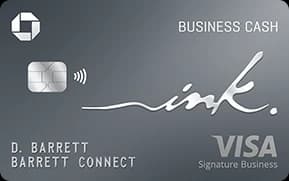
This is the 2026 decision guide for getting the most out of Chase Ultimate Rewards. Every point you earn on Sapphire Preferred, Sapphire Reserve, Freedom Unlimited, or Ink Preferred pools into one Ultimate Rewards balance. The card you hold decides how that balance behaves at redemption time — and the choice between the portal and transfer partners is where most of the value is won or lost.
Quick answer
Use the Chase Travel portal when the cash fare is cheap or no award space exists — your points lock in at a fixed 1.25 cents each on Sapphire Preferred (higher on Sapphire Reserve), with zero research and full miles + elite-status credit. Transfer 1:1 to partners like United or World of Hyatt when you want premium cabins or high-end hotels, where points routinely fetch 1.5 to 2+ cents. The portal is the smart, simple floor; transfers are the high-ceiling play that needs award availability and is irreversible. For a complete overview of the UR ecosystem, start with the Chase Ultimate Rewards program guide.
TL;DR: Chase Ultimate Rewards points can be redeemed two main ways. (1) The Chase Travel portal redeems points at a fixed cents-per-point rate set by the card — 1.25 cents on the Chase Sapphire Preferred, a higher boost on the Chase Sapphire Reserve. Portal bookings still earn airline miles and count toward elite status, and they work for any published fare with no award-availability requirement. (2) Transferring points 1:1 to travel partners (United MileagePlus, World of Hyatt, Air Canada Aeroplan, etc.) can deliver 1.5 to 2+ cents per point, especially for business/first class and luxury hotels, but requires award space and cannot be reversed. Rule of thumb: portal for cheap or simple cash fares, transfers for outsized premium redemptions.
The two redemption paths
Path 1: The Chase Travel portal (fixed value)
The Chase Travel portal is an online booking site — flights, hotels, cars, activities — where you pay with points instead of cash. The key feature is that your points convert at a fixed, card-dependent rate:
- Sapphire Preferred: 1.25 cents per point. A $500 flight costs 40,000 points.
- Sapphire Reserve: a higher boost above 1 cent, so the same $500 flight costs fewer points.
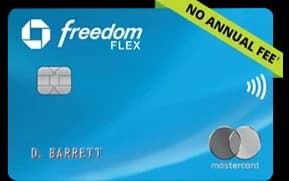
- Freedom Unlimited and Ink Preferred: these earn into the same pool, but on their own they redeem at 1 cent in the portal. Pair them with a Sapphire card and the whole balance redeems at the Sapphire rate — the core reason the Chase "trifecta" exists.
Three things make the portal underrated. First, it always works: any seat the airline sells for cash, you can buy with points — no award chart, no blackout dates, no "saver space." Second, portal flights still earn airline miles and count toward elite status, because you are buying a normal revenue ticket; only the form of payment changed. Third, it is reversible-friendly — cancellations follow the airline or hotel's normal cash-fare policy, and points typically return to your account.
Path 2: Transfer to travel partners (variable value)
Instead of spending points in the portal, you move them — at a 1:1 ratio — into a partner's own loyalty program: United MileagePlus, World of Hyatt, Air Canada Aeroplan, British Airways, Southwest, and more. The Chase Ultimate Rewards transfer partners guide maps out every partner's best redemption sweet spots. Once transferred, you book an award directly with that partner, and the value you get depends entirely on that program's award pricing.
This is where points can punch far above 1.25 cents. A business-class seat that sells for $4,000 cash might cost 80,000 partner miles — that is 5 cents per point. A World of Hyatt night that costs $600 cash might price at 25,000 points — 2.4 cents per point. The World of Hyatt program guide covers every category and the best properties to target. The upside is real, but it comes with two hard constraints: you need award availability (the partner must release a saver seat or standard room), and transfers are irreversible — once points leave Chase, you cannot pull them back.
Why the card you hold changes everything
Both paths draw from one shared Ultimate Rewards balance, but the portal rate is a property of the card, not the points. Spend through a card that only redeems at 1 cent and you have voluntarily capped your floor. This is the entire logic behind the Chase "trifecta": earn at high multiples on the no-annual-fee cards, then redeem the whole stack through the premium card.
A concrete pooling example. Say you put grocery and gas spend on Freedom Unlimited and business spend on Ink Preferred, racking up 100,000 points. (This is the exact structure behind the Chase trifecta strategy.) On their own those points cap at 1 cent in the portal — a $1,000 ceiling. Move the same 100,000 points to a household Sapphire Preferred account and the portal floor jumps to 1.25 cents, a $1,250 ceiling, a 25% lift for free. On Sapphire Reserve the floor rises further. If you are deciding which Sapphire to anchor your ecosystem with, the Sapphire Preferred vs Sapphire Reserve comparison weighs the Preferred's 1.25-cent floor and $95 fee against the Reserve's higher boost. The takeaway is structural: hold at least one Sapphire card so every point in your ecosystem inherits the better redemption rate, no matter which card earned it.
Portal vs transfer: the decision table
| Factor | Chase Travel portal | Transfer to partners |
|---|---|---|
| Value per point | Fixed (1.25 cents on Sapphire Preferred, higher on Reserve) | Variable, 1.5 to 2+ cents possible |
| Availability needed | None — any cash fare bookable | Yes — award space required |
| Research effort | Minimal | Moderate to high |
| Earns miles / elite credit | Yes | No (award tickets rarely earn) |
| Reversible | Generally yes (cash-fare rules) | No — transfers are permanent |
| Best for | Cheap fares, no award space, simplicity | Premium cabins, luxury hotels, peak dates |
Worked examples (cents per point)
The math is always the same: value per point = cash price of the trip ÷ points spent. Compare that number against your portal floor.
| Trip | Cash price | Portal cost (CSP 1.25¢) | Partner award cost | Portal value | Partner value | Winner |
|---|---|---|---|---|---|---|
| Domestic economy, off-peak | $180 | 14,400 pts | 12,500 United miles | 1.25¢ | 1.44¢ | Roughly a tie — book the portal |
| Long-haul business class | $4,200 | 336,000 pts | 88,000 partner miles | 1.25¢ | 4.77¢ | Transfer, by a mile |
| Hyatt resort, 2 nights | $1,100 | 88,000 pts | 50,000 Hyatt points | 1.25¢ | 2.20¢ | Transfer |
| Last-minute economy, no award space | $320 | 25,600 pts | Not available | 1.25¢ | — | Portal |
The pattern jumps out. For a cheap economy ticket the portal floor of 1.25 cents is hard to beat and often wins outright. For a $4,200 business-class seat, transferring turns each point into nearly 5 cents — almost 4x the portal — and leaving those points in the portal would quietly waste over $3,000 of value. And when there is simply no award space, the portal is the only path that books the trip at all.
Common mistakes that quietly burn value
- Transferring before confirming award space. Because transfers are permanent, moving points "to see if a seat opens" is the most expensive error in the game. Always find the live award first, then transfer the exact amount.
- Redeeming through a 1-cent card when a Sapphire account exists. If you hold a Sapphire card, route the booking through it so the whole balance redeems at 1.25 cents or higher. Booking through a Freedom or Ink account alone leaves 25% on the table.
- Forcing a transfer on a cheap fare. A $200 economy ticket rarely beats the portal floor at a partner. Transferring here adds research, risk, and irreversibility for little or no gain.
- Ignoring miles and status on the portal. For travelers chasing elite status, the portal's revenue-ticket earning can be worth more long-term than a marginal cents-per-point edge from a transfer.
When to use which
Use the portal when:
- The cash fare is cheap — economy tickets, short hops, off-peak dates where the portal's fixed rate already beats what a partner award would return.
- There is no award availability. Award seats are capacity-controlled; the portal sells anything the airline sells.
- You want the trip to earn miles and elite-qualifying credit — portal bookings are revenue tickets, so they count.
- You value simplicity and reversibility over squeezing out the last cent. The portal is the rational default for most everyday travel.
Transfer to partners when:
- You are booking a premium cabin — business or first class, where cash prices are high and award pricing is comparatively low.
- You are booking a high-value hotel, especially World of Hyatt, where the points-to-cash ratio is consistently strong.
- The cash fare is expensive relative to the award cost, pushing your cents-per-point well above the portal floor.
- You have done the research and confirmed live award space before transferring — never speculatively move points hoping space appears.
A simple rule of thumb closes the loop: run the cents-per-point math first. If a transfer clears roughly 2 cents per point or better, transfer. If it lands near or below your portal rate, book the portal and keep the flexibility. About 70% of everyday redemptions are fine in the portal; the partner play is for the high-stakes 30% where premium travel is on the table. For Air Canada Aeroplan specifically — one of the most versatile partners for routing to partner airlines — see the Aeroplan program guide.
Bottom line
The Chase Travel portal and transfer partners are not rivals — they are two tools for two jobs. For a deeper dive on squeezing maximum value from every point, see our guide on how to redeem Chase Ultimate Rewards for maximum value. The portal is your reliable floor: a fixed 1.25 cents per point on Sapphire Preferred (higher on Sapphire Reserve), bookable on any fare, earning miles and elite credit, with no research and easy cancellation. Transfer partners are your high-ceiling play: 1.5 to 2+ cents per point when you target premium cabins and top hotels, at the cost of needing award space and accepting that the move is permanent. Hold a Sapphire card so your whole Ultimate Rewards balance — including points from Freedom Unlimited and Ink Preferred — redeems at the better rate, then let the trip decide the button. Cheap and simple? Portal. Premium and pricey? Transfer. Do the one-line math before every redemption and you will never leave value on the table.
Get weekly card offer alerts
Sunday digest of elevated bonuses. One email, zero spam.
Cards mentioned in this guide


Frequently asked questions
What is the Chase Travel portal value per point in 2026?
Do Chase Travel portal flights earn airline miles and elite status?
When is transferring to partners better than the portal?
Can I transfer Ultimate Rewards points back from a partner to Chase?
Related guides
Rules & Mechanics
What Counts as "Travel" for Chase's $300 Credit and 3x Categories
10 min
Rules & Mechanics
Primary vs Secondary Rental Car Coverage: Which Cards Give You Primary
9 min
Rules & Mechanics
How Credit Card Welcome Bonuses Actually Work: Minimum Spend, Timing, Fine Print
10 min
Rules & Mechanics
Chase Travel Insurance & Purchase Protection Guide 2026
15 min
Related news

chase · Jun 10, 2026
Chase Hyatt Transfer Ratio 4:3: What It Means for Sapphire Preferred and Ink Business Preferred

chase · Jun 10, 2026
Chase to Virgin Atlantic: 30% Transfer Bonus — Book Delta Business Class for 18,000 Points

hyatt · Jun 3, 2026
Hyatt Added Perk for Globalists, Explorists and Cardholders

hyatt · Jun 2, 2026
Best Hyatt Sweet Spots After May 2026: 10 Survivors Ranked
Cards in this ecosystem


Considering switching?