Best Credit Cards for Startups in 2026
Personal guarantee cards for bootstrapped founders, corporate no-PG cards for funded startups. The best picks at every funding stage from pre-revenue to Series A.
On this page▾

Quick answer
The best credit card for most early-stage startups is the Ink Preferred — large welcome bonus, 3x on key startup categories, and Chase Ultimate Rewards points that can be redeemed for real value. If your startup has raised venture funding and you want to avoid a personal guarantee, corporate no-PG cards like Ramp or Brex are worth considering alongside or instead of personal-guarantee options.
Two paths: personal guarantee vs. corporate cards
Before we get to specific card recommendations, it's important to understand the fundamental split in the startup credit card market — and if you're unsure whether you qualify, our guide on can I get a business credit card answers the eligibility question in full.
Path 1: Personal guarantee cards (Chase, Amex)
These are traditional business credit cards where the founder personally guarantees the debt. If the company can't pay, your personal credit is on the hook. The upside: you can get approved based on your personal credit score alone, even before your startup has revenue or a credit history.
Who this is right for:
- Pre-revenue or bootstrapped founders with good personal credit (700+)
- Startups that haven't raised institutional funding
- Solopreneurs and small teams under 10 people
- Any founder who wants a proven, card-issuer-backed rewards program
Path 2: Corporate no-PG cards (Ramp, Brex, Mercury)
These cards underwrite based on your company's financial health — bank balance, funding, and revenue — not your personal credit. No personal guarantee means your personal assets are protected. The tradeoff: you typically need venture funding or meaningful revenue to qualify.
Who this is right for:
- Seed-stage and Series A+ funded startups
- Startups with $50K+ in a business bank account
- Companies that want per-employee virtual cards and spend controls
- Founders who want to protect their personal credit profile
Best cards by funding stage
Pre-revenue / bootstrapped (0–$10K MRR)
At this stage, your personal credit score is your only underwriting lever. Chase and Amex are the best options.
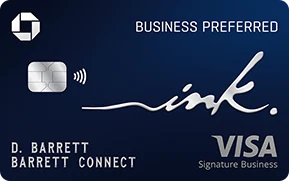
Top pick: Ink Preferred
3x points on advertising, shipping, internet/phone/cable, and travel (up to $150,000/year combined). The advertising category alone is a massive win for startups running paid acquisition. $95 annual fee. Welcome bonus is consistently one of the largest in the business card space.
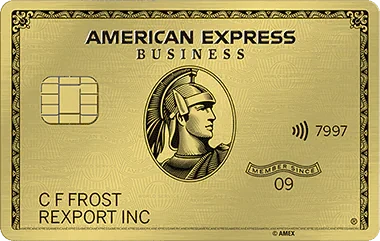
Runner-up: Amex Business Gold
4x MR on the 2 categories where you spend the most each month (auto-rotating across airfare, advertising, gas, restaurants, shipping, and technology/cloud). The automatic category rotation means you never have to think about optimizing — the card adapts to your spending. $375 annual fee. Best suited for founders spending $2,000+/month — full details in our Amex Business Gold review.
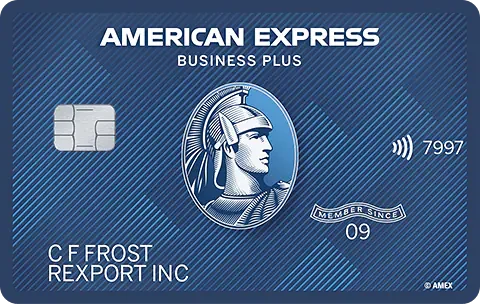
No-fee option: Blue Business Plus
2x MR on everything up to $50,000/year. Perfect as a catch-all secondary card or as a primary card when you're watching cash burn carefully. No annual fee means zero overhead cost — see our Amex Blue Business Plus review for a full breakdown of the MR earning structure.
Bootstrapped / early revenue ($10K–$50K MRR)
At this stage you're generating meaningful revenue and can justify premium card fees. Your spend mix is also clearer.
Top pick: Amex Business Gold
The auto-rotating 4x categories become very valuable as your spend scales. If you're spending $5,000/month on Google Ads and $2,000/month on cloud infrastructure (AWS, GCP, Azure count as "technology"), you're generating 7,000 MR points monthly from two categories alone. That's $70+ in pure cash value, or $140+ when transferred to airline partners.
Cash back option: Spark Cash Plus
2% flat cash back, no preset spending limit, charge card structure. For startups that spend heavily but unpredictably — inventory runs, vendor payments, event costs — the unlimited spending power is a genuine competitive advantage. $150 annual fee (waived first year). Our Capital One Spark Cash Plus review breaks down the annual-fee rebate and how the pay-in-full structure affects cash flow.
Seed-funded (raised $500K–$3M)
With institutional funding in the bank, no-PG corporate options open up. The key question becomes: do you want the simplicity of a corporate card with spend controls, or the superior rewards of a personal-guarantee card?
The hybrid approach used by many seed-stage teams:
- Keep one personal-guarantee card (Ink Preferred or Amex Business Gold) for founder-level spending and to capture welcome bonuses
- Add a no-PG card (Ramp or Brex) for team spending with employee card controls
This gives you the best of both worlds: great rewards on high-volume founder spend, plus operational simplicity for the team.
Series A and beyond ($3M+ raised)
At this stage, the primary considerations shift from rewards to spend management, accounting integrations, and financial controls.
Amex Business Platinum becomes relevant at Series A for founders and executives: 5x on flights and hotels booked through Amex Travel, access to Centurion Lounges, $200 airline fee credit, and the Business Platinum's $895 annual fee. If you're flying business class to investor meetings quarterly, this card pays for itself — see our Amex Business Platinum review for a full cost-benefit breakdown.
Card comparison at a glance
| Card | Annual fee | Best earn rate | No personal guarantee? | Best for |
|---|---|---|---|---|
| Ink Preferred | $95 | 3x ads/travel/shipping | No | Pre-revenue, bootstrapped |
| Amex Business Gold | $375 | 4x top 2 categories | No | $2K+/mo spend |
| Blue Business Plus | $0 | 2x everywhere | No | Catch-all, no-fee |
| Spark Cash Plus | $150 | 2% flat | No | Variable-spend, no limit |
| Ramp | $0 | 1.5% flat | Yes | Seed-funded teams |
| Brex | $0 | 7x Brex pts on rideshare, etc. | Yes | VC-backed startups |
Building startup credit from day one
Whichever card you choose, use it consistently and pay the full balance monthly. This builds your business credit profile with Dun & Bradstreet and Experian Business — which matters when you eventually seek business loans, equipment financing, or lines of credit. The points you earn along the way are part of the broader Amex Membership Rewards program, which gives you access to 20+ airline and hotel transfer partners.
Key actions:
- Get an EIN from the IRS (free at irs.gov, takes 5 minutes online)
- Open a dedicated business checking account
- Apply for your first business credit card using the EIN + personal guarantee
- Pay on time, every time — one missed payment can delay your business credit score by months
The Chase 5/24 trap for startup founders
If you're a startup founder who plans to apply for multiple business cards over the next few years, be aware of the Chase 5/24 rule: Chase will decline your application if you've opened 5 or more credit cards (personal or business) in the last 24 months.
Strategy: Apply for Chase Ink cards first, before you've accumulated 5 new cards — our Chase Ink Business Preferred review explains which Ink card to start with. Amex and Capital One do not have a hard 5/24 equivalent, so they can be applied for later. If you want to survey the full Amex business lineup, see our best Amex business cards guide.
Get weekly card offer alerts
Sunday digest of elevated bonuses. One email, zero spam.
Cards mentioned in this guide

Frequently asked questions
Can a startup with no revenue get a business credit card?
What is the difference between a personal guarantee card and a corporate no-PG card for startups?
Which startup credit card gives the most rewards for Google and Facebook ad spend?
Related guides
Related news

chase · Jun 10, 2026
Chase Hyatt Transfer Ratio 4:3: What It Means for Sapphire Preferred and Ink Business Preferred

chase · Jun 10, 2026
Chase to Virgin Atlantic: 30% Transfer Bonus — Book Delta Business Class for 18,000 Points

airlines · Jun 4, 2026
Alaska Atmos Members Day Launched

hyatt · Jun 3, 2026
Hyatt Added Perk for Globalists, Explorists and Cardholders