Business Credit Cards for Sole Proprietors 2026
Yes, you can get a business credit card as a sole proprietor. On the application, use your SSN as the tax ID, your own legal name as the business name, and "Sole Proprietor" as the business type — no LLC, EIN, or business bank account required. Major issuers including Chase, Amex, and Capital One approve sole proprietors routinely, so freelancers, gig workers, and side-hustlers all qualify.
On this page▾

Topic Collection
Part of the Business Credit Cards Collection
Explore all 37 articles
Quick answer
Yes, you can get a business credit card as a sole proprietor. Use your SSN as the tax ID, your own name as the business name, and "Sole Proprietor" as the business type. No LLC, EIN, or business bank account required. Chase, Amex, and Capital One all approve sole proprietors routinely.
What is a sole proprietor?
A sole proprietor is anyone who runs a business as an individual without formally incorporating. From a tax and legal standpoint, you and your business are the same entity. This is the simplest business structure and requires no registration in most states.
You are a sole proprietor if you:
- Freelance or consult for clients and receive 1099 income
- Sell products on eBay, Etsy, Amazon, Poshmark, or Mercari
- Rent a room or property on Airbnb or VRBO
- Drive for Uber, Lyft, DoorDash, or Instacart
- Offer services: photography, tutoring, writing, coding, design, landscaping, cleaning, handywork
- Do any work "on the side" that generates income, even casually
You are NOT required to have:
- A business license (though some activities require one)
- A business bank account
- A registered business name (DBA)
- An EIN
- Any specific revenue level
EIN vs SSN: which do you use on the application?
When a business credit card application asks for a "Business Tax ID" or "EIN," sole proprietors can enter their Social Security Number (SSN). The IRS explicitly allows sole proprietors to use their SSN as their business tax ID.
| Situation | What to enter |
|---|---|
| Sole proprietor, no employees | Your SSN |
| Single-member LLC, no employees | Your SSN (or EIN if you have one) |
| Partnership, LLC with employees, corporation | EIN required |
Getting a free EIN from IRS.gov is simple (takes 10 minutes online) and some people prefer it to keep business and personal identities separate. But it doesn't change your approval odds or card terms.
How to fill out the business credit card application
| Field | What to enter |
|---|---|
| Legal business name | Your full legal name (e.g., "Jane Smith") |
| Business trade name / DBA | Optional — can leave blank or use a name you use (e.g., "Smith Consulting") |
| Business structure | Sole Proprietor |
| Business tax ID | Your SSN |
| Years in business | Estimate — "less than 1 year" is accepted for new ventures |
| Annual business revenue | Honest estimate of your annual income from the activity |
| Number of employees | 0 (or 1 if you count yourself) |
| Business phone | Can be your personal cell |
| Business address | Can be your home address |
Best business credit cards for sole proprietors
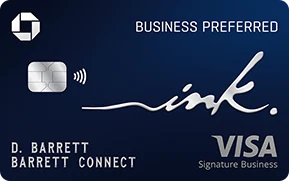
Ink Preferred — Best overall for sole proprietors
3x Ultimate Rewards on travel, shipping, advertising, and internet/cable/phone (up to $150,000/year). Welcome bonus historically 80,000–100,000+ UR points. $95 annual fee. Points transfer 1:1 to Hyatt, United, Singapore Airlines, and 11 more partners.
Why it's the top pick: The 3x categories align perfectly with the most common sole proprietor expenses — advertising (Google, Meta, LinkedIn ads), internet, phone, and any business travel. The welcome bonus alone can be worth $1,500–2,000+ toward travel.
Approval for sole proprietors: Chase approves sole proprietors routinely. A personal credit score of 700+ is the main approval factor. Having an existing Chase personal card (checking, savings, or credit card) may improve odds slightly.
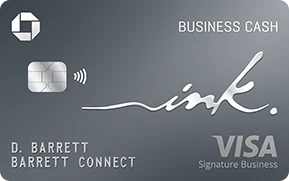
Ink Cash — Best no-fee option for office/telecom spenders
5x on office supplies and internet/cable/phone services (up to $25,000/year). 2x on gas stations and restaurants. $0 annual fee. UR points become fully transferable when paired with Ink Preferred or a Sapphire card.
Why it works for sole proprietors: If you have significant internet, phone, or software bills, this card earns 5x with zero annual fee. A sole proprietor paying $200/month for internet + phone bills generates $120/year in points value (at 1¢/pt) or $240+ if transferred to travel partners — at no cost.
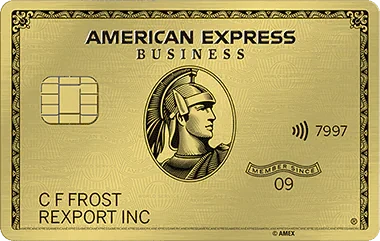
Amex Business Gold — Best for variable category spenders
4x Membership Rewards on the 2 categories where you spend the most each month (auto-rotates across: airfare, ads, gas, restaurants, shipping, software/cloud/tech). Cap of $150,000/year. $375 annual fee.
Why sole proprietors love it: The automatic category selection removes the tracking burden. If your business spends shift between months — heavy on ads one month, travel another — Business Gold catches your highest spend automatically. Torn between the flexible earner and the top pick above? Our Amex Business Gold vs Chase Ink Business Preferred comparison lays out which fits a sole proprietor's spend.
Sole proprietor eligibility: Amex explicitly approves sole proprietors. New side hustles with minimal revenue have been approved. The personal credit score is the primary approval factor.
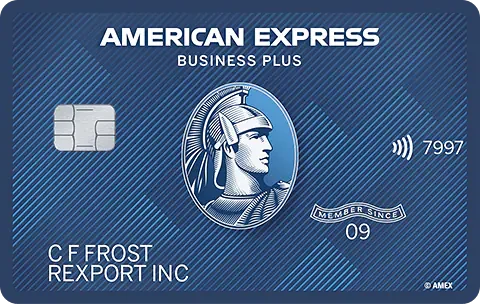
Blue Business Plus — Best no-fee flat-rate MR earner
2x Amex Membership Rewards on all purchases up to $50,000/year, then 1x. No annual fee. Points transfer to 18 Amex airline and hotel partners.
Best for: Sole proprietors who want Amex points with no annual fee commitment and don't want to track categories.
Spark Cash Plus — Best for cash back simplicity
Unlimited 2% cash back on all purchases. No preset spending limit. $150 annual fee (waived first year). Our Capital One Spark Cash Plus review explains how the pay-in-full charge structure and the annual cash bonus for high spenders work.
Best for: Sole proprietors who prefer straightforward cash back over points optimization, especially those with high and variable monthly spend.
Approval tips for sole proprietors
Credit score matters most. Banks can't verify your business revenue, so personal creditworthiness is the primary approval factor. A score above 700 is comfortable; 720+ is strong.
Start with your existing banking relationships. If you have a Chase checking account or personal credit card, Chase is more likely to approve an Ink application. Same for Amex. If you already bank with Bank of America, the Bank of America Business Advantage cards reward your existing deposit balances with boosted cash back through the Preferred Rewards for Business tiers.
Don't understate your business. "Annual business revenue" is your honest estimate of what the activity generates. If you made $8,000 last year on freelancing, state that. Banks don't ask for documentation.
If denied, call reconsideration. For Chase business cards specifically, a reconsideration call sometimes succeeds when a human reviewer sees your business income and personal credit profile. For Amex, approvals are often instant if your profile is clean.
Space out applications. Chase flags velocity. If you apply for multiple Chase cards in quick succession, approval odds drop. Wait 90+ days between Ink card applications.
Common myths about sole proprietors and business cards
Myth: "I need to be making money to apply." False. Banks ask for your expected revenue, not proven revenue. A new side hustle with $0 in actual revenue but a realistic business plan is approved regularly.
Myth: "Business cards are only for real businesses." False. "Real business" is not defined by complexity or formality. A person who occasionally photographs weddings for $500 each is a sole proprietor operating a photography business.
Myth: "Business cards have higher interest rates." Generally false for the major issuers. Chase Ink and Amex Business cards carry APRs in the same range as comparable personal cards.
Myth: "Business cards will hurt my personal credit." Largely false. Chase Ink, Amex Business, and most other business cards do NOT report ongoing activity (balance, utilization) to your personal credit report. Only the initial hard inquiry appears. This means carrying a high balance on an Ink card doesn't affect your personal credit utilization. For the full issuer-by-issuer breakdown, see how business cards affect your personal credit.
Tax advantages of using a dedicated business card
Using a separate business credit card for business expenses simplifies tax filing:
- All business expenses are consolidated on one statement
- Categorized spending reports make Schedule C preparation easier
- Clear documentation protects against audit scrutiny on expense deductions
This benefit applies even if your business card is in your personal name (sole proprietors) — the documentation still holds up.
Related guides
Get weekly card offer alerts
Sunday digest of elevated bonuses. One email, zero spam.
Cards mentioned in this guide

Frequently asked questions
Can a sole proprietor get a business credit card?
What do I enter for business name as a sole proprietor?
Do I need revenue to get a business credit card?
Related guides
Rules & Mechanics
Can I Get a Business Credit Card? (Complete 2026 Guide)
10 min
Rules & Mechanics
EIN vs SSN for Business Credit Cards: What Do You Actually Need?
8 min
Card Roundups
Best Business Credit Cards for Points & Rewards 2026
14 min
Rules & Mechanics
Chase 5/24 Rule Explained (2026): What Counts, What Doesn’t, How to Check
9 min
Related news

chase · Jun 2, 2026
Chase Ink Preferred 100K Returns: 2026 Ink Lineup

chase · Jun 10, 2026
Chase Hyatt Transfer Ratio 4:3: What It Means for Sapphire Preferred and Ink Business Preferred

chase · Jun 10, 2026
Chase to Virgin Atlantic: 30% Transfer Bonus — Book Delta Business Class for 18,000 Points

airlines · Jun 4, 2026
Alaska Atmos Members Day Launched