Can I Get a Business Credit Card? (Complete 2026 Guide)
Yes — almost certainly. If you have any income-generating activity such as freelancing, gig work, online selling, consulting, or renting property, you qualify for a business credit card. You do not need an LLC, EIN, registered business, or significant revenue: apply with your SSN, select "Sole Proprietor" as the business type, and your personal credit score determines approval. Chase, Amex, and Capital One have all approved millions of sole proprietors and side-hustlers.
On this page▾

Topic Collection
Part of the Business Credit Cards Collection
Explore all 37 articles
Quick answer
Yes — almost certainly. If you have any income-generating activity (freelancing, gig work, online selling, consulting, renting property), you qualify for a business credit card. You don't need an LLC, EIN, registered business, or significant revenue. Use your SSN, select "Sole Proprietor" as the business type, and your personal credit score determines approval.
Who qualifies for a business credit card?
The definition of "business" for credit card purposes is much broader than most people think. Any income-generating activity makes you eligible:
You qualify if you:
- Do any freelance or contract work (design, writing, coding, consulting, legal, accounting)
- Sell anything online (eBay, Etsy, Amazon, Facebook Marketplace, Depop, Poshmark)
- Drive for Uber, Lyft, DoorDash, Instacart, or any gig platform
- Rent a room, apartment, or property on Airbnb, VRBO, or directly
- Offer services in your community (landscaping, cleaning, tutoring, photography, handyman work)
- Have a YouTube channel, Twitch stream, or any creator income
- Resell items for profit at any scale
- Consult or advise anyone for compensation
You do NOT need:
- An LLC or any formal business structure
- An EIN (Employer Identification Number)
- A business bank account
- A business license (unless your activity requires one for other reasons)
- A minimum amount of revenue
- To have been in business for any specific length of time
- Employees
What counts as a "real" business?
Banks define business eligibility by whether you engage in income-generating activity — not by legal structure, formality, or size. A freelancer making $2,000/year is a sole proprietor and qualifies just as legitimately as a company with employees.
This is not a gray area. Chase, Amex, Capital One, and other major issuers have approved millions of sole proprietors and side hustlers. The business credit card application literally has "Sole Proprietor" as a business type option precisely because this is normal and expected.
What you'll need to apply
| Field | What to enter |
|---|---|
| Business name | Your own full legal name (or any name you use for your work) |
| Business type | Sole Proprietor |
| Business tax ID | Your SSN |
| Annual business revenue | Your honest estimate of annual income from the activity |
| Years in business | How long you've been doing it (even "less than 1 year" is fine) |
| Number of employees | 0 |
Which business credit card should I get?
For most people starting out: Ink Preferred or Ink Cash.
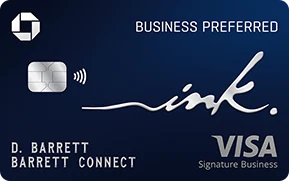
The Ink Business Preferred ($95/year) earns 3x Ultimate Rewards on advertising, shipping, travel, and internet/cable/phone — the four categories that cover most sole proprietor and small business spending. The welcome bonus has historically been worth $1,200–2,000+ in travel.
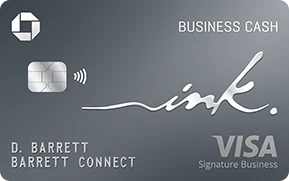
The Ink Business Cash ($0/year) earns 5x on office supplies, internet, cable, and phone, plus 2x on gas and restaurants. Best if you have significant internet or phone bills and want zero annual fee.
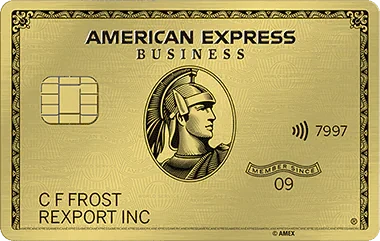
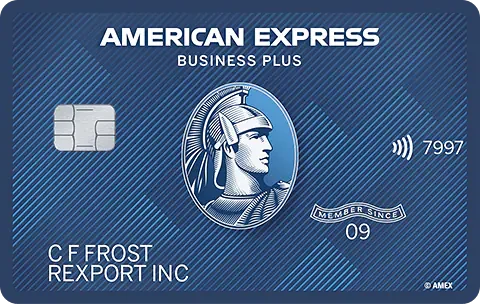
For Amex points collectors: Blue Business Plus (2x MR flat, $0 fee) or Amex Business Gold (4x auto-rotating categories, $375 fee).
For cash back simplicity: Spark Cash Plus (2% flat on everything, no preset spending limit). If you're torn between flat-rate cash back and bonus-category points, see Capital One Spark Cash Plus vs. Chase Ink Business Preferred for a full side-by-side.
See the full ranking: Best business credit cards 2026
Will applying affect my personal credit?
Short answer: Yes for the hard inquiry (temporary ~5-point dip). No for ongoing card activity.
When you apply for a business credit card, the issuer pulls your personal credit report — this creates a hard inquiry, typically reducing your score by about 3–5 points for a few months. This is unavoidable and is the same impact as any credit application.
After approval, Chase Ink and Amex Business cards do NOT report ongoing activity to your personal credit bureaus. Your balance, utilization, and payment history on these cards are invisible to personal credit scoring. This is a significant advantage over personal cards for people carrying business expenses.
Capital One Spark cards are an exception — they do report to personal credit bureaus. If you have high business spending, Chase Ink or Amex Business cards protect your personal credit utilization better.
Business cards and Chase 5/24
Business cards don't count toward 5/24 after approval — but you need to be under 5/24 to get approved.
This means:
- If you're at 4/24, getting an Ink card keeps you at 4/24 (the business card doesn't increase the count)
- If you're at 5/24 or higher, Chase will deny an Ink application the same as any personal card
Strategy: Collect your personal Chase cards (Sapphire, Hyatt, Freedom) first while you're comfortably under 5/24. Then add Ink cards — each one earns a welcome bonus without consuming a 5/24 slot.
For the complete guide: Chase 5/24 rule explained | Ink cards and 5/24
Approval factors for first-time business card applicants
Personal credit score — the primary factor. Most issuers approve comfortably at 700+; 680 is borderline.
Stated business revenue — banks ask but don't verify. An honest estimate of your expected or actual income is sufficient. A new side hustle with minimal revenue is approved on the strength of personal creditworthiness.
Existing banking relationship — Chase approves Ink cards more readily when you have a Chase checking, savings, or personal credit card. Amex is similar. The same dynamic helps at other banks: the Bank of America Business Advantage cards even scale your rewards rate up based on the deposits you keep with the bank.
Recent application activity — Chase tracks applications across all cards. Don't apply for multiple Chase cards at once. Space applications 90+ days apart.
What to say if you've never thought of yourself as a business owner
When you call yourself a "freelancer," "side hustler," or "gig worker," that's exactly what the bank is looking for. On the application:
- Business name: your own name or "[Your Name] [What You Do]" (e.g., "Maria Garcia Photography")
- Business type: Sole Proprietor
- Business description: one sentence — "Freelance graphic design services" / "Online reselling via eBay and Etsy" / "Rideshare driving via Uber and Lyft"
- Revenue: your realistic estimate of annual income from this activity
You are not lying or stretching the truth. You are accurately describing your economic activity using the terminology banks use for this exact situation.
Related guides
Get weekly card offer alerts
Sunday digest of elevated bonuses. One email, zero spam.
Cards mentioned in this guide

Frequently asked questions
Can I get a business credit card if I have a regular job?
What happens if I lie on a business credit card application?
Does a business credit card affect my personal credit score?
Related guides
Rules & Mechanics
Business Credit Cards for Sole Proprietors 2026
12 min
Rules & Mechanics
EIN vs SSN for Business Credit Cards: What Do You Actually Need?
8 min
Card Roundups
Best Business Credit Cards for Points & Rewards 2026
14 min
Rules & Mechanics
Chase 5/24 Rule Explained (2026): What Counts, What Doesn’t, How to Check
9 min
Related news

chase · Jun 2, 2026
Chase Ink Preferred 100K Returns: 2026 Ink Lineup

chase · Jun 10, 2026
Chase Hyatt Transfer Ratio 4:3: What It Means for Sapphire Preferred and Ink Business Preferred

chase · Jun 10, 2026
Chase to Virgin Atlantic: 30% Transfer Bonus — Book Delta Business Class for 18,000 Points

airlines · Jun 4, 2026
Alaska Atmos Members Day Launched