Chase Pay Yourself Back in 2026: What's Left and When It's Worth It
As of Q3 2026, Chase Pay Yourself Back is limited mostly to annual fees, select charities, and a handful of niche categories (pet stores/vet care and transit on Sapphire, gas and transit on Reserve, shipping and utilities on Ink), paying 1.05¢–1.5¢ per point through September 30, 2026. Transferring to a travel partner instead is typically worth 1.5–4× more; PYB wins mainly when you have no trip planned or are closing the account.
On this page▾
Topic Collection
Part of the Sweet Spots Collection
Explore all 58 articles
Chase Pay Yourself Back once let you redeem Ultimate Rewards points for cash-value statement credits on groceries, gas, and dining at travel-level rates. That version of the program is gone. What survives in late 2026 is a narrow list of categories — annual fees, select charities, a couple of niche purchase types — and in almost every case, transferring the same points to a travel partner is worth meaningfully more.
If you're sitting on a stack of Ultimate Rewards and wondering whether to Pay Yourself Back or transfer, the honest answer depends on whether you have a trip to book. Below: the exact categories live right now for Sapphire Preferred, Sapphire Reserve, and the Ink Business lineup, the redemption rate on each, and the arithmetic that shows when PYB actually wins.
Quick answer
Pay Yourself Back today is a quarterly, rotating list of narrow categories redeemable at 1.05¢–1.5¢ per point — well below the 1.5¢–3¢+ you can get transferring the same points to airline and hotel partners. The current window (through September 30, 2026) covers:
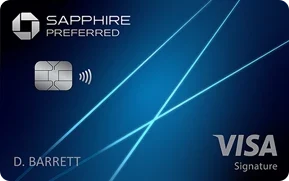
- Sapphire Preferred — annual fee and pet supplies/vet care at 1.1¢, public transit at 1.05¢, select charities at 1.25¢
- Sapphire Reserve — annual fee at 1.25¢, gas stations and public transit at 1.2¢, select charities at 1.5¢
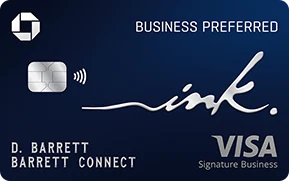
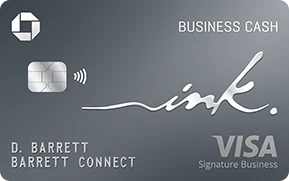
- Ink Business cards (Ink Preferred, Ink Cash) — shipping and internet/cable/phone at 1.1¢, select charities at 1.25¢
Chase refreshes this list roughly every quarter, and categories have been cut sharply since the program's 2020 launch — grocery stores, fitness clubs, home improvement, and general utilities have all been removed from the Sapphire lineup over 2024–2025.
💡 Pro tip — Check your Chase Ultimate Rewards account directly before redeeming. Categories can change on the quarter boundary (next refresh: October 1, 2026), and this guide's numbers are a snapshot, not a permanent chart.
Key takeaway: PYB in 2026 tops out at 1.5¢/point on Sapphire Reserve charity redemptions — everything else clusters at 1.05¢–1.25¢, below what most transfer partners pay.
What Pay Yourself Back actually is
Pay Yourself Back lets you apply Ultimate Rewards points as a statement credit against purchases you've already made in a specific, Chase-defined category — no portal booking, no partner transfer, no award search. You pick a past purchase (within roughly 90 days), tell Chase how many points to apply, and the credit posts to your statement.
The appeal is zero friction: no waiting for an award to price out, no risk of a flight getting devalued mid-search. The catch is the rate. Chase sets the redemption value per category, and outside of the elevated charity rate, none of the current categories touch what a well-planned transfer-partner redemption pays.
How PYB compares to the two other redemption paths
| Redemption path | Typical value | Effort | Flexibility |
|---|---|---|---|
| Cash back / statement credit (baseline) | 1.0¢/point | None | Total |
| Pay Yourself Back (2026 categories) | 1.05¢–1.5¢/point | Low | Narrow (specific purchases only) |
| Transfer to airline/hotel partner | 1.5¢–3.5¢+/point | Medium–high | Requires award availability |
Key takeaway: PYB sits just above the cash-back floor. It's a small step up in exchange for almost no effort — but it's a small step.
What's left in 2026: the category breakdown by card
Chase reworks this list every quarter, and the current window runs through September 30, 2026. Here's what's active right now.
Sapphire Preferred — $95 AF
- Annual fee: 1.1¢/point
- Pet supply stores & veterinary services: 1.1¢/point
- Public transit: 1.05¢/point
- Select charities: 1.25¢/point
Sapphire Reserve — $795 AF
- Annual card fee: 1.25¢/point
- Gas stations: 1.2¢/point
- Public transit: 1.2¢/point
- Select charities: 1.5¢/point
Ink Business cards (Ink Preferred, Ink Cash, Ink Business Unlimited)
- Shipping: 1.1¢/point
- Internet, cable, and phone services: 1.1¢/point
- Select charities: 1.25¢/point
Charity redemptions run through a fixed list of roughly 20 organizations (the Red Cross, UNICEF USA, Habitat for Humanity, World Central Kitchen, and similar), and Chase has kept this the highest-value category across every eligible card for over a year now — likely because it's low-cost PR relative to letting cardholders redeem groceries or gas at the same rate.
⚠️ Biggest mistake — Assuming last year's PYB categories are still live. Chase pulled grocery stores, gyms, home improvement, and general utilities from the Sapphire lineup between 2024 and 2025. If a blog post or forum thread mentions redeeming groceries through PYB, it's describing a version of the program that no longer exists.
Key takeaway: the annual fee and charity redemptions are the two categories that show up on every eligible card. Everything else is issuer-specific and narrower than it used to be.
The math: why transfer partners beat PYB almost every time
Run the same 50,000 points three ways on a Sapphire Reserve:
- Pay Yourself Back toward the annual fee: 50,000 × 1.25¢ = $625 off the $795 AF.
- Pay Yourself Back toward a charity: 50,000 × 1.5¢ = $750 donated.
- Transfer to World of Hyatt, booking a category 4 off-peak night (typically 12,000–15,000 points/night, retail room rate around $280–$350): 50,000 points covers roughly 3–4 nights, each worth $70–$115 in cash value per 12,000–15,000 points redeemed — pushing blended value to $0.019–$0.023/point, or $950–$1,150 in total redemption value.
The gap: $200–$400 on the same 50,000 points, just by transferring to a hotel partner with a specific stay in mind instead of applying the points to a statement credit. On premium-cabin airline transfers (Aeroplan, Virgin Atlantic, Flying Blue), the gap widens further — a 75,000-mile business-class redemption worth $4,500+ in cash prices out at roughly $0.06/point equivalent, roughly 4–5× the best PYB rate available.
💡 Pro tip — Before you redeem anything through PYB, check Chase Ultimate Rewards transfer partners for a route that fits a trip you're already planning. Five minutes of comparison shopping is the difference between $625 and $950+ on the same 50,000 points.
Key takeaway: on a like-for-like 50,000-point redemption, a planned Hyatt or airline transfer typically returns 1.5–4× more value than the best available PYB rate.
When Pay Yourself Back actually wins
Transfer partners beat PYB on pure math almost every time, but "almost every time" isn't "every time." PYB is the better call in a few specific, narrow situations:
You have no trip planned and no award research time. A transfer only pays off if you actually book something. If your points would otherwise sit unused for a year while you research, 1.1¢–1.5¢ guaranteed beats 1.5¢–3¢ theoretical.
You're about to downgrade or cancel the card. If you're not renewing a Sapphire Reserve past this cycle, applying points to the $795 fee at 1.25¢ (worth $625+) is a clean way to extract value from points that would otherwise need a new home before the account closes.
You're a small-business Ink holder with real shipping or utility spend and zero interest in travel redemptions. 1.1¢ on shipping and internet bills, applied automatically with no award search, beats letting the points sit — especially for an owner who doesn't want to manage award bookings at all.
The charity category, specifically. At 1.25¢–1.5¢, PYB's charity rate is competitive with or better than several transfer partners' effective cash-equivalent value, and it comes with zero booking risk. If you were going to donate cash to one of the ~20 eligible charities anyway, redeeming through PYB is close to free money.
Decision framework
| Your situation | Better path |
|---|---|
| You have a specific trip within 12 months and haven't booked | Transfer to a partner — value is 1.5–4× higher |
| No trip planned, points otherwise sitting idle >6 months | PYB toward annual fee or transit — guaranteed 1.05¢–1.25¢ beats $0 |
| Card closing/downgrading this cycle | PYB toward the annual fee before closure |
| Ink holder with >$3,000/year in shipping or utility spend | PYB on shipping/utilities is fine — low effort, no award risk |
| Already planning to donate >$500/year to an eligible charity | PYB charity redemption at 1.25¢–1.5¢ |
Key takeaway: PYB is a fallback for idle points and a genuinely good option for charity giving — not a primary redemption strategy for anyone actively booking travel.
Real use case: 60,000 points, two paths
Setup: A Ink Cash holder accumulates 60,000 Ultimate Rewards points from a mix of the welcome bonus and 5% category spend over year one. They also hold a Sapphire Preferred, which unlocks transfers.
Path A — Pay Yourself Back on internet/phone bills: 60,000 × 1.1¢ = $660 in statement credits against a year of business internet and phone service. Zero planning required.
Path B — Move the points to the Sapphire Preferred, then transfer to Hyatt for two weekend stays at a category 3 property (retail ~$220/night, 9,000–12,000 points/night on off-peak dates): 60,000 points covers roughly 5–6 nights, each worth $180–$220 in avoided cash spend — $1,050–$1,250 in redemption value.
The gap: $390–$590 in favor of the transfer path, for the cost of about 20 minutes comparing Hyatt award nights to cash rates before booking. Path A is defensible only if the business genuinely has no travel need and the owner wants zero booking friction.
Key takeaway: for a $95–$150 AF ecosystem, the transfer path beats PYB by $6–10 per 1,000 points in this example — enough to make the planning time worth it for anyone who travels even occasionally.
Bottom line: Chase Pay Yourself Back in 2026 is a maintenance program, not a redemption strategy. The annual fee offset and charity giving are legitimately useful; everything else pays less than half of what a planned transfer-partner redemption returns. Check Chase Ultimate Rewards transfer partners and the full guide to redeeming Ultimate Rewards for maximum value before defaulting to PYB — and if you're still deciding which Chase card should anchor your points, see Chase Sapphire Preferred vs Reserve and your first-year roadmap with Chase.
Disclosure: CreditPoints may receive compensation if you click through and are approved for cards mentioned in this article. We only recommend products we believe deliver genuine value to readers. See our editorial policy for details.
Get weekly card offer alerts
Sunday digest of elevated bonuses. One email, zero spam.
Cards mentioned in this guide

Frequently asked questions
What is the current best Chase Pay Yourself Back rate in 2026?
Is Pay Yourself Back better than transferring points to travel partners?
Does Pay Yourself Back require enrollment?
What categories has Chase removed from Pay Yourself Back?
Can Ink Business cardholders use Pay Yourself Back?
Does Pay Yourself Back expire or change categories over time?
Related guides
Rewards Programs
Chase Ultimate Rewards Transfer Partners 2026
15 min
Strategy
How to Redeem Chase Ultimate Rewards for Maximum Value (2026)
12 min
Strategy
Chase Sapphire Preferred vs Chase Sapphire Reserve (2026): Which Is Right for You?
10 min
Rewards Programs
World of Hyatt: The Complete 2026 Program Guide
12 min
Related news

chase · Jun 10, 2026
Chase Hyatt Transfer Ratio 4:3: What It Means for Sapphire Preferred and Ink Business Preferred

chase · Jun 10, 2026
Chase to Virgin Atlantic: 30% Transfer Bonus — Book Delta Business Class for 18,000 Points

hyatt · Jun 3, 2026
Hyatt Added Perk for Globalists, Explorists and Cardholders

hyatt · Jun 2, 2026
Hyatt’s Chart Change Just Repriced Your Chase Points
Cards in this ecosystem
Considering switching?