Your First Year with Chase: A 12-Month Beginner Roadmap
Apply for Chase Sapphire Preferred first (it unlocks point transfers), add a no-fee Freedom card within 2–4 months, consider an Ink Business card around month 6–9 if you have deductible business spend, and make your first transfer-partner redemption before your 12-month anniversary review.
On this page▾

Topic Collection
Part of the Issuer Application Rules Collection
Explore all 14 articles
The order you apply for Chase cards matters as much as which cards you pick. Get the sequence wrong and you burn a 5/24 slot on a card that pays worse, or you earn cash-back points on a no-fee card with no way to turn them into a Hyatt stay or a business-class flight. This is the 12-month plan that avoids both mistakes.
This roadmap assumes you're starting from zero Chase cards and want to end year one with a working Ultimate Rewards engine — a small system that earns, transfers, and redeems on purpose. It's built around three constraints that trip up almost every beginner: Chase's 5/24 rule, the fact that not every Chase card can transfer points on its own, and the reality that welcome bonuses are worth 3–10× your annual spend in year one alone, so application order changes your total return.
Quick answer
Apply for Sapphire Preferred first (it unlocks transfers and typically pays the largest bonus relative to its $95 fee), add a no-annual-fee earner like Freedom Unlimited within 2–4 months, consider an Ink Business card around month 6–9 if you have any self-employment or side income, and use months 9–12 to book your first transfer-partner redemption and decide whether to keep, upgrade, or add cards for year two. In outline:
- Month 1: Apply for Sapphire Preferred — the anchor card that unlocks transfers for everything else you'll add later
- Months 2–4: Add Freedom Unlimited or Freedom Flex (no AF) once the first bonus posts
- Months 5–9: If you have $5,000+/year in deductible business spend, add an Ink Business card — it doesn't cost you a 5/24 slot after approval
- Months 9–12: Make your first transfer-partner redemption, then review whether to upgrade to Sapphire Reserve based on your actual travel spend
💡 Pro tip — Apply for your highest-value card first, while your 5/24 count is lowest. Every personal card you open elsewhere (retail cards, other banks' travel cards) counts against the same 24-month window, so sequencing Chase first protects your odds on the card that matters most.
Key takeaway: the entire roadmap exists to solve one problem — get the anchor card first, add cheap earning power next, and don't let 5/24 or "stuck" cash-back points quietly cap your first-year return.
Month 1: the anchor card decision
Start with Sapphire Preferred ($95 AF) unless you're certain you'll travel enough in year one to justify Sapphire Reserve ($795 AF) — for a first Chase card, that's a minority of applicants. The Preferred currently carries a 75,000-point welcome bonus after $5,000 in spend over 3 months (check the live offer before applying — it fluctuates and occasionally spikes higher for a limited window). At even a conservative 1.5¢/point transfer value, that clears the $95 fee several times over in year one.
The reason to lead with Sapphire Preferred instead of a no-fee card isn't just the bonus — it's that only Sapphire Preferred, Sapphire Reserve, and Ink Business Preferred can transfer Ultimate Rewards to airline and hotel partners. Every other Chase card (Freedom Unlimited, Freedom Flex, Ink Business Cash, Ink Business Unlimited) earns points that are locked to cash-back-equivalent redemptions on their own. Hold one of the three transfer-enabled cards, and every point earned on your other Chase cards becomes transferable the moment it lands in the same Ultimate Rewards account.
Applying for the anchor card in month 1, while your 5/24 count is at its lowest, also protects your odds — Chase's 5/24 rule means an application is likely denied once you've opened five or more personal cards (any issuer) in the trailing 24 months.
Key takeaway: Sapphire Preferred first, not because it's the flashiest card, but because it's the one that makes every other Chase card in your wallet transfer-eligible.
Months 2–4: add a no-AF earner without spending a 5/24 slot you need later
Once your Sapphire Preferred statement has posted and the bonus has cleared (typically 6–8 weeks after meeting minimum spend), add Freedom Unlimited or Freedom Flex. Both carry no annual fee. Freedom Unlimited earns a flat 1.5x on everything with no categories to track; Freedom Flex earns 5% in rotating quarterly categories (up to $1,500/quarter) plus 3% on dining and drugstores.
Because you already hold the Sapphire Preferred, every point either Freedom card earns is automatically transfer-eligible — you're not choosing between "cash back card" and "travel card," you're stacking a free earning multiplier onto an account that already transfers.
This is also the point where most beginners should pause new applications for a few months. There's no Chase-enforced minimum gap between applications, but issuers do watch velocity, and letting your first two bonuses post and your utilization normalize improves approval odds on whatever comes next.
⚠️ Biggest mistake — Applying for a Freedom card before the Sapphire Preferred. If you open Freedom Unlimited first, every point you earn on it sits as cash-back-equivalent value until you add a transfer-enabled card — and by then you've already spent months earning at a locked-in lower ceiling.
Key takeaway: the Freedom cards are free earning power, but only once you already hold a transfer-enabled card. Sequence them second, not first.
Months 5–9: the business-card decision
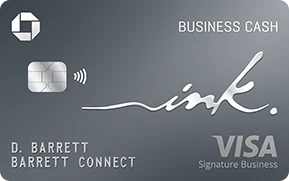
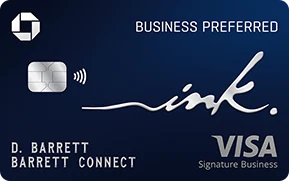
If you have any self-employment income, freelance work, or a side business — even $5,000–$10,000 a year in deductible spend — this is the window to evaluate Ink Cash or Ink Preferred. Ink Business Preferred currently carries a bonus in the 90,000–100,000-point range after $6,000–$8,000 in spend (elevated offers appear periodically; confirm the live number). Ink Business Cash typically runs a cash-value bonus in the $500–$1,000 range with no annual fee.
The detail beginners consistently get wrong: Chase's Ink Business cards are still subject to the 5/24 rule for approval — you need to be under 5/24 to get approved — but once approved, they don't add to your personal 5/24 count going forward. That makes month 5–9 a good window specifically because you're likely still under 5/24 from the two personal cards you opened in months 1–4, and adding a business card now doesn't burn a future personal-card slot.
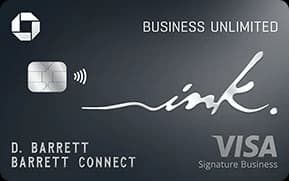
If you took Ink Business Cash or Ink Business Unlimited (no transfer ability on their own), those points become transferable automatically once you hold Sapphire Preferred, Reserve, or Ink Business Preferred — same mechanic as the Freedom cards.
Key takeaway: business cards are the one category that doesn't cost you a future 5/24 slot — evaluate them mid-year if you have real deductible spend, not as an afterthought.
Months 9–12: your first redemption and the trifecta call
By month 9–10, you likely have 100,000–180,000 combined Ultimate Rewards points across your cards. This is the window to make your first transfer-partner redemption rather than letting points accumulate indefinitely — pick a specific trip, check Chase's transfer partners, and book. A first redemption teaches you more about the ecosystem's real value than any amount of reading.
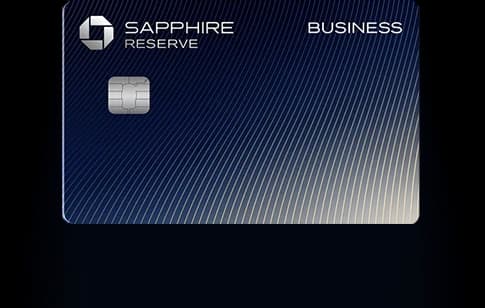
Around your Sapphire Preferred's 12-month mark, review whether to keep it as-is, upgrade to Sapphire Reserve, or add it to a full Chase trifecta (Sapphire + Freedom + Ink). The upgrade to Reserve only pays for itself if your actual travel and dining spend clears roughly $3,000–$4,000/year — see the spend thresholds below.
💡 Pro tip — Don't let points sit past 18–24 months. Transfer ratios and partner award charts change without warning; a redemption modeled in month 3 may not exist at the same price in month 18.
Key takeaway: year one isn't complete until you've made at least one real transfer-partner redemption — the bonus points only become value once you book something with them.
The month-by-month roadmap at a glance
| Month | Action | Card | Why this order |
|---|---|---|---|
| 1 | Apply, hit minimum spend | Sapphire Preferred ($95 AF) | Anchor card — unlocks transfers for everything added later |
| 2–4 | Apply once bonus #1 posts | Freedom Unlimited or Flex ($0 AF) | Free earning power, already transfer-eligible via Sapphire |
| 5–9 | Apply if self-employed/side income | Ink Business Cash or Preferred | Doesn't cost a future 5/24 slot once approved |
| 9–10 | Book a specific trip | — | First real redemption via a transfer partner |
| 11–12 | Anniversary review | Keep / upgrade to Reserve / build trifecta | Decision driven by actual annual spend, not guesswork |
Key takeaway: four applications maximum in year one, each timed to a specific unlock — anchor, free earner, business card, then a pause to actually use the points.
Decision framework: which path fits your annual spend
| Your annual spend profile | Recommended year-one path |
|---|---|
| Under $15,000/year, no dedicated travel budget | Sapphire Preferred + Freedom Unlimited only — skip Reserve and Ink |
| $15,000–$40,000/year, $2,000–$4,000 on travel/dining | Sapphire Preferred + Freedom Unlimited/Flex duo is the ceiling for most people |
| $40,000+/year or $10,000+/year in deductible business spend | Add Ink Business Preferred or Ink Business Cash to build the trifecta |
| 4+ leisure trips/year, want lounge access and the $300 travel credit | Consider upgrading Sapphire Preferred → Reserve once travel/dining spend clears ~$3,500/year |
Real use case: Maria's first year in numbers
Maria opens Sapphire Preferred in January, spends $5,000 in 3 months on rent (via a payment platform), groceries, and normal spend, and earns a 75,000-point welcome bonus. In April, once the bonus has posted, she adds Freedom Unlimited — no AF, 1.5x on everything, and because she already holds the Preferred, every Freedom point is transfer-eligible from day one.
In July, her freelance design income hits $12,000/year, so she applies for Ink Cash and earns a $750 cash-value bonus plus 5% back on the first $25,000 in combined purchases at office supply stores, internet, cable, and phone services. By October she's accumulated roughly 130,000 combined points.
She transfers 60,000 points to World of Hyatt and books four nights at a category 4 property (retail ~$300/night), covering roughly $1,050–$1,200 in room cost — a blended value of about 1.8¢–2¢/point, well above the 1¢ cash-back floor. Total first-year cost across two annual fees: $95 (Sapphire Preferred only — both Freedom and Ink Cash carry no AF). Total value extracted: the welcome bonuses alone (75,000 + $750 cash-equivalent) plus the Hyatt stay clear $1,800–$2,200 against a $95 total annual-fee cost.
Key takeaway: the spend threshold, not personal preference, should decide whether you add Ink or upgrade to Reserve — model your actual annual travel and business spend against the table above before applying for anything past the first two cards.
Bottom line: the fastest path to a working Chase points system isn't opening every card at once — it's sequencing three applications over 6–9 months so each one unlocks value the last one couldn't. Start with Sapphire Preferred, respect 5/24, and don't let points sit unused past your first anniversary. If Chase denies an application along the way, the reconsideration line resolves a meaningful share of first-time declines. For what to actually do with points once you have them, see how to redeem Ultimate Rewards for maximum value and what counts as travel for the $300 credit once you're deciding on the Reserve upgrade.
Disclosure: CreditPoints may receive compensation if you click through and are approved for cards mentioned in this article. We only recommend products we believe deliver genuine value to readers. See our editorial policy for details.
Get weekly card offer alerts
Sunday digest of elevated bonuses. One email, zero spam.
Cards mentioned in this guide




Frequently asked questions
Which Chase card should I get first as a beginner?
Do Chase Ink Business cards count against the 5/24 rule?
Should I get Chase Freedom Unlimited before Sapphire Preferred?
How much annual spend justifies upgrading to Chase Sapphire Reserve?
How many Chase cards should I open in my first year?
Related guides
Rules & Mechanics
Chase 5/24 Rule Explained (2026): What Counts, What Doesn’t, How to Check
9 min
Strategy
Chase Trifecta 2026: Sapphire + 2 Freedoms (Full Math)
14 min
Rewards Programs
Chase Ultimate Rewards Transfer Partners 2026
15 min
Strategy
Chase Sapphire Preferred vs Chase Sapphire Reserve (2026): Which Is Right for You?
10 min
Related news

chase · Jun 9, 2026
Chase Disney Inspire Visa Launch: $99 AF, $400 Welcome — Is It Worth a 5/24 Slot?

chase · Jun 2, 2026
Chase 20% Flying Blue Bonus May 2026: Retrospective

chase · Jun 2, 2026
Chase Ultimate Rewards 2026: Cash-Back + Points Boost

chase · Jun 10, 2026
Chase Hyatt Transfer Ratio 4:3: What It Means for Sapphire Preferred and Ink Business Preferred
Cards in this ecosystem

Considering switching?