How Credit Card Welcome Bonuses Actually Work: Minimum Spend, Timing, Fine Print
The minimum-spend clock starts on your account approval date, not your first statement. Cash advances, balance transfers, and fees never count; ordinary purchases and most gift cards do. Points typically post 6–8 weeks after you clear the threshold, and Chase’s 5/24 rule or Amex’s once-per-lifetime rule can block a bonus regardless of how much you spend.
On this page▾

Topic Collection
Part of the Issuer Application Rules Collection
Explore all 20 articles
A welcome bonus worth $1,500 is not free money — it is a contract with fine print almost nobody reads before applying. Miss the minimum-spend window by a week, run a balance transfer through the wrong card, or apply through the wrong channel, and the six-figure point total you were counting on simply never posts. Every issuer advertises the headline number — 100,000 points, $900 in statement credits — and buries the mechanics that decide whether you actually collect it.
This guide covers the parts issuers don't put in the marketing copy: what spending counts and what doesn't, when the minimum-spend clock actually starts, when points actually land in your account, the approval gates that can block a bonus before you even apply, and why the same card can carry three different offers depending on where you look. For the current best offers by card, see Best Credit Card Sign-Up Bonuses; for how we score whether a given offer is actually strong, see the CP Offer Score explained.
Quick answer
The minimum-spend clock starts on your account approval date — not your first statement, not the day the physical card arrives. Cash advances, balance transfers, and fees never count toward the requirement; ordinary purchases, including most retail gift cards, do. Points typically post 6–8 weeks after you clear the threshold. And the offer itself can differ by up to tens of thousands of points depending on whether you apply online, through a referral link, or in a branch.
- Clock start: account approval date (confirm via your welcome letter or online account terms)
- What counts: purchases and most retail gift cards; what doesn't: cash advances, balance transfers, fees, interest, and refunded purchases
- Posting delay: usually 6–8 weeks after the spend threshold clears, often on the following statement
- Gating rules: Chase's 5/24 and Amex's once-per-lifetime rule can block a bonus regardless of how much you spend
- Channel variance: online, referral, and in-branch offers on the identical card can differ by 25,000+ points
💡 Pro tip — Before you apply for any card, check your own Chase 5/24 status and, for Amex cards, confirm you're not blocked by the once-per-lifetime rule. A denied bonus wastes a hard inquiry and, on Amex, can burn eligibility permanently.
Key takeaway: the minimum-spend window starts at approval, not card-in-hand; only real purchases count; and the gates (5/24, once-per-lifetime) matter more than the headline bonus number.
What actually counts toward minimum spend
Every issuer's terms use some version of the phrase "net purchases," and it means something narrower than "money that left your account."
Counts toward the minimum spend:
- Ordinary retail, dining, travel, and online purchases
- Most retail gift card purchases (Visa/Mastercard gift cards at grocery or drugstore chains typically post as regular retail purchases)
- Recurring bills paid by card — utilities, streaming, insurance premiums, phone plans
- Business expenses run through a business card, including vendor payments and software subscriptions
Never counts toward the minimum spend:
- Cash advances — ATM withdrawals and any transaction coded as a cash-equivalent transaction
- Balance transfers — explicitly excluded on every major issuer's terms, even though the money moves through the account
- Fees — annual fees, balance-transfer fees, cash-advance fees, and foreign-transaction fees are charges, not purchases
- Interest charges
- Returned or refunded purchases — a $500 purchase refunded the next week nets back out of your progress
The gift-card gray zone
This is the part readers get wrong most often. A fixed-value Visa or Mastercard gift card bought at a grocery store or drugstore almost always posts as an ordinary retail purchase — it counts toward minimum spend the same as any other purchase at that merchant. What does not reliably count: reloadable prepaid cards, money orders, and anything the card network's processing codes flag as a cash-equivalent transaction. Some issuers have also started excluding gift-card purchases from bonus category multipliers (you still earn the base rate, just not 3x or 4x) even while the purchase still counts toward the minimum-spend total. Read the current terms for your specific card before assuming a gift-card run will get you there — issuers update these exclusions without much notice.
| Card | Bonus | Minimum spend | Window | Annual fee |
|---|---|---|---|---|
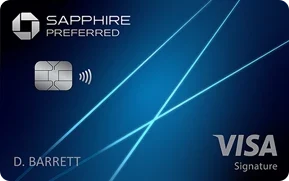
| Sapphire Preferred | 75,000 UR | $5,000 | 3 months | $95 |
| Sapphire Reserve | 100,000 UR | $6,000 | 3 months | $795 |
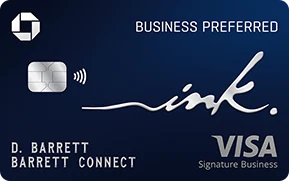
| Ink Preferred | 100,000 UR | $8,000 | 3 months | $95 |
| Amex Gold | 100,000 MR | $8,000 | 6 months | $325 |
| Amex Platinum | 175,000 MR | $12,000 | 6 months | $895 |
| Venture X | 75,000 miles | $4,000 | 3 months | $395 |
Notice the pattern: Amex generally gives you a longer window (6 months) for a larger dollar requirement, while Chase compresses the same or larger requirement into 3 months. That's a mechanical difference that should shape which card you apply for around a given expense — see the minimum-spend strategy guide for how to match a card's window to a real expense you already have coming.
Key takeaway: purchases and most gift cards count; cash advances, balance transfers, fees, and refunds don't. A 3-month, $5,000 requirement and a 6-month, $8,000 requirement are mechanically very different challenges.
When the clock actually starts: approval date, not statement date
The single most common misunderstanding: applicants assume the minimum-spend window starts when they receive the physical card, or when their first statement closes. It doesn't. Across Chase, Amex, Citi, and Capital One, the window opens on your account approval date — the day the issuer approves the application, which is usually instant or within a few business days, well before the card ships.
That means the first 1–2 weeks of your window — while the card is in the mail — already count against your deadline. If you're planning to time a big card application around a known expense (a tuition payment, an insurance renewal), account for shipping time in your math, not just the calendar window quoted in the offer terms.
You can find the exact approval date on your welcome letter, or by checking your account's "terms and conditions" page online — issuers are required to disclose it, but it's rarely on the page that shows your progress toward the bonus.
Key takeaway: the window opens at approval, before the card arrives — build in a week for shipping, don't count it as free spending time.
When points actually post
Clearing the minimum spend is not the same moment as the points landing in your account. Issuers typically post the bonus 6–8 weeks after your statement confirms you crossed the threshold — sometimes on the very next statement, sometimes one statement later, depending on when in your billing cycle you hit the number.
⚠️ Biggest mistake — Downgrading, canceling, or letting the card go inactive the moment you think you've hit minimum spend. Some issuers reserve the right to claw back an unposted bonus if the account closes before the points are credited. Wait for the bonus to actually show up in your rewards balance — usually visible online before it's usable — before you touch the account status.
If eight weeks pass with no bonus and your statement clearly shows the spend threshold cleared, that's the point to call the issuer, not before. Premature calls waste time; issuers won't investigate until the standard posting window has elapsed.
Key takeaway: budget 6–8 weeks after clearing the threshold before the bonus posts, and don't touch the account's open/closed status until it does.
The gates that decide if you get a bonus at all
Meeting minimum spend is irrelevant if you were never eligible for the bonus in the first place. Two rules block more bonuses than any spending mistake does:
Chase's 5/24 rule — if you've opened five or more personal credit cards (any issuer) in the last 24 months, Chase denies nearly every consumer card application outright, with no reconsideration path on most products. Business cards from other issuers usually don't count toward your 5/24 total, but Chase's own business cards are still subject to the rule on the way in. Full mechanics: Chase 5/24 rule explained.
Amex's once-per-lifetime rule — earn a specific card's welcome bonus once, and Amex flags that card family on your Customer ID permanently. There's no waiting period like Chase's; the block doesn't expire. The rule applies per card family, not per issuer — a personal Gold bonus doesn't block Business Gold. Full mechanics: Amex once-per-lifetime rule explained.
Check both before you apply, not after a denial. Chase's pre-qualification tool and Amex's pre-qualification tool both check eligibility without a hard pull.
Key takeaway: 5/24 and once-per-lifetime can block a bonus regardless of spend — check eligibility with a soft pull before applying, not after a denial burns a hard inquiry.
Why the same card can show a different offer depending on where you look
The exact same physical card can carry meaningfully different welcome offers across channels:
- The public evergreen offer — what you see logged out on the issuer's own website. This is usually the baseline, and often the lowest of the three.
- A targeted or pre-qualified offer — mailers, email offers, or tools like Amex's CardMatch sometimes show an elevated bonus not available on the public page, targeted at specific credit profiles.
- A referral offer — an existing cardholder's referral link occasionally carries a different bonus than the public page, and can also earn the referrer bonus points, which is why some applicants specifically seek out a referral before applying.
- In-branch offers — less common today, but some banks still authorize branch bankers to extend an offer not listed online, particularly for existing relationship customers.
The practical rule: never apply from the first link you see. Check the issuer's public page, search for a current targeted offer, and ask whether anyone in your circle has a live referral link, before submitting the application that starts your clock.
Key takeaway: the same card can differ by tens of thousands of points across public, targeted, and referral channels — compare all three before applying, since applying resets your options.
Real use case: timing an Ink Business Preferred application
Setup: A freelance consultant expects a $9,000 software-license renewal and a $3,000 conference-travel expense in the same quarter — $12,000 in already-planned spend, well above the Ink Preferred's $8,000/3-month requirement.
Execution: Apply for the card before either expense posts, so both land inside the 3-month window. The software renewal alone (if it processes on the card) covers the full $8,000 requirement in one transaction.
Result: 100,000 Ultimate Rewards points for spend the consultant was going to incur anyway, on a $95 annual fee. At CreditPoints' realistic 1.25¢/point Ultimate Rewards valuation, that's roughly $1,250 in value for zero incremental spending.
Decision framework — matching your gap to a card's window:
| Your spend gap to the bonus | Best approach |
|---|---|
| Under $1,000 | Move one recurring bill cycle (insurance, utilities) onto the new card — don't force it |
| $1,000–$4,000 | Time the application around one known lump expense (tuition installment, insurance renewal, planned trip) |
| $4,000–$8,000 | Requires a genuine large expense already on your calendar — see the minimum-spend strategy guide for the legitimate options and where the math stops making sense |
| Above $8,000 with no real expense to point at | Don't force it — an artificially inflated spend habit to chase a bonus usually costs more in interest or impulse purchases than the bonus is worth |
Key takeaway: match the card's spend window to an expense you already have on the calendar — don't invent spending to chase a bonus.
Editor's take
The welcome-bonus mechanics are consistent enough across issuers that "read the terms" is genuinely good advice, not a cop-out. The two things that trip up more people than bad math are timing (assuming the clock starts later than it does) and eligibility (applying while blocked by 5/24 or once-per-lifetime). Get those two right and the spend-tracking itself is usually the easy part — see how we score whether an offer is actually worth chasing for the next layer of the decision.
Disclosure: CreditPoints may receive compensation if you click through and are approved for cards mentioned in this article. We only recommend products we believe deliver genuine value to readers. See our editorial policy for details.
Get weekly card offer alerts
Sunday digest of elevated bonuses. One email, zero spam.
Cards mentioned in this guide



Frequently asked questions
Does the minimum-spend clock start when I apply or when I’m approved?
Do balance transfers count toward a welcome bonus’s minimum spend?
Will buying gift cards help me hit minimum spend?
How long after hitting minimum spend do welcome bonus points actually post?
Can Chase deny my welcome bonus if I go over 5/24 after I’m already approved?
Why did my friend get a better welcome offer than the one I see online?
Related guides
Related news




Cards in this ecosystem

Considering switching?