Best Credit Card Sign-Up Bonuses of June 2026
As of June 2026, the top credit card sign-up bonus is the Chase Ink Business Preferred at an all-time-high 200,000 Ultimate Rewards points after $8,000 in three months. The Chase Ink Business Cash and Unlimited each offer $1,000 cash back, the Amex Platinum sits at 80,000–100,000 MR points, and the Capital One Venture X offers up to 100,000 miles. Watch Chase 5/24 and the Amex once-per-lifetime rule before applying.
On this page▾

Quick answer
June 2026 is one of the best months ever to collect sign-up bonuses. The Chase Ink Business Preferred is offering an all-time-high 200,000 Ultimate Rewards points after $8,000 in spending in three months, while the Chase Ink Business Cash and Unlimited are each offering $1,000 cash back — records for those cards. On the personal side, the Amex Platinum sits at 80,000–100,000 Membership Rewards points and the Capital One Venture X is offering up to 100,000 miles.
TL;DR: As of June 2026, the top credit card welcome bonuses include: Chase Ink Business Preferred at 200,000 UR points ($8K/3 mo, all-time high), Chase Ink Business Cash at $1,000 cash back ($8K/4 mo), Chase Ink Business Unlimited at $1,000 cash back, Amex Platinum at 80,000–100,000 MR points, Amex Gold at 60,000–90,000 MR points, Capital One Venture X at 75,000–100,000 miles, and Chase Sapphire Reserve at up to 100,000 UR points when available. Key rules: Chase 5/24 limits approvals if you opened 5+ cards in 24 months; Amex bonuses are once per lifetime per card product.
Top picks at a glance
| Card | Best for |
|---|---|
| Ink Preferred | Highest-ever points bonus — 200K UR |
| Ink Cash | Best cash-back welcome offer — $1,000 |
| Ink Unlimited | Simple flat-rate cash back + $1,000 bonus |
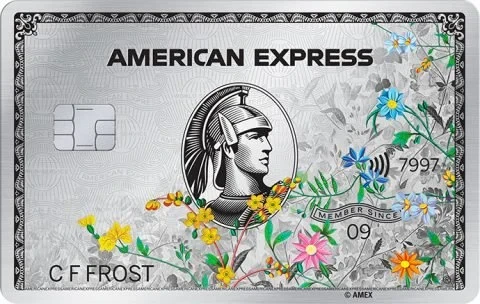
| Amex Platinum | Premium travel perks + 80K–100K MR points |
| Amex Gold | Dining & groceries + 60K–90K MR points |
| Venture X | Flexible travel miles + up to 100K bonus |
The all-time-high Chase Ink Business Preferred offer
The Ink Preferred is the single most valuable welcome bonus available right now. At 200,000 Ultimate Rewards points after spending $8,000 in the first three months, this is the highest bonus the card has ever offered. UR points are worth approximately 1.5–2 cents each when transferred to airline and hotel partners such as United, Hyatt, and Air Canada Aeroplan — see the Chase Ultimate Rewards guide for a full partner-by-partner breakdown — which means this bonus is realistically worth $3,000–$4,000 in travel — and potentially more for aspirational redemptions.
The card's $95 annual fee is modest relative to the bonus. It also earns 3× UR points on travel, shipping, internet, cable, phone, and advertising on social media and search engines (up to $150,000 per year), making it a strong ongoing earner for small-business owners.
To qualify you need a legitimate business — sole proprietorships, freelancers, and side-gig operators all count. You also must be under Chase's 5/24 rule (more on that below). If you've previously held this card and received its bonus, you need to wait 24 months from the date you last received the bonus before you're eligible again.
The $8,000 minimum spend over three months is meaningful but achievable for most businesses. Paying estimated taxes, buying inventory, or prepaying software subscriptions are common ways to hit the threshold. If the spend feels tight, the Chase Ink Business Cash and Unlimited each require $8,000 over a more generous four months for their $1,000 bonuses.
Chase Ink Business Cash and Unlimited — $1,000 cash-back records
Both the Ink Cash and Ink Unlimited carry $1,000 cash-back welcome bonuses after $8,000 in purchases within the first four months — the best offers these cards have ever seen. Neither card has an annual fee, which means there is zero ongoing cost to hold them.
The Ink Cash earns 5% at office supply stores and on internet, cable, and phone services (up to $25,000/year), plus 2% at gas stations and restaurants. The Ink Unlimited earns a flat 1.5% on every purchase. Both cards earn Chase Ultimate Rewards points under the hood — if you also hold the Ink Business Preferred or Chase Sapphire Reserve, you can pool points and transfer them to travel partners, dramatically increasing the value of the $1,000 "cash back."
A smart strategy is to apply for the Ink Business Preferred first (since it has the bigger bonus and a spend requirement you'll hit in 3 months), then apply for the Ink Cash or Unlimited after a 30–90-day waiting period. Chase is generally comfortable approving multiple Ink cards for the same business over time as long as you're under 5/24 and demonstrate responsible credit use.
Amex Platinum and Gold — elevated personal card bonuses
The Amex Platinum is currently showing 80,000–100,000 Membership Rewards points after $8,000 in purchases within the first six months — look for targeted 100K offers via CardMatch or referral links. With a $895 annual fee, the Platinum is best suited to frequent travelers who can use its long list of credits: up to $200 airline fee credit, $200 Uber Cash, $240 digital entertainment credit, $155 Walmart+ credit, $189 CLEAR Plus credit, and access to Centurion and Priority Pass lounges worldwide. Membership Rewards points transfer to over 20 airline and hotel partners, including Air France/KLM Flying Blue, ANA, Delta, and Marriott Bonvoy.
The Amex Gold sits at 60,000–90,000 MR points after $6,000 in purchases in the first six months, with a $325 annual fee. It earns 4× MR on restaurants worldwide and at U.S. supermarkets (up to $25,000/year), plus 3× on flights booked directly with airlines. Its $120 dining credit (Grubhub, Cheesecake Factory, Goldbelly, etc.) and $120 Uber Cash partially offset the annual fee. For anyone who spends heavily on food and dining, the Gold is one of the best ongoing earners in any wallet.
Both Amex cards are subject to the once-per-lifetime rule: if you've ever received a welcome bonus on the same card product, you are permanently ineligible for a new bonus — even if you cancelled years ago.
Capital One Venture X — flexible miles at a record offer
The Venture X is offering 75,000–100,000 miles after $4,000 in purchases within the first three months. Capital One miles transfer to 15+ airline and hotel partners including Air Canada Aeroplan, Turkish Airlines Miles&Smiles, and Wyndham Rewards — the full Capital One Miles program guide covers every partner — and are worth approximately 1–1.7 cents each in transfer value. The card's $395 annual fee is substantially offset by a $300 annual travel credit (applied to Capital One Travel bookings) and 10,000 anniversary miles (worth ~$100), making the net effective cost under $100 per year for people who travel even occasionally.
The Venture X earns 10× miles on hotels and rental cars booked through Capital One Travel, 5× on flights booked through Capital One Travel, and 2× on everything else. It also provides Priority Pass and Capital One Lounge access, making it a strong premium travel card at a fraction of the Amex Platinum's fee. Unlike Chase and Amex, Capital One does not publish strict lifetime-bonus rules — you may be eligible for a repeat bonus after 48 months, though this is not guaranteed.
Chase Sapphire Reserve — the flagship personal UR card
When available, the Sapphire Reserve offers up to 100,000 Ultimate Rewards points, though standard public offers often show 60,000–75,000 points after $4,000 in three months. Always check for elevated in-branch offers and referral links. The card carries a $795 annual fee but includes a $300 travel credit that applies automatically to the first travel purchases each year, effectively reducing the fee to $495. It earns 3× UR on travel and dining, and its points are worth 1.5 cents each through Chase's own travel portal — or more when transferred to partners.
Chase's once-per-48-months rule applies: you cannot earn a Sapphire-family bonus (Preferred or Reserve) more than once every 48 months. Additionally, you must be under 5/24 to be approved.
How to evaluate any welcome bonus
Not all welcome bonuses are created equal. Use this framework to assess any offer:
1. Points value. Estimate the cash value of the points or miles. UR and MR points are worth 1.5–2+ cents when transferred to partners. Cash-back is face value. Airline miles vary widely — 75K United miles is worth far more in business class than in economy.
2. Minimum spend requirement. Divide the spend requirement by the number of months. If a card requires $6,000 in three months ($2,000/month) and your baseline spending is $1,500/month, you'll need to put extra charges on the card or find organic spend like insurance premiums or utility bills.
3. Time limit. Three months is tight; six months is comfortable. Never manufacture spend through cash advances or gift-card reselling at a loss — the risk of account shutdown is not worth it.
4. Annual fee. Subtract the value of credits and ongoing benefits you'll actually use from the annual fee. A $550 card with $300 in credits you'll use has a real cost of $250. Factor that into your bonus calculation.
5. Opportunity cost. Every application may occupy a Chase 5/24 slot or tie up spending that could hit another bonus. Sequence your applications thoughtfully.
Application strategy and key rules
Chase 5/24. Chase will deny most card applications if you've opened five or more new credit card accounts (across all issuers) in the past 24 months. Business cards from Amex, Citi, and Capital One typically don't show on your personal credit report and don't count toward 5/24. Chase business cards also don't add to your 5/24 count — but you still need to be under 5/24 to get approved for them. Priority: get Chase cards first while you're under 5/24, then branch out to Amex and Capital One.
Amex once-per-lifetime rule. Amex will not award a welcome bonus on a card if you have ever had that card and received its bonus before, even decades ago. If you're unsure, check the terms before applying — the application page often states "not eligible if you've had this card." There is no workaround.
Amex pop-up jail. Amex may show a pop-up during the application informing you that you won't receive the bonus. Always use the CardMatch tool or apply via referral links to pre-check targeted offers that are more likely to pay out.
Velocity limits. Amex approves at most two personal and two business cards in a 90-day window. Chase is more conservative — one or two cards per month is a safe pace. Applying for too many cards quickly raises fraud flags and increases denial rates.
Credit score. Premium travel cards like the Amex Platinum and Chase Sapphire Reserve generally require a 720+ FICO score. The Capital One Venture X is approachable at 700+. Chase Ink Business cards may be approved at slightly lower scores if your business is established.
Bottom line
June 2026 is an exceptional time to add a credit card — especially if you own a small business. The Ink Preferred at 200,000 UR points is a once-in-a-decade opportunity, and pairing it with the no-fee Ink Cash or Ink Unlimited compounds the value dramatically. On the personal side, the Amex Platinum and Venture X offer strong all-in value for frequent travelers. Deciding between the marquee business and premium picks? Our Amex Platinum vs Chase Ink Business Preferred comparison weighs the two biggest bonuses of the season. Apply strategically — Chase first, Amex and Capital One after — and you can collect well over $5,000 in travel value from a single application season. Once you have the points, see best card combinations to maximize them across ecosystems, and review Citi application rules if you plan to add a ThankYou card to your stack.
Get weekly card offer alerts
Sunday digest of elevated bonuses. One email, zero spam.