Paying Rent and Vendors by Card: Bilt, Plastiq, and Alternatives 2026
For earning on rent every month, Bilt is the only mainstream route that does it without charging a percentage fee, and it is the right answer for most renters. For putting a large one-off payment on a card, an intermediary like Plastiq charges 2.99 percent and delivers the money by ACH, wire or cheque to recipients that do not accept cards. At 2.99 percent, a 2x card is roughly break-even and a 1x card is a clear loss, so use the fee route to clear a welcome bonus or a spending threshold rather than as a monthly habit. If the payment does not have to be rent, a federal tax payment buys the same spend at 1.75 percent instead.
On this page▾

Rent is the largest recurring payment most households make and the one card networks reach least. Two answers exist and they are not variations of each other. Bilt earns points on rent without charging a card fee. Everything else charges a fee, usually around 3 percent, and only makes sense when the points are worth more than that or when the payment unlocks something bigger.
Quick answer
If your goal is to earn on rent every month, Bilt is the only mainstream route that does it without a percentage fee, and it is the right answer for most renters. If your goal is to push a large one-off payment onto a card, a service like Plastiq charges 2.99 percent and will send the money to a landlord or vendor that does not accept cards, by ACH, wire or cheque. At 2.99 percent, ongoing rewards rarely justify the cost on their own, so treat fee-based rent and vendor payments as a tool for clearing a welcome bonus or a spending threshold, not as a monthly habit.
- Bilt: earns on rent without a percentage card fee
- Plastiq: 2.99 percent, works where the recipient takes no cards
- Federal tax by comparison: 1.75 percent, the cheapest way to buy spend
- Break-even at 2.99 percent: you need points worth roughly 3 cents on a 1x card
- Best use of the fee route: welcome bonuses and spending thresholds
💡 Pro tip — If you need to buy spend and it does not have to be rent, buy it as a tax payment instead. Same job, 1.75 percent versus 2.99 percent, which is $124 saved on a $10,000 payment.
The two models
| Bilt | Fee-based services | |
|---|---|---|
| What it is | A rewards program built around rent | A payment intermediary |
| Percentage fee on rent | None on the Bilt path | About 2.99 percent |
| Who it pays | Your landlord, through Bilt | Almost any recipient, by ACH, wire or cheque |
| Best for | Earning every month | One-off large payments |
| Worst for | Landlords outside the network | Ongoing use, where the fee compounds |
The distinction matters because people compare them as if they were competitors. They are not. Bilt answers "how do I earn on rent"; Plastiq answers "how do I put this payment on a card at all".
Key takeaway: a fee-free route is about earning, a fee-based route is about access, and confusing the two is how people end up paying 3 percent every month.
The arithmetic at 2.99 percent
Divide the fee by the points earned to get cost per point, then compare against what you actually get for them.
| Card earn rate | Points on $2,000 rent | Fee at 2.99% | Cost per point |
|---|---|---|---|
| 1x | 2,000 | $60 | 3.0 cents |
| 1.5x | 3,000 | $60 | 2.0 cents |
| 2x | 4,000 | $60 | 1.5 cents |
| 3x | 6,000 | $60 | 1.0 cent |
Transferable points reliably return 1.5 to 2 cents when used well. So a 2x card is roughly break-even, a 3x card is a modest win, and a 1x card is a clear loss. That table explains why ongoing fee-based rent payment is a bad monthly habit for almost everyone: very few cards earn 3x on a rent-coded payment.
When paying a fee is clearly right
- Clearing a welcome bonus. A $3,000 rent payment costs $90 and can be the difference between earning a bonus worth several hundred dollars and missing it.
- Hitting a spending threshold that unlocks a free night, a companion fare, or a retention benefit.
- Paying a vendor who takes no cards when the alternative is a wire you would pay a bank fee on anyway.
- Deliberate cash flow management, where the float is worth more than the fee and the balance is cleared in full.
When it is clearly wrong
- As a monthly routine on a 1x or 2x card. The fee eats the reward.
- When you will carry a balance. Interest dwarfs both the fee and the rewards.
- When a cheaper route buys the same spend. Tax payments cost 1.75 percent.
- When your landlord already accepts cards directly. Check first; many property managers now do, sometimes at a lower fee than an intermediary.
Other routes worth checking
Your landlord's own portal. Large property managers increasingly accept cards directly, often at 2 to 3 percent, occasionally lower. It is worth one email before assuming you need an intermediary.
Bill-pay services attached to specific categories. Some utilities, insurers and municipal services accept cards at a lower fee than a general intermediary, and a few accept them free.
Business vendor payments. If the payment is a business expense, the processing fee is generally deductible against business tax, which effectively discounts it by your marginal rate. That does not apply to personal rent.
Cheque and ACH. Free, earns nothing, and remains the correct answer for most people most months.
A worked comparison
You need to move $6,000 onto a new card to clear a bonus, and you have three options.
| Route | Fee | Cost |
|---|---|---|
| Federal tax via Pay1040 | 1.75 percent | $105 |
| Rent via a fee-based service | 2.99 percent | $179 |
| Vendor invoice via a fee-based service | 2.99 percent | $179 |
If a tax payment is available to you, it is $74 cheaper for identical work. The rent route earns its place when tax is not an option, when the frequency limits are already used, or when the payment is genuinely due anyway.
Common mistakes
- Treating Bilt and fee-based services as alternatives. One earns, the other provides access.
- Paying 2.99 percent monthly on a 2x card. That is a break-even at best, repeated twelve times.
- Not asking the landlord first. Direct acceptance is more common than it used to be.
- Using rent when tax is cheaper. Same spend, 1.24 percentage points more expensive.
- Forgetting delivery time. ACH, wire and cheque take days; a rent deadline is not the moment to discover that.
- Carrying the balance. The fee is 2.99 percent once; interest is far more, repeatedly.
Editor's take
Our position is that fee-based rent payment is a good tool and a bad habit. Once or twice a year, aimed at a welcome bonus or a threshold, it is among the cheapest ways to manufacture legitimate spend. Every month, on a card earning 2x, it is a slow leak dressed up as optimization. For ongoing earning on rent, the fee-free route is the only one that survives contact with the arithmetic, and for buying spend generally, a tax payment beats a rent payment by more than a percentage point for exactly the same result.
Related reading
- Bilt Rent Day explained — the monthly promotion that changes the fee-free math
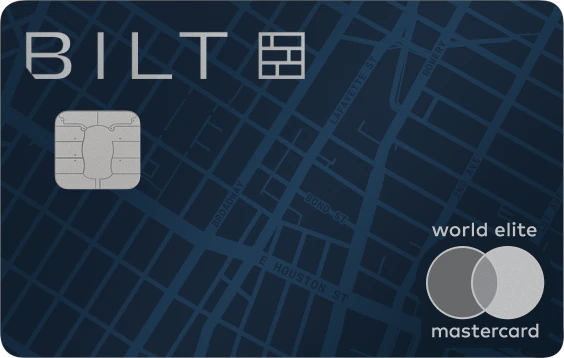
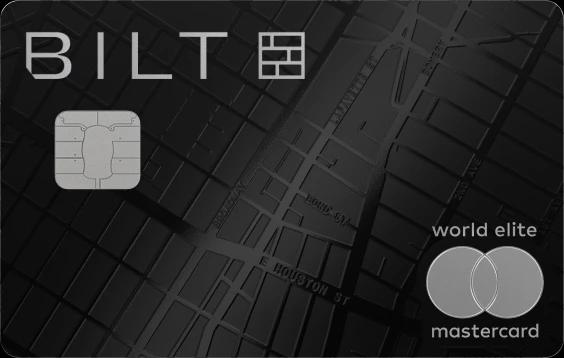
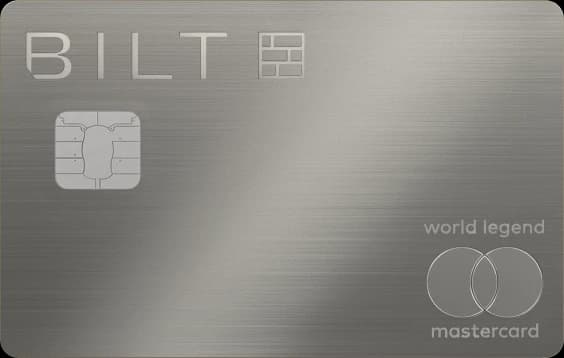
- Bilt Mastercard 2.0 complete guide — how the fee-free rent path works
- Paying taxes with a credit card — the cheaper way to buy the same spend
- Meeting an $8k+ business minimum spend — where this route fits in a bonus plan
- How to transfer Bilt to Hyatt — what the points you earn are worth
- Business credit card expense management — the vendor-payment side in detail
Get weekly card offer alerts
Sunday digest of elevated bonuses. One email, zero spam.
Cards mentioned in this guide
Frequently asked questions
What does Plastiq charge to pay rent by credit card?
Is it worth paying rent by card every month?
Is there a cheaper way to put a big payment on a card?
Can I ask my landlord to take a card directly?
Are the fees deductible if the payment is a business expense?
Related guides
Rules & Mechanics
Bilt Rent Day Explained: How to Maximize the Monthly Promo (2026)
9 min
Card Roundups
Does Bilt Card 2.0 Require 5 Transactions? (2026 Guide)
18 min
Strategy
Paying Taxes with a Credit Card: Processor Fees vs Rewards Math 2026
8 min
Strategy
Meeting an $8k+ Business Card Minimum Spend Without Wasting Money
8 min
Related news

bilt · Jun 2, 2026
Bilt Rent Day June 2026: TAP 25-125% Bonus Explained

bilt · Jun 2, 2026
Bilt 2.0 at 6 Months: What Worked, What Backfired

industry · Jun 2, 2026
Biggest Credit Card Changes 2026: Mid-Year Retrospective

chase · Jun 10, 2026
Chase Hyatt Transfer Ratio 4:3: What It Means for Sapphire Preferred and Ink Business Preferred
Cards in this ecosystem
Considering switching?