Should You Keep or Cancel the Capital One Savor? (2026)
Capital One Savor keep or cancel decision guide 2026. $95 annual fee break-even is $2,375 dining/year. Downgrade to SavorOne or cancel? Miles fate explained.
On this page▾

Topic Collection
Part of the Keep or Cancel Collection
Explore all 23 articles
Quick answer
Keep the Capital One Savor if you spend at least $2,375/year on dining — the 4% cash back rate covers the $95 annual fee exactly at that threshold. If you spend more, you profit. If you spend less, downgrade to the SavorOne (no annual fee, 3% dining) rather than canceling outright. Only cancel if you have a superior dining card like the Amex Gold and no longer want to maintain two ecosystems.
TL;DR: The Capital One Savor has a $95 annual fee and earns 4% on dining and entertainment. Break-even on dining alone is $2,375/year. Alternatives include downgrading to the no-annual-fee SavorOne (which earns 3% on dining) or replacing with the Amex Gold (4x on restaurants, $325 annual fee). Your miles are preserved if you downgrade but may be forfeited if you cancel.
At a glance
| Feature | Detail |
|---|---|
| Annual fee | $95 |
| Dining earn rate | 4% cash back (or 4x miles if earning Venture Miles) |
| Entertainment earn rate | 4% |
| Grocery stores earn rate | 3% (excluding superstores) |
| All other purchases | 1% |
| Break-even on dining ($95 AF) | $2,375/year ($198/month) |
| Downgrade option | Capital One SavorOne (no annual fee, 3% dining) |
| Cancel or downgrade? | Downgrade in most cases |
| Retention offer available? | Yes — call and ask |
Is the $95 annual fee worth it?
The Capital One Savor charges $95 per year. Its primary value comes from the 4% earn rate on dining and entertainment. To determine whether the fee is justified, calculate your annual spending in these categories:
Dining break-even math:
- Annual fee: $95
- Savor earns 4% on dining; SavorOne earns 3% on dining
- The extra 1% on Savor vs SavorOne is worth $95 when you spend $9,500/year on dining
- Compared to a no-rewards card: break-even on the Savor itself is $2,375/year on dining alone
The real question is: what would you put on the card instead? If you have a 2% cash back card as your baseline, the Savor's extra 2% over baseline ($95 fee ÷ 0.02 extra = $4,750/year required to break even) is a tougher hurdle.
For travel-focused cardholders: If you have the Venture X, your Capital One miles may pool together, meaning dining on the Savor at 3x or 4x earns transferable Venture Miles — adding significant value beyond simple cash back calculations.
When to keep the Capital One Savor
Keep the Savor if:
- You spend $2,375+ per year on dining ($198+/month)
- You also spend on entertainment (concerts, streaming, sports — all earn 4%)
- You use Capital One miles and want to maximize Venture Miles earning on dining
- You have not received a retention offer yet (call first before making a decision)
- You have already applied within the last year and canceling would hurt your credit mix
The dining + entertainment double: Many Savor holders underestimate how much entertainment spend adds up. Concerts, movies, sporting events, streaming services — all earn 4%. Add entertainment to your dining math before deciding.
Entertainment examples that earn 4%:
- Live event tickets (concerts, sports, theater)
- Streaming services (Netflix, Hulu, Spotify)
- Movie theaters
- Amusement parks
- Select video game purchases
If dining is $150/month and entertainment is $50/month, that's $200/month × 12 = $2,400/year × 4% = $96 — barely breaking even on the fee, but tied.
When to downgrade to SavorOne
Downgrade to SavorOne if:
- Your dining + entertainment spending does not justify the $95 fee
- You still want some reward on dining (3% SavorOne vs 1% bare card) but not the $95 charge
- You want to preserve your account history and credit limit (downgrading does not close the account)
- You want to preserve your Capital One miles balance (downgrading keeps miles intact)
The SavorOne charges no annual fee and earns:
- 3% on dining and entertainment
- 3% on grocery stores (excluding superstores)
- 8% on Capital One Entertainment
- 1% everywhere else
Downgrading vs canceling: Downgrading the Savor to a SavorOne or Quicksilver keeps your account open, preserves your credit line, maintains your average account age, and keeps your Capital One rewards balance. (The same logic applies if you are deciding whether to downgrade the Venture X rather than cancel it.) Capital One allows product changes between personal cards. Call the number on the back of your card and ask to "downgrade" or "product change" the Savor.
When to cancel the Capital One Savor
Cancel the Savor if:
- You already have the Amex Gold and use it for 4x dining (why pay $95 for 4% when Amex Gold gives 4x + superior ecosystem?)
- You have the Venture X and SavorOne — the SavorOne carries no fee and earns 3% dining while the Venture X handles everything else
- Your total dining + entertainment spending is under $1,500/year and the math doesn't work even after a retention offer
- You are simplifying your wallet and this card no longer fits your strategy
What happens to your miles if you cancel? This depends on your Capital One setup:
- If the Savor is your ONLY Capital One rewards card: your miles may be forfeited upon cancellation. Redeem or transfer them first.
- If you have another Capital One miles card (like Venture X or Venture): your miles typically transfer to or remain in the surviving account — but confirm with Capital One before closing. See the keep or cancel Venture X guide if you are also weighing that card's annual fee.
Always transfer or redeem your miles before canceling any card, not just Capital One cards.
How to request a retention offer
Before canceling or downgrading, call Capital One at the number on the back of your card and say:
"I'm considering canceling my Savor card because the annual fee no longer makes sense for my spending. Is there any retention offer or statement credit available to keep the account?"
Capital One retention offers are less common than Chase or Amex offers but do exist. You may receive a statement credit, bonus miles, or a temporary fee waiver. The worst they can say is no. If you get a $50–$95 credit, that effectively reduces or eliminates the annual fee for another year.
Best time to call: Right when the annual fee posts or within 30 days after. Capital One may be more flexible in that window.
Comparing the Savor vs SavorOne vs Amex Gold for dining
| Card | Annual Fee | Dining Earn Rate | Other Benefits |
|---|---|---|---|
| Savor | $95 | 4% (or 4x miles) | 4% entertainment |
| SavorOne | $0 | 3% | 3% groceries |
| Amex Gold | $325 | 4x Membership Rewards | $120 dining credit, $120 Uber Cash, airline fee credit, transferable MR points |
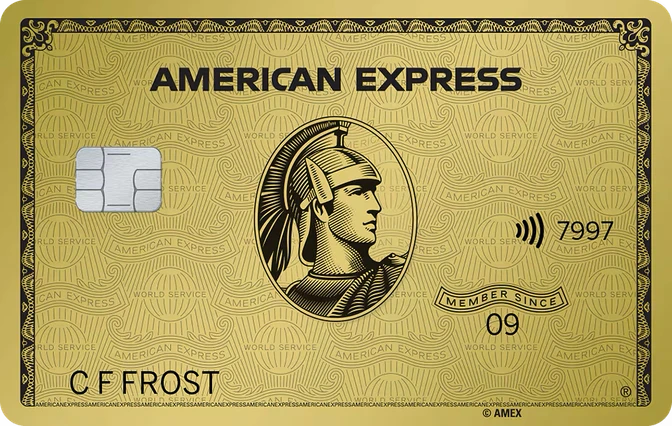
The Amex Gold case: At $325 annual fee, the Amex Gold earns 4x at restaurants (the same ratio as the Savor's 4%) plus up to $240 in annual credits ($120 dining at participating restaurants + $120 Uber Cash). If you use those credits, the effective annual fee is around $10. The Amex Gold also earns 4x at US supermarkets (up to $25,000/year). And Membership Rewards points transfer to 20+ airline programs — a more robust transfer ecosystem than Capital One.
If you have the Amex Gold: there is a strong argument to cancel the Savor and consolidate dining spend on the Gold. The Savor's 4% is identical to the Gold's 4x in earn rate, but the Gold's ecosystem and credit offsets make the $325 fee more justifiable.
The Capital One ecosystem consideration
If you are deeply invested in the Capital One Venture Miles ecosystem — meaning you have the Venture X and use miles for Turkish, Avianca, or Flying Blue transfers — the Savor's 4x earning on dining produces valuable Venture Miles, not just 4% cash back. In that context, the Savor may be worth keeping even if simple cash-back math doesn't justify the fee.
Venture Miles earning on dining at 4x (via Savor) compared to 2x (via Venture X's base rate) effectively doubles your miles per dollar on dining. At a transfer value of 1.5–2 cents per mile to premium cabin travel, that gap compounds quickly.
Step-by-step decision guide
- Calculate your dining + entertainment spend: multiply monthly by 12
- If over $2,375/year: lean toward keeping the Savor
- If between $1,500–$2,375/year: call for a retention offer first
- If under $1,500/year: downgrade to SavorOne rather than cancel
- Do you have the Amex Gold? If yes, reconsider keeping Savor unless you need Capital One miles specifically
- Do you have other Capital One cards? Confirm miles fate before canceling
- Call Capital One and ask for a retention offer regardless of your spending level before making a final decision
Get weekly card offer alerts
Sunday digest of elevated bonuses. One email, zero spam.
Cards mentioned in this guide



Frequently asked questions
What happens to my Capital One miles if I cancel the Savor?
Can I downgrade the Capital One Savor to a no-annual-fee card?
Does Capital One offer retention bonuses on the Savor card?
How does the Capital One SavorOne compare to the Savor for dining?
Should I cancel the Savor if I already have the Amex Gold?
Related guides
Strategy
Capital One Card Ecosystem Guide 2026: Best Stack, Partners & Strategy
15 min
Rules & Mechanics
Capital One Application Rules 2026: Triple Bureau Pull and Approval Strategy
12 min
Rewards Programs
How to Transfer Capital One Miles to Turkish Airlines 2026
11 min
Rewards Programs
How to Transfer Capital One Miles to Avianca LifeMiles 2026
11 min
Related news

capital-one · Jun 10, 2026
Capital One Dulles Lounge Partially Closes July 9 — What Venture X Cardholders Should Know

airlines · Jun 2, 2026
Credit Card Transfer Bonuses Mid-2026: H1 Drought Recap

airlines · Jun 2, 2026
Flying Blue Promo Awards June 2026: Best Europe Deal?

airlines · Jun 2, 2026
Aeroplan 2026: SQC Status and June 1 Devaluation