Amex Gold vs Capital One SavorOne: Best Dining Card (2026)
Pick Amex Gold ($325 annual fee) if you spend $6,000+/year on dining and U.S. supermarkets combined, will use its monthly dining/Uber/Resy credits, and transfer Membership Rewards to airline partners at 1.5-2+ cents — its 4x earn then beats SavorOne. Pick Capital One SavorOne ($0 annual fee) for an unlimited 3% on dining, groceries, and entertainment with no fee, no caps to track, and no monthly homework. For most casual diners below the break-even, SavorOne is the smarter, free default.
On this page▾

The best dining card is not the one with the highest multiplier — it is the one whose value clears its annual fee for your real spend. Amex Gold earns more per dollar and per point, but charges $325 a year to do it. Capital One SavorOne earns 3% on dining, groceries, and entertainment for $0. The gap between them is a single number: how much you actually spend on food.
This is the comparison that decides whether a dining-focused person should pay an annual fee at all. Amex Gold runs $325/year and earns transferable Membership Rewards. SavorOne runs $0/year and earns flat cash back. Both are excellent dining cards. They are excellent for opposite reasons — one is a premium points engine that demands engagement, the other is a no-fee tool you can set and forget. Capital One SavorOne Cash Rewards Credit Card is closed to new applicants — the no-fee dining card is now sold as Savor Rewards.
The honest framing: Amex Gold wins on raw earn rate and point ceiling, SavorOne wins on simplicity and never charging you. The break-even is roughly $6,000-$8,000 a year of combined dining and grocery spend, depending on how you redeem and whether you use the Gold credits. Below is the side-by-side, a worked break-even table, who should pick which, and a clear verdict.
Quick answer
Pick Amex Gold if you spend $6,000+/year on dining and U.S. supermarkets combined, will use its monthly credits, and want airline-transfer point value. Pick Capital One SavorOne if you want 3% on dining with zero annual fee, zero category caps to track, and no monthly-credit homework. For most casual diners under that spend threshold, SavorOne is the smarter default — it never costs anything and the 3% lands every single time. For heavy diners who engage with the Amex ecosystem, Gold's 4x earn plus transferable points produces more total value than 3% cash back ever can.
TL;DR: Amex Gold ($325 annual fee) earns 4x Membership Rewards on dining worldwide and 4x at U.S. supermarkets (each capped at $25,000/year), and those points transfer to airline partners at roughly 1.5-2+ cents each. Capital One SavorOne has a $0 annual fee, earns an unlimited 3% cash back on dining, grocery stores, entertainment, and streaming, 1% on everything else, and charges no foreign-transaction fee. Gold delivers more value above roughly $6,000-$8,000/year of combined dining-and-grocery spend if its credits are used and points are transferred; SavorOne wins below that threshold and for anyone who wants simplicity and no fee. The Amex welcome bonus is once-per-lifetime per card.
At a glance
| Amex Gold | Capital One SavorOne | |
|---|---|---|
| Annual fee | $325 | $0 |
| Dining earn | 4x worldwide | 3% unlimited |
| U.S. supermarkets / groceries | 4x (cap $25,000/yr) | 3% grocery stores |
| Entertainment | 1x | 3% |
| Streaming | 1x | 3% |
| Everything else | 1x | 1% |
| Reward type | Transferable Membership Rewards | Cash back (or 1x-value miles) |
| Point/cash value | ~1.5-2+ cents via airline transfers | 1 cent flat |
| Foreign-transaction fee | None | None |
| Monthly credits | Dining + Uber + Resy (offset much of fee) | None |
| Tracking burden | High (credit calendar, $25K caps) | None |
| Welcome bonus | Yes, once-per-lifetime | Yes |
The headline difference is the fee-vs-rate trade. SavorOne's 3% is flat, uncapped, and free. Gold's 4x is higher, but it costs $325 up front and the value only materializes if you redeem Membership Rewards above 1 cent — which means transferring to airline partners, not cashing out.
How the earn rates actually compare
Multipliers and percentages are not directly comparable until you fix a point value. SavorOne pays a literal 3 cents per dollar on dining. Amex Gold pays 4 Membership Rewards per dollar — worth 4 cents only if you redeem each point at 1 cent. Cash out Gold's points at 1 cent and you get 4% back; transfer them to Amex Gold's airline partners at 1.5-2 cents and the same 4x becomes 6-8 cents per dollar on dining.
That is the whole argument. If you cash out, Gold's 4x still edges SavorOne's 3% — but the $325 fee swamps a 1-percentage-point lead until your spend is enormous. If you transfer points, Gold's effective dining rate doubles SavorOne's, and the fee gets cleared at a much lower spend level.
Dining: Gold 4x vs SavorOne 3%. At a 1-cent cash valuation, Gold leads by 1 point per dollar. At a 1.75-cent transfer valuation, Gold's dining return is roughly 7% — more than double SavorOne's 3%.
Groceries / U.S. supermarkets: Gold 4x (capped at $25,000/year) vs SavorOne 3% at grocery stores. Same dynamic — Gold leads on rate, leads further on point value, but only up to the $25,000 cap.
Entertainment and streaming: SavorOne wins outright. SavorOne earns 3% on entertainment (concerts, sports, movies) and streaming; Gold earns only 1x. A household with meaningful concert, ticket, or streaming spend tilts toward SavorOne here.
Everything else: Both earn their base rate — Gold 1x, SavorOne 1%. A wash.
The break-even on the $325 fee
Here is the worked example. Assume a household spends a combined amount per year on dining plus U.S. groceries, splits it evenly, and we compare net value after the annual fee. SavorOne values cash at 1 cent. Gold is shown two ways: points cashed out at 1 cent, and points transferred at 1.75 cents. Gold's column also credits $200/year of realistically-used monthly credits (dining + Uber + Resy), which offset much of the fee.
| Combined dining + grocery / yr | SavorOne net (3%, $0 AF) | Gold net — cash out (4x @ 1¢, +$200 credits, −$325) | Gold net — transfer (4x @ 1.75¢, +$200 credits, −$325) |
|---|---|---|---|
| $3,000 | $90 | $120 + $200 − $325 = −$5 | $210 + $200 − $325 = $85 |
| $6,000 | $180 | $240 + $200 − $325 = $115 | $420 + $200 − $325 = $295 |
| $8,000 | $240 | $320 + $200 − $325 = $195 | $560 + $200 − $325 = $435 |
| $12,000 | $360 | $480 + $200 − $325 = $355 | $840 + $200 − $325 = $715 |
Read it carefully. If you cash out Membership Rewards at 1 cent, Gold barely beats SavorOne even at $12,000 of spend — and trails it below roughly $8,000. The $325 fee is brutal for cash-out users. But if you transfer points at 1.75 cents, Gold pulls ahead of SavorOne somewhere around $6,000-$8,000 of combined dining-and-grocery spend, and the lead widens fast after that.
So the break-even is not a single number — it depends entirely on whether you redeem at 1 cent or transfer at 1.5-2+ cents. For a transfer user, ~$6,000-$8,000/year combined is the crossover. For a cash-out user, Gold rarely makes sense at all, and SavorOne is the correct card.
Where the credits change the math
Amex Gold's dining, Uber, and Resy credits are the hidden lever. They offset much of the $325 fee — but only if you use them. They drop in monthly increments and do not roll over; a forgotten month is value lost permanently. A disciplined Gold holder who uses the credits and orders Uber/UberEats and dines at Resy restaurants can offset a large share of the fee before earning a single point. A holder who ignores them is paying the full $325 against a 1-percentage-point earn edge — a losing trade at almost any spend level.
SavorOne has no credits to track because it has no fee to offset. This is the entire simplicity argument: there is no calendar, no caps under $25,000 to monitor, no monthly homework. The 3% lands automatically, forever, for free.
Who should pick which
Pick Amex Gold if you spend $6,000+/year combined on dining and U.S. supermarkets, you will actually use the monthly dining/Uber/Resy credits, you want point value above 1 cent via airline transfers (Air France-KLM, ANA, and others), and you are comfortable managing a credit calendar and the $25,000 category caps. Gold rewards engagement. For a heavy diner who transfers points, it is the highest-value dining card available.
Pick Capital One SavorOne if you want a flat 3% on dining with no annual fee, you value simplicity over squeezing out the last cent, your dining-plus-grocery spend is under roughly $6,000/year, you have meaningful entertainment or streaming spend (3% there vs Gold's 1x), or you simply do not want to manage credits and caps. SavorOne is the no-fee default that never costs you anything and never makes you do homework. It also carries no foreign-transaction fee, so it travels well.
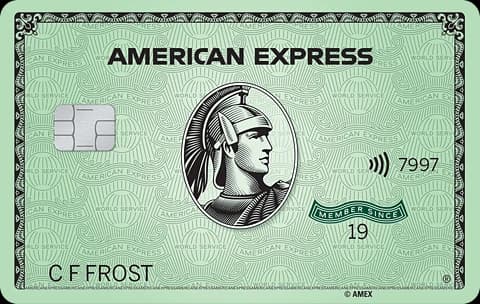
Consider a hybrid: there is no rule against holding both. Many readers keep SavorOne as the free, always-on 3% dining card and add Gold only once their dining-plus-grocery spend clears the break-even and they have committed to transferring points. If you want a no-fee card that also earns transferable points, Amex Green is an alternative worth a look — see our Amex Green review for the full rate breakdown — though its rate structure differs. And if your spend is dining-light but grocery-heavy, a rotating-category card like Custom Cash can out-earn both in its top category.
Bottom line
Amex Gold is the better dining card if — and only if — you spend heavily on food, use the credits, and transfer points; otherwise Capital One SavorOne wins by default. Gold's 4x earn and transferable Membership Rewards produce more total value than 3% cash back can, but the $325 annual fee demands $6,000-$8,000/year of combined dining-and-grocery spend plus disciplined credit usage and point transfers to justify itself. Below that bar, or for anyone who wants to never think about it, SavorOne's free, uncapped 3% is the smarter card. Start with SavorOne, graduate to Gold when your spend and engagement make the fee pay for itself.
Get weekly card offer alerts
Sunday digest of elevated bonuses. One email, zero spam.
Cards mentioned in this guide

Frequently asked questions
Is Amex Gold worth the $325 annual fee for dining?
How much do I need to spend for Amex Gold to beat SavorOne?
Does Capital One SavorOne charge an annual fee or foreign-transaction fee?
Can I hold both Amex Gold and Capital One SavorOne at the same time?
Why is Amex Gold called a transferable-points card and SavorOne is not?
Related guides
Related news

airlines · Jun 2, 2026
Aeroplan 2026: SQC Status and June 1 Devaluation

amex · Jun 9, 2026
Amex Renames Green Card to "Classic Green" August 2026 — What Changes (Spoiler: Almost Nothing)

industry · Jun 6, 2026
Apartment Collection by Hilton

amex · Jun 2, 2026
Amex 30% Avios Transfer Bonus: 1,000 MR = 1,300 Avios, Ends ~June 21 2026
Cards in this ecosystem


Considering switching?