How to Maximize Every Amex Gold Statement Credit in 2026
The Amex Gold has four enrollment-required statement credits worth up to $424/year against its $325 annual fee: $120/yr dining ($10/mo at Grubhub, The Cheesecake Factory, Goldbelly, Wine.com, Milk Bar), $120/yr Uber Cash ($10/mo), $84/yr Dunkin ($7/mo), and $100/yr Resy ($50 in H1 + $50 in H2). The three monthly credits expire each month if unused, so enroll all four and set monthly reminders.
On this page▾

The Amex Gold charges a $325 annual fee — but ships with up to $424 of statement credits across dining, Uber, Dunkin, and Resy. Use all of them and the card pays for itself before you count a single Membership Rewards point. Miss the monthly use-it-or-lose-it windows and you are just renting a metal card.
The Amex Gold is a credit-stacking card, not a flat-rate one — and if you want the full picture before diving into each credit, the Amex Gold card review covers rewards rates, perks, and who should apply. Its real cost depends entirely on how many of the monthly credits you actually trigger. The math is unforgiving in one direction and generous in the other: four separate credits, three of them reset every single month, and none of them roll over. This guide breaks down each credit, how to trigger it, the exact timing trap, and the realistic net cost after you fold in the 4× dining and grocery earn.
Quick answer
The Amex Gold has four enrollment-required statement credits worth up to $424/year against a $325 annual fee: a $120/year dining credit ($10/month at Grubhub, The Cheesecake Factory, Goldbelly, Wine.com, and Milk Bar), $120/year Uber Cash ($10/month for US Uber and Uber Eats), an $84/year Dunkin credit ($7/month at Dunkin), and a $100/year Resy credit ($50 January-June + $50 July-December). The three monthly credits expire at the end of each calendar month if unused. Enroll all four in your Amex account, set monthly reminders, and the credits alone more than offset the fee — before counting 4× Membership Rewards on dining and US groceries.
TL;DR: The Amex Gold Card ($325 annual fee) includes four enrollment-required statement credits: $120/yr dining ($10/mo at Grubhub, The Cheesecake Factory, Goldbelly, Wine.com, Milk Bar), $120/yr Uber Cash ($10/mo US Uber/Uber Eats), $84/yr Dunkin ($7/mo), and $100/yr Resy ($50 in H1 + $50 in H2). The dining, Uber, and Dunkin credits are monthly and use-it-or-lose-it — unused balances do not roll over. Realizing all four returns up to $424/year, exceeding the $325 fee, before the card's 4× Membership Rewards earn on restaurants worldwide and US supermarkets (4× capped at the first $25,000/year). The most common mistake is forgetting the small $10 monthly Uber and dining credits.
Credits at a glance
| Credit | Amount | How to use it | Timing |
|---|---|---|---|
| Dining credit | $120/yr ($10/mo) | Spend at Grubhub, The Cheesecake Factory, Goldbelly, Wine.com, or Milk Bar | Resets monthly — use it or lose it |
| Uber Cash | $120/yr ($10/mo) | Add Gold to Uber wallet; cash lands monthly for US Uber rides + Uber Eats | Resets monthly — does not roll over |
| Dunkin credit | $84/yr ($7/mo) | Spend $7+ at Dunkin locations | Resets monthly — expires end of month |
| Resy credit | $100/yr ($50 + $50) | Pay at Resy partner restaurants (US) | Two halves: Jan-Jun, then Jul-Dec |
The dining, Uber, and Dunkin credits are the three monthly ones — those are where almost all the lost value happens. The Resy credit is semi-annual, so you get two six-month windows instead of twelve one-month windows.
Why the math works
Add the four credits at full value: $120 + $120 + $84 + $100 = $424 per year. That is $99 more than the $325 annual fee. In other words, if you trigger every credit, you are net positive by $99 before earning a single point. Then the rewards stack on top.
The Gold earns 4× Membership Rewards on dining worldwide and 4× at US supermarkets (the grocery 4× is capped at the first $25,000 of spend per calendar year, then drops to 1×). A household that puts $6,000 of dining and $6,000 of groceries on the card earns 48,000 MR per year — worth roughly $720 at a conservative 1.5¢/point transfer value, and the Amex Membership Rewards program guide walks through every transfer partner and redemption option in detail. Combined with the credits, the card swings from a $325 cost to a multi-hundred-dollar annual gain.
Net-cost scenarios
| Credits realized | Credit value | Net fee (before points) | With $720 of 4× earn |
|---|---|---|---|
| All four | $424 | −$99 (you profit) | −$819 (you profit) |
| Three of four (skip Dunkin) | $340 | −$15 (you profit) | −$735 |
| Half (forget the monthly small ones) | ~$160 | +$165 | −$555 |
| None | $0 | +$325 | −$395 |
Even in the worst case where you forget every credit, the 4× earn can still rescue the card if your dining and grocery spend is high enough. But there is no reason to leave the easy $424 on the table — and for cardholders wondering whether to keep the card long-term, the keep or cancel Amex Gold guide runs through the exact break-even math.
The dining credit
How it works
The $10/month dining credit applies to purchases at a fixed list of partners: Grubhub, The Cheesecake Factory, Goldbelly, Wine.com, and Milk Bar. It is not a general restaurant credit — it only triggers at those specific merchants. Grubhub is the most flexible because it covers food delivery and pickup from thousands of local restaurants, plus Grubhub+ membership — and pairing this with Amex Offers targeted to dining merchants can stack additional savings on the same transactions.
How to trigger it
Enroll the card in the dining credit through your Amex online account first (no enrollment, no credit). Then spend at least $10 at any qualifying partner in a calendar month. The simplest repeatable play is a $10+ Grubhub order. The statement credit posts within a few days.
The timing trap
This is a monthly, use-it-or-lose-it credit. If you do not spend by the last day of the calendar month, that month's $10 is gone forever — it does not bank, roll, or refund. Twelve missed months is the full $120.
The Uber Cash credit
How it works
$10 in Uber Cash is deposited into your Uber account each month, for a total of $120/year. It works on US Uber rides and Uber Eats orders. The Gold must be the selected payment method in your Uber wallet for the credit to deposit.
How to trigger it
Add the Amex Gold as a payment method in the Uber app and make sure it is set as the default Amex card there. The $10 deposits automatically at the start of each month — you do not have to spend to receive it, but you do have to spend to use it before it expires.
The timing trap
The deposited Uber Cash expires at the end of each month. A common mistake is letting two or three months of $10 stack mentally — they do not stack. Each month's $10 must be spent within that month. An Uber Eats order or a single ride clears it easily.
The Dunkin credit
How it works
The $7/month Dunkin credit ($84/year) applies to purchases of $7 or more at Dunkin locations. You need to hit the $7 threshold in a single qualifying transaction or eligible spend to capture the full credit.
How to trigger it
Enroll in the Dunkin benefit in your Amex account, then spend $7+ at Dunkin in the month. Reloading a Dunkin app gift-card balance of $7+ is a reliable way to hit the threshold even if you are not buying coffee that week.
The timing trap
Monthly and non-cumulative. If your Dunkin spend in a month is under $7, or zero, that month's $7 is lost. This is the credit most people skip — which is fine if you never go to Dunkin, but it is also the easiest $84 to leave behind.
The Resy credit
How it works
The Resy credit is $100/year split into two halves: $50 from January through June, and $50 from July through December. It applies to dining at US restaurants that use Resy for reservations and payment. Unlike the other three, it is semi-annual rather than monthly, so the windows are longer and more forgiving.
How to trigger it
Enroll in the Resy benefit, then pay your bill at a participating Resy restaurant. You get up to $50 back in the first half of the year and another $50 in the second half.
The timing trap
The two halves do not combine. If you do not use the $50 in the January-June window, it does not carry into the July-December window — you forfeit it and start fresh with the second $50. Plan one Resy meal per half-year and the full $100 is yours. Cardholders who want to compare the credit structure against Amex's premium card should read the Amex Platinum review, which carries a far larger but more complex set of benefits.
Your monthly credit checklist
Run this every month. The three monthly credits ($10 dining + $10 Uber + $7 Dunkin = $27/month) reset on the 1st and expire on the last day.
- 1st of the month: Confirm $10 Uber Cash deposited in your Uber wallet.
- Mid-month: Place a $10+ Grubhub order to clear the dining credit.
- Mid-month: Use the $10 Uber Cash on an Uber Eats order or a ride.
- Mid-month: Spend $7+ at Dunkin (or reload $7 to the Dunkin app) for the Dunkin credit.
- Last week: Sweep — check Amex's "Benefits" tab for any credit still showing as available, and clear it before the month closes.
- June and December: Confirm the $50 Resy credit is used before each half-year window closes.
A recurring calendar reminder on the 5th, 20th, and 28th of each month captures all three monthly credits with margin to spare.
Common mistakes
1. Not enrolling. Every Amex Gold credit is enrollment-required. The card does not auto-apply them. Log into your Amex account, open the Benefits section, and click enroll on dining, Uber, Dunkin, and Resy. No enrollment means $0 in credits and a full $325 fee.
2. Treating the monthly credits as if they bank. The $10 dining, $10 Uber, and $7 Dunkin credits reset every calendar month. Skipping a month does not give you $20 next month — it just deletes $27. Across a year, forgetting the small monthly credits is how people quietly lose $200+ of value.
3. Forgetting the Uber wallet setup. Uber Cash only deposits if the Gold is added to your Uber payment methods. People enroll in the benefit but never add the card to Uber, then wonder where the $10 went.
4. Confusing the dining credit with general restaurants. The $10 dining credit only works at Grubhub, The Cheesecake Factory, Goldbelly, Wine.com, and Milk Bar — not at any restaurant. A normal restaurant tab earns 4× points but does not trigger the dining credit.
5. Letting the first Resy $50 expire. The Resy credit's January-June half does not roll into the July-December half. Two separate meals, two separate windows.
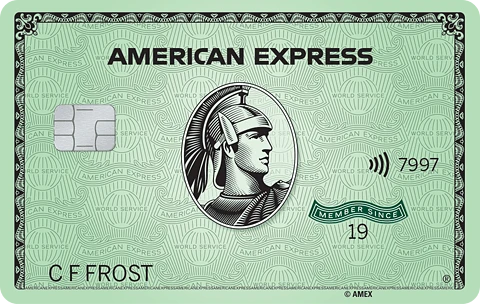
6. Holding the card with no dining or grocery spend. If you neither trigger the credits nor use the 4× categories, the Gold is a $325 fee for nothing. Either feed it real dining and grocery spend or downgrade to a no-fee Amex EveryDay or the Amex Green if you want to keep the Membership Rewards account alive.
Bottom line
The Amex Gold's $325 fee is a sticker price, not the real cost. Enroll in all four credits, work the monthly checklist, and you collect up to $424 in statement credits — a net gain of $99 before a single point. Add the 4× Membership Rewards on dining and US groceries and a typical household nets several hundred dollars a year. The only way the Gold loses money is neglect: forgetting the small monthly $10 dining, $10 Uber, and $7 Dunkin credits that quietly expire on the last day of each month. Treat the credits like a monthly subscription you have already paid for, and the card is one of the best-value mid-tier products in the Amex Green and Membership Rewards ecosystem — and once you are maximizing the credits here, the Amex trifecta strategy shows how to stack the Gold with the Platinum and a no-fee card to squeeze even more value from the top Membership Rewards sweet spots.
Get weekly card offer alerts
Sunday digest of elevated bonuses. One email, zero spam.
Cards mentioned in this guide

Frequently asked questions
Do the Amex Gold statement credits really offset the $325 annual fee?
What happens if I forget to use a monthly Amex Gold credit?
Does the Amex Gold dining credit work at any restaurant?
How does the Amex Gold Resy credit timing work?
Is the Amex Gold worth keeping if I do not use all the credits?
Related guides
Related news

amex · Jun 9, 2026
Amex Renames Green Card to "Classic Green" August 2026 — What Changes (Spoiler: Almost Nothing)

amex · Jun 2, 2026
Amex 30% Avios Transfer Bonus: 1,000 MR = 1,300 Avios, Ends ~June 21 2026

amex · Jun 2, 2026
Amex Gold 60th Anniversary Refresh 2026: Who Wins?

industry · Jun 6, 2026
Apartment Collection by Hilton
Cards in this ecosystem



Considering switching?