The Amex Quadfecta 2026: Four Cards, One Membership Rewards Engine
Route dining and U.S. groceries to the Amex Gold (4×), flights and prepaid hotels to the Amex Platinum (5×), broad travel and transit to the Amex Green (3×), and everything else to the Amex Blue Business Plus (2×). All four pool into one Membership Rewards account that transfers 1:1 to Delta, Aeroplan, Flying Blue, and more. Combined annual fees of $1,370 drop to roughly $300–$500 net after Gold and Platinum credits.
On this page▾

Four Amex cards. One Membership Rewards account. Every dollar of spend earns 2× to 5× depending on where you swipe, all of it pooling into a single transferable currency. The Platinum carries flights and hotels at 5×, the Gold owns dining and U.S. groceries at 4×, the Green sweeps broad travel and transit at 3×, and the Blue Business Plus mops up everything else at 2×.
The Amex Quadfecta is the maximalist build of the Membership Rewards ecosystem. Where an Amex trifecta leaves your "everything else" spend earning 1×, the quadfecta closes that gap by adding Blue Business Plus — a $0-annual-fee card that earns 2× on the first $50,000 of general spend each year. No category is left at 1×. That single change lifts the blended earn rate on a typical spend profile from roughly 2.1× to 2.6×, a 24% improvement on the unbonused tail of your budget.
This is the 2026 step-by-step build. Which card catches which purchase, how the four pool into one MR balance, where those points transfer for outsized value, the combined annual-fee math against the credits that offset it, and the build order that respects Amex's application rules so you don't torch a once-per-lifetime welcome bonus.
Quick answer
The Amex Quadfecta routes every purchase to the highest-earning of four cards, then pools all points into one Membership Rewards account.
- Amex Gold ($325 AF) — dining worldwide and U.S. groceries at 4×
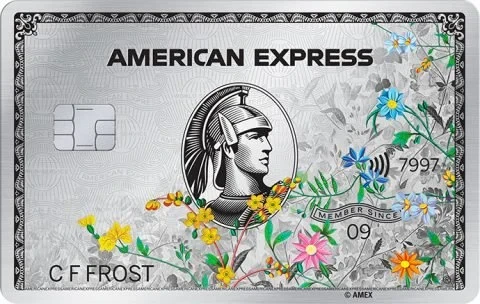
- Amex Platinum ($895 AF) — flights and prepaid hotels booked through Amex Travel at 5×
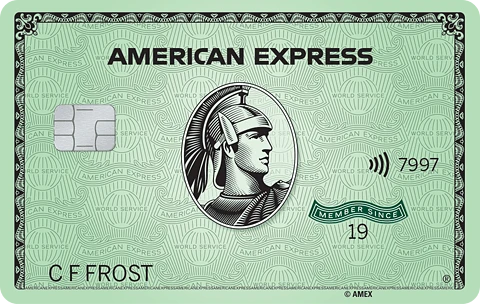
- Amex Green ($150 AF) — broad travel, transit, rideshare, and restaurants at 3×
- Blue Business Plus ($0 AF) — literally everything else at 2× (up to $50K/year)
Combined annual fees run $1,370, but the statement credits on Gold and Platinum offset roughly $1,000 of that for an engaged user. All four earn the same Membership Rewards points, which transfer 1:1 to partners like Delta, Aeroplan, Flying Blue, ANA, and Virgin Atlantic — where the points are worth far more than the 0.6¢ Amex Travel gives you for cash-style redemptions. The Membership Rewards sweet spots guide breaks down the best ways to redeem those transfers for maximum value.
TL;DR: The "Amex Quadfecta" is a four-card Membership Rewards strategy: Amex Gold (4× dining + U.S. groceries), Amex Platinum (5× flights + prepaid hotels via Amex Travel), Amex Green (3× broad travel, transit, restaurants), and Amex Blue Business Plus (2× everything else). All four pool into one Membership Rewards account that transfers 1:1 to airline and hotel partners including Delta, Aeroplan, Flying Blue, British Airways, Virgin Atlantic, ANA, Hilton, and Marriott — but NOT United or World of Hyatt. Combined annual fees total $1,370 ($895 + $325 + $150 + $0), heavily offset by Gold and Platinum statement credits. A simpler "trifecta" drops the Green. Welcome bonuses are once-per-lifetime per card, so applications should be spaced using Amex's 2-in-90 rule.
Which card for which purchase
| Purchase type | Route to | Earn rate | Why |
|---|---|---|---|
| Dining / restaurants (worldwide) | Amex Gold | 4× | Gold beats Green's 3× on restaurants |
| U.S. groceries | Amex Gold | 4× | Up to $25K/year, then 1× |
| Flights (direct or Amex Travel) | Amex Platinum | 5× | Highest single multiplier in the stack |
| Prepaid hotels via Amex Travel | Amex Platinum | 5× | Includes Fine Hotels & Resorts bookings |
| Broad travel (any travel merchant) | Amex Green | 3× | Catches travel the Platinum 5× misses |
| Transit / subway / bus / parking | Amex Green | 3× | Plat and Gold earn only 1× here |
| Rideshare (Uber, Lyft) | Amex Green | 3× | Coded as transit/travel |
| Everything else | Blue Business Plus | 2× | First $50K/year, then 1× |
The one judgment call: restaurants are 4× on Gold and 3× on Green, so dining always goes to Gold. Green's 3× restaurant category is a backstop for when you've maxed something else, not the primary dining card.
How the four cards pool into one balance
All Membership Rewards points sit in a single account tied to your Amex login. There is no manual transfer between cards, no "combine points" step, and no expiration as long as one MR-earning card stays open. The Blue Business Plus is a business card, but its points pool with your personal cards for transfer purposes — you see them under one Membership Rewards balance when you go to transfer out.
This is the whole point of the structure. You earn at four different rates across four cards, but you spend from one unified pile. Transfer-partner access is granted by your premium cards (Gold, Platinum, Green) — the Blue Business Plus alone earns "Membership Rewards Express" points that need a premium card open to unlock full 1:1 transfers. In a quadfecta you always have a premium card open, so this never bites you.
Where the points actually go
Membership Rewards transfer 1:1 to a deep partner list. The headline airline partners:
- Delta SkyMiles — 1:1, useful for domestic and the SkyTeam network
- Air Canada Aeroplan — 1:1, one of the best sweet-spot programs
- Air France-KLM Flying Blue — 1:1, frequent transfer bonuses
- British Airways / Qatar Avios — 1:1, short-haul and oneworld value
- Virgin Atlantic Flying Club — 1:1, ANA and Delta partner awards
- ANA Mileage Club — 1:1, round-the-world and Star Alliance premium cabins
Hotel side: Hilton Honors (1:2, usually weak) and Marriott Bonvoy (1:1). Two important gaps: no United and no World of Hyatt. If United or Hyatt redemptions are central to your travel, the quadfecta is the wrong ecosystem — that is Chase Ultimate Rewards territory. Redeemed for cash or Amex Travel bookings, MR is worth only about 0.6¢ per point; transferred to the right partner award, the same point routinely clears 1.5–2.5¢. That spread is why the transfer step is non-negotiable.
The fee-vs-value math
| Card | Annual fee | Key offsetting credits | Net cost (engaged user) |
|---|---|---|---|
| Amex Platinum | $895 | $200 airline + $200 Uber + $200 FHR/prepaid hotel + $189 CLEAR + $155 Walmart+ + $300 Equinox | ~$0–$200 if you use most |
| Amex Gold | $325 | $120 Uber + $120 dining + $84 Dunkin + $100 Resy | ~$0–$100 if you use most |
| Amex Green | $150 | $189 CLEAR + $199 LoungeBuddy | Can net positive |
| Blue Business Plus | $0 | None needed | $0 |
| Combined | $1,370 | ~$1,000+ realisable | ~$300–$500 net |
The headline $1,370 is the number Amex hopes scares you off. The realistic number after credits, for someone who actually uses Uber, books one prepaid hotel a year, and enrolls in CLEAR once (you only need it on one card), is closer to $300–$500 net. Against that you're earning 2× to 5× on every dollar and capturing four once-per-lifetime welcome bonuses worth well over $5,000 in transferable points in year one.
A note on the CLEAR credit: both Platinum ($189) and Green ($189) offer it, but CLEAR costs one membership, so you can only realise one. Don't double-count it in your math.
Step-by-step build order
The build order matters because of Amex's velocity rules: roughly one new Amex card per 5 days, and no more than two Amex cards in any 90-day window. Welcome bonuses are once-per-lifetime per card, so a denied application or a wasted bonus is expensive. Space the applications.
-
Open Amex Gold first. It has the most broadly useful 4× categories (dining + groceries) and the lowest minimum-spend bar to hit its welcome bonus. Put all dining and U.S. grocery spend here immediately.
-
Wait ~90 days, then open Amex Platinum. This is your single largest welcome bonus and your travel-earning engine — see the full Amex Platinum review for a deep dive on every credit and benefit. If you can only justify one of these two anchor cards rather than both, the Amex Gold vs Amex Platinum comparison weighs their earning and credits head to head. Start booking flights and prepaid hotels through it at 5×. Enroll in CLEAR on this card (not Green) and set calendar reminders for the monthly Uber and airline credits.
-
Wait another ~90 days, then add Amex Green. Now broad travel, transit, and rideshare have a 3× home instead of falling to 1×. Green is the lowest-fee premium card and rounds out category coverage.
-
Add Blue Business Plus when you have a business to apply with. As a $0-AF business card it can be opened without disturbing your personal velocity much, and it converts your entire "everything else" tail from 1× to 2× — see the Blue Business Plus review for the fine print. If you don't have business activity, the Blue Business Cash or the Amex Business Gold are alternative routes into the business side of the ecosystem.
After the build, your only ongoing job is routing discipline (swipe the right card) and credit discipline (use the monthly credits, which are forfeited if unused). A shared note or a card sticker labeling each card's category solves the routing problem permanently.
A simpler path: drop the Green
If four cards feels like too much, the trifecta — Gold + Platinum + Blue Business Plus — captures 90% of the value. You lose the 3× on transit and broad travel (those purchases fall to 2× on Blue Business Plus instead of 3× on Green), but you save $150 in annual fee and one card to manage. For most people whose travel spend already funnels through the Platinum at 5×, the Green's incremental 3× on the leftover transit slice is the most skippable piece of the quadfecta. The Amex Gold card review covers that card's 4× categories and dining credits in full detail if you want to evaluate it independently.
Add the Green back when your transit, rideshare, and non-Amex-Travel travel spend grows past roughly $3,000/year — that's the point where the extra 1× (3× vs 2×) on that spend covers the $150 fee with room to spare.
Bottom line
The Amex Quadfecta is the most complete way to earn Membership Rewards: 5× flights and prepaid hotels, 4× dining and groceries, 3× broad travel and transit, 2× everything else, all pooling into one transferable balance. The $1,370 in combined annual fees looks brutal until you net out the ~$1,000 in Gold and Platinum credits, leaving a real cost near $300–$500 for someone who uses the benefits. Build it in order — Gold, then Platinum, then Green, then Blue Business Plus — spacing applications to respect the 2-in-90 rule and protect four once-per-lifetime bonuses. Then transfer your points to Aeroplan, Flying Blue, or Virgin Atlantic and watch a 0.6¢ point turn into a 2¢ one. Just remember the two gaps: no United, no Hyatt. If those programs are your travel core, the quadfecta isn't your ecosystem.
Get weekly card offer alerts
Sunday digest of elevated bonuses. One email, zero spam.
Cards mentioned in this guide


Frequently asked questions
What is the Amex Quadfecta?
Do all four cards really pool their points together?
Can I transfer Amex points to United or Hyatt?
Are the $1,370 in combined annual fees worth it?
In what order should I apply for the four cards?
Should I skip the Green and just run a trifecta?
Related guides
Related news

amex · Jun 2, 2026
Amex 30% Avios Transfer Bonus: 1,000 MR = 1,300 Avios, Ends ~June 21 2026

amex · Jun 9, 2026
Amex Renames Green Card to "Classic Green" August 2026 — What Changes (Spoiler: Almost Nothing)

amex · Jun 2, 2026
Amex Gold 60th Anniversary Refresh 2026: Who Wins?

industry · Jun 6, 2026
Apartment Collection by Hilton
Cards in this ecosystem


Considering switching?