Annual Fee Refund Rules by Issuer: How Long You Have to Cancel or Downgrade (2026)
Close a card within the issuer's refund window and the annual fee comes back in full: about 30 days from the statement date at Amex, 30 days from posting at Chase, 37 at Citi, 39 at Capital One, 60 at Barclays, about 30 at Bank of America and U.S. Bank, and up to 90 at Wells Fargo on limited data; Bilt publishes no policy. After the window, Amex prorates a downgrade but not a cancellation, Chase refunds nothing either way, and Capital One is inconsistent. No issuer allows a product change before twelve months, so the window after the second fee is the one that matters — call inside it, ask for a retention offer first, then downgrade or cancel.
On this page▾

Topic Collection
Part of the Card Downgrade Guides Collection
Explore all 32 articles
The annual fee is not final the day it posts. Every major issuer refunds it in full if you close the card within a window — 30 days at Amex and Chase, 37 at Citi, 39 at Capital One, 60 at Barclays — and most will prorate it if you downgrade after that. The window is the safety net behind every keep-or-cancel decision: you can let the fee post, see the second-year credits, and still walk away without paying. Miss it, and the same decision costs you the full fee.
Below: the refund window for nine issuers, what happens on cancel versus downgrade inside and outside it, the twelve-month rule that blocks early downgrades, and a worked timeline for a fee that posts in October.
Quick answer
Close a card within the issuer's refund window and the annual fee comes back in full: about 30 days from the statement date at American Express, 30 days from posting at Chase (reports run to 41 days from statement close), 37 days at Citi, 39 days at Capital One, 60 days at Barclays, about 30 days at Bank of America and U.S. Bank, and up to 90 days at Wells Fargo on limited data. After the window, Amex prorates the fee if you downgrade to a cheaper card but not if you cancel; Chase does not prorate either way; Capital One's downgrade proration is inconsistent. Every issuer requires the account to be at least twelve months old before a product change, so the window that matters is the one after the second fee, not the first.
- Longest windows: Wells Fargo (about 90 days, thin data), Barclays (60 days)
- Shortest: Amex, Chase, Bank of America, U.S. Bank (about 30 days)
- Prorated on downgrade after the window: Amex yes, Chase no, Capital One inconsistent, Citi reported yes
- Never assume: Bilt has no published policy — call and ask before the fee posts
💡 Pro tip — Set a calendar reminder for the day the fee posts, not the anniversary. The window counts from the statement or posting date, which is often two to four weeks after your card anniversary, and every issuer starts the clock there.
The refund windows
| Issuer | Full refund if closed within | Prorated refund after the window? | Notes |
|---|---|---|---|
| American Express | 30 days from the statement date the fee appears on | Downgrade: yes, prorated. Cancel: no | The most consistent policy; agents apply it without argument |
| Chase | 30 days from the fee posting; reports run up to 41 days from statement close | No, for either cancel or downgrade | Chase stopped prorating in 2019; the window is the only refund |
| Citi | 37 days from the statement date | Reported prorated on downgrade; inconsistent | Written into Citi's cardmember agreement |
| Capital One | 39 days from posting | Inconsistent on downgrade; some reports of proration, some of none | Ask the agent to confirm before agreeing to the change |
| Barclays | 60 days from posting | Reported prorated | The longest firm window among the big issuers |
| Bank of America | About 30 days; inconsistent reports | Inconsistent | Confirm on the call; data points vary |
| U.S. Bank | 30 days from posting | Reported prorated on some cards | Older data; Altitude Reserve reports are the most common |
| Wells Fargo | Up to 90 days from posting | Limited data | Few premium cards; treat the window as unconfirmed |
| Bilt | Not published | Not published | Call before the fee posts; do not rely on a window |
Key takeaway: the window is 30 days at the two issuers that hold most premium cards — Amex and Chase — and the two differ sharply after it: Amex prorates a downgrade, Chase refunds nothing.
Cancel versus downgrade: what each does
Cancel closes the account. Inside the window you get the fee back in full at every issuer; outside it you get nothing at Chase and Amex and a prorated amount at a few others. Cancelling also drops the credit line from your utilization ratio and, after ten years of reporting, the account from your history. Amex may claw back a welcome bonus if the account is closed within twelve months of opening.
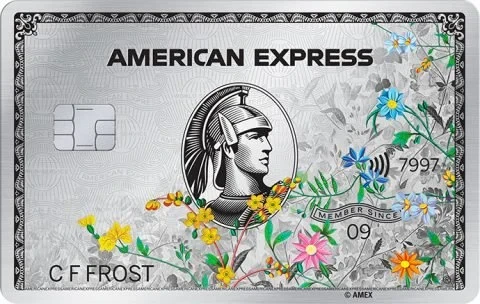
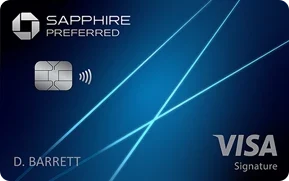
Downgrade (product change) keeps the account open on a cheaper card in the same family — the Amex Platinum to the Amex Gold or Green, the Sapphire Reserve to the Sapphire Preferred or a no-fee Freedom. The account age, credit line, and points survive. Inside the window you get the full fee back and pay the new card's fee; outside it, Amex refunds the difference prorated and Chase refunds nothing until the next anniversary.
| Action | Inside the window | Outside the window (Amex) | Outside the window (Chase) |
|---|---|---|---|
| Cancel | Full refund | No refund | No refund |
| Downgrade | Full refund, new fee charged | Prorated refund of the difference | No refund; new fee from next anniversary |
| Keep | Fee stands | Fee stands | Fee stands |
For a $895 Platinum downgraded to a $325 Gold six months after the fee posts, Amex refunds roughly half the $570 difference — about $285. The same move at Chase from a $795 Reserve to a $95 Preferred six months in refunds nothing, and the Preferred's fee is not charged until the next anniversary.
The twelve-month rule
No major issuer will product-change a card that is less than twelve months old. The rule stems from the CARD Act's restriction on changing fees in the first year, and it means the refund window that matters for a new card is the one after the second fee, not the first. In year one you can only keep or cancel; in year two you can keep, cancel, or downgrade.
This is why the standard occasional-traveler play — open a premium card for the bonus, hold twelve months, downgrade — depends on the second fee posting first. Cancelling before it posts avoids the fee but forfeits the downgrade option; cancelling inside the window after it posts gets the fee back and keeps the option open for a few weeks while you decide. Do premium cards make sense if you travel twice a year uses exactly that sequence.
Retention offers: call before you decide
Every cancel or downgrade call is a retention conversation. Amex and Chase in particular offer statement credits or bonus points to keep the card — commonly $100-$300 or 10,000-50,000 points on the premium cards, more often for accounts with heavy spending. Ask "are there any retention offers on this account?" before saying you want to close. Accepting an Amex retention offer generally requires keeping the card for another year; the fee you already paid stays.
The order that works: fee posts → call inside the window → ask for retention → accept if it clears your break-even, otherwise downgrade (year two or later) or cancel → confirm the refund on the next statement.
Real use case: a Reserve fee that posts in October
A cardholder opened the Sapphire Reserve in September 2025. The second annual fee of $795 posts on the October 8, 2026 statement.
- October 8: fee posts. Window runs 30 days from posting — until about November 7 — with reports of Chase honoring up to 41 days from the statement close.
- October 9-20: the cardholder runs the year-two math from annual fee break-even math: $300 travel credit used, no Edit stays, no DoorDash — about $450 of credits against $795.
- October 21: calls Chase, asks for retention. Offered 10,000 points. Not enough to close a $345 gap at 1.5 cents.
- October 21, same call: requests a product change to the Sapphire Preferred. The account is over twelve months old, so it is allowed. Chase refunds the full $795 because the change is inside the window; the $95 Preferred fee posts on the next statement.
- November statement: $795 credit appears; $95 charged. Net cost of the year-two decision: $95, and 130,000 Ultimate Rewards points stay in the account.
Had the same call happened on December 1, Chase would have refunded nothing, and the year-two decision would have cost $795 plus a $95 Preferred fee at the following anniversary.
Decision framework
| Your situation | Do this |
|---|---|
| Fee just posted, card is under 12 months old | Keep or cancel only; no downgrade available. Cancel inside the window if the bonus is already posted and the card fails the math — but check for bonus clawback at Amex |
| Fee just posted, card is over 12 months old | Call inside the window: retention first, downgrade second, cancel last |
| Window missed at Amex | Downgrade anyway — the prorated refund of the difference is still worth taking |
| Window missed at Chase | Keep the card until the next anniversary; there is no refund either way, so use the credits |
| Bilt, Wells Fargo, or Bank of America | Call before the fee posts and ask the agent to state the policy; treat the windows above as unconfirmed |
Common mistakes
- Counting from the anniversary instead of the statement. The clock starts when the fee posts, which is usually weeks later. Use the statement date.
- Cancelling a card under twelve months old to dodge the fee. You lose the downgrade option and, at Amex, may lose the welcome bonus. Let the fee post and use the window.
- Assuming Chase prorates. It has not since 2019. At Chase the window is the only refund.
- Not asking for retention. The offer is free to ask for and often worth $100-$300; the agent will not volunteer it.
- Closing instead of downgrading. Closing drops the credit line and, eventually, the account age; the no-fee sibling keeps both for $0.
- Trusting a blog's window over the agent's. Bank of America, Wells Fargo, and Bilt data are thin. Ask, get a reference number, and check the next statement.
Editor's take
The refund window is the quiet reason the keep-or-cancel decision is lower-stakes than it looks: you can let the fee post, see whether the second-year credits still fit your life, and reverse the whole thing for free within a month. Our reading of the table: Amex is the most cardholder-friendly issuer here, with a clean 30-day window and prorated downgrades after it; Chase is the strictest, with the same 30 days and nothing beyond; and the smaller issuers are a coin toss that a phone call settles. Put the posting date on a calendar, call inside the window, ask for retention first, and let the numbers from the break-even formula make the decision.
Related reading
- Annual fee break-even math — the year-two number that tells you whether to use the window
- Premium card credits compared — the realistic credit values behind that number
- Do premium cards make sense if you travel twice a year? — the hold-twelve-months-then-downgrade play
- Should you keep or cancel the Amex Platinum? — the Platinum's downgrade paths
- Should you keep or cancel the Chase Sapphire Reserve? — the Reserve's
- Should you keep or cancel the Capital One Venture X? — the Venture X's
Get weekly card offer alerts
Sunday digest of elevated bonuses. One email, zero spam.
Cards mentioned in this guide


Frequently asked questions
How long do I have to cancel a credit card and get the annual fee refunded?
Does Amex refund the annual fee if I downgrade after the 30-day window?
Why can't I downgrade my card in the first year?
Should I ask for a retention offer before cancelling?
Is it better to cancel or downgrade a card I no longer want?
Related guides
Strategy
Annual Fee Break-Even Math: The One Formula for Any Card (With Worked Numbers)
10 min
Card Roundups
Premium Card Credits Compared: How Much of Each $395-$895 Fee You Really Recoup
12 min
Strategy
Do Premium Cards Make Sense If You Only Travel Twice a Year? (Venture X, Reserve, Platinum)
10 min
Strategy
Should You Keep or Cancel the Amex Platinum? (2026)
9 min
Related news

airlines · Jun 2, 2026
Credit Card Transfer Bonuses Mid-2026: H1 Drought Recap

airlines · Jun 2, 2026
Aeroplan 2026: SQC Status and June 1 Devaluation

industry · Jun 2, 2026
Travel Rewards Devaluations 2026: Every Major Loyalty Program Change This Year

industry · Jun 2, 2026
Biggest Credit Card Changes 2026: Mid-Year Retrospective