Best Business Credit Cards for Companies With Employees in 2026
Free unlimited employee cards, per-employee spending controls, and a strategy most teams miss: employee spend counts toward your welcome bonus minimum spend.
On this page▾

Topic Collection
Part of the Business Credit Cards Collection
Explore all 39 articles
Quick answer
When your business has employees, the credit card calculus changes from "what earns the most on my spending" to "how do I give employees the right tools while maximizing rewards on all company spending." For most companies, the best employee card setup comes down to: Amex Business Gold for teams under 25 (free unlimited cards, 4x on auto-rotating categories, employee spend pools to one account), Ink Preferred for companies needing strong travel and telecom rewards (3x, free cards), and Spark Cash Plus for simplicity at any scale (free cards, 2% flat on everything, no preset spending limit).
TL;DR: Best business credit cards for companies with employees in 2026: (1) Employee spend on all major cards (Amex, Chase Ink, Capital One) counts toward the primary cardholder's bonus minimum spend — a critical benefit when onboarding; (2) Amex Business Gold and Chase Ink Business Preferred both offer free unlimited employee cards; (3) Amex Business Platinum charges $175/block of 3 employee cards but gives each cardholder full Centurion Lounge access; (4) per-employee spending limits are available on all major issuers; (5) employee spending pools to the primary account (not a separate rewards program). For 5-person teams: Amex Business Gold. For 25-person teams: Chase Ink Preferred. For 100-person teams: Capital One Spark Cash Plus or consider Ramp/Brex.
Why employee cards change the card strategy
When you operate solo, the only variable is which card earns the most on your own spending patterns. Add employees and the questions multiply:
- How much does each employee card cost? Free cards vs. $175/card changes the math for large teams.
- Does employee spend count toward my welcome bonus minimum spend? Yes — and this is one of the most underappreciated employee card benefits.
- Does employee spending pool into the same rewards account? Yes on all major cards — employee spend earns rewards credited to the primary account.
- Do employee purchases count toward category bonus caps? Yes — the $150,000 annual 4x cap on the Amex Business Gold is shared across the entire account, including all employee cards.
- Can I set per-employee spending limits? Yes on all major issuers. This is essential for budget control and fraud prevention.
- What expense reporting do I get? Year-end summaries, real-time alerts, and downloadable transaction data.
How employee card spend helps hit welcome bonuses
One of the most actionable — and least discussed — benefits of employee cards is that all employee spending counts toward the primary cardholder's minimum spend requirement for the welcome bonus.
A practical example: The Amex Business Gold has a welcome offer requiring $10,000 in purchases in the first 3 months. If you issue employee cards on day one, all their business spending counts toward that $10,000. A team of five employees collectively spending $2,500/month on business expenses would hit the $10,000 threshold in one month without any unusual personal spending.
This applies to:
- Amex Business Gold: employee spend counts toward minimum spend
- Amex Business Platinum: employee spend counts toward minimum spend
- Ink Preferred: employee spend counts toward minimum spend
- Spark Cash Plus: employee spend counts toward minimum spend
The strategy: apply for a new card when your employee headcount is growing, issue employee cards within the first week, and let normal business operations drive you toward the welcome bonus threshold. For a deeper look at how to structure this, see the employee card strategy guide.
Best cards for companies with employees — by team size
1–5 employees: Amex Business Gold
For small teams, the Amex Business Gold is the strongest choice. Employee cards are free and unlimited. The 4x auto-rotating mechanic across two top categories is powerful because your team's collective advertising, travel, and software spend is constantly finding the highest-earning category.
Setup for a 5-person team:
- Issue employee cards to all team members immediately (use the welcome bonus minimum spend window)
- Set individual monthly spending limits (start at 110–120% of expected spend)
- Review the Amex Business account dashboard monthly to see which two categories earned 4x and ensure future spend is routed accordingly
The $150,000 annual 4x cap consideration: At 5 employees, if each spends $2,500/month on combined advertising and qualifying purchases, the team reaches the $150,000 cap in 10 months. Once you approach the cap, consider adding a Spark Cash Plus or Ink Preferred as a secondary card for overflow.
5–25 employees: Chase Ink Business Preferred
The Ink Preferred earns 3x Ultimate Rewards on travel, shipping, internet, cable, phone, and select advertising — all free employee cards. For a professional services firm or tech company with 15 employees, the 3x categories often align perfectly with typical spending. See our full Chase Ink Business Preferred review for detailed category breakdowns.
Why Chase Ink Preferred scales well to 25 employees:
- No per-employee card costs (purely free)
- 3x on categories that cover most business travel and telecom expenses
- The $150,000/year cap means a 15-person team can average $10,000 each in qualifying spend — achievable but not immediately exhausted
- Chase's business portal provides per-employee transaction reports
- Ultimate Rewards points can be transferred to Hyatt, United, Marriott, British Airways, and 11 other partners
Adding a second card at this stage: For employees with roles that involve different spend patterns, consider a card combination:
- Chase Ink Business Preferred for employees who travel and manage advertising/telecom
- Spark Cash Plus for employees whose spending is in materials, services, or other non-bonus categories
25–100 employees: Capital One Spark Cash Plus as anchor
The Spark Cash Plus becomes increasingly attractive as team size grows because it eliminates category management overhead. With 25+ employees in multiple roles with different spending patterns, maintaining a "route this card for this category" policy becomes operationally complex. Flat 2% on everything means every purchase on every employee card earns the same rate — no training required, no category confusion, no missed optimization.
Key benefits at 25–100 employee scale:
- Free unlimited employee cards
- No preset spending limit — important for employees making large purchases
- 2% cash back credited monthly — predictable cash flow
- No category caps — $1M in employee card spend still earns 2% on every dollar
- Year-end spending reports by employee
Pairing strategy at this scale:
- Spark Cash Plus as the base card for all employees
- Amex Business Gold for employees in marketing/advertising roles (4x on advertising spend)
- Chase Ink Business Cash for employees managing IT/telecom expenses (5x on internet/phone)
100+ employees: Consider true corporate card programs
At 100+ employees, the rewards optimization of consumer-grade business cards starts to compete with operational overhead — tracking which employee has which card, managing lost/stolen card procedures across a large workforce, and integrating with enterprise ERP systems. For context on how fintech alternatives compare, see Ramp vs Brex vs Amex Business.
This is the natural territory of true corporate cards (Amex Corporate, Citi Commercial, JP Morgan Palladium) and fintech corporate platforms (Ramp, Brex). These offer:
- No personal guarantee required
- Per-department or per-team card programs
- Deep accounting integrations (SAP, Oracle, NetSuite)
- Automated expense reporting at scale
- Real-time spend controls with rule-based approval workflows
Feature comparison for employee card programs
| Card | Annual Fee | Employee Card Cost | Earn Rate | Employee Spend Caps | Notable Feature |
|---|---|---|---|---|---|
| Amex Business Gold | $375 | Free | 4x top 2 auto | $150k/yr combined | Auto-rotating categories |
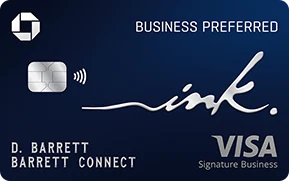
| Ink Preferred | $95 | Free | 3x select categories | $150k/yr combined | UR transfer partners |
| Spark Cash Plus | $150 | Free | 2% flat | None | No preset limit |
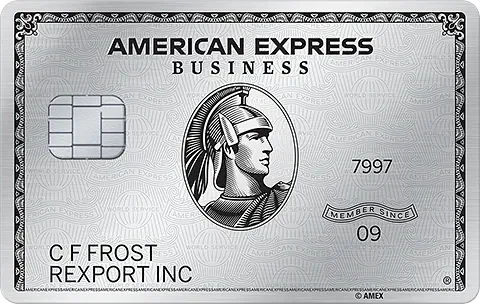
| Amex Business Platinum | $895 | $175/block of 3 | 5x flights, 1.5x $5k+ | Per card | Centurion Lounge per card |
Setting up employee card controls
Step 1: Define spending categories per employee role
Before issuing cards, decide which employees should have cards and what their expected monthly spend looks like:
- Salespeople: travel, client entertainment
- Marketing team: advertising platforms, design tools, subscriptions
- Operations: office supplies, software, utilities
- Field/technical staff: fuel, materials, tools
- Executives: general business expenses, travel
Route employees to the card that earns most on their dominant spending type.
Step 2: Set individual spending limits
All major issuers allow per-employee monthly spending limits. Set limits at:
- 100% of expected monthly spend for predictable roles
- 120–150% for roles with variable spend
Real-time alerts (set to notify for purchases over $200–$500) provide additional oversight without limiting employee efficiency.
Step 3: Build an expense reporting workflow
For companies under 15 employees, card issuer portals (Amex @ Work, Chase Business Portal, Capital One for Business) often provide sufficient reporting. For 15–100 employees, integrate with:
- Expensify — connects with Amex, Chase, Capital One; automated receipt scanning
- Ramp (if using Ramp cards) — built-in expense management
- QuickBooks Online — direct card feed integrations
- Concur — enterprise-grade, used widely with Amex Corporate
Step 4: Establish a lost/stolen card policy
Communicate clearly to all employees:
- Immediately report a lost or stolen card to the issuer (not just to HR)
- Zero-liability protection applies to unauthorized transactions
- A replacement card arrives in 2–5 business days (rush delivery available from most issuers)
- Document and report all unauthorized transactions per company policy
The welcome bonus strategy with new employee hires
A growth-stage company hiring 5–10 new employees per quarter can use each major card application as a welcome bonus opportunity — the same principle applies whether you're running a startup or an established business, and our guide to startup credit cards covers the optimal first-card strategy in detail. The process:
- Apply for a new business card (e.g., Chase Ink Business Preferred, $95 annual fee, 90,000-point welcome bonus after $8,000 spend in 3 months)
- Immediately issue employee cards to all new hires
- All employee spending counts toward the $8,000 minimum — 10 employees spending $1,000 each in their first month covers it
- Earn the welcome bonus, which often exceeds the annual fee by 10x–20x in value
- Repeat in 24 months (Chase Sapphire cards have a 48-month rule; Chase Ink cards allow re-application more frequently)
This is a compounding strategy: each hire cohort can fund a new welcome bonus, meaning fast-growing companies earn disproportionate first-year value from their card programs. To understand how employee card spend affects both your personal and business credit profiles, see do business cards affect personal credit.
Get weekly card offer alerts
Sunday digest of elevated bonuses. One email, zero spam.
Cards mentioned in this guide


Frequently asked questions
Does employee card spending count toward my welcome bonus minimum spend requirement?
What happens to the bonus category cap when I have many employees using my business card?
Which business credit card is best for a company with 25 employees?
Related guides
Related news

chase · Jun 10, 2026
Chase Hyatt Transfer Ratio 4:3: What It Means for Sapphire Preferred and Ink Business Preferred

chase · Jun 10, 2026
Chase to Virgin Atlantic: 30% Transfer Bonus — Book Delta Business Class for 18,000 Points

airlines · Jun 4, 2026
Alaska Atmos Members Day Launched

hyatt · Jun 3, 2026
Hyatt Added Perk for Globalists, Explorists and Cardholders