Ramp vs Brex vs Amex Business Cards (2026): Which Is Right for Your Company?
Corporate charge cards (no personal guarantee, expense software built-in) vs traditional business credit cards (personal guarantee, transferable MR points). Full breakdown of when each tool wins and how to use them together.
On this page▾

Three categories of business spending tools, three completely different products. Ramp and Brex are corporate charge cards built for tech-forward companies that want expense management software, virtual cards, and no personal guarantee. American Express business cards are traditional credit products that require a personal guarantee but earn transferable Membership Rewards and have wider merchant acceptance. Knowing which category fits your company is more important than comparing features side by side.
This guide explains what Ramp and Brex actually are, why they are not credit cards in the traditional sense, when they are the right tool, when American Express wins, and how to think about the three options alongside each other for a growing company.
Quick answer
TL;DR: Ramp and Brex are corporate charge cards (not traditional credit cards) that extend credit based on a company's financial profile and do not require a personal guarantee for qualified companies. They include built-in expense management software, virtual card issuance, ERP integrations, and real-time spend controls. They are best for VC-backed startups and growth companies with strong balance sheets. American Express business cards (Business Gold, Business Platinum, Blue Business Plus, Blue Business Cash) require a personal guarantee, report to business credit bureaus, and earn transferable Membership Rewards with 20+ airline and hotel transfer partners. They are best for profitable small businesses and sole proprietors who want rewards on general business spend and Amex's partner ecosystem.
What are Ramp and Brex, exactly?
Ramp and Brex are often called "corporate cards," but the most accurate description is corporate charge cards with integrated expense management software. They differ from traditional business credit cards in several important ways:
No revolving credit. Both Ramp and Brex are charge cards: the balance must be paid in full each billing cycle (Ramp) or on a defined schedule (Brex offers some options). There is no revolving credit line that you carry month to month the way a traditional credit card allows.
No personal guarantee (for qualified companies). This is the headline difference. Ramp and Brex extend credit based on a company's financial profile — cash balance, revenue, funding history — rather than the founder's personal credit score. A venture-backed startup with $2 million in the bank can qualify without the CEO personally guaranteeing the debt. This protects founders' personal credit and personal assets from business card liability.
The catch: qualification requires demonstrable company financial health. Ramp typically requires $25,000+ in a linked business bank account. Brex has tiered requirements depending on funding status — VC-backed startups get different terms than bootstrapped businesses. A sole proprietor or a bootstrapped company with $15,000 in the bank will likely not qualify for either, regardless of personal creditworthiness.
Built-in software, not an add-on. The expense management platform is native to both products. Real-time spend visibility, receipt matching, ERP/accounting integrations (QuickBooks, NetSuite, Sage), custom approval workflows, per-employee spend limits, and virtual card creation are core features, not upsells. This replaces Expensify, Divvy, or similar expense tools for companies that would otherwise pay for them separately — our business credit card expense management guide compares these approaches in depth.
Rewards structure. Both offer points on spending, but the rewards ecosystems are different from Amex:
- Ramp: Cash back and statement credits. Straightforward but not transferable airline miles.
- Brex: Points transferable to select airline partners (varies by plan — check current Brex terms). The premium tier has better transfer options. The transfer partner list is more limited than Amex or Chase.
American Express business cards: the traditional alternative
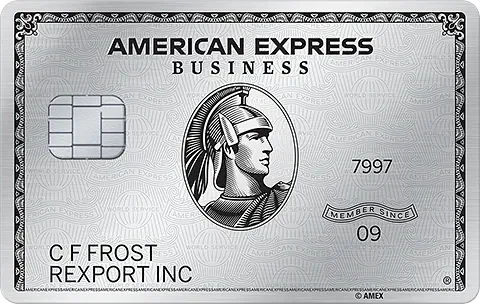
The Amex Business Gold, Amex Business Platinum, Blue Business Plus, and Blue Business Cash are traditional business credit cards with personal guarantees. What makes them different from Ramp/Brex:
Transferable Membership Rewards. Amex MR is one of the two most valuable points currencies in the U.S. credit card ecosystem (alongside Chase Ultimate Rewards). MR transfers to 20+ airline and hotel partners at 1:1: Delta SkyMiles, Air France/KLM Flying Blue, British Airways Avios, Avianca LifeMiles, ANA, Emirates, Singapore Airlines, Hilton Honors, Marriott Bonvoy, and more. For a business owner who travels frequently and wants to maximize the value of their spending, this ecosystem is materially more valuable than Ramp's cash back or Brex's limited transfer partners.
Broader merchant acceptance. Amex has expanded dramatically, but it is still not accepted everywhere that Visa/Mastercard is. Ramp and Brex issue Visa or Mastercard. If your vendors or international suppliers do not accept Amex, this matters.
Revolving credit. Traditional Amex business cards have credit lines you can carry (at interest). For businesses with occasional cash flow gaps, a revolving line is more useful than a charge card that demands full payment.
Category bonuses. The Amex Business Gold earns 4x on your top two categories automatically (see our Amex Business Gold review), and the Amex Business Platinum earns 5x on travel through Amex Travel (detailed in our Amex Business Platinum review). These rates exceed what Ramp and Brex typically offer on equivalent spending. If the Amex side is the one you are weighing, Business Gold vs Business Platinum puts the 4x-on-two-categories model against the 5x-on-Amex-Travel model directly.
Personal guarantee required. Unlike Ramp and Brex for qualified companies, every Amex business card requires the primary cardholder to personally guarantee the debt. For a founder who has already signed multiple personal guarantees, this is a familiar obligation — but it does expose personal credit and assets.
Side-by-side comparison
| Ramp | Brex | Amex Business Cards | |
|---|---|---|---|
| Card type | Corporate charge card | Corporate charge card | Traditional business credit card |
| Personal guarantee | Not required (for qualified cos.) | Not required (for qualified cos.) | Required |
| Qualification basis | Company cash/revenue | Company cash/funding stage | Personal credit + business income |
| Revolving credit | No — charge card, pay in full | No — charge card | Yes |
| Expense management software | Yes — built-in, free | Yes — built-in | No (separate product) |
| Virtual cards | Yes — unlimited | Yes | Limited |
| ERP integrations | Yes — NetSuite, QuickBooks, Sage, etc. | Yes | No |
| Rewards | Cash back / statement credits | Points (limited transfer partners) | Transferable MR — 20+ partners |
| Airline/hotel transfer partners | Few or none | Limited (varies by plan) | 20+ at 1:1 |
| Category bonuses | Varies | Varies | 4x/5x on specific categories |
| Annual fee | $0 (Ramp base) | $0–custom | $0–$895 depending on card |
| Foreign transaction fee | $0 | $0 | $0 |
| Merchant acceptance | Visa/Mastercard (near-universal) | Visa/Mastercard (near-universal) | Amex (good, not universal) |
| Personal credit impact | Typically none | Typically none | None (biz cards don't hit personal report) |
| Best for | Funded startups, growth cos. | VC-backed startups, tech cos. | SMBs, profitable businesses, solopreneurs |
When to use Ramp
Ramp is purpose-built for companies that have multiple employees making purchases and need real-time visibility and controls without building an expense management infrastructure.
Use Ramp if:
- You are a venture-backed startup or growth company with $25,000+ in a business bank account
- You have employees spending on company accounts and need centralized control
- You want to replace a standalone expense management tool (Expensify, Divvy, Concur)
- Your team needs virtual cards for software subscriptions, ad spend, or vendor payments
- You prioritize cash back simplicity over travel rewards optimization
- You are not interested in managing a points ecosystem
Ramp is not the right fit if:
- Your business cannot meet the minimum cash balance requirements
- You want transferable airline miles or hotel points
- You need revolving credit to manage cash flow gaps
When to use Brex
Brex started as a startup card but has expanded its product significantly. It offers stronger travel-focused rewards on premium plans and additional features for growth-stage companies.
Use Brex if:
- You are a VC-backed startup or tech company, particularly in the early/growth stage — for a broader look at card options tailored to new ventures, see our best credit cards for startups guide
- You want the combined benefit of expense management software plus some travel rewards
- Your company spends heavily on categories Brex bonus-rates (check current terms — these change)
- You want no personal guarantee and your company qualifies
- Your team needs international employee cards with local currency support
Brex is not the right fit if:
- You want Amex Membership Rewards transfer partners (Brex's list is much shorter)
- Your business is profitable but not venture-backed (qualification can be harder)
- You want the breadth of Hyatt, Delta, Emirates, or ANA transfers
When to use Amex business cards
American Express business cards are the right tool for a different business profile entirely.
Use Amex if:
- You are a profitable small business, sole proprietor, consultant, or freelancer
- You want to earn transferable Membership Rewards for travel — our best Amex business credit cards roundup compares every Amex option side by side
- Your personal credit qualifies you for the card (680+ FICO for most products)
- You want category bonuses: Amex Business Gold 4x on auto-rotating categories, Amex Business Platinum 5x on Amex Travel bookings
- You want the widest airline/hotel transfer partner access (Delta, Emirates, Air France, ANA, Hilton, Marriott, and more)
- You are building a multi-card points strategy (Gold + Platinum + Blue Business Plus) — Blue Business Plus vs Business Gold is the usual first decision in that stack
- You need revolving credit
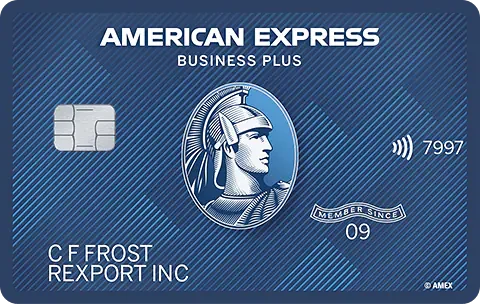
The Amex Blue Business Plus at $0 annual fee is the best no-fee MR earner available — 2x on the first $50,000/year of all purchases with no categories to track. The Blue Business Cash is the same at 2% cash back for simplicity seekers.
The hybrid approach: holding multiple tools
Many fast-growing companies use Ramp or Brex for operational spending (SaaS subscriptions, payroll tools, vendor payments, ad spend under employee control) and Amex business cards for the founder's personal business travel and category-concentrated spending.
The split makes sense:
- Ramp/Brex handles: employee spending, virtual card proliferation, expense report automation, ERP sync
- Amex handles: founder's travel (earning MR for flights and hotel transfers), the company's highest-spend categories (ads, shipping, software), and any spending that benefits from Amex's 4x/5x multipliers
This is not an either/or decision for a company above a certain scale. The expense management infrastructure of Ramp or Brex, combined with the rewards optimization of an Amex Business Gold or Platinum, captures both operational efficiency and points value.
The 5/24 rule and credit considerations for Amex
Amex business cards do not appear on your personal credit report. They do not count toward Chase's 5/24 rule. The welcome bonus on each Amex product is once-per-lifetime — you can only earn it once, ever. Amex has its own application velocity limits.
Ramp and Brex do not typically appear on personal credit reports for founders. They report business activity to business credit bureaus. The absence of a personal guarantee means the company's creditworthiness, not the founder's personal FICO, is the primary underwriting factor.
Which to choose in 2026
For a VC-backed startup or high-growth company with multiple employees spending:
- Start with Ramp or Brex for expense management infrastructure — also compare options in our best corporate credit cards roundup
- Add an Amex Business Gold for the founder's travel and highest-category spend
For a profitable small business, consultant, or sole proprietor:
- Start with Amex Business Gold (4x MR on top categories) or Ink Preferred (3x UR → Hyatt/United)
- Add Blue Business Plus as a catch-all once you have the primary card
For a bootstrapped startup that doesn't qualify for Ramp/Brex yet:
- Amex or Chase business cards are your path — personal guarantee required but no minimum cash balance beyond your personal credit score
Bottom line
Ramp and Brex are not better or worse than Amex — they solve different problems. Ramp and Brex provide corporate-grade expense infrastructure for companies that have moved beyond the founder-with-a-credit-card stage, without requiring personal guarantees from founders. American Express provides the highest-quality rewards on business spending for companies and individuals who will actively use airline/hotel transfer partners. The best answer for many companies at scale is both: Ramp or Brex for the team, Amex for the founder's travel. Start with Amex if you are early-stage or solo; add the corporate card infrastructure when you have employees spending at scale.
Get weekly card offer alerts
Sunday digest of elevated bonuses. One email, zero spam.
Cards mentioned in this guide


Frequently asked questions
Do Ramp and Brex require a personal guarantee?
Can I use Ramp or Brex instead of an Amex business card?
Does Ramp or Brex earn airline miles?
Related guides
Related news

amex · Jun 2, 2026
Amex 30% Avios Transfer Bonus: 1,000 MR = 1,300 Avios, Ends ~June 21 2026

amex · Jun 2, 2026
Amex Gold 60th Anniversary Refresh 2026: Who Wins?

amex · Jun 2, 2026
Amex Platinum at $895: One Year Post-Refresh Verdict

amex · Jun 25, 2026
Amex Platinum vs Schwab Platinum: the same $895 card, with a cash-out
Cards in this ecosystem




Considering switching?