Best Credit Cards for Groceries in 2026
The best US grocery card in 2026 depends on annual supermarket spend. For $0-$6K/yr, Amex Blue Cash Preferred returns the most at 6% cashback (the highest published rate). For $6K-$25K/yr, Amex Gold earns 4x Membership Rewards (transferable at 1.5-2 cpp). Citi Custom Cash (5% on your top category up to $500/mo) is the best no-annual-fee option. Note Walmart, Target, and Costco do not trigger supermarket bonuses — they code as discount stores or wholesale clubs (MCC 5310/5300), not supermarkets (5411).
On this page▾

Quick answer
For US groceries in 2026, the best cards are Blue Cash Preferred (6% cashback at US supermarkets up to $6K/yr — highest published rate), Amex Gold (4x Membership Rewards at US supermarkets up to $25K/yr — best transferable points earn), and Custom Cash (5% on your top-eligible category each cycle, groceries qualifies, $500/mo cap).
Grocery card optimization in the US rests on 3 facts:
- Whole Foods, Trader Joe's, Kroger, Publix, Albertsons, Safeway, H-E-B, ShopRite, and most regional chains code as MCC 5411 — "Grocery Stores, Supermarkets." These trigger the supermarket bonus on every major card listed below.
- Walmart, Target, and Costco do NOT code as supermarkets on most issuer bonuses. Walmart Supercenters code as discount stores (MCC 5310/5300). Target codes as discount store. Costco codes as wholesale club (MCC 5300). Choose a different strategy for those merchants.
- The annual caps matter more than the headline rate. A 6% card capped at $6K/yr earns the same $360/yr regardless of whether you spend $6K or $12K at supermarkets — past the cap the rate drops to 1%. A household spending $15K+/yr on groceries should split between two cards.
TL;DR: The best credit card for US groceries in 2026 depends on annual supermarket spend. For $0–$6K/yr Amex Blue Cash Preferred (6% cashback) returns the most cash. For $6K–$25K/yr Amex Gold (4x Membership Rewards, transferable to airlines/hotels at 1.5–2 cpp) is the highest-value transferable-points option. Citi Custom Cash (5% on top category up to $500/mo) is the best no-annual-fee grocery card. Walmart Supercenter, Target, and Costco do not trigger supermarket bonuses on these cards because they code as discount stores or wholesale clubs (MCC 5310/5300), not supermarkets (MCC 5411).
Top picks at a glance
| Card | Best for |
|---|---|
| Blue Cash Preferred | Highest cashback rate — 6% at US supermarkets up to $6K/yr ($360 max/yr) |
| Amex Gold | Best transferable-points earn — 4x MR at US supermarkets up to $25K/yr |
| Custom Cash | Best no-annual-fee — 5% on top category (groceries qualifies), $500/mo cap |
| Savor | Best for grocery + dining combo — 3% dining + 1% groceries, no cap, no AF |
| Freedom Flex | Best rotating category — 5% on quarterly grocery activations (when offered) |
1. Blue Cash Preferred — highest US-grocery cashback
6% cashback at US supermarkets up to $6,000/yr in purchases (then 1%). Also 6% on select US streaming and 3% on transit + US gas stations. The $6K cap is the binding constraint — a household spending exactly $115/week at supermarkets hits it perfectly. Past $6K the card drops to 1%, so pair it with a 4x Amex Gold or 5x Citi Custom Cash for the overflow. The $95 annual fee is recovered after roughly $1,900 of supermarket spend at the differential vs a 1% card. Cashback comes as Reward Dollars (statement credit). No transfer partners — this is a pure cashback card.
2. Amex Gold — best transferable-points earn on groceries
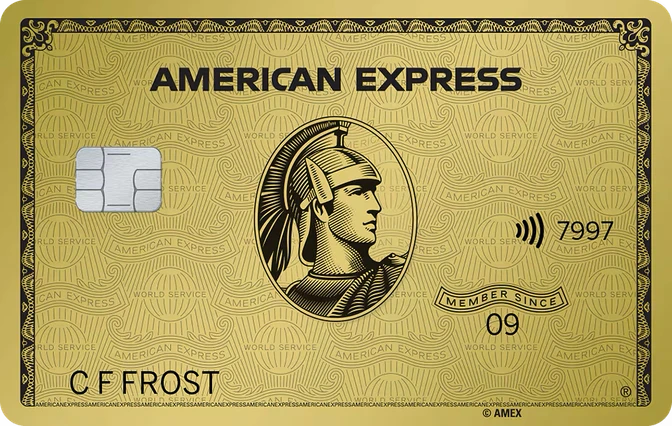
The Amex Gold card earns 4x Membership Rewards at US supermarkets up to $25,000/yr in purchases (then 1x). Also 4x at restaurants worldwide (including Uber Eats, no cap on dining). The $25K cap is much higher than Blue Cash Preferred's $6K, making this the right card for high-grocery households or anyone who values Membership Rewards transfer flexibility (ANA, Air Canada Aeroplan, Flying Blue, British Airways, etc.). At 1.5–2 cpp redemption value the effective return is 6–8% — meaningfully above Blue Cash Preferred for travelers. $325 annual fee partially offset by $120 dining credit, $120 Uber Cash, $100 resort credit.
3. Custom Cash — best no-annual-fee grocery card
5% cashback on your top-eligible spending category each billing cycle, up to $500/mo (i.e. $25/mo or $300/yr cap if groceries is your top category every cycle). Groceries (MCC 5411) is one of the qualifying categories. $0 annual fee. Best as a dedicated grocery card for a $6K/yr-or-less household, or as overflow protection past the Blue Cash Preferred cap. Citi ThankYou Points earned on this card can be transferred to partners when paired with a Citi Strata Premier (Avianca LifeMiles, Choice Privileges, Wyndham, etc.).
4. Savor — best for grocery + dining households
3% cashback on dining, entertainment, popular streaming, and grocery stores (excluding Walmart and Target). 1% on everything else. $0 annual fee, no foreign transaction fees, and no spending caps — the only major grocery-earning card with truly uncapped earning. Best for households where grocery spend is uncertain or high (>$15K/yr) AND dining is also significant. At 3% the rate trails Blue Cash Preferred's 6% within its cap, but past the cap Savor wins outright. The cashback redeems as a statement credit or check at 1 cpp. If dining is your bigger category, weigh Amex Gold vs Capital One Savor for dining before you commit.
5. Freedom Flex — best rotating quarterly grocery category
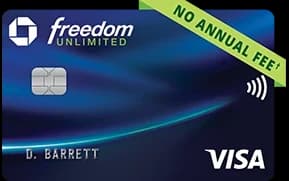
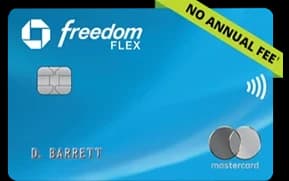
5% cashback on rotating quarterly categories, up to $1,500/quarter ($75/quarter max in 5x rewards). Grocery stores have appeared as a Q1 or Q4 category in past years (typically excluding Walmart and Target). When activated, this is the highest-rate grocery card available — 5% on up to $1,500 in supermarket spend, no annual fee. Pairs perfectly with Chase Sapphire Preferred/Reserve to convert the cashback into transferable Ultimate Rewards (Hyatt, United, Air Canada Aeroplan, etc.). The catch: groceries are not guaranteed every year — Chase publishes the calendar each quarter.
Costco / Walmart / Target — special considerations
Costco. Wholesale club, MCC 5300. Does NOT trigger supermarket bonuses on Amex Gold, Blue Cash Preferred, Citi Custom Cash, or Savor. Costco is a Visa-only merchant — Amex and Mastercard physical cards are not accepted in-warehouse (Mastercard and Discover work at Costco.com). The dedicated card is the Costco Anywhere Visa by Citi (2% Costco purchases, 4% gas) — but for transferable-points fans, paying with Capital One Venture X (2x flat) is the best non-Costco-specific play. For the full lineup, see the best credit cards for Costco.
Walmart. Discount store, MCC 5310 (Supercenters) or 5411 in rare cases (small Walmart Neighborhood Markets sometimes code as supermarkets — verify your local store). Walmart Grocery pickup/delivery typically codes as MCC 5411 in some processing systems but as discount store in others. The Capital One Walmart Rewards card earns 5% on Walmart.com/Grocery pickup + delivery, 2% in-store. For Walmart Supercenters in-person, a flat-2x card like Citi Double Cash or Venture X is the best non-Walmart-specific play.
Target. Discount store, MCC 5310. Does NOT trigger supermarket bonuses. The Target REDcard offers 5% off every Target purchase at the point of sale (not a points card — a direct discount). For points players, a flat-2x card is the best Target option absent the REDcard.
Decision framework
Spend $0–$6K/yr at US supermarkets → Amex Blue Cash Preferred. 6% cashback = $360/yr max. The $95 AF breaks even at $1,900/yr. Pure cashback, no strategy needed. For a broader comparison of the best cash-back credit cards, that guide covers all spending categories, not just groceries.
Spend $6K–$25K/yr at US supermarkets + fly or stay at hotels → Amex Gold. 4x MR at 1.5 cpp = $0.06/dollar. At 2 cpp (Air Canada Aeroplan, Flying Blue sweet spots) = $0.08/dollar — beats Blue Cash Preferred's 6% even inside the cap. The $25K annual ceiling fits most households.
No annual fee required → Citi Custom Cash. 5% on up to $500/mo ($300/yr cap) — the highest no-AF grocery rate available. Best for single-person households spending under $500/mo on groceries. If you prefer to stay in the Amex ecosystem, the best no-annual-fee Amex cards includes the Amex Blue Cash Everyday (3% at US supermarkets) as a fee-free alternative.
High spend across groceries AND dining (>$15K combined) → Capital One Savor. 3% on both with zero caps. At $20K combined annual spend: $600/yr in cashback, no AF friction.
Chase ecosystem already (Sapphire Preferred/Reserve) → Chase Freedom Flex when groceries rotate. In Q1/Q4 grocery quarters: 5% on up to $1,500 = $75 max. Transfer to UR and redeem via Hyatt (1.7–2.1 cpp average) for effective ~$127–$158 in hotel value per quarter.
Real use cases
Case 1 — Family of 4, $12K/yr at supermarkets, no travel rewards goal. Split: Amex Blue Cash Preferred for first $6K ($360 cashback) + Capital One Savor for remaining $6K ($180 cashback). Total: $540/yr. One card alone at 1% past cap = $60 on the overflow — leaving $120/yr on the table.
Case 2 — Couple, $8K/yr at Whole Foods + $5K/yr dining, fly 2x/yr. Amex Gold: 4x MR on $13K combined = 52,000 MR/yr. Transferred to Air Canada Aeroplan at 1 cpp = $520 in economy flights; transferred at 1.8 cpp (business class) = $936. The $325 AF is offset by $120 dining credit + $120 Uber Cash = effective $85 AF net.
Case 3 — Solo renter, $4,800/yr groceries, wants no annual fee. Citi Custom Cash: 5% on $500/mo = $300/yr cashback. Add Citi Strata Premier to unlock partner transfers — 18,000 TYP earned in 12 months can move to Avianca LifeMiles for a round-trip domestic flight (typically 7,500–12,500 miles each way).
Case 4 — Costco member, $8K/yr in-warehouse. Neither Amex, Gold, nor Blue Cash Preferred earns above 1% at Costco (MCC 5300). Costco Anywhere Visa by Citi earns 2% on Costco purchases = $160/yr. Alternatively, Capital One Venture X (2x = 2 cpp at 1 cpp = $160/yr) while earning transferable miles.
Common mistakes
1. Forgetting Walmart and Costco don't count as supermarkets. Households spending $300/week at Walmart on a card with 6% supermarket bonus earn 1% on those swipes, not 6%. Verify the MCC by checking how prior swipes posted — or just route Walmart/Costco/Target to a flat-2x card.
2. Ignoring the annual cap and double-stacking. Past $6,000 in supermarket spend on Amex Blue Cash Preferred, the rate drops from 6% to 1% — a $300/yr loss for a $9K/yr household. Once you hit the cap, route overflow to Amex Gold (still 4x) or Citi Custom Cash (5% on top category).
3. Holding Blue Cash Preferred instead of Amex Gold when you transfer points. Blue Cash Preferred returns 6% cashback. Amex Gold returns 4x Membership Rewards, redeemable for 1.5–2 cpp on transfer partners — an effective 6–8% return. For travelers, Gold wins. For cashback-only households, Blue Cash Preferred wins within its $6K cap. Pairing Amex Gold with the Amex Platinum and Blue Business Plus creates the Amex trifecta, the strongest Membership Rewards earning stack available.
Related content
- Currency hubs: Amex Membership Rewards program guide
- Related commercial guides: Best credit cards for dining 2026 (planned) · Best credit cards for gas 2026 (planned)
Get weekly card offer alerts
Sunday digest of elevated bonuses. One email, zero spam.
Cards mentioned in this guide

Frequently asked questions
Does Walmart count as a grocery store on credit-card category bonuses?
Does Target count as groceries?
Does Costco count as groceries?
Which card earns the most cashback on US groceries?
Can I earn grocery bonuses on Whole Foods if I'm an Amazon Prime member?
Related guides
Related news



Cards in this ecosystem


Considering switching?