Best Cards If You Sometimes Carry a Balance (Low-APR Picks 2026)
If you carry a balance, Wells Fargo Reflect (21 months at 0%, 5% fee) wins for debt over $3,000, Discover it Cash Back (15 months, 3% intro fee) wins for a lower entry cost, Navy Federal More Rewards Amex or PenFed Power Cash Rewards (14.15%-18.00% and 17.99% ongoing) win if you expect to carry a balance long-term, Capital One Quicksilver Secured wins if your file is too thin to qualify elsewhere, and Wells Fargo Active Cash (2% cash back plus 12 months at 0%) wins if you only carry a balance occasionally.
On this page▾

Topic Collection
Part of the Credit Score Guides Collection
Explore all 14 articles
If you're carrying a balance from month to month, a rewards card is the wrong tool for the job. A point worth 1-2¢ earned on new spending cannot outrun 22-29% APR compounding on an unpaid balance — the interest erases the rewards math within weeks, not months. This guide skips the sign-up-bonus pitch and ranks the least-bad options for someone who is, realistically, going to carry debt for a while.
Three of the six picks below have no cash back worth mentioning. The two that do are built so the 0% intro period does the real work, not the rewards rate. Every APR quoted is variable and set at approval based on your credit file — issuers publish a range, and where you land depends on your score, income, and existing debt. All figures were verified against issuer terms in August 2026.
Quick answer
For most people carrying a balance, the fastest way to stop bleeding interest is a long 0% intro window on a balance-transfer card — not a new rewards card. Which specific card depends on your debt size, your timeline, and whether you can even get approved yet.
- Best long 0% intro window: WF Reflect — 21 months at 0% APR, 5% transfer fee.
- Best balance transfer for the lowest upfront cost: Discover it Cash Back — 15 months at 0% APR, only 3% intro transfer fee.
- Best ongoing low APR, credit union (military-affiliated): NFCU More Rewards — 14.15%-18.00% ongoing APR, $0 transfer fee.
- Best ongoing low APR, open to anyone: PenFed Power Cash — 17.99% ongoing APR, join with a $5 savings deposit.
- Best for a thin file: Quicksilver Secured — refundable deposit, no credit history required.
- Best if you occasionally carry a balance but still want cash back: Active Cash — 2% flat cash back plus a 12-month 0% window.
Key takeaway: the right pick depends on whether your problem is size of debt, speed of payoff, approval odds, or an occasional rough month — not which card has the flashiest welcome bonus.
Why a rewards card is the wrong tool once you're carrying debt
Rewards points and interest charges come from two different pools of money, and conflating them is the single most expensive mistake in this guide. A card that earns 2% cash back pays you 2% on new purchases. Interest charges you 22-29% APR on whatever balance you didn't pay off — regardless of how that balance got there.
Run the numbers on $5,000 of debt at a typical rewards-card ongoing APR of 24.99%: that's roughly $104 in interest every month, or $1,248 a year, accruing whether you spend another dollar on the card or not. A 2% cash back card would need $62,400 of new annual spending just to earn enough rewards to offset that single year of interest.
⚠️ Biggest mistake — Keeping your everyday rewards card open for spending while a large balance sits on it, on the theory that the points "make up for it." The interest on the balance is nearly always a bigger number than the rewards on the spend, and the two never net against each other on your statement.
Key takeaway: on $5,000 of debt at 24.99% APR, you lose about $1,248 a year to interest — no realistic cash-back rate closes that gap while you're still carrying the balance.
Best long 0% intro window: WF Reflect
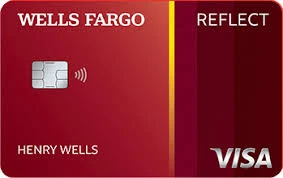
WF Reflect carries the longest combined 0% window on the market right now: 21 months at 0% APR on both purchases and balance transfers, provided transfers post within 120 days of opening. After that, the ongoing variable APR lands at 17.49%, 23.99%, or 28.24%, depending on your creditworthiness. The transfer fee is 5% of the amount moved (minimum $5), and the annual fee is $0.
Break-even math: on a $5,000 transfer, the 5% fee costs $250 upfront. Against a 24.99% rewards-card APR ($104/month in interest), that fee pays for itself in about 2.4 months. Run the full 21-month window and you avoid roughly $2,184 in interest for a $250 cost — a net savings near $1,934, compared with leaving that same $5,000 on a rewards card and paying interest on it the whole time.
Key takeaway: for debt above $3,000 that will take more than a year to clear, WF Reflect's 21-month runway beats a shorter, cheaper-fee card on total dollars saved.
Best balance transfer for the lowest upfront cost: Discover it Cash Back
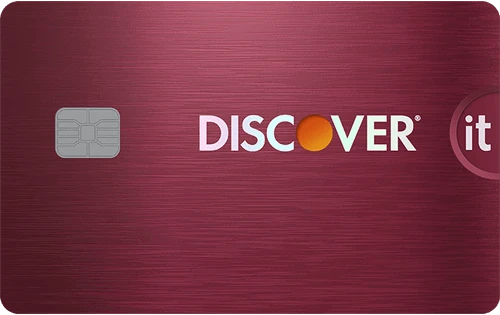
Discover it Cash Back runs a shorter window — 15 months at 0% APR on both purchases and balance transfers — but the transfer fee starts at 3% for the first 60 days the account is open, rising to 5% after that. Ongoing APR after the promo is 17.49%-27.49% variable. Annual fee: $0.
Break-even math: on the same $5,000 transfer, the 3% intro fee costs $150 — $100 less than WF Reflect's. Against $104/month in avoided interest, that breaks even in under 1.5 months. Over 15 months you avoid roughly $1,560 in interest for a $150 cost, netting about $1,410 — a smaller total than WF Reflect because the window is 6 months shorter, but cheaper to enter, and Discover matches all first-year cash back on any new spending you route through the card.
| WF Reflect | Discover it Cash Back | |
|---|---|---|
| 0% window | 21 months | 15 months |
| Transfer fee | 5% (min $5) | 3% intro (60 days), then 5% |
| Ongoing APR | 17.49%–28.24% variable | 17.49%–27.49% variable |
| $5,000 fee cost | $250 | $150 |
| Best for | Debt over $3,000, 12+ month payoff | Debt under $3,000, faster payoff, want rewards too |
Key takeaway: choose WF Reflect for a longer runway on larger debt; choose Discover it Cash Back when you can pay off faster and want a lower entry fee.
Best ongoing low APR: credit-union and no-frills picks
If you can't or won't apply for another card, or expect to carry some balance indefinitely rather than clear it in a defined window, the ongoing APR matters more than any intro promo. Credit unions consistently beat national issuers here, since they're member-owned and not competing on rewards marketing.
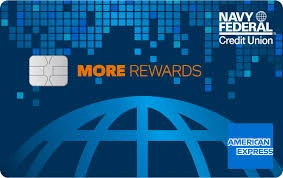
NFCU More Rewards runs a 0.99% intro APR for 12 months on balance transfers only (not purchases) within 60 days of opening, with no balance-transfer fee at all. After that, the ongoing variable APR is 14.15%-18.00% — among the lowest of any card here, roughly 7-11 points below a typical rewards card. The catch: membership requires an active-duty, veteran, or DoD affiliation, or an immediate family/household connection to one.
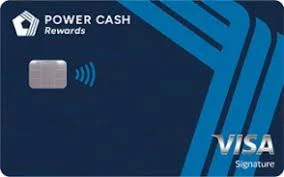
PenFed Power Cash is the pick without a military connection: a 12-month 0% intro APR on purchases and transfers, a 3% transfer fee, and an ongoing 17.99% variable APR — still 5-11 points below a typical rewards card. Membership is open to any US citizen or permanent resident who opens a savings account with a $5 deposit.
💡 Pro tip — Check your existing bank or a local credit union's own low-APR card before applying anywhere else. Many regional credit unions publish ongoing APRs in the 12-16% range that never show up in national "best of" roundups, because they don't pay for placement.
Break-even math on the ongoing rate alone: on $5,000 carried long-term (no intro window in play), NFCU More Rewards's 18% ceiling costs about $75/month; PenFed Power Cash's 17.99% costs about the same. Compare that with a typical rewards card at 24.99% ($104/month) and you save roughly $29-30/month, or about $350/year, indefinitely — with no fee, no window to track, and no risk of the rate reverting once a promo ends.
Key takeaway: for balances you'll carry for a year or more without a clear payoff date, a credit union's lower standing APR beats chasing another 0% promo you might not clear in time.
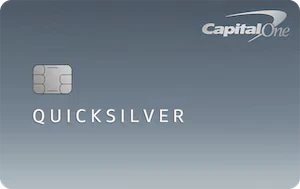
Best for a thin file: Quicksilver Secured
If your credit file is too thin to qualify for any card above, the calculus changes: approval odds matter more than APR, because a 0% card that rejects your application saves you nothing. Quicksilver Secured requires a refundable deposit starting at $200 (Capital One may allow more, up to $1,000+, based on your file), reports to all three bureaus, and earns 1.5% cash back unlimited — unusual for a secured card. Annual fee: $0. Ongoing APR: 28.99% variable, with no 0% intro offer.
Break-even math: there isn't a favorable one. At 28.99%, the ongoing rate sits above the 24.99% typical rewards-card APR used throughout this guide — it is not a cheap way to carry debt. Its job is building the payment history that gets you approved for WF Reflect or PenFed Power Cash in 12-18 months, not saving you interest today. Pay the balance in full if you can; carrying debt on a secured card at 29% while your file is thin is the worst version of this guide's problem, not a solution to it.
Discover it Secured, historically the best rewards-earning secured card, is currently paused for new applications — Capital One, which acquired Discover in 2025, confirmed it stopped accepting applications in June 2026 while reworking the product for a later relaunch. Existing cardholders are unaffected.
Key takeaway: a thin file usually means the best move is minimizing the card's cost while you build the file, not finding a genuinely low APR — that comes with your next card, once you qualify.
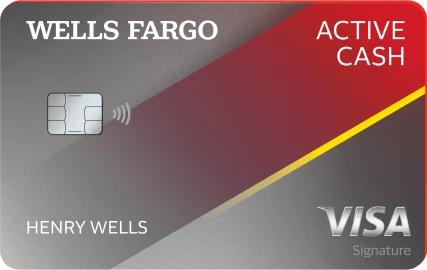
Best if you occasionally carry a balance but still want cash back: Active Cash
Some readers don't fit either extreme — most months they pay in full, but two or three months a year (a slow quarter, an unplanned bill) they carry a balance. Active Cash covers both jobs. It earns a flat 2% cash back on everything with no rotating categories, plus a 12-month 0% intro APR on purchases and transfers (transfers within 120 days, at a 3% intro fee for 120 days, then 5%). Ongoing APR after the promo: 18.49%-28.49% variable. Annual fee: $0.
Real use case: say a $2,000 unexpected repair bill lands mid-year and you can't pay it off in one statement. On a standard rewards card at 24.99% APR, carrying that $2,000 for three months while you catch up costs about $125 in interest. On Active Cash inside its intro window, that same three months costs $0 in interest — you're still inside the 12-month promo, so the emergency spend rides at 0% while your regular spending keeps earning 2% cash back the rest of the year.
Key takeaway: if your balance-carrying is occasional and unpredictable rather than a fixed payoff project, one card that does both jobs beats juggling a dedicated 0% card and a separate rewards card.
Decision framework
| Your situation | Best fit |
|---|---|
| $3,000+ debt, will take 12+ months to clear | WF Reflect — longest runway wins on total interest saved |
| Under $3,000, want to pay off in under a year, some new spending too | Discover it Cash Back — lower entry fee, first-year cash back match |
| Military/DoD-affiliated, will carry some balance long-term | NFCU More Rewards — lowest ongoing APR, $0 transfer fee |
| No military affiliation, want the credit-union rate anyway | PenFed Power Cash — 17.99% ongoing, open to anyone with $5 |
| Thin or no credit file, can't qualify for the cards above | Quicksilver Secured — approval-focused, not APR-focused |
| Mostly pay in full, occasionally carry a balance for 1-3 months | Active Cash — 2% cash back plus a 12-month safety net |
Key takeaway: match the card to the shape of your debt problem first — every other factor, including rewards, is secondary until the balance is under control.
For the mechanics behind these numbers — what counts as a true 0% offer versus deferred interest, and the exact break-even formula — see 0% APR vs Balance Transfer: Choosing the Right Debt Tool. For a longer list of transfer-focused cards ranked purely on fee and window length, see the best balance transfer credit cards of 2026.
Bottom line: every card here is a tool for minimizing damage while you pay down debt, not a rewards play. Match the card to your specific problem, apply for exactly one, stop using whatever card got you into debt, and set an autopay amount that clears the balance before the window closes. APRs shown are variable ranges set at approval; your actual rate depends on your credit file, not the number advertised.
Get weekly card offer alerts
Sunday digest of elevated bonuses. One email, zero spam.
Cards mentioned in this guide
Frequently asked questions
What's the real difference between a 0% intro APR card and a card with a low ongoing APR?
Does a welcome bonus make up for the interest I'll pay while carrying a balance?
What credit score do I need for these cards?
What happens if I don't pay off my balance before the 0% intro period ends?
Navy Federal or PenFed — which is the better credit union pick?
Should I close a balance-transfer or low-APR card once I pay it off?
Related guides
Rules & Mechanics
0% APR vs Balance Transfer: Choosing the Right Debt Tool
11 min
Card Roundups
Best 0% Balance Transfer Credit Cards in 2026: Up to 21 Months 0% APR
14 min
Rules & Mechanics
Avoiding Credit Card Debt & APR Traps: A Newcomer’s Guide (2026)
11 min
Rules & Mechanics
Credit Utilization Explained for Newcomers (2026)
13 min
Related news

airlines · Jun 2, 2026
Aeroplan 2026: SQC Status and June 1 Devaluation

amex · Jun 25, 2026
Amex Platinum vs Schwab Platinum: the same $895 card, with a cash-out

chase · Jun 10, 2026
Chase Hyatt Transfer Ratio 4:3: What It Means for Sapphire Preferred and Ink Business Preferred

chase · Jun 10, 2026
Chase to Virgin Atlantic: 30% Transfer Bonus — Book Delta Business Class for 18,000 Points