Credit Utilization Explained for Newcomers (2026)
Credit utilization is your balance divided by your credit limit — per-card and aggregate — and it drives about 30% of your FICO score. Keep it under 10% (always under 30%). Bureaus see the balance from your statement closing date, so pay down before the statement closes, not just by the due date: a $180 balance on a $200 limit reports 90%, but paying to $15 first reports 7.5%. On a low first-card limit, pay early and request a credit-limit increase as your history builds.
On this page▾

Topic Collection
Part of the New to America Collection
Explore all 37 articles
Quick answer
Credit utilization is the share of your available credit you are using — your balance divided by your credit limit — and it drives roughly 30% of your FICO score, making it the single biggest lever you control month to month. For the full picture of building US credit as a new immigrant, see our mega-hub. Keep it under 10% for an ideal score and always under 30%. The number that matters is the balance on your statement closing date, because that is what the issuer reports to the bureaus. Pay your card down before the statement closes — not just before the due date — and your reported utilization drops, often lifting your score within one cycle. On a small first-card limit, a tiny balance can look huge, so request a credit-limit increase once you qualify. A $200 limit carrying a $180 balance reports as 90% — terrible — while paying it to $15 first reports as 7.5%.
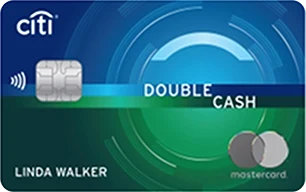
TL;DR: Credit utilization is the ratio of your credit card balance to your credit limit, expressed as a percentage, calculated both per-card and in aggregate across all cards. It accounts for about 30% of a FICO score (the "amounts owed" category), second only to payment history. Under 10% is ideal; under 30% is the widely cited safe ceiling. Credit card issuers report the balance from your statement closing date to Experian, TransUnion, and Equifax, not your real-time balance — so paying the card down before the statement closes lowers the reported utilization for that month. A low credit limit on a first card makes ordinary spending look high (a $180 balance on a $200 limit is 90% utilization); paying it to $15 before the statement closes reports 7.5%. Requesting a higher credit limit raises the denominator and lowers utilization without changing spending. Utilization has no memory — it resets each month from the freshly reported balance. Example flat-rate cards: Capital One Quicksilver (1.5% cash back, $0 annual fee) and Citi Double Cash (up to 2% — 1% when you buy, 1% as you pay).
Worked example: how the limit changes everything
Imagine one card with a $200 credit limit. Here is how the same spending reports at different paydown points.
| Credit limit | Statement balance | Utilization | Score impact |
|---|---|---|---|
| $200 | $180 | 90% | Severe drag — looks maxed out |
| $200 | $60 | 30% | Borderline — at the acceptable ceiling |
| $200 | $20 | 10% | Good — at the ideal edge |
| $200 | $15 | 7.5% | Ideal — clean reported number |
| $200 | $0 | 0% | Fine, though a tiny balance can score marginally better |
Same card, same limit — the only thing that moved is what the balance was on the statement closing date. Spend $180 across the month if you like, but pay it down to $15 before the statement closes and the bureaus see 7.5%, not 90%.
What credit utilization actually is
Utilization is a ratio: your reported balance divided by your credit limit. A $50 balance on a $500 limit is 10%. It is measured two ways, and both matter.
- Per-card utilization looks at each card on its own. One maxed-out card can hurt even if your others are empty.
- Aggregate utilization sums every balance and divides by your total credit across all cards.
FICO looks at both. A common newcomer trap: aggregate utilization is fine, but one small first card is running hot, and that per-card figure quietly weighs you down.
Why it is worth ~30% of your score
FICO sorts its inputs into categories. Payment history is the largest at about 35%. Right behind it, at roughly 30%, sits "amounts owed" — and utilization is the dominant piece of that category. Nothing else you control moves the needle as fast. Unlike account age, which you cannot rush, utilization can change the moment your next statement reports. For a full breakdown of every scoring factor, see how US credit scores work for immigrants.
The statement-closing-date trick
This is the mechanic newcomers most often miss. Your issuer does not report your balance every day. Once per billing cycle, on the statement closing date, it takes a snapshot of your balance and sends that one number to Experian, TransUnion, and Equifax.
That snapshot — not your due-date balance, not today's balance — is your reported utilization for the month.
So there are two different dates on every card:
| Date | What it is | What it controls |
|---|---|---|
| Statement closing date | The day the balance snapshot is taken | Your reported utilization |
| Payment due date | The day payment is required to avoid interest and late marks | Your payment history |
Paying in full by the due date keeps you out of interest and protects payment history. But to lower reported utilization, you pay down before the statement closing date. Many newcomers pay on time, never carry interest, and still see a high utilization on their report — because they paid after the statement already snapshotted a big balance.
How to use it
- Find your statement closing date in the app or on a statement — it is usually fixed each month (e.g. the 7th).
- Make a payment a few days before it to bring the balance down to your target — under 10% of the limit.
- Let the statement close on that low number. That is what reports.
- Pay any remaining balance by the due date to avoid interest and protect payment history.
Some people pay twice a month for this reason: once before the statement closes to control utilization, once by the due date to clear the rest.
Why a low first-card limit makes small spending look high
Newcomers usually start with a low limit — often $200 to $500 — because there is no US history yet. That low denominator is the whole problem. When choosing your first card, our best secured credit cards guide compares options by starting limit and graduation timeline. Normal spending eats the limit fast.
On a $200 limit, a single $80 grocery run plus a $50 phone bill is already $130 — that is 65% utilization if it sits there on the closing date. You did nothing wrong; the limit is just small. The same $130 on a $2,000 limit would be 6.5%.
Two fixes work together:
- Pay before the statement closes so the snapshot is small regardless of how much ran through the card.
- Raise the limit so the denominator grows and the same spending takes up a smaller share.
Requesting a credit-limit increase
A credit-limit increase (CLI) lowers utilization instantly without changing a dollar of spending — bigger denominator, smaller ratio. If $50 of monthly spend sits on a $200 limit, that is 25%; raise the limit to $1,000 and the same $50 is 5%.
A few things to know before you ask:
- Timing: many issuers let you request after about six months of on-time payments. Some auto-increase without a request.
- Hard vs soft pull: some issuers do a soft inquiry (no score impact) for a CLI; others may do a hard pull. Check before requesting if you are inquiry-sensitive.
- Do not then spend more. A higher limit only helps utilization if your balance stays low. Treat the new headroom as breathing room, not a bigger budget.
Cards like the Quicksilver and Discover it Cash Back are known for reviewing accounts for increases as your history builds.
Step by step: keep utilization low every month
- Know your statement closing date for each card.
- Set a target balance at the closing date — aim for under 10% of the limit, never over 30%.
- Pay down to the target a few days before the statement closes.
- Let the statement report the low number.
- Pay the rest by the due date so you never carry interest and your payment history stays perfect.
- Request a credit-limit increase once you have about six months of clean history, then keep your balance low against the new limit.
- Spread spending across cards if you have more than one, so no single card runs hot. Adding a second card also raises your total available credit, an approach the authorized-user strategy guide pairs with to speed up score growth even further.
A flat-rate everyday card such as the Quicksilver (1.5% cash back, $0 annual fee) or the Double Cash (up to 2% — 1% when you buy, 1% as you pay) makes this routine easy: charge daily, pay before the statement, earn on every dollar, and report a clean utilization.
Common mistakes
- Paying by the due date but not before the statement closes. You avoid interest but still report a big balance. Move at least part of the payment earlier.
- Maxing a small first-card limit. A $200 line fills fast; $180 on it is 90%. Keep the reported balance under about $20.
- Watching only aggregate utilization. One hot card hurts even if your total looks fine. Check each card.
- Asking for a limit increase, then spending into it. The ratio only improves if the balance stays low against the bigger limit.
- Closing your oldest card to "simplify." That removes its limit from the denominator and can spike aggregate utilization overnight. This and other traps are covered in detail in the guide to newcomer credit card mistakes to avoid.
- Chasing 0% reported on every card. A small reported balance can score marginally better than a flat zero; do not stress over reporting exactly $0.
Bottom line
Utilization is balance divided by limit, measured per-card and in aggregate, and it is worth about 30% of your FICO score — the fastest lever you control. To see how utilization fits into the overall newcomer credit-building timeline, follow the month-by-month milestones there. Aim under 10%, never breach 30%, and remember that the bureaus only see the balance from your statement closing date. Pay down before that snapshot, not just by the due date, and a $180 balance on a $200 limit drops from 90% to 7.5% reported. On a small first-card limit, pay early and request a credit-limit increase as your history builds so ordinary spending stops looking like a maxed-out card. Run daily spend through a clean earner like the Quicksilver (1.5%, $0 annual fee) or Double Cash (up to 2%), pay before each statement closes, and your reported utilization stays low month after month.
Get weekly card offer alerts
Sunday digest of elevated bonuses. One email, zero spam.
Cards mentioned in this guide

Frequently asked questions
What credit utilization should a newcomer aim for?
Why does my utilization look high even though I pay on time?
Does requesting a credit-limit increase help my score?
Should I leave a small balance or pay to zero?
Does closing a credit card affect my utilization?
Related guides
Rules & Mechanics
Does Carrying a Small Balance Help Your Score? The Myth, Debunked
9 min
Rules & Mechanics
Statement Date vs Due Date: The Billing Cycle, Finally Explained
9 min
Rules & Mechanics
How Credit Card Interest Is Actually Calculated
10 min
Rules & Mechanics
Do Welcome Bonuses Hurt Your Credit Score?
9 min
Related news

amex · Jun 25, 2026
Amex Platinum vs Schwab Platinum: the same $895 card, with a cash-out

chase · Jun 10, 2026
Chase Hyatt Transfer Ratio 4:3: What It Means for Sapphire Preferred and Ink Business Preferred

chase · Jun 10, 2026
Chase to Virgin Atlantic: 30% Transfer Bonus — Book Delta Business Class for 18,000 Points

ihg · Jun 10, 2026
IHG Buy Points at 0.5¢ Extended Through June 30 — Best Price for InterContinental Stays