0% APR vs Balance Transfer: Choosing the Right Debt Tool
A 0% purchase APR waives interest on new spending with no fee; a 0% balance-transfer APR waives interest on existing debt but usually costs a 3-5% transfer fee. On a $6,000 balance at 24% APR, a 5%-fee transfer to a 21-month 0% card saves roughly $1,439 versus staying put, and you almost always cannot transfer within the same issuer.
On this page▾

Topic Collection
Part of the Credit Score Guides Collection
Explore all 14 articles
A 0% intro APR and a balance transfer sound like the same trick, and issuers are happy to let you assume they are. They are not. One waives interest on money you have not spent yet; the other moves money you already owe onto a new card, usually for a fee. Picking the wrong one — or missing the fine print — can cost hundreds of dollars on debt you were trying to shrink.
This guide is about the mechanics, not the pitch: what a transfer fee actually costs, when it beats staying put, and where the 0% window quietly runs out on you.
Quick answer
A 0% intro purchase APR waives interest on new spending for a set window (commonly 12-21 months). A 0% balance-transfer APR waives interest on debt moved from another card, and almost always comes with a transfer fee of 3-5% of the amount moved.
- If you have existing debt, a transfer with a 3-5% fee usually still beats paying 20-29% APR for more than two or three months.
- If you have no debt yet, a 0% purchase APR card with no transfer fee is the cheaper tool.
- Deferred interest (common on store cards) is not true 0% — miss the deadline by a day and the issuer bills you retroactively for every month of interest.
- You usually cannot transfer a balance to another card from the same issuer.
💡 Pro tip — Break-even (months) = transfer fee ($) ÷ your current monthly interest ($). Below that, staying put can be cheaper.
Key takeaway: 0% purchase APR is free money on future spending; 0% balance-transfer APR is a fee-based tool for existing debt. Confusing the two — or trusting a "0%" sticker without checking for deferred interest — is how people end up worse off.
0% purchase APR vs. 0% balance-transfer APR
Issuers often advertise both on the same card without drawing a hard line between them. They're separate promotions with separate rules.
0% intro purchase APR applies to new purchases for a fixed window — often 12-21 months, no fee, because nothing is transferred. At the end, any remaining balance accrues interest at the card's standard variable APR, typically 17-28% in 2026.
0% intro balance-transfer APR applies to debt moved from another card, usually within 60-120 days of opening. You almost always pay a 3-5% transfer fee upfront. A $6,000 transfer at 5% costs $300 the moment it lands.
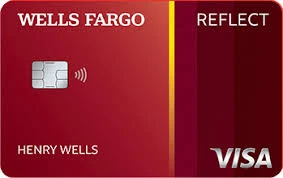
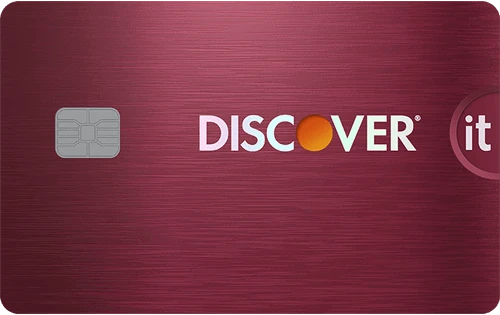
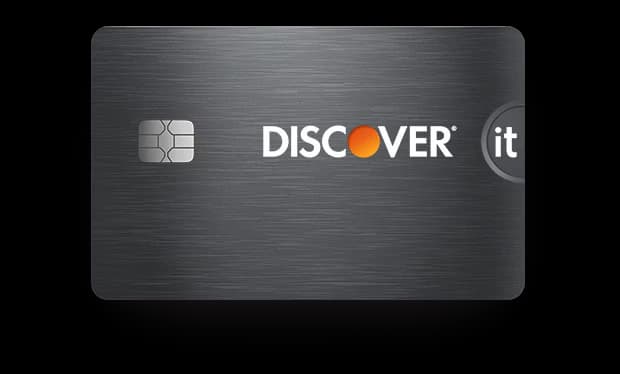
Some cards, like the WF Reflect, apply 0% to both purchases and transfers (21 months each, transfers must post within 120 days). Others, like the Discover it Cash Back, split the two — roughly 15 months on purchases, with an introductory 3% transfer fee in the first few months rising to 5%. Read the specific offer before applying; the windows aren't guaranteed to match.
| 0% purchase APR | 0% balance-transfer APR | |
|---|---|---|
| Applies to | New spending after opening | Debt moved from another card |
| Fee | None | Typically 3-5% of amount moved |
| Typical window | 12-21 months | 12-21 months, often shorter enrollment |
| Ends | Standard variable APR (~17-28%) applies | Same |
Key takeaway: a 0% purchase offer is free; a 0% transfer offer costs 3-5% upfront to stop a bigger bleed. They're not interchangeable.
The transfer fee and the break-even math
A transfer only makes sense once the interest it stops exceeds the fee. Break-even (months) = transfer fee ($) ÷ monthly interest you're currently paying ($).
Worked example: $6,000 at 24% APR runs roughly $120 in interest the first month (24% ÷ 12 × $6,000). A transfer at a 5% fee costs $300 upfront.
$300 ÷ $120 ≈ 2.5 months. After about two and a half months of not paying that interest, the transfer has paid for itself. On debt this size, the fee is a rounding error against a year or two of avoided interest — which is why transfers make sense for most people carrying debt more than a couple of months.
Where it flips: if you can pay off the balance in 6-8 weeks anyway, the interest you'd pay staying put may be smaller than the fee, and moving the debt buys you nothing but a hard credit pull. Run this math before applying, not after.
⚠️ Biggest mistake — Transferring a balance and treating the freed-up limit on the old card as new spending money. You now have two cards with debt instead of one.
Key takeaway: at a 5% fee, most transfers break even in 2-4 months against a 20%+ APR balance. Below a couple of months of remaining payoff time, the fee can outweigh the benefit.
Deferred interest vs. true 0%
True 0% APR means interest genuinely doesn't accrue during the window. If you still owe money when it ends, interest starts building forward, on the remaining balance only.
Deferred interest, common on store cards, works differently: interest accrues silently the whole period, and you're only spared it if you pay the full balance by the deadline. Miss it by a day, and the issuer bills you for every month of interest since the original purchase, retroactively, in one lump charge. A $2,000 furniture purchase on a 12-month deferred-interest plan at 28% APR can generate a $450+ surprise charge if $1 remains on day 366.
⚠️ Biggest mistake — Assuming "0% for 12 months, no interest if paid in full" on a store card behaves like a normal 0% card. It doesn't. Look for the phrase "deferred interest" in the terms and treat the deadline as absolute.
Key takeaway: true 0% only charges interest going forward. Deferred interest charges you backward, for the entire window, the moment you miss the deadline.
When the promo ends, and why you shouldn't spend on the card
Every 0% window expires quietly — the change just shows up as a line on your next statement. The remaining balance converts to the card's standard variable APR (commonly 17-28%), interest starts accruing daily immediately (see how credit card interest is actually calculated), and no grace period cushions a balance you're already carrying.
The fix: divide your balance by the months left in the promo the day you open the card, and treat that as a mandatory payment. $6,000 over a 21-month window means $286/month minimum.
The other failure mode: putting new purchases on the same card mid-payoff. Some cards only extend 0% to the transfer, leaving new purchases accruing interest immediately. Worse, federal payment-allocation rules (CARD Act) apply payments above the minimum to the highest-APR portion first — so if your transfer sits at 0% and new purchases accrue at 24%+, your payments go to the 0% balance while the new purchases compound untouched. Stop using the old card entirely, and don't use the new one for anything but paying down the transfer.
Key takeaway: the day the promo ends, any leftover balance starts at the card's full rate with no cushion. And a balance-transfer card is a payoff tool, not a spending card, until the transferred debt hits zero.
Eligibility: usually not within the same issuer
Most major issuers won't let you transfer a balance from one of their cards to another of their own. Chase won't do Chase-to-Chase; Citi won't do Citi-to-Citi; American Express generally doesn't accept transfers at all. The debt has to move to a different bank.
If your highest-APR debt sits on a Citi card, you need a Wells Fargo, Discover, Bank of America, or Capital One product to move it to — not another Citi card, even with an attractive 0% offer. Approval and the limit you're given depend on your credit profile — the strongest windows (18-21 months) typically go to FICO 690+ applicants — and a new account means a new hard inquiry with a small, short-lived score effect.
Key takeaway: plan your transfer target around a different bank than the one you owe. Approval and limit depend on your credit profile, not just the advertised offer.
Worked example: $6,000 at 24% APR
Paying $300/month either way, using the WF Reflect's structure (21 months 0%, 5% fee) against staying on a 24% APR card:
Stay put:
| Month | Balance |
|---|---|
| 6 | $4,865 |
| 12 | $3,586 |
| 18 | $2,146 |
| 24 | $524 |
| 26 | $0 |
Total paid: ≈$7,739. Interest: ≈$1,739. Payoff: ≈26 months.
Transfer, 5% fee:
| Month | Balance |
|---|---|
| 6 | $4,500 |
| 12 | $2,700 |
| 18 | $900 |
| 21 | $0 |
Total paid: $6,300. Interest: $0. Payoff: 21 months.
Net result: the transfer saves roughly $1,439 and finishes 5 months sooner, for the identical $300/month commitment. (Figures use simple monthly compounding; your issuer's exact daily math will differ slightly — see the interest calculation guide.)
Key takeaway: on $6,000 at 24% APR, a 5%-fee transfer to a 21-month 0% card saves about $1,439 and clears the debt five months faster — even after the fee.
Decision framework
| Your situation | Better tool |
|---|---|
| Existing debt above ~$1,000 at 18%+ APR, payable in 12-21 months | Balance transfer — the fee almost always pays for itself |
| No existing debt, a planned purchase to pay off over 6-18 months | 0% purchase APR card, no fee |
| Debt spread across cards at your current issuer | Target a different issuer — same-issuer transfers are usually blocked |
| Can't realistically stop new spending | Neither tool helps until spending stops |
| Remaining payoff timeline under 2-3 months | The fee may cost more than the interest saved — check the break-even first |
If you're choosing between specific cards, the balance-transfer offers roundup compares fees and windows, and the low-APR card picks cover carrying a lower ongoing rate instead. Newer to US credit? The newcomer's guide to APR traps covers grace-period basics this guide assumes.
Bottom line: a 0% purchase APR is free; a 0% balance-transfer APR costs a fee worth paying almost anytime debt would otherwise sit at 18%+ APR for more than a couple of months. Divide the fee by your monthly interest to find the break-even, confirm the offer isn't deferred interest in disguise, confirm your target is a different issuer, and stop spending on the card you just cleared. This is arithmetic, not advice — and the arithmetic almost always favors moving the debt.
Get weekly card offer alerts
Sunday digest of elevated bonuses. One email, zero spam.
Cards mentioned in this guide
Frequently asked questions
Is a 0% balance transfer worth the fee?
Can I do a balance transfer to a card from the same bank I already owe?
What happens if I don't pay off the balance before the 0% period ends?
What is deferred interest and how is it different from 0% APR?
Should I keep spending on my old card after I transfer its balance?
Does applying for a balance-transfer card hurt my credit score?
Related guides
Card Roundups
Best 0% Balance Transfer Credit Cards in 2026: Up to 21 Months 0% APR
14 min
Card Roundups
Best Cards If You Sometimes Carry a Balance (Low-APR Picks 2026)
10 min
Rules & Mechanics
How Credit Card Interest Is Actually Calculated
10 min
Strategy
Debt Avalanche vs Snowball When You Have Multiple Cards
11 min
Related news

airlines · Jun 2, 2026
Aeroplan 2026: SQC Status and June 1 Devaluation

amex · Jun 25, 2026
Amex Platinum vs Schwab Platinum: the same $895 card, with a cash-out

chase · Jun 10, 2026
Chase Hyatt Transfer Ratio 4:3: What It Means for Sapphire Preferred and Ink Business Preferred

chase · Jun 10, 2026
Chase to Virgin Atlantic: 30% Transfer Bonus — Book Delta Business Class for 18,000 Points
Cards in this ecosystem


Considering switching?