Best 0% Balance Transfer Credit Cards in 2026: Up to 21 Months 0% APR
Wells Fargo Reflect (21 months 0% APR, 5% fee) saves $1,235 on a $5,000 balance at 24% APR versus paying it down with minimum payments. For debt under $3,000, Wells Fargo Active Cash (12 months 0%, 3% fee, 2% cashback long-term) is the better pick.
On this page▾

Quick Answer
The Wells Fargo Reflect (21 months 0% APR, 5% fee) is the best balance transfer card for most people carrying $3,000+ in debt. On a $5,000 balance at 24% APR, it saves $1,235 in interest versus continuing minimum payments — even after the $250 transfer fee. If your debt is under $3,000 and you want a card worth keeping, Wells Fargo Active Cash (12 months 0%, 3% fee, 2% cashback forever) beats it. The two longest 0% windows in this guide sit side by side at Diamond Preferred vs WF Reflect — both run 21 months, and the transfer fee is what separates them.
The average American household carries $7,500 in credit card debt at 24%+ APR. That's roughly $1,800/year — a full month of an average salary — paid to your credit card company in interest alone. Forever, until you pay off the balance.
There's a legal way to pause that interest for 12 to 21 months. It's called a 0% balance transfer credit card, and it's the single most powerful debt-paydown tool available to anyone with decent credit.
This guide is the unvarnished 2026 playbook. We'll cover exactly how balance transfer cards work, the catches nobody mentions, which 5 cards are actually worth applying for, and a step-by-step plan to use them without making the typical mistakes that turn this strategy into a disaster.
If you're carrying $1,000+ on a high-interest credit card, this guide could save you $500–$3,000+ in interest. Read carefully.
What a 0% balance transfer card actually does
A balance transfer card is a regular credit card with one special feature: when you open it, the issuer offers a promotional 0% APR period (typically 12 to 21 months) specifically for balances transferred from your other credit cards.
Here's the flow:
- You apply for a new credit card with a 0% balance transfer offer
- You get approved with a credit limit high enough to absorb your debt
- You request that the new card pay off your old high-interest card (the "balance transfer")
- You pay a one-time transfer fee (usually 3–5% of the transferred amount)
- Your debt now sits on the new card at 0% interest for the promotional period
- You aggressively pay down the balance during the 0% window
- Before the promo expires, you either pay it off completely OR transfer remaining balance to ANOTHER 0% card
The result: instead of paying 24%+ interest while you struggle to pay down debt, you pay 0% — meaning every dollar you pay goes to actual principal reduction.
The real math: how much you actually save
Let's use a realistic example. Say you have $5,000 in credit card debt at 24% APR.
Without a balance transfer:
- Annual interest: $1,200
- If you pay $250/month (typical minimum-plus), it takes ~28 months to pay off
- Total interest paid over 28 months: $1,485
With Wells Fargo Reflect (21 months 0% intro APR, 5% balance transfer fee):
- Transfer fee: $250 (one-time, 5% of $5,000)
- Monthly payment to clear in 21 months: $250
- Total interest paid: $0
- Total cost (just the fee): $250
- Net savings: $1,235 — that's a free vacation, or a real dent in your emergency fund
With Wells Fargo Reflect at $10,000 debt at 24% APR:
- Without transfer: ~$2,800 interest over 30 months
- With transfer (5% fee): $500 fee + $0 interest
- Net savings: $2,300 in just 21 months
For anyone in this situation, the math isn't subtle. The transfer fee is almost always a fraction of the interest you'd otherwise pay.
Top 5 balance transfer cards in 2026
Below are the five cards genuinely worth applying for, ranked by overall value (longest 0% period + lowest fee + complementary benefits).
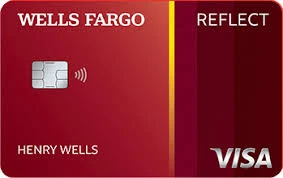
1. WF Reflect — Best Overall (Longest 0%)
- 0% intro APR: 21 months on balance transfers and purchases
- Balance transfer fee: 5% (minimum $5)
- Regular APR: 18.24%–29.99% variable after promo
- Annual fee: $0
- Credit needed: 670+ FICO recommended
- Rewards after promo: None (this is a pure debt-payoff tool)
Why it wins: The 21-month 0% intro is the longest on the market right now. For someone carrying $5K+ in debt, those extra 6 months over a 15-month card can mean an extra $500–$1,000 in interest avoided. The 5% transfer fee is higher than some competitors, but the extra time more than makes up for it.
Get it if: You need the maximum runway to pay off significant debt.
2. Citi Simplicity — Best for "I Pay Late Sometimes"
- 0% intro APR: 21 months on balance transfers (low-fee variant)
- Balance transfer fee: 5% or $5 minimum
- Regular APR: 19.24%–29.99% variable
- Annual fee: $0
- Unique feature: No late fees, ever. No penalty APR.
- Credit needed: 670+ FICO
Why it stands out: If you've ever paid a credit card late (because life happens), this is your safety net. Most cards charge a $40 late fee AND increase your APR to 29.99% as punishment. Citi Simplicity does neither. For someone using a BT card during a tight financial period, this protection alone is worth getting.
Get it if: You want belt-and-suspenders protection during your debt payoff.
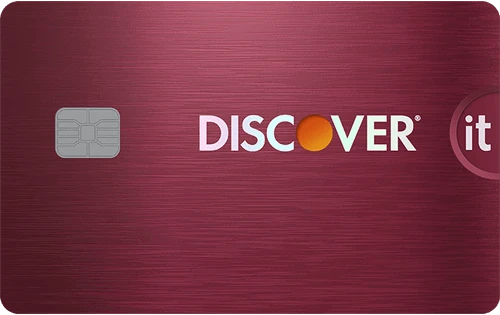
3. Discover it Cash Back (Balance Transfer Variant) — Best for "Mostly Pay Off, Some Spending"
- 0% intro APR: 18 months on balance transfers, 15 months on purchases
- Balance transfer fee: 3% intro (then 5%)
- Regular APR: 18.24%–27.24% variable
- Annual fee: $0
- Rewards: 5% cashback in rotating quarterly categories (groceries, gas, dining, Amazon — varies), 1% everything else
- First-year match: Discover doubles your first year of cashback
Why it works: If you're trying to pay off debt AND continue using a card for everyday purchases, Discover gives you 0% on both the transfer AND new spending for over a year — while earning cashback. The 3% transfer fee (intro) is better than Wells Fargo's 5%.
Get it if: Your debt is medium-sized ($1K–$5K) and you want to keep earning rewards.
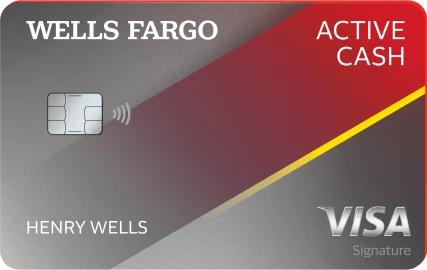
4. Active Cash — Best for "Long-Term Holder After Payoff"
- 0% intro APR: 12 months on balance transfers and purchases (transfer within 120 days)
- Balance transfer fee: 3% (within first 120 days, then 5%)
- Regular APR: 19.24%–29.24% variable
- Annual fee: $0
- Rewards: 2% unlimited cashback on everything (one of the best flat-rate cards on market)
- Welcome bonus: $200 after $500 spend in first 3 months
Why it's clever: This card has only 12 months of 0% (shorter than Reflect), but after you pay off your debt, it becomes a top-tier 2% cashback card you'll keep forever. Most balance transfer cards become useless once the promo ends. Active Cash is the rare BT card you actually want to hold long-term.
Get it if: Your debt is smaller ($1K–$3K) AND you want a 2% cashback card to keep.
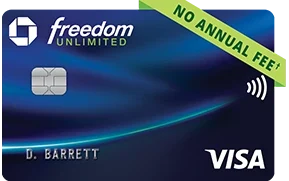
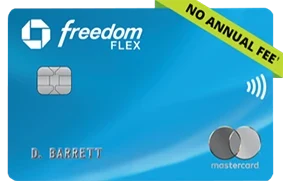
5. Freedom Unlimited — Best for "Already in Chase Ecosystem"
- 0% intro APR: 15 months on balance transfers and purchases
- Balance transfer fee: 3% intro (first 60 days), then 5%
- Regular APR: 19.74%–28.49% variable
- Annual fee: $0
- Rewards: 1.5% cashback on everything, 3% on dining and drugstores, 5% on travel via Chase
- Welcome bonus: Often available — currently 1.5% extra cashback for first year (effectively 3% on everything for year 1)
Why it's strategic: If you're working your way toward Chase Sapphire Preferred or Reserve later (we cover that path in How to Build US Credit from 0 to 750 FICO in 6 Months), the Freedom Unlimited starts your Chase relationship AND pays off debt simultaneously. Freedom Unlimited vs WF Reflect is the trade-off in one place: a shorter 0% window on a card worth keeping, against the longest window on a card you close once the debt is gone.
Get it if: You plan to enter the Chase ecosystem for travel rewards after paying off debt.
Quick-comparison cheat sheet
| Card | 0% Length | Transfer Fee | Annual Fee | Best For |
|---|---|---|---|---|
| WF Reflect | 21 months | 5% | $0 | Maximum runway for large debt |
| Citi Simplicity | 21 months | 5% | $0 | No-late-fee safety net |
| Discover it Cash Back | 18 months (BT) / 15 months (purchases) | 3% intro / 5% | $0 | Cashback + 0% combo |
| Active Cash | 12 months | 3% intro / 5% | $0 | Keep card forever (2% cashback) |
| Freedom Unlimited | 15 months | 3% intro / 5% | $0 | Path to Chase ecosystem |
The hidden catch nobody talks about: balance transfer fees
Here's what most "best balance transfer cards" articles undersell: almost every card charges a 3-5% transfer fee upfront.
Why this matters:
If you transfer $5,000 at a 5% fee = $250 immediately added to your new card balance. So you're now paying down $5,250, not $5,000.
The math still works (you're saving $1,200+/year in interest), but you need to factor the fee into your plan.
The break-even calculation
A balance transfer makes financial sense when:
Interest you'd avoid > Transfer fee
Quick formula:
- Old card monthly interest = (debt × APR) ÷ 12
- Months of promo period = 12, 15, 18, or 21
- Total interest avoided = monthly interest × promo months
- Compare to transfer fee (3-5% of debt)
For most debts over $1,000 at 20%+ APR, transfers pay off easily. Below $500, the fee might not be worth it — you'd pay it down faster than the math justifies.
Step-by-step playbook: how to actually execute
This isn't theory. Follow these steps in order.
Step 1: Audit your debt
Write down every credit card you have, its current balance, APR, and minimum payment. This is your starting picture.
Step 2: Calculate your total debt and target
If you have $4,000 across two cards at 22% and 25% APR, your total is $4,000. Add ~5% buffer for the transfer fee: target a card with at least $4,200 credit limit.
Step 3: Check your FICO
Run a free credit check via Discover Credit Scorecard or Capital One CreditWise. You need 670+ FICO to be approved for most balance transfer cards. Below 650, you'll likely be denied.
Step 4: Use the Approval Predictor BEFORE applying
This is critical — every application = hard pull = -5 to -10 FICO points temporarily. Don't waste pulls on cards you won't be approved for.
Run our free Approval Predictor — no SSN, no hard pull, takes 60 seconds. It tells you the odds for each balance transfer card based on your FICO.
Step 5: Apply for ONE card
Pick the card that best matches your debt size and timeline (use the chart above). Apply directly through the issuer's website. Decisions are usually instant.
Step 6: Request the balance transfer
After approval (your new card arrives in 7-10 days), log into your new card's online portal and request a balance transfer. You'll need:
- The old card account number
- The amount to transfer
- Your full balance OR partial (transfer up to your new card's credit limit minus a small buffer)
The transfer usually completes in 7-14 days. During this period, keep making minimum payments on the OLD card — the transfer isn't instant, and missed payments hurt.
Step 7: Set up your payoff plan
Take your transferred debt (including the 3-5% fee) and divide by the number of months in the 0% window. Example:
- Transferred: $5,000 + $250 fee = $5,250
- 0% period: 21 months
- Monthly payment to clear: $250/month
Set up autopay on the new card for this amount. Don't miss a single one.
Step 8: Don't use the new card for spending
This is the discipline test. Many people open a balance transfer card, then start using it for new purchases — defeating the whole point. Use the new card ONLY to absorb the transferred debt. Use a different card (or cash) for everyday spending.
Step 9: Track the 0% expiration date
Put it in your calendar with a 60-day advance reminder. When that reminder fires, you have two options:
- You've paid it off — celebrate, you saved $1,000–$3,000 in interest
- You still have a balance — apply for another 0% balance transfer card and roll it forward (see "Exit plan" below)
The exit plan: what happens after 0% expires
If you can't pay off the full balance during the 0% window, you have a clear next move: transfer the remaining balance to ANOTHER 0% balance transfer card.
This is called "debt rolling," and it's legal, legitimate, and used by millions of disciplined debt-payoff strategists.
Constraints
- You'll pay another 3-5% transfer fee on the remaining balance
- You can't transfer between cards from the same issuer (Chase to Chase doesn't work). So if you used Wells Fargo Reflect first, your next move is Citi Simplicity or Discover, not another Wells Fargo card. For a broader look at Citi no-fee options, see the best no-annual-fee Citi cards guide.
- Each application = hard pull = temporary FICO drop
- The second card needs sufficient credit limit to absorb the remainder
When NOT to debt-roll
If you've been making minimum payments and your balance hasn't moved much, a second balance transfer won't fix the underlying problem. At that point, you need:
- A non-profit credit counseling service (NFCC.org)
- Debt consolidation loan (lower interest than credit card, fixed term)
- Personal loan
- Reassessment of your monthly spending
Balance transfer cards are a TOOL for disciplined paydown — they're not a solution for chronic over-spending.
5 common mistakes that sabotage the strategy
After watching the community use balance transfer cards, here are the patterns that consistently waste people's money.
Mistake 1: Continuing to use the old card
You transferred $5K to your new 0% card. Now your old card has a $0 balance — and a fresh $5K credit limit. Many people start using it again. Within 6 months, they have $5K on the new card AND $3K back on the old one. Net debt: more than they started with.
Fix: Cut up the old card (or freeze it in a literal block of ice — sounds silly, works). Don't close it (kills your credit age), just stop using it.
Mistake 2: Not setting up autopay
Missing one payment on a balance transfer card often ends the 0% promo immediately. You go from paying 0% to 28%+ overnight.
Fix: Autopay for the calculated monthly amount. Set it the day you receive the card.
Mistake 3: Spending on the new card
The 0% intro APR sometimes applies to purchases too — but the transfer fee math is wrong if you mix transfers with new spending. Worse, new purchases often have a higher APR than the transferred balance, and your payments get applied to the LOWER APR balance first (federal rule), meaning your purchases accrue interest the whole time.
Fix: Use a different card for all spending while paying off the transfer.
Mistake 4: Trying to transfer more than your credit limit
If your new card's limit is $4,500 and your debt is $5,000, you can only transfer $4,500. The remaining $500 stays on the old card at 24% APR. Some people don't realize this and fall short.
Fix: Request a credit limit increase from the new card BEFORE transferring (if your income supports it), or accept that you'll need to pay down the leftover at your old APR.
Mistake 5: Closing the old card
Once you've paid off the old card, the temptation is to close it. Don't. Closing it shortens your average credit history (a major FICO factor) and reduces your total available credit (kills your credit utilization ratio).
Fix: Keep the old card open. Charge a $5 subscription on it (Netflix, Spotify) and set autopay. Forget about it.
Who should NOT use balance transfer cards
Be honest with yourself before applying.
You're NOT a good fit if…
- Your FICO is below 650. You won't be approved for the best cards. Look at secured cards or credit counseling first — and read how credit scores work to understand which factors to improve before applying.
- You have a debt of less than $500. The transfer fee + paperwork isn't worth it. Just pay it down quickly.
- You can't commit to NOT using the old card. If you'll keep spending, balance transfers will make things worse, not better.
- You're in serious financial stress. If you can't make minimum payments, you need credit counseling (NFCC.org) or a debt management plan, not a new credit card.
- Your debt is from medical bills. Many hospitals offer 0% payment plans directly that don't require new credit cards.
You ARE a good fit if…
- FICO 670+
- Debt $1,000–$30,000 on high-APR credit cards
- Stable income that can sustain steady monthly payments
- Discipline to not increase spending after the transfer
- 0% APR window matches a realistic payoff timeline
After you're debt-free: transitioning to rewards optimization
Once you've paid off your balance transfer card, you have something powerful: established credit and disposable cash flow. Now you can shift from defensive debt-management to offensive rewards-optimization.
The transition path:
- Keep your balance transfer card open (don't close — preserves credit age and utilization)
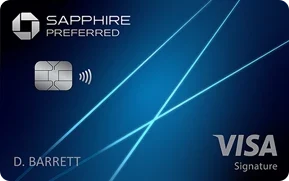
- Apply for a rewards card that matches your spending pattern — typically Freedom Unlimited or Discover it Cash Back if you want cashback, or upgrade to Sapphire Preferred after 6+ months at FICO 720+. If you want to stay with Citi for your next card, the Citi Diamond Preferred is worth comparing to Simplicity before you choose
- Use the rewards card for everyday spending, pay full balance every month, and start earning ~2-5% on purchases
Done right, the same person who was paying $1,200/year in interest can be earning $1,000+/year in rewards within 18-24 months.
Run our free AI Advisor — it builds your personalized rewards roadmap once you're ready to transition.
Get weekly card offer alerts
Sunday digest of elevated bonuses. One email, zero spam.
Cards mentioned in this guide
Frequently asked questions
How does a 0% balance transfer credit card work?
What is the longest 0% intro APR on balance transfers in 2026?
How much does a balance transfer fee cost?
Will applying for a balance transfer card hurt my credit score?
What FICO score do I need to qualify for a balance transfer card?
What happens if I don't pay off the balance before the 0% period ends?
Can I transfer a balance between cards from the same issuer (e.g., Chase to Chase)?
Can I use a balance transfer card for new purchases too?
Should I close my old credit card after transferring the balance?
Are balance transfer cards a good fit for everyone with credit card debt?
Related guides
Card Roundups
Best Credit Cards for Amazon 2026: Prime Visa, No-Prime Options, and the Prime Big Deal Days Play
10 min
Card Roundups
🏆 CreditPoints Top 5 — Best Credit Cards Right Now
9 min
Card Roundups
Best Cards If You Sometimes Carry a Balance (Low-APR Picks 2026)
10 min
Card Roundups
Best No-Annual-Fee Credit Cards of 2026: Five Roles, Not One Ranking
9 min
Related news

chase · Jun 9, 2026
Chase Disney Inspire Visa Launch: $99 AF, $400 Welcome — Is It Worth a 5/24 Slot?

chase · Jun 2, 2026
Chase 20% Flying Blue Bonus May 2026: Retrospective

chase · Jun 2, 2026
Chase Sapphire Reserve 150K Welcome Offer 2026

chase · Jun 2, 2026
Chase Ultimate Rewards 2026: Cash-Back + Points Boost