Chase Ink Business Cards Guide (2026): Which Ink Card to Get + the 5/24 Workaround
You can get a Chase Ink business card as a sole proprietor with no LLC, no EIN, and even $0 reported revenue — approval is driven by your personal credit (720+ ideal) and being under 5/24. All four Ink products are separately bonus-eligible, and approved Inks never add to your 5/24 count.
On this page▾

Topic Collection
Part of the Issuer Application Rules Collection
Explore all 20 articles
You don't need an LLC. You don't need employees. You don't need $50,000 in revenue.
You need exactly one thing to apply for a Chase Ink business credit card: a real activity that earns — or is honestly starting to earn — money.
Selling on eBay counts. Driving Uber counts. Hosting on Airbnb counts. Tutoring counts. Reselling sneakers counts. Writing freelance counts. Renting out a single unit counts.
The single most common mistake first-time business-card applicants make is waiting to "have a real business" — and missing 100,000-point welcome bonuses while they wait.
This guide is the complete playbook for getting approved for Chase Ink cards as a regular person operating as a sole proprietor, plus how to stack multiple Ink bonuses over time without violating any rules.
Quick answer
Can you get a Chase Ink card without an LLC?
Yes. You apply as a sole proprietor using your SSN as the tax ID and your own legal name as the business name. No state filing, no business bank account, no logo required.
Things that qualify as a legitimate business in Chase's eyes:
- eBay, Etsy, Mercari, Poshmark, Vinted seller
- Facebook Marketplace flipping
- Amazon FBA or Merch by Amazon
- Freelance writing, design, code, video, photo
- Consulting (any field, any size)
- Uber, Lyft, DoorDash, Instacart, Grubhub driving
- Airbnb or Vrbo host
- YouTube creator, podcaster, newsletter, course seller
- Tutoring, music lessons, fitness coaching
- Reselling concert tickets, sneakers, trading cards
- Rental property (even a single unit)
- Cleaning, lawn care, handyman side work
- Photography or videography gigs
- Pet sitting, dog walking, mobile grooming
💡 Pro tip — If you've earned (or are honestly starting to earn) money from any of the activities above, you already have a sole proprietorship. The IRS treats it as a business the moment you report income on Schedule C. Chase will accept it as a business too.
Key takeaway: a Chase Ink card application does not require an LLC, EIN, business bank account, or formal company. A sole proprietorship — which you have by default the moment you start earning money outside a W-2 job — is enough.
What actually counts as a business?
Most beginners think "business" means a storefront, payroll, and a logo. Chase doesn't.
Chase's application asks for a business activity. Any of the activities below qualifies — and you can be honest about all of them.
| Activity | Counts as a business? | What to write on the application |
|---|---|---|
| Selling on eBay / Etsy / Marketplace | ✅ Yes | "Online resale" / "Online retail" |
| Tutoring | ✅ Yes | "Tutoring services" |
| Consulting (any field) | ✅ Yes | "Consulting" |
| Freelance writing / design / video | ✅ Yes | "Freelance services" |
| YouTube / podcast / newsletter | ✅ Yes | "Content creation" |
| Uber / Lyft / DoorDash / Instacart | ✅ Yes | "Rideshare" / "Delivery services" |
| Airbnb / Vrbo hosting | ✅ Yes | "Short-term rental" |
| Reselling (sneakers, tickets, cards) | ✅ Yes | "Online resale" |
| Single-unit rental property | ✅ Yes | "Real estate rental" |
| House-cleaning / lawn / handyman | ✅ Yes | "Cleaning services" / "Landscaping" |
| Photography (paid gigs) | ✅ Yes | "Photography services" |
| Music lessons / fitness coaching | ✅ Yes | "Coaching" / "Lessons" |
| Selling crafts at flea markets | ✅ Yes | "Retail" |
| Pet sitting / dog walking | ✅ Yes | "Pet services" |
The pattern: any activity where you intend to earn money is a business. Even if you've earned $200 total this year. Even if you've earned $0 so far but are honestly starting.
📌 Note — Do not claim a business you have no intention of running. That's fraud. But the bar for "legitimate" is you're actually doing the activity or honestly starting it — not you're profitable or you have customers yet.
Key takeaway: Chase's definition of "business" is broad. Side gigs, freelance work, rideshare, reselling, single-property rentals, and creator income all qualify. The bar is intent + activity, not revenue or paperwork.
Do you really need an LLC?
No. The short decision tree:
| Question | Answer |
|---|---|
| Do I need an LLC to apply? | No — sole proprietorship is accepted |
| Do I need an EIN? | No — your SSN is your tax ID as a sole prop |
| Do I need a business bank account? | No — Chase doesn't require one |
| Do I need a business name? | No — your legal name is the default business name |
| Will Chase verify my LLC? | N/A — they verify your personal credit, not the entity |
The detailed side-by-side that actually matters:
| Sole Proprietor | LLC | |
|---|---|---|
| Setup cost | $0 | $50 – $500 + state filing |
| Tax ID | Your SSN | Optional EIN (or SSN) |
| Business name | Your legal name (or DBA) | LLC name on the filing |
| Liability protection | Personal | Limited (separates personal assets) |
| Chase application — accepted? | ✅ Yes | ✅ Yes |
| Approval odds | Same as LLC if credit is clean | Same as sole prop |
| Tax treatment | Schedule C on personal return | Pass-through (usually similar) |
| Eligible for Chase Ink welcome bonuses? | ✅ Yes | ✅ Yes |
LLCs offer liability protection — meaningful if you're hosting Airbnbs, doing physical services, or operating in a litigation-prone industry. For credit-card purposes, sole prop and LLC are treated identically by Chase.
💡 Pro tip — Don't form an LLC just to get a credit card. The "form-an-LLC-first" myth is one of the most common time-wasters in the points community. Start as a sole prop, get approved, then form an LLC later if liability protection becomes relevant for your specific business.
Key takeaway: An LLC offers liability protection but provides zero advantage in Chase business-card applications. Sole prop and LLC have identical approval odds and identical access to Ink welcome bonuses.
The Chase Ink card lineup
Chase issues four core Ink business cards. Here's how they stack up. For a head-to-head of the three most-cross-shopped options, see Ink Business Cash vs Unlimited vs Preferred. Want the deep dive on a single card? Read the full reviews: Ink Business Cash review, Ink Business Unlimited review, Ink Business Preferred review, and Ink Business Premier review.
| Card | Annual fee | Typical welcome offer | Best earning rate | Unlocks transfer partners? |
|---|---|---|---|---|
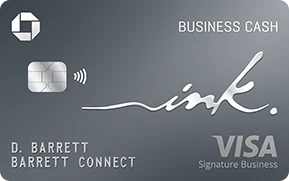
| Ink Cash | $0 | 75K – 90K UR (or $750 cash) | 5× on office supplies + internet/cable/phone (up to $25K/yr) | Only when paired |
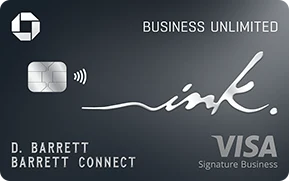
| Ink Unlimited | $0 | 75K – 90K UR (or $750 cash) | 1.5× flat on everything | Only when paired |
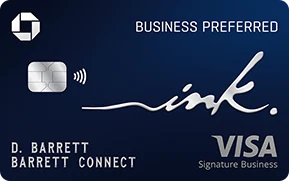
| Ink Preferred | $95 | 90K – 120K UR | 3× on travel + shipping + internet/cable/phone + social ads (up to $150K/yr) | ✅ Yes, directly |
| Ink Premier | $195 | 100K+ UR | 2.5× on purchases of $5,000+; 2× on smaller | ✅ Yes, directly |
Which Chase Ink card is best?
For most people the Ink Business Cash is the best starting card: it carries a $0 annual fee and earns 5× on office supplies + internet/cable/phone (up to $25K/yr) — the highest category rate in the lineup. If you want one card that earns on everything, the Ink Business Unlimited ($0 annual fee) earns 1.5× flat on all spend. The Ink Business Preferred ($95) is the points anchor — it's the lowest-fee card that unlocks transfer partners directly. All four cards earn Ultimate Rewards.
The "pair with a Preferred or Premier" trick
The Ink Cash and Ink Unlimited earn Ultimate Rewards points — but those points only become transferable points usable with airline and hotel partners when you hold an Ink Preferred, Ink Premier, Sapphire Preferred, or Sapphire Reserve in the same Chase profile.
Without a "premium" anchor card, Ink Cash and Ink Unlimited points are redeemable at 1¢ each — basically cash back.
💡 Pro tip — The optimal long-term setup is Ink Cash + Ink Unlimited + Ink Preferred — the Ink trifecta strategy. Cash earns 5× on office-supply categories. Unlimited earns 1.5× on everything else. Preferred unlocks transfer-partner access for both. Total annual fee: $95.
Key takeaway: all four Ink cards earn Ultimate Rewards. The $0-AF Cash and Unlimited are the cashback workhorses; the $95 Preferred is the transferable-points anchor that unlocks Hyatt, United, and the other 12 Chase transfer partners.
How Chase actually approves business card applications
Beginners assume Chase looks at business revenue, business credit, or company size. Mostly, they don't.
Chase Ink approvals are driven by personal credit factors first, with business details as a secondary check.
The 5 factors that actually matter
| Factor | How Chase uses it | Realistic target |
|---|---|---|
| Personal credit score | Primary approval signal | 720+ for clean approval; 680–720 works often |
| 5/24 status | Hard gate — must be under 5/24 at the moment of application | ≤4 personal cards opened in last 24 months |
| Existing Chase relationship | Helps if you have a checking/savings account + cards in good standing | Open a Chase checking account before applying if you don't have one |
| Income (personal) | Reported on application; the higher the better | $30K+ household typical floor |
| Reported business revenue | Lower weight than people think | $0 is acceptable for a new business |
📌 Note — Reporting $0 in business revenue is normal for a brand-new sole prop. Chase has approved Ink applications with $0 reported revenue many, many times. The application asks what your business made last year — if you just started, $0 is accurate.
Common application questions, answered
| Application field | What to put if you're new |
|---|---|
| Years in business | 0 (or 1 if you started this year) |
| Annual business revenue | The honest figure — $0 if you just started |
| Estimated monthly spend on this card | A reasonable forecast — $500 to $2,000 is typical |
| Number of employees | 1 (you) |
| Legal business name | Your full legal name (sole prop default) |
| Tax ID | Your SSN |
| Business address | Your home address is fine |
| Type of business | Pick the closest match — "Online retail", "Consulting services", etc. |
Key takeaway: Chase Ink approvals are 80% personal credit + 5/24 status, 20% business details. Brand-new sole props with $0 revenue get approved every day. The single most important number is your personal credit score, not your business size.
Does 5/24 apply to Chase Ink cards?
Yes — but with a critical twist that makes Ink cards the most efficient bonus-stack in the points game.
The 5/24 rule in one sentence
The Chase 5/24 rule: Chase generally won't approve any Chase card application — personal or business — if you've opened 5 or more personal credit cards from any issuer in the last 24 months.
It's a hard gate. Applications above 5/24 auto-decline, regardless of credit score.
Why Ink cards are the workaround
Chase Ink business cards do NOT report to your personal credit report. They count toward 5/24 for approval purposes only — they don't add to your slot count after approval.
In plain English:
| What | Does it affect your 5/24? |
|---|---|
| Applying for an Ink card | Yes — you must be under 5/24 to apply |
| Getting approved | No — Ink approval doesn't ADD to your 5/24 count |
| Time after approval | Your 5/24 status keeps improving as old cards age off your report |
Visual:
Today's 5/24 count: 4/24  →  Apply for Ink Preferred  →  APPROVED
                                  ↓
Tomorrow's 5/24 count: still 4/24 (Ink doesn't add)
                                  ↓
6 months later: still 4/24 (Ink is invisible on personal report)
That's why points-game strategists prioritize Chase Ink cards: you can stack multiple business-card bonuses without using up personal 5/24 slots.
⚠️ Critical — You still need to be under 5/24 at the moment of application. If you're at 5/24, Chase will decline the Ink application even though the Ink itself wouldn't push you over. Plan applications when you're at 4/24 or less.
For a deeper breakdown, see Chase 5/24 rule explained and the Ink-specific deep dive on Chase Ink business cards and the 5/24 rule.
Key takeaway: you must be under 5/24 to be approved for any Chase Ink card. After approval, the Ink itself doesn't add to your 5/24 count — which is why Ink cards are the most efficient way to stack Chase welcome bonuses without burning personal-card slots.
Can you earn multiple Chase Ink bonuses?
Yes — and the rules are clearer than most newcomers realize.
Rule #1 — Each Ink product is separately bonus-eligible
The four Ink products (Cash, Unlimited, Preferred, Premier) are treated as distinct products for bonus purposes. You can earn the welcome bonus on each one once.
| Card | Welcome bonus eligible the first time? |
|---|---|
| Ink Business Cash | ✅ Yes |
| Ink Business Unlimited | ✅ Yes |
| Ink Business Preferred | ✅ Yes |
| Ink Business Premier | ✅ Yes |
That's potentially 300,000 – 400,000+ Ultimate Rewards across all four — enough for $7,500+ in Hyatt redemptions or 10+ international business-class flights via the airline partners.
Rule #2 — Same Ink card again? Read the bonus disclosure
You can earn the welcome bonus on the same Ink product a second time, but you must:
- Have closed (or product-changed) the previous card at least 24 months ago, AND
- Verify the application's specific bonus disclosure language at the moment of applying — Chase's pre-application terms have tightened over time
📌 Note — Historical data points suggest Inks have a softer re-eligibility window than Sapphire personal cards (which require 48 months). Don't assume any specific timeline — read the application's exact bonus terms before submitting.
Rule #3 — Multiple businesses, one applicant
If you operate multiple distinct businesses (e.g., eBay reselling + rental property + freelance writing), you may apply for the same Ink product for each business — and each application is potentially bonus-eligible.
Example: you hold an Ink Cash for your eBay business and want a second Ink Cash for your freelance writing business. Chase often approves the second when each application clearly identifies a different business activity.
⚠️ Be honest — Don't invent businesses to chase bonuses. Each business you apply for should be a real activity. Chase verifies via soft signals (different business names, distinct revenue patterns) and can claw back bonuses if it later suspects fabrication.
Example: a 12-month Ink sequence
For someone starting at 4/24 with one legitimate sole prop:
| Month | Application | Welcome bonus | Why this order |
|---|---|---|---|
| 0 | Ink Preferred | 90K – 100K UR | Highest standalone bonus; unlocks transfer access |
| 3 | Ink Cash | 75K – 90K UR | $0 AF, 5× category earning |
| 6 | Ink Unlimited | 75K – 90K UR | $0 AF, 1.5× catch-all |
| 9 – 12 | Ink Premier | 100K+ UR | $195 AF; strongest for higher monthly spend |
Total possible welcome bonuses across 12 months: 340K – 380K Ultimate Rewards.
At Hyatt's typical 2.0¢/pt redemption rate, that's $6,800 – $7,600 of travel for roughly $30K of minimum spend that overlaps with normal household + business expenses.
Key takeaway: you can legally and responsibly earn the welcome bonus on all four Ink products — 300K+ Ultimate Rewards in a 12-month sequence — and the bonuses don't add to your personal 5/24 count. The real constraint is hitting each card's minimum spend without overstretching.
Best application sequences by goal
Scenario A — Beginner (first Chase business card)
Goal: get approved, learn the process, earn one solid welcome bonus.
| Step | Action |
|---|---|
| 1 | Check your 5/24 status — must be at or below 4/24 |
| 2 | Apply for Ink Cash or Ink Unlimited — $0 AF means no annual cost |
| 3 | Hit the minimum spend ($6,000 in 6 months is typical) |
| 4 | Pair with a future Sapphire Preferred or Sapphire Reserve later to unlock transfer partners |
💡 Pro tip — Start with Ink Cash or Ink Unlimited. They're $0 AF, so even if you change your mind about the points strategy, there's no cost to keeping the card open for credit-age purposes.
Scenario B — Maximum Ultimate Rewards (12-month plan)
Goal: stack 300K+ UR in one calendar year.
| Month | Card | Bonus | Min. spend |
|---|---|---|---|
| 0 | Ink Preferred | 90K – 100K UR | $8,000 in 3 mo |
| 3 | Ink Cash | 75K – 90K UR | $6,000 in 6 mo |
| 6 | Ink Unlimited | 75K – 90K UR | $6,000 in 6 mo |
| 9 | Ink Premier | 100K+ UR | $10,000 in 3 mo |
Total: 340K – 380K UR. Roughly $30K total minimum spend across 12 months — about $2,500/month of real or natural-business spend.
Scenario C — Higher-spend business owner
Goal: earn welcome bonuses and optimize ongoing earn rate.
| Card | Why hold long-term |
|---|---|
| Ink Preferred | 3× on travel + shipping + internet/cable/phone + social ads (up to $150K/yr) |
| Ink Cash | 5× on office supplies (up to $25K/yr); gift-card route to extend categories |
| Ink Premier | 2.5× on purchases ≥ $5,000 — strongest catch-all for large B2B spend |
| Sapphire Reserve or Sapphire Preferred | Anchors transfer-partner access for the whole Chase pool |
Key takeaway: a first-timer should open one $0-AF Ink and prove approval. A bonus-stacker can sequence all four Inks across 9–12 months. A high-spend business owner should hold Preferred + Cash + Premier as the long-term combo, plus a Sapphire to keep transfer-partner access alive.
Decision framework: which Ink card wins for your situation
Pick based on where your money actually goes.
| If you spend… | Best card | Why |
|---|---|---|
| >$2,000/yr on internet, cable, or phone | Ink Cash | 5× = $0.075/dollar at $0.015/pt vs. 1× elsewhere |
| >$8,000 in 3 months naturally | Ink Preferred first | Unlocks transfer partners + highest standalone bonus |
| >$5,000+ on a single B2B purchase | Ink Premier | 2.5× on large purchases beats Preferred's 3× on category |
| All spend is mixed/uncategorized | Ink Unlimited | 1.5× flat beats most cards' 1× base rate |
| You want transfer access at zero AF | Ink Cash or Unlimited + Sapphire Preferred | $95 total AF vs. $195 for Premier |
Rule of thumb: If your monthly business + household spend is under $2,000, start with Ink Cash ($0 AF). If it's $2,000–$5,000, start with Ink Preferred. If large single transactions dominate, add Ink Premier.
Real use case: what 100K Chase UR actually buys
Scenario: You earn 90K UR from the Ink Preferred welcome bonus (after $8,000 spend in 3 months) plus 10K from ongoing 3× on $3,333 in internet/phone/shipping.
At $0.015/pt via Hyatt transfer: $1,500 of hotel value — or specifically, 2 nights at Hyatt Regency Maui (standard rack $450–$650/night) for 18,000 points per night using category pricing. The 100K total would cover 5 nights = $2,250–$3,250 of rack value.
At 1¢/pt (cash redemption, no transfer partner): same 100K = $1,000 cash — 33–50% less value.
The gap: using a transfer partner vs. cash redemption on 100K points is worth $500–$2,250 extra depending on the property. That gap is why pairing any $0-AF Ink with an Ink Preferred matters.
Real-world approval examples
These mirror real applicant profiles. Numbers are realistic, not best-case.
Example #1 — Sole prop with no LLC, no business bank
Profile: 28-year-old W-2 employee. Started reselling shoes on StockX 4 months ago. No LLC, no separate business bank account, $1,400 in business revenue YTD. Personal credit 750. 2/24.
Application: Ink Cash. Business name = legal name. Tax ID = SSN. Revenue field = $1,400. Years in business = 0.
Result: Approved with a $5,000 credit line. Earned 75K UR after $6K minimum spend over 4 months of normal household + sneaker-flipping expenses.
Example #2 — Part-time freelancer
Profile: 34-year-old graphic designer with a full-time W-2 job and weekend freelance Adobe Illustrator gigs. ~$8,000 in freelance income last year. Personal credit 745. 3/24.
Application: Ink Preferred. Business name = legal name. Tax ID = SSN. Revenue field = $8,000. Spend forecast = $1,500/mo.
Result: Approved with a $12,000 credit line. Earned the 100K UR bonus after $8K spend in 90 days (overlapped with normal household + freelance software subscriptions).
Example #3 — eBay reseller, two-Ink stack
Profile: 42-year-old. Sells reseller-grade electronics on eBay nights and weekends. Two years in. $24,000 gross sales / $9,000 net profit last year. Personal credit 720. 4/24.
Application: Ink Cash and Ink Unlimited, submitted as separate applications 90 days apart.
Result: Both approved. Ink Cash at $6,000 line; Ink Unlimited at $4,500. Earned 75K UR on each. The two cards now cover catch-all spend (Unlimited at 1.5×) and category spend (Cash at 5× on shipping-label purchases via office-supply stores).
Example #4 — Airbnb host with a single rental
Profile: 51-year-old W-2 employee with one rental property. ~$18,000 gross rental income last year. Personal credit 780. 2/24.
Application: Ink Preferred. Business activity = "Short-term rental". Revenue = $18,000. Spend forecast = $1,200/month (utilities, cleaning supplies, repairs, ads).
Result: Approved with a $20,000 credit line. The 3× category multiplier on internet + utilities matched the actual property spend pattern, so the card paid for itself within the first 6 months.
Key takeaway: real approvals come from real activity — eBay flips, freelance, Airbnb, side hustles. The common thread is honest reporting of revenue plus a personal credit profile that's clean enough (720+ ideal, 680+ workable) and at or below 4/24.
Biggest mistakes to avoid
The four most common errors first-timers make.
Mistake #1 — Waiting for an LLC
You don't need one. Every month spent forming an LLC, opening a business bank account, and "getting paperwork in order" is a month of points not earned. Chase has approved thousands of sole props for Ink cards. Start there.
Mistake #2 — Overstating business revenue
Some applicants inflate revenue figures believing it improves approval odds. It doesn't. Chase approves $0-revenue Inks every day. Inflated numbers can flag the application for review or be considered fraud during a future reconsideration call. Be exact. Be honest.
Mistake #3 — Applying too aggressively
A new applicant should not apply for three Inks the same week. Chase systems detect velocity. Standard pacing:
- 90 days between Chase business-card applications
- 30+ days between any Chase application (business or personal)
- One big "no" can chill future apps for 6+ months
Mistake #4 — Ignoring 5/24 status
The single most common avoidable Ink rejection is applying while at 5/24. The Ink itself wouldn't push you over — but Chase still declines applications submitted by anyone already at the threshold.
Always count yourself before applying.
⚠️ The 5/24 trap — Personal cards from Capital One, Citi, Wells Fargo, Discover, Amex, Bank of America, and U.S. Bank all count toward 5/24, not just Chase cards. Authorized-user cards count too unless you can get them removed from your personal report.
Key takeaway: don't form an LLC just to apply, don't inflate revenue, don't apply too fast, and always check your 5/24 status the day before applying. Avoid these four and approval rates climb dramatically.
Related Chase reading
Before applying, browse these for context:
- Chase 5/24 rule explained — full breakdown of the gate
- Chase Sapphire Reserve 150K offer — the personal-card flagship that unlocks transfer partners
- Chase Ultimate Rewards transfer partners 2026 — where your UR can fly
- How to transfer Chase points to Hyatt — the highest-value redemption Chase points reach
- Best business credit cards — how the Inks rank against Amex, Capital One, and the rest of the field
- Capital One Spark Cash Plus vs Ink Business Premier — the head-to-head for flat-rate business spend
Bottom line
You do not need an LLC. You do not need an EIN. You do not need a business bank account. You do not need a logo, a website, or employees.
You need:
- A real activity that earns money — or is genuinely starting to earn money
- A personal credit score that's reasonably clean (720+ ideal, 680+ workable)
- Under 5/24 status at the moment of application
- Honest answers on the application
The optimal first move: open an Ink Cash or Ink Unlimited as a sole proprietor. $0 annual fee. Approval is straightforward when the credit profile is clean. The welcome bonus is the price of learning how the system works.
The optimal long-term move: stack all four Ink products across 12+ months for 300K+ Ultimate Rewards, then pair with a Sapphire to unlock transfer-partner value at Hyatt and across the airline alliance.
Card issuers have made the rules less mysterious than the points community sometimes suggests. The biggest barrier between you and 100,000 Ultimate Rewards is usually fear of clicking apply. Drop the fear, do the homework, and the points come.
Compare deeper
- Side-by-side comparison: Ink Business Preferred vs Chase Sapphire Reserve
- Side-by-side comparison: Chase Sapphire Preferred vs Chase Sapphire Reserve
- Side-by-side comparison: Ink Business Preferred vs Ink Business Premier
- Side-by-side comparison: Ink Business Preferred vs Chase Sapphire Preferred
More compare matchups
- Compare head-to-head: Ink Business Preferred vs Chase Sapphire Reserve
- Compare head-to-head: Chase Sapphire Preferred vs Chase Sapphire Reserve
- Compare head-to-head: Ink Business Preferred vs Ink Business Premier
- Compare head-to-head: Ink Business Preferred vs Chase Sapphire Preferred
- Compare head-to-head: Ink Business Unlimited vs Chase Sapphire Preferred
- Compare head-to-head: Ink Business Cash vs Chase Sapphire Preferred
- Compare head-to-head: Chase Sapphire Reserve vs United Club Infinite Card
- Compare head-to-head: Chase Sapphire Reserve vs United Quest Card
Get weekly card offer alerts
Sunday digest of elevated bonuses. One email, zero spam.
Cards mentioned in this guide

Frequently asked questions
Do I need an LLC to apply for a Chase Ink card?
Can I use my SSN instead of an EIN?
Can I get approved with $0 in business revenue?
How many Chase Ink cards can I have?
Do Chase Ink cards count toward 5/24?
Can Chase verify my business?
How long should I wait between Chase business-card applications?
Can I earn the same Ink bonus twice?
Which Chase Ink card should I start with?
Does Chase report Ink cards to my personal credit?
Can I apply if I just started my business this month?
Can I get a Chase Ink card if I have a full-time W-2 job?
Do I need a separate business bank account?
What is the minimum credit score for a Chase Ink approval?
Can I get an Ink card if I have multiple businesses?
What happens if Chase denies my Ink application?
Can I downgrade an Ink card to avoid the annual fee?
Do Chase Ultimate Rewards points earned on Ink cards expire?
What are the best Chase Ink strategies for success?
Related guides
Strategy
Chase 5/24 Workaround: 3 Legit Ways to Get Approved in 2026 (+1 That Fails)
13 min
Strategy
Chase Trifecta 2026: Sapphire + 2 Freedoms (Full Math)
14 min
Strategy
Your First Year with Chase: A 12-Month Beginner Roadmap
11 min
Strategy
Chase Southwest Rapid Rewards Performance Business Review 2026
13 min
Related news

chase · Jun 2, 2026
Chase Ink Preferred 100K Returns: 2026 Ink Lineup

chase · Jun 10, 2026
Chase Hyatt Transfer Ratio 4:3: What It Means for Sapphire Preferred and Ink Business Preferred

chase · Jun 10, 2026
Chase to Virgin Atlantic: 30% Transfer Bonus — Book Delta Business Class for 18,000 Points

hyatt · Jun 3, 2026
Hyatt Added Perk for Globalists, Explorists and Cardholders
Cards in this ecosystem
Considering switching?