Chase Ink Business Cards & the 5/24 Rule: How to Keep Earning Chase Bonuses (2026)
Chase Ink business cards do not report to your personal credit bureaus, so opening one does not add to your 5/24 count — but Chase still applies the 5/24 screen when approving the card, so you must be under 5/24 to be approved. Stay under 5/24, then collect Ink cards to keep earning Chase bonuses without burning 5/24 slots.
On this page▾

Topic Collection
Part of the Issuer Application Rules Collection
Explore all 16 articles
Here is the insight most points players miss: a Chase Ink business card does not show up on your personal credit report, so opening one does not raise your 5/24 number — yet Chase still checks that number and you must be under 5/24 to be approved. Master this asymmetry and you can keep collecting Chase bonuses for years without burning a single 5/24 slot.
The 5/24 rule is the single most important gate in the Chase ecosystem: apply for a Chase card after opening 5 or more personal cards (from any issuer) in the past 24 months, and you get an automatic decline. Most readers treat this as a hard ceiling of five lifetime Chase approvals. It is not. Business cards behave differently, and Chase Ink is the engine that lets a disciplined applicant earn welcome bonus after welcome bonus while a casual applicant taps out at five. The full Ink card lineup gives you a complete breakdown of each option.
This guide explains exactly how Ink interacts with 5/24, who qualifies for a business card (the answer is broader than you think — sole proprietors, side hustlers, and gig workers all count), the precise application sequence that maximises your Chase yield, and the mistakes that quietly cost people thousands of dollars in foregone bonuses.
Quick answer
Chase Ink business cards do not count toward your 5/24 number, but you still must be under 5/24 to be approved.
The rule has two separate steps people conflate:
-
Does opening an Ink card add to your 5/24 count? No. Chase Ink business cards do not report to your personal credit bureaus (Equifax, Experian, TransUnion). The account simply does not appear on your personal report, so it never enters the 5/24 tally.
-
Does Chase check your 5/24 count when deciding whether to approve the Ink card? Yes. Chase pulls your personal credit and applies the 5/24 screen to Ink applications. If you are at 5/24 or above, expect an auto-decline — even though approving the card would not have added to your count.
The practical result: stay under 5/24, then collect Ink cards. Each Ink approval delivers a welcome bonus (often worth $900 to $1,125 in Ultimate Rewards value) without consuming a 5/24 slot, because the new account never lands on your personal report. Over time you can hold multiple Ink cards while keeping a clean 4/24 or 3/24 personal profile open for the next Sapphire or Freedom.
TL;DR: Chase Ink business cards do not appear on your personal credit report, so opening one does not increase your Chase 5/24 count. However, Chase still applies the 5/24 screen when underwriting an Ink application — you must be under 5/24 (fewer than 5 personal cards opened across all issuers in 24 months) to be approved. This lets disciplined applicants earn repeated Chase welcome bonuses without using up 5/24 "slots." Sole proprietors, freelancers, and gig workers qualify for business cards using their SSN as the tax ID.
What counts toward 5/24 — at a glance
| Card type | Adds to your 5/24 count? | Checked against 5/24 at approval? |
|---|---|---|
| Personal Chase card (Sapphire, Freedom) | Yes | Yes |
| Personal card from any other issuer (Amex, Citi, Capital One) | Yes | Yes (Chase counts it) |
| Chase Ink business card | No (does not report to personal bureaus) | Yes (must be under 5/24) |
| Most other issuers' business cards (Amex, Citi, Barclays) | No | N/A for those issuers |
| Capital One business cards | Yes (Capital One reports to personal) | Yes |
| Authorized-user account on someone else's card | Often yes (if it shows on your report) | Yes |
The two rows that trip people up: Capital One business cards do report to your personal credit and do add to 5/24, and authorized-user accounts can quietly push you over — see Capital One's application rules for the full picture. Chase Ink is the clean case — invisible to 5/24 on the way in, but gated by it at the door.
Why Ink does not report to your personal credit
Card issuers choose whether a business card reports to consumer bureaus. The major issuers — Chase, Amex, Citi, Barclays, U.S. Bank — keep business card activity off your personal report unless the account goes seriously delinquent. Capital One and Discover are the well-known exceptions that report business cards like personal ones.
Because the Ink account never appears on your Equifax, Experian, or TransUnion personal file, Chase's own 5/24 algorithm — which reads that personal file — never sees it. That is the entire mechanism. There is no special exemption flag; the card is simply absent from the data the 5/24 screen reads.
This also means your Ink spending and balances do not affect your personal credit utilisation, which is a side benefit: a heavy month of business spend on an Ink card will not dent your personal credit score.
Who qualifies for a business card
This is where most people self-disqualify by mistake. You do not need an LLC, an S-Corp, an EIN, or even a registered business name. The IRS and Chase both recognise the sole proprietorship: a person doing business activity under their own name and Social Security Number.
You qualify if you have any of the following, even casually:
- Freelance or contract work — design, writing, consulting, tutoring, photography, coding.
- Gig economy income — driving, delivery, task work, short-term rentals.
- Reselling — eBay, Facebook Marketplace, Poshmark, garage-sale flipping.
- Side services — dog-walking, lawn care, cleaning, handyman work, music lessons.
- Plans to start any of the above (an honest intent to earn income qualifies as a sole proprietorship in formation).
On the application you list "Sole Proprietorship" as the business type, use your SSN as the tax ID (the EIN field), enter your legal name as the business name, and report realistic gross revenue. Chase does not request documentation at application time for new sole proprietors. The income does not need to be large — modest side-hustle revenue is entirely sufficient.
What you must not do is fabricate a business that does not exist and has no genuine intent behind it. Real but small is fine; fictional is fraud.
The sequencing strategy — step by step
The goal is to keep your personal 5/24 count low and deliberate while harvesting Ink bonuses freely. Order matters because personal Chase cards are 5/24-strict and Ink cards are not count-additive. If you want to see how the personal and business cards work together as a system, the Chase Ink trifecta strategy covers that in depth.
-
Open the personal Chase cards you want first, while under 5/24. Sapphire Preferred and Freedom Unlimited are the anchor pair — get these approved before your personal count creeps up. Once you are at 5/24, you are locked out of new personal Chase cards until accounts age off.
-
Confirm you are under 5/24 before each Ink application. Pull your account-open dates from your credit report. Even though the Ink card will not add to your count, you must be below 5 to be approved.
-
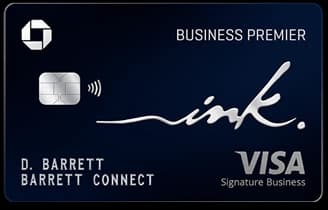
Open your first Ink card. Ink Preferred carries a $95 annual fee but a large welcome bonus (often 90,000 Ultimate Rewards points on $8,000 of spend in 3 months, roughly $1,125 in transfer value). The points pool with your personal Sapphire — see the Ink Business Preferred vs Sapphire Reserve comparison if you are deciding which card should anchor your travel-redemption side of the pool.
-
Wait for Chase's application velocity window. Chase limits you to roughly 1 card per 30 days and 2 per 90 days across personal and business. Space your Ink applications at least 90 days apart.
-
Stack a second Ink card. Ink Unlimited has a $0 annual fee, a strong welcome bonus, and 1.5% flat earn on all business spend — the easy everyday companion.
-
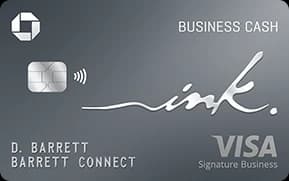
Add a third Ink card over time. Ink Cash ($0 annual fee) earns 5% on office supplies, internet, cable, and phone up to a yearly cap, plus its own welcome bonus. Three Ink cards, three welcome bonuses, zero 5/24 slots consumed.
-
Repeat the cycle. Because Ink cards never touch your 5/24 count, your personal profile stays open. As your old personal cards age past 24 months, you regain personal Chase eligibility too — while the Ink bonuses keep flowing in the background.
The sequencing table
| Step | Card | Annual fee | 5/24 impact | Why this order |
|---|---|---|---|---|
| 1 | Sapphire Preferred (personal) | $95 | +1 to count | 5/24-strict; open while you have room |
| 2 | Freedom Unlimited (personal) | $0 | +1 to count | Pairs with Sapphire; also 5/24-strict |
| 3 | Ink Preferred | $95 | 0 (does not report) | Largest Ink bonus; must be under 5/24 to approve |
| 4 | Ink Unlimited | $0 | 0 (does not report) | 90+ days later; 1.5% flat earner |
| 5 | Ink Cash | $0 | 0 (does not report) | 90+ days later; 5% category card |
By the time you hold all five, your personal 5/24 count reflects only the two personal cards — leaving three open slots for future Sapphire or Freedom moves (the CSP vs CSR comparison can help you decide which to target next), while three Ink welcome bonuses (well over $2,900 of combined value) have already landed.
Common mistakes
1. Applying for an Ink card while at or above 5/24. The card would not add to your count, but Chase still screens you and auto-declines. The hard inquiry stays on your report for 24 months for nothing. Always confirm you are under 5/24 first.
2. Burning 5/24 slots on personal cards before grabbing Ink. Some people open five personal cards, hit the wall, then discover Ink — but now they are locked out of Ink approvals too, because they are at 5/24. Open personal Chase cards thoughtfully and leave headroom for Ink.
3. Assuming all business cards skip 5/24. Capital One business cards report to your personal credit and add to your count. If you want a true 5/24-neutral business card, stick with Chase, Amex, Citi, or Barclays — not Capital One.
4. Believing Ink is fully exempt and applying recklessly. "Does not count" is not "does not get checked." People conflate the reporting exemption with an approval exemption and get surprised by declines.
5. Ignoring Chase application velocity. Even under 5/24, stacking three Ink applications inside 60 days triggers Chase's 1/30 and 2/90 velocity declines. Space them 90 days apart.
6. Thinking you need a formal business. Newcomers and side-hustlers skip Ink entirely because they assume they need an LLC. A sole proprietorship on your SSN qualifies — you are leaving real money on the table by not applying.
7. Closing personal cards to lower 5/24. Closing does not help; the account still counts for the full 24 months from its open date. Let accounts age off naturally instead.
Bottom line
The Chase Ink line is the closest thing to a perpetual-motion machine in the points world. Personal Chase cards are scarce — five slots, then a two-year wait. Ink cards are not scarce in the same way: each one delivers a welcome bonus, pools points with your personal Sapphire, and leaves your 5/24 count untouched. The only discipline required is to stay under 5/24 before each application and respect Chase's velocity windows.
Sequence it right — personal anchors first (the Sapphire trifecta guide covers how the personal side fits together), then a steady cadence of Ink cards spaced 90 days apart — and you can collect three Ink welcome bonuses worth more than $2,900 combined while still holding three open 5/24 slots for whatever Chase launches next. If you have any genuine side income, even a small one, you qualify. The mistake is not applying.
For the foundational mechanics, see Chase 5/24 Rule Explained and the Chase 5/24 Workaround Strategy. For card-by-card detail: Ink Business Preferred, Ink Business Unlimited, Ink Business Cash.
Get weekly card offer alerts
Sunday digest of elevated bonuses. One email, zero spam.
Cards mentioned in this guide


Frequently asked questions
Do Chase Ink business cards count toward 5/24?
Can I get a Chase Ink card without a registered business?
Do all business cards skip the 5/24 count?
How many Chase Ink cards can I hold at once?
What is the right order — personal Chase cards or Ink first?
Related guides
Strategy
Chase Ink Business Cards Guide (2026): Which Ink Card to Get + the 5/24 Workaround
17 min
Strategy
Chase 5/24 Workaround: 3 Legit Ways to Get Approved in 2026 (+1 That Fails)
13 min
Strategy
Chase Southwest Rapid Rewards Performance Business Review 2026
13 min
Strategy
Sapphire Reserve Business vs Amex Business Platinum
20 min
Related news

chase · Jun 2, 2026
Chase Ink Preferred 100K Returns: 2026 Ink Lineup

chase · Jun 10, 2026
Chase Hyatt Transfer Ratio 4:3: What It Means for Sapphire Preferred and Ink Business Preferred

chase · Jun 10, 2026
Chase to Virgin Atlantic: 30% Transfer Bonus — Book Delta Business Class for 18,000 Points

hyatt · Jun 3, 2026
Hyatt Added Perk for Globalists, Explorists and Cardholders
Cards in this ecosystem


Considering switching?