Cell Phone Protection by Card 2026: Who Covers What (and Which Cards Have None)
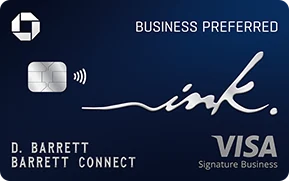
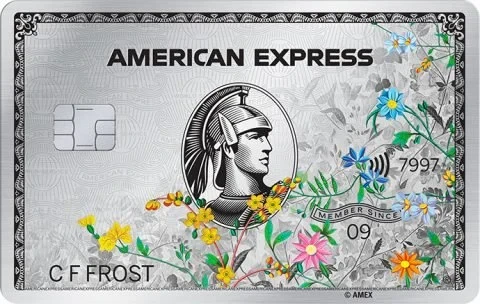
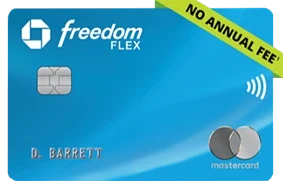
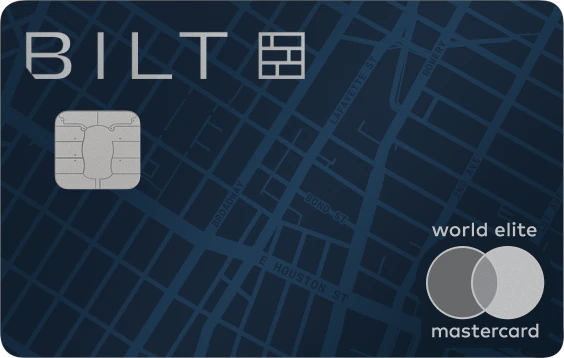
The strongest cell phone protection in 2026 is on the Chase Ink Business Preferred, Ink Business Premier, and Sapphire Reserve for Business: $1,000 per claim, $100 deductible, three claims a year. The Amex Platinum, Business Platinum, Business Gold, Delta Platinum and Reserve, Hilton Aspire, Marriott Brilliant, and Capital One Venture X pay $800 per claim with a $50 deductible, and only Amex covers cracked screens. Best no-fee options are the Chase Freedom Flex and Bilt Blue ($800, $50 deductible) and the Wells Fargo Active Cash ($600, $25 deductible). The personal Sapphire Reserve and Preferred, Amex Gold, Ink Cash and Unlimited, every Citi card, and the U.S. Bank Altitude Reserve have no cell phone protection at all. Coverage requires paying the prior month's wireless bill with the card.
On this page▾

Topic Collection
Part of the Keep or Cancel Collection
Explore all 36 articles
Cell phone protection is the one card benefit almost everyone can use and almost no one checks before they need it. The rules are simple and unforgiving: pay the phone bill with the card, wait until the next month, and a stolen or broken phone is covered up to a cap — $600, $800, or $1,000 per claim depending on the card — minus a deductible of $25 to $100. Get the card wrong and the benefit is zero: the personal Sapphire Reserve, Sapphire Preferred, Amex Gold, every Citi card, and the no-fee Ink cards do not carry it at all.
Below: every U.S. card with the benefit and its exact numbers, the cards people wrongly assume have it, the two rules that decide whether a claim pays, and which card to move your phone bill to.
Quick answer
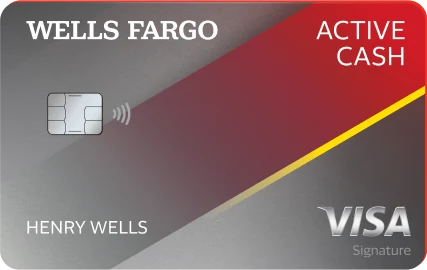
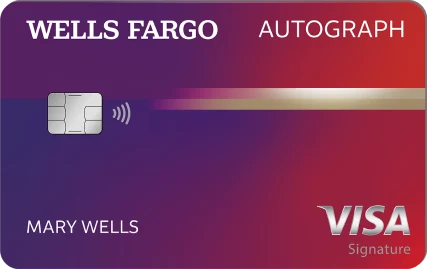
The strongest cell phone protection in 2026 is on the Ink Preferred and its Chase business siblings: $1,000 per claim, $100 deductible, three claims a year, $3,000 annual cap. The best no-fee options are the Active Cash and Autograph ($600 per claim, $25 deductible) and the Freedom Flex and Bilt Blue ($800 per claim, $50 deductible). The Amex Platinum, Venture X, and the Amex Delta, Hilton, and Marriott premium co-brands all pay $800 per claim with a $50 deductible, and Amex is the only issuer that covers cracked screens as cosmetic damage. Whatever the card, coverage only exists if the prior month's wireless bill was paid with it. Wells Fargo Autograph Card is closed to new applicants.
- Highest cap: Ink Preferred, Ink Premier, Sapphire Reserve Biz — $1,000 per claim
- Lowest deductible: Wells Fargo cards — $25
- Best no-fee: Freedom Flex or Bilt Blue ($800), Active Cash ($600, $25 deductible)
- Covers screen cracks: Amex cards only
- Do not have it: personal Sapphire Reserve and Sapphire Preferred, Amex Gold, Ink Cash, Ink Unlimited, Strata Premier, Altitude Reserve (closed to new applicants).
💡 Pro tip — Move the wireless bill to the card today, not the day the phone breaks. Every policy covers only phones on a bill that was paid with the card in the month before the incident. A bill switched after the drop covers nothing.
The full table
All figures are per the issuer's guide to benefits as of September 2026. "Cosmetic" means cracked screens and other damage that does not stop the phone from working.
| Card | Per claim | Deductible | Claims per 12 months | Cap per 12 months | Cosmetic damage |
|---|---|---|---|---|---|
| Ink Preferred | $1,000 | $100 | 3 | $3,000 | Not covered |
| Ink Premier | $1,000 | $100 | 3 | $3,000 | Not covered |
| Sapphire Reserve Biz | $1,000 | $100 | 3 | $3,000 | Not covered |
| Autograph Journey | $1,000 | $25 | 2 | $2,000 | Not covered |
| Amex Platinum | $800 | $50 | 2 | $1,600 | Covered |
| Amex Business Platinum | $800 | $50 | 2 | $1,600 | Covered |
| Amex Business Gold | $800 | $50 | 2 | $1,600 | Covered |
| Delta Platinum and Delta Reserve | $800 | $50 | 2 | $1,600 | Covered |
| Hilton Aspire and Bonvoy Brilliant | $800 | $50 | 2 | $1,600 | Covered |
| Venture X | $800 | $50 | 2 | $1,600 | Not covered |
| Freedom Flex | $800 | $50 | 2 | $1,000 | Not covered |
| Bilt Blue, Bilt Obsidian, Bilt Palladium | $800 | $50 | 2 | $1,000 | Not covered |
| JetBlue Business and Hawaiian Business | $800 | $50 | 2 | $1,200 | Not covered |
| Autograph | $600 | $25 | 2 | $1,200 | Not covered |
| Active Cash | $600 | $25 | 2 | $1,200 | Not covered |
| Wyndham Business | $600 | $50 | 2 | $1,000 | Not covered |
Key takeaway: three tiers — $1,000 on the Chase business cards and the Autograph Journey, $800 on Amex, Capital One, Bilt, and the Freedom Flex, $600 on the no-fee Wells Fargo cards — and only Amex pays for a cracked screen on a phone that still works.
The cards that do not have it
The most common mistake in this category is assuming a premium card carries the benefit. These do not, as of September 2026:
| Card | Why people assume it | Reality |
|---|---|---|
| Sapphire Reserve (personal) | Strongest travel insurance in the market | No cell phone protection; only the business version has it |
| Sapphire Preferred | Sibling of a card that has it | None |
| Ink Cash and Ink Unlimited | Ink family | Only the Preferred and Premier carry it |
| Amex Gold and Amex Green | Amex family | Only the Platinum, Business Platinum, Business Gold, and the premium co-brands |
| Strata Premier and every other Citi card | Citi once offered it | Citi removed most protections in 2019 and has not restored this one |
| Altitude Reserve | Premium card | No cell phone protection |
If your phone bill is on one of these, the benefit is zero, and the right move is a $0 card that has it — the Freedom Flex, Bilt Blue, or Active Cash — used for the wireless bill alone.
The two rules that decide every claim
1. The bill must be paid with the card the month before. Coverage applies to phones listed on a wireless bill that was paid in full with the card in the calendar month before the theft or damage. Switching the bill after an incident does not help. Autopay on the covered card is the simplest way to never miss a month. Phones on the same bill — a family plan — are all covered, up to the per-claim and annual caps.
2. The damage must stop the phone from working, unless the card is Amex. Every non-Amex policy excludes cosmetic damage: a cracked screen on a phone that still makes calls is not a claim. Amex policies explicitly cover screen cracks, which is the single biggest practical difference in the table — a $300 screen replacement is the most common phone repair, and only Amex pays for it.
Other terms common to nearly every policy: the phone must be on a monthly plan (prepaid plans are usually excluded); loss without theft is not covered; claims need a police report for theft or a repair estimate for damage; the benefit pays after any other insurance you carry; and the cap is per claim after the deductible, so a $1,000 cap with a $100 deductible pays at most $900.
What a claim is really worth
The benefit replaces a carrier's insurance plan, which runs $8-$18 a month per line — $100-$200 a year — with a deductible of $99-$249 per claim. A card with $800 coverage and a $50 deductible is better than most carrier plans on every axis except loss (carriers cover a lost phone; cards do not).
| Scenario | Repair or replacement cost | Ink Business Preferred pays | Amex Platinum pays | Freedom Flex pays | Wells Fargo Active Cash pays |
|---|---|---|---|---|---|
| Cracked screen, phone works | $329 | $0 (cosmetic) | $279 | $0 (cosmetic) | $0 (cosmetic) |
| Cracked screen, touch dead | $329 | $229 | $279 | $279 | $304 |
| Water damage, phone dead | $999 replacement | $899 | $750 | $750 | $575 |
| Stolen, police report | $1,199 replacement | $900 | $750 | $750 | $575 |
Two things the table shows: the low Wells Fargo deductible wins on cheap repairs, and the Chase business cards win on total-loss claims. Amex wins the one scenario the others exclude entirely.
Decision framework
| Your situation | Put the phone bill on |
|---|---|
| You have a Chase business card that qualifies | Ink Preferred — highest cap, three claims, and 3x on the phone bill itself |
| You want screen cracks covered | Any Amex card in the table; the Amex Business Gold earns 4x on wireless if it is a top category |
| You want $0 annual fee and the highest cap | Freedom Flex or Bilt Blue — $800 per claim |
| You want the lowest deductible | Active Cash — $25, plus 2% back on the bill |
| You already hold the Venture X | Use it — $800 per claim, $1,600 a year, and authorized users' phones on the same bill count |
| Your bill is on a Sapphire, Amex Gold, Citi, or no-fee Ink card | Move it; those cards pay nothing |
Real use case: a family of four on one plan
A family pays $220 a month for four lines on a single wireless bill. The teenager cracks a screen in March (phone still works), and in August a phone goes through the wash.
- Bill on the personal Sapphire Reserve: both incidents are out of pocket — the card has no cell phone protection. Cost: $329 + $999 = $1,328.
- Bill on the Freedom Flex: the March crack is cosmetic and excluded; the August loss pays $750 after the $50 deductible. Cost: $578, and the card earned 1% on $2,640 of bills.
- Bill on the Amex Platinum: the crack pays $279, the wash pays $750. Cost: $299, and two claims are used for the year.
- Bill on the Ink Preferred: the crack is excluded; the wash pays $899. Cost: $429, one claim used of three, and the bill earned 3x.
The right card saved this family $900-$1,000 in a single year against the wrong one, on a benefit none of them pays extra for.
Common mistakes
- Putting the bill on the "best" card instead of a covered one. The Sapphire Reserve is the best travel card and has no cell phone protection.
- Paying the bill with points, a carrier credit, or a different card in the month before the incident. Coverage follows the payment; a skipped month is a gap.
- Filing a cosmetic-damage claim on a non-Amex card. It will be denied. Check whether the phone still works before filing.
- Forgetting the deductible when comparing. $600 at $25 pays more than $800 at $50 on any repair under $250.
- Filing after the deadline. Most policies require notice within 60-90 days of the incident and documents within 90-120 days.
- Assuming loss is covered. A phone left in a taxi is neither theft nor damage; no card pays for it.
Editor's take
We built this table because the benefit is decided by a routing choice most people never make deliberately. Our reading: if you hold a qualifying Chase business card, the wireless bill belongs there and nowhere else; if you hold an Amex from the table, the screen-crack coverage is worth the routing on its own; and if you hold neither, a $0 Freedom Flex or Bilt Blue on the bill alone is the cheapest phone insurance in the country. What you should not do is leave the bill on a Sapphire, a Gold, or a Citi card and assume something is covering it.
Related reading
- Chase Ink Business Preferred review — the card with the highest cap in the table
- Chase Freedom Flex review — the $0 card with $800 coverage
- Chase travel insurance and purchase protection guide — the other protections on the Chase cards
- Best credit cards with travel insurance — trip delay, cancellation, and baggage by card
- Primary vs secondary rental car coverage — the protections cluster's rental-car half
- Capital One Venture X benefits guide — the Venture X's full benefit list
Get weekly card offer alerts
Sunday digest of elevated bonuses. One email, zero spam.
Cards mentioned in this guide

Frequently asked questions
Which credit card has the best cell phone protection in 2026?
Does the Chase Sapphire Reserve have cell phone protection?
Does credit card cell phone protection cover a cracked screen?
What do I have to do for the coverage to apply?
Is credit card cell phone protection better than carrier insurance?
Related guides
Card Roundups
Chase Ink Business Preferred Review 2026: Best Business Card for Points?
13 min
Card Roundups
Chase Freedom Flex Review 2026: 5% Rotating Categories, $0 Fee
13 min
Rules & Mechanics
Chase Travel Insurance & Purchase Protection Guide 2026
15 min
Card Roundups
Best Credit Cards With Travel Insurance in 2026
12 min