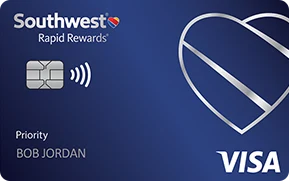
Chase Southwest Rapid Rewards Priority Review 2026
Chase Southwest Priority review 2026: fee raised to $229 (was $149), partially offset by $75 travel credit and 7,500 anniversary points. Updated math for frequent Southwest flyers.
On this page▾

Topic Collection
Part of the Card Reviews Collection
Explore all 61 articles
Quick answer
The Chase Southwest Rapid Rewards Priority is the premium Southwest personal card for frequent flyers who will actually use its perks — but a 2026 fee increase means it's no longer a clear-cut pick over the Premier. The $229 annual fee is partially offset by a $75 Southwest travel credit and 7,500 anniversary points worth approximately $112, leaving a net cost of roughly $42 before you earn a single reward point or use a boarding upgrade. Add 4 upgraded boardings per year, 3x on Southwest, and 20% back on inflight purchases, and frequent flyers can still come out $114–$194 ahead for the year — but only if you fly Southwest often enough to use those perks.
TL;DR: The Chase Southwest Rapid Rewards Priority card has a $229 annual fee (raised from $149 in 2026), earns 3x points on Southwest Airlines purchases, 2x on hotel and car rental partners, and 1x on everything else. It includes a $75 annual Southwest travel credit, 7,500 anniversary bonus points (worth ~$112), 4 upgraded boardings per year, 20% back on inflight purchases, and no foreign transaction fee. The current welcome offer is typically 50,000–65,000 Rapid Rewards points after meeting a minimum spend threshold in the first 3 months.
At a glance
| Feature | Detail |
|---|---|
| Annual fee | $229 |
| Effective annual fee (after $75 SW credit) | ~$154 |
| Welcome bonus | 50,000–65,000 Rapid Rewards points after minimum spend in 3 months |
| Earning rate — Southwest purchases | 3x points |
| Earning rate — hotel/car rental partners | 2x points |
| Earning rate — everything else | 1x point |
| Anniversary bonus | 7,500 Rapid Rewards points (~$112 value) |
| Southwest travel credit | $75/year |
| Upgraded boardings | 4 per year |
| Inflight purchase discount | 20% back |
| Foreign transaction fee | None |
| Credit score recommended | Good–Excellent (670+) |
Who should get the Southwest Priority card?
The Southwest Rapid Rewards Priority is the definitive answer for anyone who flies Southwest regularly and wants to maximize every dollar of that loyalty. If you fly Southwest 6 or more times per year and often pay for Anytime or Business Select fares (or just want to sit in better positions when boarding), the Priority's premium perks pay for themselves quickly.
This card makes the most financial sense if you:
- Fly Southwest 6+ times per year
- Would otherwise buy EarlyBird Check-In or pay for upgraded boarding positions
- Purchase food, drinks, or inflight Wi-Fi and want 20% back
- Can use the $75 Southwest travel credit annually (almost every Southwest flyer can)
- Are on a Companion Pass pursuit and want the highest possible anniversary point bonus
The card is less suited for:
- Infrequent Southwest flyers (fewer than 4 flights/year) who won't use the credits
- Travelers seeking Tier Qualifying Points for A-List status (the Premier has TQPs; Priority does not)
- People who primarily want EarlyBird passes (the Plus includes 2 per year; Priority does not)
- Travelers who also want comprehensive trip cancellation coverage — see our best credit cards with travel insurance guide for cards that add robust travel protection alongside Southwest earning
Welcome bonus analysis
The Priority's welcome bonus typically ranges from 50,000 to 65,000 Rapid Rewards points after meeting a spend threshold (often $1,000–$3,000) within 3 months. At a conservative 1.5 cents per point valuation, a 65,000-point bonus represents approximately $975 in Southwest flight value.
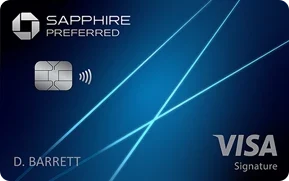
Like all Southwest personal card bonuses, these points count toward the 135,000-point Companion Pass threshold, making the welcome bonus an extraordinarily powerful Companion Pass accelerant, especially when paired with points from Sapphire Preferred or Ink Preferred transfers — see our Chase Ultimate Rewards program guide for a full overview of earning and transferring UR points. See our Southwest card vs. Chase UR guide for a full breakdown of when transfers make sense.
Application tip: The Chase 5/24 rule applies. Fewer than 5 new credit card accounts opened in the past 24 months is required. Also, Chase typically limits Southwest personal card welcome bonuses to one per customer — so if you have previously received a bonus on the Plus or Premier, you may not be eligible.
The $75 Southwest travel credit: your best starting point
The annual $75 Southwest travel credit is the Priority's most tangible benefit. It applies automatically to Southwest purchases — no activation, no category tracking. Here is what it covers:
- Southwest Airlines flight purchases
- Southwest vacation packages
- Inflight purchases (food, drinks, Wi-Fi)
- Gift card purchases through Southwest
How to use it: Simply charge any Southwest purchase to the card and the credit automatically offsets up to $75 within the statement period. Most Priority cardholders use this within their first 1–2 Southwest flights of the year. The credit reduces the effective annual fee to $154 — just $5 above the Premier's own $149 fee (which Chase also raised, from $99, in the same 2026 increase). Count the Priority's larger anniversary-point offset too, and its full net cost of $42 actually undercuts the Premier's roughly $59.
Annual fee math:
- Priority annual fee: $229
- Minus $75 Southwest credit: −$75
- Net annual fee: $154
- Minus 7,500 anniversary points (~$112 value): −$112
- Net cost after credits and anniversary points: $42
Upgraded boardings: the boarding position advantage
Southwest's open seating means your boarding position determines where you sit. Group A boards first (best seat selection), Group B next, Group C last. Upgraded boarding — available for purchase at the gate when the flight is not full — guarantees you an A1–A15 position.
The Priority card includes 4 complimentary upgraded boardings per year. At an average cost of $30–$50 per upgraded boarding at the gate, 4 per year represent $120–$200 in value, assuming the flight qualifies (not all flights have upgrade availability). The Chase Sapphire trifecta strategy pairs well with the Priority for travelers who also earn flexible Chase points alongside their Southwest miles.
How to use them: Purchase an upgraded boarding at the Southwest gate or online before your flight. Then request reimbursement as a statement credit. The process takes 1–2 billing cycles but is straightforward. If you fly Southwest frequently, you will likely exhaust these four upgrades within the first few months of the year.
20% back on inflight purchases
Southwest sells food, drinks, and Wi-Fi passes on its flights. The Priority card returns 20% of inflight spend as a statement credit, applied automatically to eligible purchases. While Southwest's inflight menu is budget-priced, frequent flyers who regularly purchase Wi-Fi ($8–$12 per flight) or drinks accumulate meaningful savings:
- $10 Wi-Fi purchase → $2 back
- $7 beer → $1.40 back
- $5 snack box → $1 back
At $15–$20 per flight in inflight spend and 12 flights per year, the 20% discount saves roughly $36–$48 annually — a modest but real benefit that requires zero effort beyond using the card.
Earning structure and everyday value
| Purchase category | Points per $1 |
|---|---|
| Southwest Airlines flights, packages, gift cards | 3x |
| Hotel partners (Choice Hotels, Hyatt via Southwest, Marriott via Southwest) | 2x |
| Car rental partners (Avis, Budget, Enterprise, Hertz, National, Alamo) | 2x |
| All other purchases | 1x |
The 3x rate on Southwest matches the Premier but beats the Plus's 2x. For a traveler spending $8,000 per year on Southwest flights, the difference between the Priority's 3x and a hypothetical 2x card is 8,000 additional points — worth roughly $120 in flights.
For all other spending, 1x per dollar is below average. Pair the Priority with the Freedom Unlimited for 1.5x on everyday spending, or the Sapphire Preferred for 2x on travel and dining. Note that Ultimate Rewards points transfer to Southwest 1:1 and count toward the Companion Pass.
Anniversary bonus: 7,500 points per year
The Priority's 7,500 anniversary points are the largest of any personal Southwest card and represent approximately $112 in Southwest flight value at 1.5 cents per point. These points:
- Are deposited automatically at each account anniversary
- Count toward the 135,000-point Companion Pass threshold
- Offset a significant portion of the annual fee when combined with the $75 travel credit (together, $187 of the $229 fee)
Combined annual value from credits and anniversary points:
| Benefit | Approximate value |
|---|---|
| $75 Southwest travel credit | $75 |
| 7,500 anniversary points | $112 |
| 4 upgraded boardings (estimated) | $120–$200 |
| 20% inflight discount (12 flights, $15 inflight/flight) | $36 |
| Total estimated value | $343–$423 |
Against a $229 annual fee, the Priority delivers roughly $114–$194 in net value before accounting for points earned on purchases — a return of roughly 50%–85% on the annual fee.
Priority vs Premier vs Plus: the full comparison
| Feature | Plus ($99) | Premier ($149) | Priority ($229) |
|---|---|---|---|
| Net annual fee | $99 | $149 | ~$154 (after $75 credit), $42 after anniversary points too |
| Southwest earn rate | 2x | 3x | 3x |
| Anniversary points | 3,000 (~$45) | 6,000 (~$90) | 7,500 (~$112) |
| Southwest travel credit | None | None | $75/year |
| Upgraded boardings | None | None | 4/year |
| 20% inflight discount | No | No | Yes |
| EarlyBird Check-In | 2/year | None | None |
| TQPs per $5K spend | None | 1,500 (max 4,500) | None |
| Foreign transaction fee | None | None | None |
Chase raised every Southwest card's annual fee in 2026 — Plus went from $69 to $99, Premier from $99 to $149, and Priority from $149 to $229 — and the relative gaps shrank as a result. The Priority's credit-adjusted fee of ~$154 is now just $5 above the Premier's $149 sticker price, and once you also count the Priority's larger anniversary-point offset ($112 vs. $90), its full net cost of about $42 is actually lower than the Premier's roughly $59. In other words, the Premier no longer holds the "cheapest net cost" title — that belongs to the Priority for anyone who flies enough to reliably use the $75 credit and 4 upgraded boardings. The Premier's one remaining edge is Tier Qualifying Points, which the Priority does not earn. For a head-to-head comparison, see our Chase Southwest Plus review and Chase Southwest Premier review. Travelers chasing A-List status via TQPs should still lean Premier; everyone else who flies Southwest often enough to use the credit and boardings should take a hard look at the Priority now that it nets out cheaper.
Companion Pass strategy with the Priority
The Priority is the premier Companion Pass acceleration vehicle among the personal Southwest cards:
| Source | Points |
|---|---|
| Priority welcome bonus | 65,000 |
| Southwest spend ($5,000 at 3x) | 15,000 |
| Hotel/car spend ($2,000 at 2x) | 4,000 |
| Anniversary bonus | 7,500 |
| Chase Ultimate Rewards transfer | 43,500 |
| Total | 135,000 |
With the Priority's welcome bonus alone providing 65,000 qualifying points, you need just 70,000 more to hit the threshold. A modest $23,000 in additional Ultimate Rewards spending on the Sapphire Preferred or Ink Preferred (transferred to Southwest) completes the picture — or combine with Southwest flight earnings and organic spend.
Is the Priority worth upgrading to from the Premier or Plus?
From the Plus: Worthwhile once you're flying Southwest 6+ times per year and will use the extra perks. The credit-adjusted Priority cost ($154) is roughly $55 more than the Plus's $99, but factor in the Priority's larger anniversary bonus, $75 credit, 4 upgraded boardings, and the inflight discount, and its full net cost of $42 is actually only about $38 higher than the Plus's own rock-bottom net cost ($4, after its EarlyBird passes). That is real money for real perks, not a freebie, but it is a smaller gap than the sticker prices suggest.
From the Premier: Now genuinely favors the Priority for anyone who will use its perks. The Priority's credit-adjusted cost ($154) is just $5 above the Premier's $149 fee, and once you count both cards' anniversary points, the Priority's full net cost ($42) is actually about $17 cheaper than the Premier's (~$59). The Premier's only remaining advantage is Tier Qualifying Points toward A-List status, which the Priority does not earn. Stick with Premier if you're specifically chasing TQPs; otherwise, if you fly Southwest often enough to use the $75 credit and 4 upgraded boardings, the Priority is now the lower-net-cost choice despite its higher sticker price.
Bottom line
Chase raised every personal Southwest card's annual fee in 2026 — Priority from $149 to $229, but also Premier from $99 to $149 and Plus from $69 to $99 — and that changes the calculus less than the sticker price alone suggests. The $75 travel credit and 7,500 anniversary points still bring the Priority's net cost down to about $42, and frequent flyers who fully use the 4 upgraded boardings and 20% inflight discount can come out $114–$194 ahead for the year. Once all three cards' fee increases are accounted for, the Priority's net cost is actually the second-lowest of the three (behind only the Plus's near-zero net cost, and ahead of the Premier's ~$59) — it is still the highest sticker price by a wide margin, but no longer the worst deal by net cost. It pays off decisively at 6+ Southwest flights per year, and even at 4 flights it is close to breakeven. Occasional flyers who fly fewer than 4 times a year, or anyone chasing A-List status via Tier Qualifying Points, are still better served by the Plus or Premier.
Get weekly card offer alerts
Sunday digest of elevated bonuses. One email, zero spam.
Cards mentioned in this guide


Frequently asked questions
How does the $75 Southwest travel credit work on the Priority card?
Do the 4 upgraded boardings on the Priority card expire at year end?
Is the Southwest Priority card worth it if I fly Southwest only 4 times a year?
Does the Southwest Priority card help earn the Companion Pass?
What is the difference between EarlyBird Check-In (on the Plus) and upgraded boarding (on the Priority)?
Related guides
Related news

chase · Jun 2, 2026
Chase 20% Flying Blue Bonus May 2026: Retrospective
chase · Jun 2, 2026
Chase Ultimate Rewards 2026: Cash-Back + Points Boost

chase · Jun 10, 2026
Chase Hyatt Transfer Ratio 4:3: What It Means for Sapphire Preferred and Ink Business Preferred
chase · Jun 10, 2026
Chase to Virgin Atlantic: 30% Transfer Bonus — Book Delta Business Class for 18,000 Points
Cards in this ecosystem


Considering switching?