Chase vs Amex Transfer Partners: Head-to-Head Value Comparison
Chase wins for hotel redemptions because World of Hyatt takes Chase points and not Amex points, and Hyatt is the only major hotel program still pricing by chart rather than by cash rate. Amex wins for international premium cabins because it reaches airline programs Chase does not, most notably Turkish Miles&Smiles. Both reach Aeroplan at 1:1. Amex additionally charges an excise tax offset fee of $0.0006 per point, capped at $99, on transfers to US airline programs, while Chase charges nothing. Note that since October 1, 2026 the Sapphire Preferred and Ink Business Preferred transfer to Hyatt at 4:3 while the Reserve remains 1:1.
On this page▾

Topic Collection
Part of the Transfer Partners Collection
Explore all 81 articles
Chase and Amex are not competing on partner count, they are competing on two specific properties: Chase owns the best hotel program in the business and Amex owns the widest airline reach. Which one is worth more to you is settled almost entirely by whether your redemptions are hotel nights or long-haul premium cabins, and that question has a different answer for most people than the partner lists suggest.
Quick answer
Chase wins if you redeem for hotels, because World of Hyatt takes Chase points and does not take Amex points, and Hyatt is the only major hotel program that still prices by chart rather than by cash rate. Amex wins if you redeem for international premium cabins, because it reaches airline programs Chase does not, most notably Turkish Miles&Smiles. Both reach Aeroplan at 1:1. The tiebreaker most people miss is that Amex charges a small excise tax offset fee on transfers to US airline programs, $0.0006 per point capped at $99, while Chase charges nothing at all.
- Chase's decisive advantage: World of Hyatt, which Amex cannot reach
- Amex's decisive advantage: wider airline reach, including Turkish
- Shared: Aeroplan at 1:1 from both
- Amex-only cost: $0.0006 per point on US airline transfers, capped at $99
- Identical at both: transfers are final and must land in your own name
💡 Pro tip — Do not choose an ecosystem by counting partners. Count the redemptions you have actually made in the last two years. If they are hotel nights, the answer is Chase and the partner list is irrelevant.
Where each one wins
| Redemption type | Better ecosystem | Why |
|---|---|---|
| Hotel nights | Chase | World of Hyatt takes Chase and not Amex |
| International business and first | Amex | Wider airline reach, including Turkish |
| Domestic US economy | Roughly even | Both reach the major US programs |
| Star Alliance long-haul | Even at 1:1 into Aeroplan | Both reach it identically |
| Simple, low-effort redemptions | Chase | Its partners are easier to book with |
| Maximum theoretical value | Amex | The best sweet spots sit in programs only it reaches |
Key takeaway: Chase optimises for reliability, Amex optimises for ceiling, and the right answer depends on which of those you will actually use.
The Hyatt question
This is the single largest structural difference between the two ecosystems, and it is worth stating plainly. World of Hyatt is a transfer partner of Chase and is not a transfer partner of Amex. Hyatt still prices award nights against a published chart while Marriott, Hilton and IHG price against the cash rate, which means Hyatt points hold value in a way the others structurally cannot.
One important detail changed recently. Since October 1, 2026 the Sapphire Preferred transfers to Hyatt at 4:3 rather than 1:1, while the Sapphire Reserve stays at 1:1 (the Ink Business Preferred moved to 4:3 as well). So 60,000 Hyatt points now cost a Preferred holder 80,000 Ultimate Rewards. That does not change which ecosystem reaches Hyatt, but it does change which Chase card you should hold if Hyatt is your reason for holding Chase at all.
The Turkish question
Running the other way, Turkish Miles&Smiles takes Amex Membership Rewards and does not take Chase Ultimate Rewards. Turkish is one of the cheapest routes into Star Alliance premium cabins and the only sensible way many people reach Lufthansa business class without paying Lufthansa's own carrier surcharges. If long-haul business class is the point of your points, that single absence is a real argument against a Chase-only setup.
The Amex fee nobody mentions
Amex charges an excise tax offset fee of $0.0006 per point on transfers to US airline programs, capped at $99. In practice:
| Points transferred | Amex fee | Chase fee |
|---|---|---|
| 25,000 | $15 | $0 |
| 60,000 | $36 | $0 |
| 100,000 | $60 | $0 |
| 200,000 | $99, the cap | $0 |
It is small and it is not a reason to choose an ecosystem on its own. It is a reason to know the number before you transfer, and to note that it applies to US airline programs specifically rather than to every partner.
What is identical
Both ecosystems share the rules that matter most, and neither is more forgiving than the other.
- Transfers are final. No reversal, at either bank.
- The receiving account must be in your name. You cannot fund a partner's account from either.
- Speed varies by partner. Most major partners are minutes; some take days at both.
- Both devalue. Partners reprice awards without notice regardless of which bank fed them.
- Both punish hoarding. A large balance is a bet that no partner devalues, and that bet loses eventually.
The decision, honestly
| You are... | Hold |
|---|---|
| A Hyatt redeemer | Chase, on a Sapphire Reserve for the 1:1 ratio |
| Chasing long-haul business class | Amex, for the airline reach |
| Doing both | Both, which is what most serious households end up doing |
| New to points and unsure | Chase, because its partners are easier to book |
| Redeeming mostly domestically | Either; the difference is small |
The two-ecosystem answer is not a cop-out. Chase and Amex overlap less than their partner counts suggest, and a household with one card in each covers almost every redemption either can reach.
Common mistakes
- Counting partners. The number is meaningless; the specific programs are everything.
- Assuming Amex reaches Hyatt. It does not, and this catches people every year.
- Assuming Chase reaches Turkish. It does not.
- Holding a Sapphire Preferred for Hyatt after October 1, 2026. The ratio is now 4:3 on that card.
- Forgetting the Amex airline fee. Small, but it exists and Chase has no equivalent.
- Choosing an ecosystem before choosing a redemption. The redemption determines the ecosystem, not the other way round.
Editor's take
We think this comparison is usually decided before anyone opens a partner list, by what the household actually redeems. Hotel-heavy travellers should hold Chase and should hold the version of the Chase card that still transfers to Hyatt at 1:1 — the Sapphire Reserve. Premium-cabin chasers should hold Amex and accept the small airline transfer fee as the cost of reaching programs Chase cannot. Everyone else is better served by whichever ecosystem their spending already earns in, because a modest balance you will actually redeem beats a large one in the theoretically superior currency.
Related reading
- Chase Ultimate Rewards transfer partners — the full Chase list
- Amex Membership Rewards transfer partners — the full Amex list
- Hyatt after October 1: the Chase 4:3 ratio — what changed on the Sapphire Preferred
- Turkish Miles&Smiles to Europe — the program only Amex reaches
- Air Canada Aeroplan sweet spots — the partner both reach at 1:1
- Are points transfers reversible? — the rule both ecosystems share
Get weekly card offer alerts
Sunday digest of elevated bonuses. One email, zero spam.
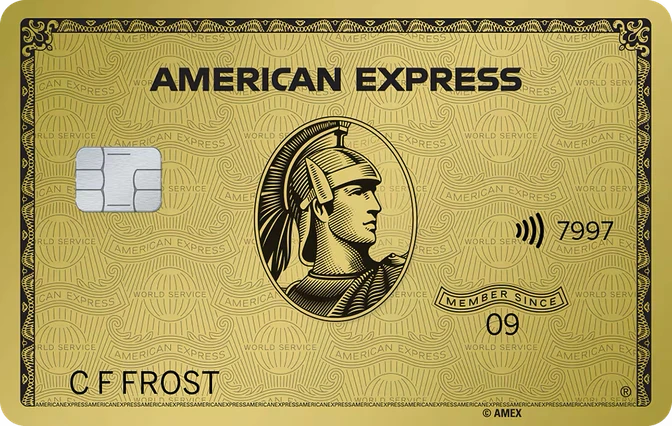
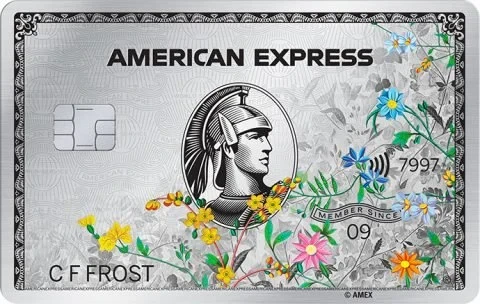
Cards mentioned in this guide


Frequently asked questions
Which has better transfer partners, Chase or Amex?
Can I transfer Amex points to Hyatt?
Does Amex charge a fee to transfer points?
Did the Chase to Hyatt transfer ratio change?
Should I just hold both ecosystems?
Related guides
Rewards Programs
Chase Ultimate Rewards Transfer Partners 2026
15 min
Rewards Programs
Amex Membership Rewards Transfer Partners: The Full 2026 List and Values
12 min
Strategy
Hyatt After October 1: What the 4:3 Chase Ratio Changed (and What to Do Now)
11 min
Rewards Programs
Turkish Miles&Smiles: Still the Cheapest Business Class to Europe?
8 min
Related news

bilt · Jun 2, 2026
Bilt Palladium vs CSR vs Amex Platinum 2026 ($495/$795/$895)

chase · Jun 10, 2026
Chase Hyatt Transfer Ratio 4:3: What It Means for Sapphire Preferred and Ink Business Preferred

airlines · Jun 4, 2026
Alaska Atmos Members Day Launched

airlines · Jun 2, 2026
Credit Card Transfer Bonuses Mid-2026: H1 Drought Recap
Cards in this ecosystem




Considering switching?