Hyatt After October 1: What the 4:3 Chase Ratio Changed (and What to Do Now)
Since October 1, 2026, Chase Sapphire Preferred and Ink Business Preferred transfer to World of Hyatt at 4:3 (100,000 UR become 75,000 Hyatt points); Sapphire Reserve and Sapphire Reserve for Business keep 1:1. If a Reserve exists in your household, combine points there and transfer 1:1. Otherwise transfer at 4:3 only for Category 1-4 Lowest-tier nights that still clear about 2 cents per point.
On this page▾

Topic Collection
Part of the Program Changes Collection
Explore all 22 articles
As of October 1, 2026, every Chase Ultimate Rewards point you send to World of Hyatt from a Sapphire Preferred or Ink Preferred arrives as three-quarters of a point. Four UR become three Hyatt points. The Sapphire Reserve and Sapphire Reserve Biz still transfer 1:1, every other Chase partner still transfers 1:1, and the Hyatt award chart itself did not move.
This guide is not the "should I transfer before the deadline" piece — that window closed last night. It is the guide for what the change actually does to your points from today forward, the arithmetic Chase's 1,000-point transfer increments add on top of it, the five routes that still reach Hyatt at full value, and the honest cases where transferring at 4:3 is still your best redemption.
Quick answer
From October 1, 2026, Sapphire Preferred and Ink Business Preferred transfer to World of Hyatt at 4:3 (100,000 UR → 75,000 Hyatt points). Sapphire Reserve and Sapphire Reserve for Business keep 1:1 permanently. If you hold, or share a household with someone who holds, a Sapphire Reserve, combine your UR into that account and transfer from there — the ratio follows the card the transfer is initiated from. Otherwise, transfer at 4:3 only for redemptions that still clear roughly 2 cents per UR, which most Lowest-tier Hyatt awards in Categories 1-4 do.
- Affected at 4:3: Sapphire Preferred (new applicants since June 15, 2026; existing cardholders from October 1, 2026), Ink Business Preferred, the discontinued Ink Plus, and Corporate Flex
- Unaffected at 1:1: Sapphire Reserve, Sapphire Reserve for Business — and all 13 other Chase transfer partners from every card
- Hidden cost: transfers move in 1,000-UR increments, so at 4:3 you often send 750 Hyatt points more than the award needs
- Still worth it at 4:3: Category 1-4 Lowest-tier nights, which clear 2.5-3.7 cents per UR even after the haircut
💡 Pro tip — Before you transfer anything, check whether a Sapphire Reserve exists anywhere in your household. Chase lets you combine Ultimate Rewards across your own cards and with one household member; a transfer initiated from the Reserve account goes 1:1, and the points you moved there are the same points.
What changed on October 1 — and what did not
| Chase card | Hyatt ratio today | Since when |
|---|---|---|
| Sapphire Preferred (applied before June 15, 2026) | 4:3 | October 1, 2026 |
| Sapphire Preferred (applied June 15, 2026 or later) | 4:3 | approval |
| Ink Preferred | 4:3 | October 1, 2026 |
| Ink Plus (no longer offered), Chase Corporate Flex | 4:3 | October 1, 2026 |
| Sapphire Reserve | 1:1 | unchanged |
| Sapphire Reserve Biz | 1:1 | unchanged |
Three things did not change, and each of them matters more than the headline:
- Every other Chase partner is still 1:1. United, Southwest, British Airways, Aer Lingus, Iberia, Air Canada Aeroplan, Air France-KLM Flying Blue, Singapore Airlines, Virgin Atlantic, JetBlue, Marriott Bonvoy, and IHG One Rewards transfer at the same ratio they did in September, from every UR card.
- Hyatt's award chart did not move. A Category 4 Lowest-tier night is still 12,000 Hyatt points; a Category 1 Lowest night is still 3,000. The chart Hyatt launched on May 20, 2026 — five demand tiers per category — is what prices your stay. The 4:3 ratio only changes how many UR it takes to buy those Hyatt points.
- Points sitting in Hyatt are untouched. Anything you transferred before October 1 is already Hyatt points at 1:1. The only thing you need to watch is Hyatt's 24-month inactivity expiration — one paid or award stay, or one earn from any partner, resets the clock.
Chase told The Points Guy in June that there are "no planned changes to transfers from the Sapphire Reserve." That is the whole reason the Reserve is now the Hyatt card inside the Chase ecosystem, and why the rest of this guide keeps coming back to it.
Key takeaway: October 1 changed the price of Hyatt points for two cards, not the price of Hyatt nights. The arithmetic below is about the transfer step and nothing else.
The arithmetic, including the part nobody mentions
The clean version: 4 UR → 3 Hyatt points, so a Hyatt award costs one-third more UR than it did.
| Hyatt award (Lowest tier) | Hyatt points | UR at 1:1 (Reserve) | UR at 4:3, exact | UR you must actually send | Hyatt points that land |
|---|---|---|---|---|---|
| Category 1 | 3,000 | 3,000 | 4,000 | 4,000 | 3,000 |
| Category 4 | 12,000 | 12,000 | 16,000 | 16,000 | 12,000 |
| Category 6 | 20,000 | 20,000 | 26,667 | 27,000 | 20,250 |
| Category 7 | 25,000 | 25,000 | 33,333 | 34,000 | 25,500 |
The last two columns are the part nobody mentions. Chase moves Ultimate Rewards to partners in increments of 1,000 points. At 1:1 that never mattered for Hyatt, because Hyatt prices everything in multiples of 1,000 too. At 4:3 it does: 1,000 UR lands as 750 Hyatt points, so any award that is not a multiple of 3,000 Hyatt points forces you to round up and strand a few hundred points in your Hyatt account.
For a single stay that is noise — 250 Hyatt points is about $5 of value. For someone who transfers for four or five stays a year and never plans around it, it adds up to a free Category 1 night's worth of stranded points by December. The fix is trivial once you know it: plan multi-night Hyatt bookings so the total lands on a multiple of 3,000 Hyatt points, or keep a small Hyatt balance from paid stays that absorbs the remainder.
In dollars, using the site's working value of about 2 cents per Hyatt point: the same 60,000-Hyatt-point trip that cost $1,200 of UR in September now costs $1,600 of UR from a Sapphire Preferred. That $400 gap is the number the rest of your decisions should be measured against.
Five routes that still reach Hyatt at 1:1 (or beat 4:3)
Route 1 — Combine into your own Sapphire Reserve and transfer from there
If you hold both a Sapphire Preferred (or Ink Preferred, Freedom, Ink Cash, Ink Unlimited) and a Sapphire Reserve, nothing changed for you in practice. Chase lets you move UR between your own cards instantly. Move the balance to the Reserve, open the transfer partners page from the Reserve account, and send to Hyatt at 1:1. The points are identical; only the account they leave from decides the ratio.
Route 2 — Combine into a household member's Sapphire Reserve
Chase's points-combining rule also allows one member of your household — someone at the same address — to receive your UR. If your spouse or partner holds a Sapphire Reserve, move your Preferred points to their Reserve, and they transfer to their Hyatt account at 1:1. Two caveats: the Hyatt points will live in their World of Hyatt account, and Chase's household rule is one person, not a friend network. Combining with people outside your household is a terms violation that can cost you the points.
Route 3 — Product-change the Preferred to a Reserve
Chase allows a product change from Sapphire Preferred to Sapphire Reserve once the Preferred account is at least 12 months old. It is a call to the number on the back of the card, usually a soft pull, and your UR balance and account age carry over. The question is whether it pays for itself on Hyatt alone:
| Sapphire Preferred | Sapphire Reserve | |
|---|---|---|
| Annual fee | $95 | $795 |
| Credit that offsets the fee | $100 hotel credit (Chase Travel bookings) | $300 travel credit |
| Fee after credits, if you use them | roughly $0 | $495 |
| Hyatt ratio | 4:3 | 1:1 |
| Extra UR per Hyatt point at 4:3 | +0.33 UR | — |
The Reserve costs roughly $400-$495 more per year after credits. At 4:3 you spend one-third more UR per Hyatt point, so at a working value of 1.5-2 cents per UR the Reserve pays for itself on Hyatt alone once you transfer about 60,000-80,000 Hyatt points' worth per year — two or three good Category 4-6 stays. Below that, the Reserve still has to earn its keep through the 8x Chase Travel rate, 4x on flights and hotels booked direct, lounge access, and its stronger travel protections. Our Sapphire Preferred vs Sapphire Reserve comparison and the upgrade CSP to CSR or apply fresh guide walk the full math.
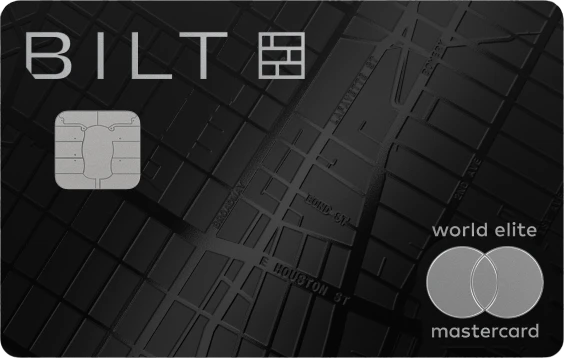
Route 4 — Transfer from Bilt instead
Bilt Rewards still transfers to World of Hyatt at 1:1, year-round. Bilt has never run a transfer bonus to Hyatt — the base ratio is simply intact. For renters, Bilt Obsidian and the rest of the Bilt lineup earn on rent that no Chase card touches, and those points reach Hyatt at full value. The step-by-step is in how to transfer Bilt to Hyatt.
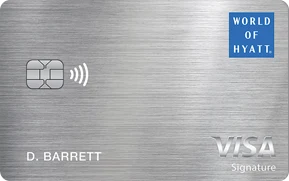
Route 5 — Earn Hyatt points directly with the World of Hyatt card
The World of Hyatt skips the transfer step entirely: 4x on Hyatt stays, 2x on dining, airline tickets bought directly from the airline, local transit, and fitness clubs, 1x elsewhere, for a $95 annual fee. It also hands you a Category 1-4 free night every cardmember year, a second one after $15,000 of spend in a cardmember year, Discoverist status, and five qualifying nights toward Globalist plus two more for every $5,000 you spend. For someone who stays at Hyatt four or more times a year, this card plus a Reserve for the big transfers is the strongest Hyatt setup on the market; best credit cards for Hyatt stays ranks the combinations.
Key takeaway: the ratio follows the card the transfer leaves from. If a Sapphire Reserve exists in your household, you are still a 1:1 household — move the points, then transfer.
When 4:3 is still the right move
Transferring at 4:3 is not automatically a bad redemption. It is a 25% worse version of what was, on Hyatt's Lowest and Low tiers, one of the best hotel redemptions available — and 75% of excellent is often still better than every alternative use of the same points.
| Hyatt category (Lowest tier) | Hyatt points | UR you send at 4:3 | Typical cash rate | Cents per UR at 4:3 | Chase Travel at 1.0-1.5¢? |
|---|---|---|---|---|---|
| Category 1 | 3,000 | 4,000 | ~$150 | ~3.7¢ | beats it |
| Category 4 | 12,000 | 16,000 | ~$420 | ~2.6¢ | beats it |
| Category 6 | 20,000 | 27,000 | ~$550 | ~2.0¢ | beats it |
| Category 7 | 25,000 | 34,000 | ~$725 | ~2.1¢ | beats it |
The comparison column is Chase Travel: a UR redeemed through the portal is worth 1.0 cent flat, or up to 1.5 cents on Sapphire Preferred bookings that carry a Points Boost offer (up to 2.0 cents on the Reserve). Every row above beats that even at 4:3. Where 4:3 stops working is Hyatt's Upper and Top tiers — a Category 4 night at its Top tier is 25,000 Hyatt points, which becomes 34,000 UR, and at that price a good airline transfer at 1:1 almost always wins.
Two rules keep this honest:
- Never transfer speculatively, at any ratio. Transfers are one-way. Confirm the award night is bookable on hyatt.com, transfer the exact rounded amount, book within minutes. The award availability explainer covers why "I will find something later" fails.
- Compare against your best airline use, not against cash. UR at 1:1 to Flying Blue, Aeroplan, or Singapore for a premium-cabin seat routinely clears 3-5 cents. If that redemption is realistically in your next 12 months, the Hyatt transfer at 4:3 has to beat it, not just beat the portal.
Decision framework by Hyatt volume
| Your profile | What to do from October 1 |
|---|---|
| 0-1 Hyatt stays a year, Preferred only | Nothing. Keep UR flexible; transfer at 4:3 only for a Category 1-4 Lowest-tier night that clears 2.5¢+ per UR. |
| 2-3 Hyatt stays a year, under 60,000 Hyatt points transferred | Stay on the Preferred. Plan transfers to land on multiples of 3,000 Hyatt points. Consider the World of Hyatt card for the free night and elite nights. |
| 60,000-80,000+ Hyatt points a year, Preferred only | Product-change to the Reserve at the 12-month mark, or apply for one if you are under 5/24. The 1:1 ratio alone covers the fee gap at this volume. |
| Any volume, a Reserve exists in your household | Combine UR into the Reserve before every Hyatt transfer. Your effective ratio is still 1:1. |
| Ink Business Preferred for business spend | Same rules: combine into a personal Reserve if you hold one; otherwise treat Hyatt transfers as a 2¢-per-UR floor. Our Ink Business Preferred vs Sapphire Preferred comparison covers which of the two 4:3 cards to keep as the transfer hub. |
| Renter with Bilt | Send Hyatt transfers from Bilt at 1:1; use Chase UR for airlines. |
Real use case: a family, 120,000 UR, four nights at a Category 4
A family holds 120,000 Ultimate Rewards on a Sapphire Preferred and wants four nights at a Category 4 Hyatt in April — 12,000 Hyatt points per night at the Lowest tier, 48,000 total.
- Before October 1: 48,000 UR → 48,000 Hyatt points. The stay costs 48,000 UR, worth about $960 at 2 cents.
- From October 1, transferring from the Preferred: 48,000 Hyatt points need 64,000 UR (48,000 × 4/3, and 64,000 happens to be a clean multiple of 1,000). The stay costs 64,000 UR — 16,000 more, or $240-$320 of value at 1.5-2 cents per UR.
- From October 1, if the other parent holds a Sapphire Reserve: combine 48,000 UR into the Reserve, transfer 1:1 into that parent's Hyatt account, book the four nights. Cost: 48,000 UR, exactly as before. Time added: about two minutes.
- If nobody holds a Reserve: the four nights at 4:3 still clear about 2.6 cents per UR against a $420 nightly rate. Transfer 64,000 UR, keep the remaining 56,000 UR for flights at 1:1.
The family's decision is not "is Hyatt still worth it." It is "which account does this transfer leave from" — and, if the answer is only ever the Preferred, whether $240-$320 a year of extra UR justifies a Reserve upgrade next spring.
Common mistakes from here on
- Transferring a round number instead of the rounded-up exact amount. Sending 30,000 UR "to be safe" for a 20,000-point night lands 22,500 Hyatt points and strands 2,500. Compute Hyatt points × 4/3, round up to the next 1,000, and stop there.
- Assuming Freedom or Ink Cash points are exempt. Freedom Flex, Freedom Unlimited, Ink Cash, and Ink Unlimited cannot transfer to partners on their own; they inherit the ratio of the premium card you combine them into. Combine into a Preferred, you get 4:3; combine into a Reserve, you get 1:1.
- Combining with someone outside your household. Chase's rule is one household member at your address. Moving points to a friend's Reserve to dodge the ratio is the kind of thing that ends with a closed account and forfeited points.
- Applying 4:3 to airlines in your head. The change is Hyatt-only. A Flying Blue or United transfer from a Preferred is exactly as good as it was in September.
- Letting pre-October Hyatt points expire. If you transferred a balance "before the deadline" without a booking, set a reminder: any earn or redemption within 24 months keeps the points alive, and a single paid night does it.
Editor's take
We were skeptical of the "transfer before October 1" frenzy in the summer, and the first day of the new ratio is a good time to say why: for most Sapphire Preferred holders, the honest impact of 4:3 is one or two hundred dollars a year, and the correct response is a change in which account you transfer from, not a change in strategy. The Reserve-in-the-household route makes the devaluation disappear for a large share of two-card families. For everyone else, Category 1-4 Lowest-tier nights are still among the best hotel redemptions you can make with Chase points, and they were still good at 75% strength when we ran the numbers. What we would not do is keep a $795 card purely to protect a Hyatt ratio if you transfer fewer than 60,000 Hyatt points a year — the Reserve has to win on its own merits, and for light Hyatt users it usually does not.
Related reading
- Chase Sapphire Preferred × Hyatt 4:3 strategy guide — the pre-October-1 decision tree this guide follows
- How to transfer Chase points to Hyatt — the step-by-step transfer walkthrough
- Hyatt award chart 2026 — every category and tier after the May 20 rechart
- Hyatt sweet spots under 15,000 points — the redemptions that still clear 2.5¢+ at 4:3
- Chase Ultimate Rewards points pooling — the combining rules the Reserve route depends on
- World of Hyatt program guide — expiration, elite tiers, and free nights
Get weekly card offer alerts
Sunday digest of elevated bonuses. One email, zero spam.
Cards mentioned in this guide




Frequently asked questions
Which Chase cards transfer to Hyatt at 4:3 after October 1, 2026?
Can I move my Sapphire Preferred points to a Sapphire Reserve and transfer to Hyatt at 1:1?
Why do I end up with leftover Hyatt points when transferring at 4:3?
Is it still worth transferring Chase points to Hyatt at 4:3?
Should I upgrade my Sapphire Preferred to a Sapphire Reserve just for the Hyatt ratio?
What happens to Hyatt points I transferred before October 1?
References
Primary sources and further reading cited in this guide.
Related guides
Related news

chase · Jun 10, 2026
Chase Hyatt Transfer Ratio 4:3: What It Means for Sapphire Preferred and Ink Business Preferred

hyatt · Jun 3, 2026
Hyatt Added Perk for Globalists, Explorists and Cardholders

hyatt · Jun 2, 2026
Hyatt’s Chart Change Just Repriced Your Chase Points

chase · Jun 10, 2026
Chase to Virgin Atlantic: 30% Transfer Bonus — Book Delta Business Class for 18,000 Points
Cards in this ecosystem




Considering switching?