How to Negotiate a Lower APR: Scripts That Actually Work
Call and ask for something specific: 2-5 percentage points off, a temporary reduced rate for 6-12 months, or a hardship program if you genuinely cannot pay. Payment history, account tenure, and a documented competing offer are what actually move an issuer; a permanent 0% rate is essentially never offered on an existing balance. Outcomes vary by account and issuer discretion.
On this page▾

Topic Collection
Part of the Credit Score Guides Collection
Explore all 14 articles
Calling your card issuer and asking for a lower rate costs you ten minutes and a phone call. It will not get you to 0%, and it usually will not last forever — but a realistic outcome (a few points off, or a temporary reduced rate) can save a few hundred dollars a year on a balance you're already carrying. The people who get a "yes" ask a specific question, name a specific number, and know when to stop asking and hang up.
This guide covers what leverage actually moves an issuer, who to ask and how to escalate past the first phone rep, what a realistic outcome looks like, the difference between a retention offer and a hardship program (and what the hardship route costs you on your credit report), two scripts you can read almost verbatim, and what each major issuer tends to do when you call.
Quick answer
Ask, but ask for something specific and realistic — not "please lower my rate." Reduce it to: 2-5 percentage points off, a temporary rate for 6-12 months, or a hardship program if you're genuinely struggling to pay. Here's the shape of it:
- Best leverage: on-time payment history for 12+ months, tenure with the issuer, and a specific competing offer (a card or a check you actually received)
- Ask the first rep, then escalate to retention if they say no — retention specialists have more authority to approve a rate change
- Realistic outcome: 2-5 points off for 6-12 months, not a permanent cut and not 0%
- Hardship programs trade a bigger rate cut for a notation on your account and often a closed card — read the fine print before you ask for one
- If the answer is no, a 0% intro-APR balance transfer usually beats a small permanent rate cut anyway — see 0% APR vs balance transfer
💡 Pro tip — Call a few weeks before your statement closes, not the day payment is due. Reps can see you're calling proactively rather than in a panic, and it gives any approved change time to apply before your next interest charge posts.
Key takeaway: a lower APR is a realistic ask when you have payment history and a specific number in mind — not a guaranteed outcome, and rarely a permanent one.
What leverage you actually have
Card issuers don't lower rates out of goodwill. They lower them when keeping your account is worth more than the interest they'd lose. Four things actually move that calculation:
Payment history. Twelve or more consecutive on-time payments is the baseline most reps look for before they'll even escalate a request. A single 30-day late payment in the past 12 months can end the conversation before it starts.
Tenure. An account open 3+ years costs less to retain than it does to replace — issuers pay $150-$500 in acquisition cost per new cardholder through marketing and welcome bonuses. A long-standing account with steady spend is worth protecting.
A competing offer. Not a vague "other cards have lower rates" — a specific pre-approved mailer, an online rate quote, or a card you already hold with a documented lower APR. Read the number off the letter. Reps can verify balance-transfer offers instantly in most systems.
A documented credit-score improvement since approval. If your score has climbed 40+ points since you got the card — say from 650 to 700+ — you now qualify for pricing tiers the issuer didn't offer you at approval. This is the single strongest lever, because it's the issuer's own risk model working in your favor.
⚠️ Biggest mistake — Calling with no number in mind and just asking to "lower my rate." Reps have wide discretion within a range but almost never volunteer the low end of it. Name a target (e.g., "I'd like this down to 18.99%") and let them counter.
Key takeaway: payment history, tenure, a specific competing offer, and a documented score improvement are the four things that actually change an issuer's math — everything else is just asking nicely.
Who to ask, and how to escalate
Start with the number on the back of your card, not a general customer-service line — this routes you to account services faster. Ask the first representative directly: "I'd like to request a lower interest rate on my account." Most first-line reps have a narrow discretion band, often 1-3 points, and a hard cap they cannot exceed regardless of your case.
If the first rep says no or offers less than you want, ask to be transferred to retention (sometimes called "customer loyalty" or "account services escalation"). This is not a rude request — it's the standard next step, and reps expect it. Retention specialists are measured on keeping accounts open and typically have 2-5x the discretion of a first-line rep.
If retention also says no, ask what would need to change — a longer payment history, a specific balance paid down, a re-review date. Write down the answer; it becomes your script for the next call in 60-90 days.
Key takeaway: the first rep can usually offer something small; retention can usually offer more. Both routes are normal and expected — issuers built the escalation path on purpose.
What a realistic outcome looks like
Set expectations before you dial. Three outcomes are common; one almost never happens.
| Outcome | How common | Typical terms |
|---|---|---|
| A few points off, permanent | Occasional | 1-3 percentage points, ongoing |
| A temporary reduced rate | Common | 3-7 points off for 6-12 months, then reverts |
| A hardship program rate | Case-by-case, requires documented hardship | Fixed low rate (often 0-6%) for 12-60 months |
| 0% APR indefinitely | Essentially never | Not offered on an existing balance outside a promotional transfer |
A temporary reduction is the most common "yes." On a $5,000 balance held for 12 months, cutting the rate from 24.99% to 19.99% saves roughly $250 in interest for that year using the average-daily-balance method — real money for a ten-minute call, even though the rate resets afterward. (For the exact mechanics of how that interest gets calculated day to day, see how credit card interest is actually calculated.)
Key takeaway: expect a few points off, or a temporary rate for 6-12 months — not a permanent cut, and never 0% on an existing balance.
Retention offer vs. hardship program — and what hardship costs you
These are two different conversations with two different consequences, and mixing them up is the most expensive mistake on this page.
A retention offer is a goodwill gesture to keep a customer who's paying on time. It typically shows up as a small permanent rate reduction, a temporary reduced rate, a fee waiver, or bonus points. It has no credit-report impact — your account keeps reporting normally.
A hardship program is a structured plan for someone who genuinely cannot make the current payment. It usually delivers a bigger rate cut — sometimes down to 0-6% — but comes with real costs:
- The account is typically closed to new purchases for the duration of the plan
- Many issuers add a notation to your credit report showing the account is in a modified-payment arrangement, visible to future lenders
- A closed account reduces your total available credit, which can raise your utilization ratio on your other cards and cost a few points on your score even while the hardship plan itself is helping you pay it off
- Getting back to a normal account (new purchases enabled, notation removed) can take 12-24 months after the plan ends
⚠️ Biggest mistake — Asking for "hardship" terms when you don't actually need them, because the rate cut sounds better. A goodwill retention ask gets you a smaller cut with zero credit-report cost; a hardship program gets you a bigger cut with a notation and a closed card. Match the ask to your actual situation.
Key takeaway: retention offers are free and reversible; hardship programs cut deeper but usually close the card and can add a visible notation to your credit report for over a year.
Two scripts that work
Read these close to verbatim — issuers' phone systems respond better to a specific, calm ask than an open-ended complaint.
Script 1 — Payment history + competing offer (retention ask):
"Hi, I'm calling about my account ending in [last 4 digits]. I've had this card for [X years] and have paid on time every month. I received an offer from [issuer/card] at [X.XX%] APR, and I'd like to see if you can match or come close to that rate on this account. Is that something you can help with, or can you transfer me to someone who can?"
Script 2 — Genuine hardship (structured plan ask):
"Hi, I'm calling about my account ending in [last 4 digits]. I'm dealing with [brief, honest reason — reduced income, medical expense, etc.] and I'm having trouble keeping up with the current payment and rate. Do you have a hardship or payment-assistance program that could lower my rate or payment for a set period while I get back on track? What would that involve, and how would it show on my credit report?"
Key takeaway: name your account, your tenure, and a specific number or situation — a rep can act on a concrete ask in under two minutes; a vague complaint gets a form-letter answer.
What each issuer typically will and won't do
Patterns reported by cardholders and documented in issuer assistance-program pages — not a guarantee for your specific account. Every decision is case-by-case.
| Issuer | Typical retention behavior | Hardship program | What they generally won't do |
|---|---|---|---|
| Chase | Rarely reduces ongoing APR on request; occasional statement credit instead | Chase payment-assistance plans with a reduced fixed rate; card usually restricted during the plan | Grant a permanent below-market APR just because you asked |
| American Express | Most active retention desk of the majors; sometimes a short promotional 0% window or bonus points | Structured assistance program with a temporary reduced rate | Waive interest already posted to a past statement |
| Citi | Fairly willing to discuss a temporary reduced rate or statement credit | Citi hardship plans with a fixed lower rate for a set number of months | Match a competitor's advertised 0% rate as an ongoing rate |
| Capital One | Retention offers are uncommon across the board, APR included | Hardship program exists but isn't widely advertised — ask directly | Adjust APR without a documented reason |
| Discover | Reps are generally accessible; case-by-case temporary reductions reported | Discover payment-assistance program available on request | Offer a cut with no history or hardship story behind it |
| Bank of America | Client Assistance Program is the main path for a real rate cut | Structured plan, fixed reduced rate, set duration | Grant goodwill-only APR cuts outside the assistance program |
| Wells Fargo | Similar hardship-first structure to Bank of America | Reduced fixed rate program, documented hardship required | Offer an ongoing cut without enrollment in the program |
Key takeaway: Amex and Citi are the most reachable for a goodwill retention ask; Chase, Capital One, Bank of America, and Wells Fargo lean on their structured hardship programs for any meaningful cut.
When the answer is no
A flat no doesn't end your options — it just means the fix moves from "this account" to "your overall debt structure":
- A 0% intro-APR balance transfer usually beats a small permanent cut in dollar terms — moving a $5,000 balance to a 0%-for-15-months offer with a 3% transfer fee ($150) saves far more than 2-3 points off an existing 25% rate. Compare the math in 0% APR vs balance transfer.
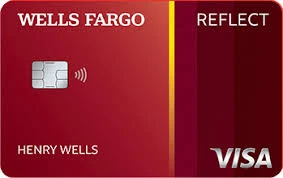
- A genuinely lower-APR card going forward — cards like WF Reflect and Double Cash are built around low ongoing rates or long 0% intro windows rather than rewards; see the fuller list once it's live at best low-APR credit cards.
- A payoff-order fix across multiple cards — if the real issue is several balances at different rates, the order you pay them down in matters more than any single rate negotiation. See debt avalanche vs snowball when you have multiple cards.
- Ask again in 60-90 days. Rate requests aren't one-shot. A denied request today with clean payments for the next three months is a stronger ask in Q1.
Real use case: $4,800 balance, one call, one year
Setup: a $4,800 balance on a card at 26.99% APR, held by a cardholder with 18 months of on-time payments and a recent card offer at 19.99% APR from a different issuer.
The call: first rep declines to change the rate; caller asks for retention. Retention offers a 6-point reduction to 20.99% for 12 months, citing the account's payment history and the competing offer as the reason.
The math: on a $4,800 balance carried through the year, interest at 26.99% runs roughly $1,295; at 20.99% for the same 12 months, roughly $1,007. Net savings: approximately $288 for a call that took about 14 minutes, with no change to the credit report.
Decision framework — should you call?
| Your situation | Recommended move |
|---|---|
| 12+ months on-time, balance under $10,000, no competing offer in hand | Call and ask; expect 1-3 points |
| 12+ months on-time, balance under $10,000, competing offer in hand | Call and ask for 4-7 points; escalate to retention if declined |
| Balance over $10,000, rate over 24% | Price a balance transfer alongside the call — the math usually favors transfer |
| Genuinely cannot make the current payment | Ask for hardship terms directly; accept the credit-report notation as the cost |
| Score improved 40+ points since approval | Lead with that fact — it's the strongest single argument you have |
Key takeaway: a documented history and a specific number turn a phone call into real savings — a few hundred dollars a year on a mid-size balance, for the cost of a coffee break.
Bottom line: a lower APR is worth asking for, but treat the outcome as a discount, not a fix. If the balance itself is the problem, a 0% transfer or a genuinely lower-rate card usually moves more money than any negotiated cut — and neither guarantees an issuer's cooperation either. Call with a number, know the difference between a retention ask and a hardship ask, and don't be surprised when the answer is "some, but not all."
Disclosure: CreditPoints may receive compensation if you click through and are approved for cards mentioned in this article. This article describes typical mechanics and reported issuer patterns; it is not personalized financial or credit advice, and outcomes vary by account, issuer discretion, and individual circumstances. See our editorial policy for details.
Get weekly card offer alerts
Sunday digest of elevated bonuses. One email, zero spam.
Cards mentioned in this guide



Frequently asked questions
Can you actually get a credit card company to lower your APR?
Does asking for a lower APR hurt your credit score?
What is the difference between a retention offer and a hardship program?
Which credit card issuer gives the best retention offers on APR?
How much can a 5-point APR reduction actually save on a $5,000 balance?
Should I ask for a lower APR or do a balance transfer instead?
Related guides
Related news

bilt · Jun 2, 2026
Bilt Palladium vs CSR vs Amex Platinum 2026 ($495/$795/$895)

chase · Jun 10, 2026
Chase Hyatt Transfer Ratio 4:3: What It Means for Sapphire Preferred and Ink Business Preferred

chase · Jun 10, 2026
Chase to Virgin Atlantic: 30% Transfer Bonus — Book Delta Business Class for 18,000 Points

chase · Jun 9, 2026
Chase Disney Inspire Visa Launch: $99 AF, $400 Welcome — Is It Worth a 5/24 Slot?
Cards in this ecosystem




Considering switching?