Upgrade CSP to CSR or Apply Fresh (2026)
Apply fresh for the Chase Sapphire Reserve if you have not earned a Sapphire welcome bonus in 48 months and are under 5/24 — that bonus (up to 100K points, ~$1,500 in value) beats any upgrade perk. If the 48-month rule or 5/24 blocks you, product-change your Chase Sapphire Preferred to Reserve for $0 beyond the annual fee. Never close the CSP first: downgrade it to a no-fee Freedom card to keep your points and credit history.
On this page▾

Last updated: June 2026.
Quick answer
If you currently hold the Chase Sapphire Preferred and want the Chase Sapphire Reserve, the right path depends on one question: are you eligible for the CSR welcome bonus?
You are eligible if both of these are true:
- You have NOT received a welcome bonus on the CSP, CSR, or any Sapphire-branded card in the past 48 months (the Chase Sapphire 48-month rule)
- You are NOT at 5/24 — fewer than 5 new personal accounts opened across all issuers in the past 24 months (the Chase 5/24 rule)
If you are eligible for the CSR welcome bonus: apply fresh. Downgrade your CSP to a no-AF Chase Freedom card first (preserves your UR balance + credit history), then submit a fresh CSR application. The current welcome bonus (100K UR as of June 15, 2026 (down from a best-ever 150K earlier in June); baseline 60K) is worth $900-$1,500 in value — far more than any product-change benefit.
If you are NOT eligible for the CSR welcome bonus: product-change your CSP to CSR. No new account, no hard pull, no 5/24 hit, no welcome bonus but also no cost beyond the AF differential.
TL;DR: Chase's Sapphire 48-month rule blocks the welcome bonus on either the Sapphire Preferred or Sapphire Reserve if you have received a Sapphire bonus on either card in the past 48 months. The 48 months counts from the date the prior bonus posted, not the application date. Combined with the Chase 5/24 rule (5+ new personal cards in 24 months = automatic decline), these two policies determine whether a CSP holder should product-change to CSR or apply fresh for the higher welcome bonus.
Upgrade vs apply fresh — at a glance
| Path | Bonus eligible | Annual fee | Points potential | Approval difficulty | Best for |
|---|---|---|---|---|---|
| Apply fresh (new CSR) | Yes — if the 48-month rule and 5/24 are clear | $795 | 60K–100K UR welcome bonus (~$900–$1,500) | Harder — hard pull, uses a 5/24 slot | Anyone eligible for the welcome bonus |
| Upgrade / product-change | No | $795 | $0 bonus; keeps your existing UR balance | Easy — no hard pull, no 5/24 hit | Anyone blocked by the 48-month rule or 5/24 |
Chase Sapphire Preferred vs Chase Sapphire Reserve
The live side-by-side, with current offer data, is at Sapphire Preferred vs Sapphire Reserve.
| Feature | Chase Sapphire Preferred | Chase Sapphire Reserve |
|---|---|---|
| Annual fee | $95 | $795 |
| Welcome bonus | Baseline 60K UR | 100K UR (live, June 2026) |
| Hyatt transfer ratio | 4:3 for existing holders from Oct 1, 2026 | 1:1 — unaffected |
| Travel credit | $50 annual hotel credit | $300 travel + $500 Edit credits |
| Best for | Low-fee points engine | Heavy travelers who use the credits |
The two paths
Path A: product-change CSP to CSR
A product change is when you call Chase and ask to convert your existing CSP account into a CSR account. The card number changes, the account number stays the same, your credit history (length-of-history factor) is preserved, and your accumulated Ultimate Rewards balance carries over.
What you get:
- The CSR's benefits and earning structure
- Account-history preservation (your 4-year-old CSP becomes a 4-year-old CSR)
- No hard pull
- No 5/24 impact (no new account)
What you do NOT get:
- The welcome bonus (60K-100K UR depending on cycle — currently worth $900-$1,500 at 1.5cpp)
The catch: product changes don't reset eligibility. If you product-change CSP→CSR today and later want the CSR welcome bonus on a fresh apply, the 48-month clock starts from the last bonus you earned (the original CSP bonus), not from today.
Path B: apply fresh for the CSR
A fresh application for the CSR creates a new account with a new account number, new opening date, and access to the full welcome bonus. To do this cleanly you typically need to:
- Downgrade your CSP to a no-AF Chase Freedom Unlimited or Freedom Flex (preserves UR balance + credit history, avoids "two Sapphires" conflict)
- Wait the recommended 30-90 days (some users report the wait is unnecessary, but Chase customer service consistently advises it)
- Apply for the CSR fresh
What you get:
- The CSR welcome bonus (current offer 60K-100K UR depending on cycle; 100K live as of June 15, 2026 (down from best-ever 150K))
- A new account (also restarts the 48-month clock)
What you give up:
- 1 of your 5/24 slots (the new CSR counts toward 5/24)
- Possible UR-balance transfer wait (downgrade-to-Freedom keeps balance — see Mistake #3)
The 48-month rule deep-dive
The Chase Sapphire 48-month rule is the central mechanic in this decision. The exact policy (as of June 2026):
"The bonus is not available to you if you currently have any Sapphire card or have received a new cardmember bonus for any Sapphire card in the past 48 months."
What "Sapphire card" includes: Chase Sapphire Preferred, Chase Sapphire Reserve, Chase Sapphire (the original, no longer offered), Chase Sapphire Reserve for Business, Chase Sapphire Preferred for Business.
What "in the past 48 months" means: 48 months counts from the date the welcome bonus posted to your account (not the application date, not the account opening date). Most Chase welcome bonuses post 6-8 weeks after meeting the spending requirement.
The math: if you got your CSP welcome bonus in January 2023, you cannot earn a CSR (or CSP, or any other Sapphire) welcome bonus until January 2027 — 48 months later. Apply fresh during that window and Chase will approve you for the card but will NOT pay out the bonus, even if you meet the spending requirement.
The 5/24 interaction: even if you ARE past the 48-month rule, Chase still applies 5/24. If you've opened 5+ new personal cards from any issuer in the past 24 months, Chase auto-declines the CSR application regardless of 48-month eligibility. For the 5/24 mechanic, see Chase 5/24 Rule Explained; for sequencing around it, see Chase 5/24 Workaround Strategy.
The math comparison
For a head-to-head with current 2026 numbers:
| Variable | Product change CSP→CSR | Apply fresh CSR |
|---|---|---|
| Welcome bonus | $0 | Current offer 60K-100K UR depending on cycle (June 2026: 100K live, down from best-ever 150K) — ~$900-$1,500 in travel value at 1.5cpp |
| Annual fee Year 1 | $795 (CSR AF, since June 2025 refresh) | $795 |
| AF differential vs CSP | +$700 ($795 - $95) | +$700 |
| Hard pull | No | Yes (1 inquiry, ~5 points for 12 months) |
| 5/24 impact | No | +1 toward 5/24 |
| UR balance preservation | Automatic | Requires downgrade-first (free if done correctly) |
| Card-anniversary credits | Same as fresh apply | Same as product change |
| Time to complete | Phone call (15 min) | 30-90 days |
| Net first-year value | -$700 (just the AF jump) | At current 100K offer: ~+$800 (bonus $1,500 minus $700 AF jump). At baseline 60K: ~+$200. |
At the live 100K bonus (June 2026), the bonus is worth $1,500 in conservative travel value. Subtract the $700 AF differential and the fresh-apply path is roughly $800 ahead of the product-change path in the first year — when the welcome bonus is actually available to you. At the baseline 60K offer the cushion shrinks to ~$200; either way the bonus more than offsets the AF differential when you're eligible.
Caveat: the CSR welcome bonus has ranged from 60K to a best-ever 150K UR since the June 2025 refresh. As of June 15, 2026 the CSR welcome bonus dropped from the best-ever 150K to 100K UR — still elevated above the 60K baseline. Always check chase.com or use a referral link from a current CSR holder to confirm the active bonus level before applying. The fresh-apply path is most lucrative during elevated-offer windows (currently 100K; historical pattern 60K in standard cycles). For the full category-by-category breakdown, see Chase Sapphire Preferred vs Reserve (2026).
Quote-worthy: "In 2026, the Chase Sapphire 48-month rule is the single most consequential timing decision in the Chase ecosystem. At the live 100K offer (June 2026), getting the 48-month timing wrong costs $1,000-$2,000 in foregone welcome-bonus value, while getting it right turns a routine product change into a $1,500 windfall."
CSR vs CSP: what actually changes after the upgrade
| Feature | Keep CSP ($95) | Upgrade to CSR ($795) |
|---|---|---|
| Travel credit | $50 hotel (Chase Travel) | $300 annual travel (auto) |
| Other credits | None | $500 Edit + $300 StubHub + $120 Global Entry |
| Lounge access | None | Priority Pass + Sapphire Lounges |
| Travel earn | 2× (5× Chase Travel) | 4× (8× Chase Travel via Points Boost) |
| Hotel elite status | None | Complimentary |
| Credits needed to break even | ~$0 | ~$1,100 if fully used |
5 scenarios with verdicts
The short version — upgrade vs apply fresh by situation:
| Your situation | Verdict |
|---|---|
| Sapphire bonus earned 48+ months ago, under 5/24 | Apply fresh — downgrade CSP to Freedom first |
| Sapphire bonus earned within the past 48 months | Product-change CSP → CSR |
| At or over 5/24 (even if past 48 months) | Product-change now; apply fresh once back under 5/24 |
| At 4/24 and past 48 months | Apply fresh — but it uses your last 5/24 slot |
| Barely use the CSP, rarely travel | Neither — downgrade to a no-fee Freedom card |
Scenario 1: You got your CSP bonus in 2022 or earlier
Verdict: Apply fresh. You're past the 48-month rule. As long as you're under 5/24, you're eligible for the full CSR welcome bonus. Downgrade CSP to Freedom Flex first, then apply for CSR.
Scenario 2: You got your CSP bonus in 2023 or 2024
Verdict: Product-change. You're inside the 48-month window. A fresh CSR application will not yield a welcome bonus, so paying the $700 AF differential gives you nothing extra over a product change. Wait until your 48-month clock expires (Jan-Dec 2027 or 2028 depending on exact date), then apply fresh.
Scenario 3: You're at 5/24
Verdict: Product-change. Even if you're past the 48-month rule, Chase will auto-decline the fresh application because of 5/24. Product change has no 5/24 implication. Schedule the fresh-apply path for when you fall back under 5/24 — typically 12-24 months out.
Scenario 4: You're 4/24 and got your CSP bonus 3 years ago
Verdict: Apply fresh, but carefully. You're under 5/24 and past 48 months on the bonus. Sequence: downgrade CSP → wait 30-60 days → apply CSR fresh. After the fresh CSR, you're at 5/24 and cannot apply for new Chase cards until you fall back below.
Scenario 5: You barely use the CSP and don't travel much
Verdict: Cancel, don't upgrade. If you're not getting $95/year of value from the CSP, the CSR's $795 AF (raised from $550 in June 2025) is even harder to justify. Downgrade CSP to a no-AF Freedom card to preserve the credit history without paying any AF. Re-evaluate in 12 months. If you already hold the CSR and are wrestling with the same question, see our guide on whether to downgrade the Reserve at $795.
The "downgrade CSP first" sequence
If you're taking the fresh-apply path, do NOT close the CSP. Closing destroys length-of-history (a 4-year-old account becomes a 0-year-old account after closure, dragging your FICO down 5-15 points). Instead, product-change CSP to Chase Freedom Unlimited or Freedom Flex before applying for CSR.
Step-by-step:
- Call Chase at the number on the back of your CSP card. Tell them you want a product change to either the Chase Freedom Unlimited or Chase Freedom Flex.
- Specify which: the Chase Freedom Unlimited earns 1.5% on everything plus 5% on travel through Chase Travel; the Chase Freedom Flex earns 5% on rotating quarterly categories. Most readers should pick Unlimited — it's simpler and earns 1.5x everywhere.
- Confirm UR transfer preservation: ask the Chase rep to confirm that your UR balance will transfer to the new Freedom account. (It will — Freedom Unlimited and Freedom Flex both earn UR.)
- Wait 30-60 days. This isn't strictly required by Chase policy but is recommended by every points blog and Chase customer service representative.
- Apply for CSR fresh. Submit the application at chase.com or via a referral link. If approved, the welcome bonus posts after meeting the $5K-$10K spending requirement within 90 days.
Why downgrade first matters: if you apply for CSR while still holding CSP, Chase's system flags "two Sapphires" and either denies the CSR application or asks you to close one. Better to handle the consolidation on your terms (product change preserves history) than have Chase force the issue. If you are denied for any reason, the Chase reconsideration line is often able to reverse the decision over the phone.
Case study #1: Marcus — $1,500 windfall from the fresh-apply path
Setup: Marcus, 35, had a CSP since January 2022 (got the bonus in March 2022 = 4 years 3 months ago in June 2026). He's at 3/24 (3 new cards in past 24 months). Wanted to upgrade to CSR for the better earning structure on dining and travel.
Decision check:
- 48-month rule: ✓ past it (March 2022 + 48 months = March 2026)
- 5/24: ✓ under it (3/24)
Verdict: Apply fresh.
Execution:
- April 2026: called Chase, product-changed CSP to Chase Freedom Unlimited. Kept the account, preserved UR balance of 85K.
- May 2026: applied for CSR fresh. Approved with $25K limit.
- August 2026: met $5K spend, earned the 100K UR welcome bonus (worth ~$1,500 in Hyatt/United transfers at 1.5cpp).
Result: Marcus turned a routine upgrade into a ~$800 win (100K UR bonus minus $700 AF differential). His next decision was how to redeem UR for maximum value — likely Hyatt sweet-spot redemptions with his 185K UR.
Case study #2: Priya — product change was the right call
Setup: Priya, 29, got her CSP welcome bonus in October 2024 (just 1.5 years ago in June 2026). At 4/24 (close to the 5/24 ceiling). Wanted CSR for the airport-lounge access ahead of a 3-week Asia trip.
Decision check:
- 48-month rule: ✗ inside the window (October 2028 is the earliest she can earn a fresh CSR bonus)
- 5/24: ✓ under it (4/24)
Verdict: Product-change. A fresh CSR application would NOT pay the welcome bonus (Chase auto-blocks at the 48-month check), so the $700 AF differential gets her CSR benefits with no bonus offset.
Execution:
- June 2026: called Chase, product-changed CSP to CSR. New card in 5 business days.
- No hard pull, no 5/24 impact, lounge access activated immediately.
Result: Priya got the CSR experience for the Asia trip without burning her welcome-bonus eligibility. In October 2028 (when her 48-month clock expires), she'll re-evaluate whether to apply fresh for a new CSR welcome bonus then.
Case study #3: David — the 5/24 trap
Setup: David, 42, had a CSP welcome bonus from 2020 (well past 48 months in 2026). At 5/24 from a Citi + Amex + Capital One + Bilt + US Bank application spree in 2024-2025. Wanted CSR fresh for the welcome bonus.
Decision check:
- 48-month rule: ✓ past it
- 5/24: ✗ at it (5/24 auto-declines)
Verdict: Product-change for now. Plan fresh CSR for 2027 when his 5/24 drops back under.
Execution:
- June 2026: product-changed CSP to CSR. Gets CSR benefits immediately.
- December 2026: oldest new card from 2024 ages out of 5/24. David is now at 4/24.
- January 2027: David could now apply for CSR fresh. But he already has CSR (from the product change), and the 48-month rule resets from his original 2020 CSP bonus (still over 48 months). To get a fresh CSR bonus, David needs to downgrade his current CSR to Freedom first, wait, then apply fresh.
Result: David's situation demonstrates the trickiest case — past 48 months but blocked by 5/24. The product change is the right interim move, but converting back to fresh-apply later requires a second downgrade. For multi-card application sequencing around 5/24, see Chase 5/24 Workaround Strategy.
8 common mistakes
Mistake #1: Closing the CSP before applying for CSR
Closing the CSP destroys 4+ years of account history (the length-of-history FICO factor). Instead, product-change to Chase Freedom Unlimited or Freedom Flex — preserves history, costs $0 AF, keeps UR balance.
Mistake #2: Applying for CSR while still holding CSP
Chase's system flags "two Sapphires" and either auto-denies the application or asks you to close one card. Best to handle the consolidation proactively: downgrade CSP to Freedom first, then apply for CSR.
Mistake #3: Forgetting that UR balance does NOT transfer if you close the wrong card
UR balances live in the card that earned them. If you close a Chase Freedom Unlimited that has 80K UR but keep your CSR, the UR transfers automatically. But if you close the LAST card with transfer access (CSP, CSR, or Ink Preferred), all UR converts to cashback at 1 cent each — losing 50-80% of value. Always keep at least ONE transferable card open.
Mistake #4: Thinking the 48-month rule counts from the card application date
The 48-month clock starts from the date the welcome bonus posted to your account, not from the application date. If you applied in October 2022 but the bonus posted in December 2022, your clock runs to December 2026 — 2 months later than you might think.
Mistake #5: Mixing up the 48-month rule with the 24-month 5/24 rule
These are two separate Chase policies. 48-month is Sapphire-specific (no two Sapphire bonuses in 48 months). 5/24 is all-Chase (no new Chase cards if you have 5+ new cards from any issuer in 24 months). You can be eligible for one and blocked by the other.
Mistake #6: Calling Chase and asking for a "retention offer" instead of a product change
Retention offers (waived AF, statement credit, bonus points) are sometimes available but are not the same as product changes or welcome bonuses. If you genuinely want the CSR product, a retention offer on the CSP doesn't help. If you're just trying to lower the CSP AF, retention is the right ask.
Mistake #7: Product-changing AT MONTH 11 of your cardmember year
The CSP and CSR both refund the AF if you close or downgrade within 30 days of the AF posting. Time your product change to take advantage. Calling at month 13 (just after the AF posted for year 2) is the worst time — you've paid an AF you can't recover.
Mistake #8: Ignoring the Chase Sapphire Preferred for Business as a wildcard
The Chase Sapphire Preferred for Business has its own SUB and is a separate card from the personal Sapphire family for some application purposes. If you have business income, the business Sapphire path opens additional welcome-bonus opportunities even if you're locked out of the personal CSR bonus.
Decision framework: 4-question filter
Ask these four questions in order:
1. When did your last Chase Sapphire (CSP or CSR) welcome bonus post to your account? → More than 48 months ago: proceed to question 2. → Less than 48 months ago: product-change. Wait until 48-month clock expires to apply fresh.
2. How many new personal cards have you opened in the past 24 months? → Fewer than 5: proceed to question 3. You're under 5/24 and eligible to apply for Chase. → 5 or more: product-change. You're at or over 5/24 and Chase will auto-decline a fresh application.
3. Are you willing to downgrade your current CSP to a Chase Freedom card first? → Yes: proceed to question 4. You'll preserve UR balance and credit history. → No: product-change. The "two Sapphires" issue requires you to consolidate before fresh application.
4. Is the current welcome bonus (60K-100K UR depending on the live offer, worth $900-$1,500 in transfer-partner travel value) worth pursuing for you? → Yes: apply fresh. The math is clear, especially at elevated 100K+ offers. → No: product-change. Skip the application process and convert your card directly.
If you answered "proceed" to all four, apply fresh. Any other path means product-change.
Bottom Line
If you can clear the Chase Sapphire 48-month rule and 5/24, apply fresh — the live 100K welcome bonus is worth roughly $800 more than any product-change perk. If either rule locks you out, product-change the Chase Sapphire Preferred to Reserve for $0 beyond the annual fee and keep your account history. Never close the CSP before you decide — downgrade it to a no-fee Freedom card to protect your Ultimate Rewards balance.
Next steps: how to transfer Chase points to Hyatt for the highest-value redemption, and the Chase Sapphire Preferred Hyatt 4:3 strategy guide if you are weighing the October 2026 ratio change.
Related guides
For the Chase ecosystem context:
- Chase Sapphire Trifecta 2026 — the 3-card setup once you have CSR + downgraded Freedom
- Chase Ultimate Rewards Transfer Partners 2026 — how to turn the welcome bonus into 2-5× its Chase Travel value via partner transfers
- Chase 5/24 Rule Explained — the rule that gates fresh applications
- Chase 5/24 Workaround Strategy — application sequencing across all issuers
For the cards:
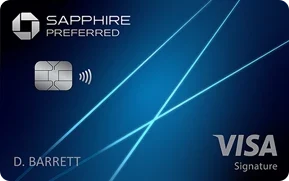
- Chase Sapphire Preferred — the starting point
- Chase Sapphire Reserve — the upgrade target
- Chase Freedom Unlimited — the recommended downgrade target
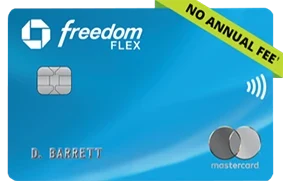
- Chase Freedom Flex — alternative downgrade target with rotating 5% categories
For the issuer hub:
- Chase issuer hub — catalogue of every Chase card and current offers
For the head-to-head comparison:
- Chase Sapphire Preferred vs Chase Sapphire Reserve — the full comparison with category-by-category math
Frequently asked questions
Get weekly card offer alerts
Sunday digest of elevated bonuses. One email, zero spam.
Cards mentioned in this guide


Frequently asked questions
What is the Chase Sapphire 48-month rule?
Will I be denied for the CSR if I'm at 5/24?
How long does a CSP-to-CSR product change take?
Can I get the CSR welcome bonus if I currently have CSP?
Does product-changing CSP to CSR cost the welcome bonus?
Will my UR balance transfer if I product-change CSP to CSR?
Do I have to wait between downgrading CSP and applying for CSR?
Does the CSR product change affect my credit score?
What happens to my CSP's anniversary credits if I product-change mid-year?
Can I product-change CSP to CSR without paying a prorated annual fee?
Is the Chase Sapphire Reserve worth the $795 annual fee in 2026?
Can I get the CSR welcome bonus through a referral link from a CSR-holding friend?
Should I downgrade CSP to Freedom Unlimited or Freedom Flex?
Does upgrading CSP to CSR reset the 48-month clock?
Can I downgrade CSR back to CSP later if $795 is too much?
Related guides
Related news

chase · Jun 9, 2026
Chase Disney Inspire Visa Launch: $99 AF, $400 Welcome — Is It Worth a 5/24 Slot?

chase · Jun 2, 2026
Chase 20% Flying Blue Bonus May 2026: Retrospective

chase · Jun 2, 2026
Chase Sapphire Reserve 150K Welcome Offer 2026

chase · Jun 2, 2026
Chase Ultimate Rewards 2026: Cash-Back + Points Boost