Amex Pop-Up Jail Explained: Why You Don't See the Welcome Bonus Offer (and How to Get Out)
The Amex pop-up is an eligibility notice shown during an application, before any credit inquiry, saying you will not receive that card's welcome offer. It fires if you have held the card before or if Amex judges your pattern of opens, closes, balance transfers, and bonus-then-idle usage to be welcome-offer abuse. It is per card, so test each one by starting an application and stopping at the pop-up. Never click through; use your existing Amex cards normally for 60-120 days, apply for nothing, and re-test.
On this page▾

Topic Collection
Part of the Issuer Application Rules Collection
Explore all 20 articles
"Pop-up jail" is the community name for a screen American Express shows during a card application, before any credit inquiry, that says you are not eligible for the welcome offer on that card. It is not a denial — Amex will still approve you and charge the annual fee if you proceed. It is Amex telling you, in advance, that the 100,000-point or 175,000-point bonus you applied for will not post. Understanding why it appears, how to check for it on any card without an inquiry, and what clears it is the difference between a first Amex year worth $2,000 and one that costs $895 for nothing.
Below: what the pop-up says and when it fires, the five triggers behind it, how to test your eligibility for every Amex card in ten minutes, what actually gets people out, and the one exception — "no lifetime language" offers — that bypasses the once-per-lifetime rule entirely.
Quick answer
The Amex pop-up appears on the application page after you enter your details and before Amex pulls your credit. It states that, based on your history with American Express cards, you are not eligible to receive the welcome offer, and asks whether you want to continue. It fires for two published reasons — you have held that card before, or Amex judges you a welcome-offer risk based on the number of cards you have opened and closed, your balance-transfer history, and how you used past cards — and it is checked per card, so you can be blocked on the Platinum and clear on the Gold. The fix is time and normal usage: three to six months of ordinary spending on the Amex cards you already hold, no new applications, and no cancellations.
- It is not a denial. Proceeding gets you the card, the fee, and no bonus. Close the window.
- It is checked before the hard pull. You can test any card's eligibility by starting an application and stopping at the pop-up — no inquiry, no record.
- It is per card, not per account. A pop-up on one card says nothing about another; test each one.
- Two published triggers: once-per-lifetime, and a welcome-offer-abuse pattern (many opens and closes, bonus-then-drop usage, balance transfers).
- The way out: use your existing Amex cards for real spending for a few months, then re-test.
💡 Pro tip — Test before you need the answer. Start an application for each Amex card you might want in the next year, stop at the pop-up or the "submit" button, and note which ones clear. It takes ten minutes, creates no inquiry, and tells you which welcome offers are actually available to you before a strong offer appears.
What the pop-up actually says
The exact wording varies slightly by card, but the substance is constant: based on your history with American Express Card Member offers, you are not eligible to receive the welcome offer for this Card; would you like to continue with your application? Two things are true at that moment:
- No credit inquiry has happened. The eligibility check runs on Amex's own records before the application is submitted. Closing the page leaves no trace on your credit report.
- The card itself is still available. If you click through, Amex evaluates the application normally. Approval means the card, the annual fee, and every benefit — minus the welcome offer.
The second point is where the money is lost. A Platinum approved through a pop-up costs $895 and delivers the credits and lounges, which can be fine, but the 175,000 points that made the application worth it never arrive. Unless the card's benefits alone justify the fee, the correct response to a pop-up is to close the window. The Amex once-per-lifetime rule guide covers the eligibility rule the pop-up enforces.
The five triggers
Amex publishes two reasons in its offer terms and the community has documented three more patterns. In rough order of frequency:
| Trigger | What it means | Published or observed |
|---|---|---|
| 1. You have held this card before | The once-per-lifetime rule. Any prior version of the same product — including one you product-changed into or out of — counts, even years ago | Published: "you may not be eligible if you have or have had this Card" |
| 2. Welcome-offer velocity | Several Amex welcome offers earned in a short period, especially with the cards barely used after the minimum spend | Published: Amex considers "the number of cards you have opened and closed" |
| 3. Bonus-and-drop usage | Cards that were used to the spending requirement and then went quiet, or were cancelled within the first year | Observed; the most common cause for people who never held the card before |
| 4. Balance-transfer and cancellation history | A history of moving balances or closing Amex cards soon after opening | Published: Amex considers "your history with credit card balance transfers" and cards opened and closed |
| 5. Too many recent Amex applications | Multiple Amex applications in the past few months, independent of the 2-in-90 approval rule | Observed; overlaps with velocity |
The important thing about triggers 2-5 is that they are about pattern, not any single act. One Gold earned and used normally does not jail anyone. Three cards in six months, each spent to the requirement and then left in a drawer, does.
Key takeaway: if you have never held the card and you still see the pop-up, Amex has decided your recent usage looks like bonus-chasing. The cure is to look like a customer for a few months.
How to check your eligibility for any card in ten minutes
Because the check runs before the hard pull, you can run it yourself:
- Log in to your Amex account, so the application pre-fills and Amex can match your history.
- Open the application page for the card you are curious about — from Amex's site, or from a referral link if a household member has one.
- Fill in the form up to the point of submission. If you are not eligible for the offer, the pop-up appears here.
- If no pop-up appears, you are eligible for that offer on that card; if you are not ready to apply, close the page. No inquiry is recorded either way.
- Repeat for every card on your list. Eligibility is card-specific.
Two cautions. Do not click "continue" through the pop-up by accident — that submits the application. And a clean check today is not a guarantee for next month: velocity and usage keep being evaluated. Re-test the week you actually apply.
How long it lasts, and what clears it
Amex does not publish a duration, and the community's experience is that pop-up jail is a rolling judgment rather than a fixed sentence. What consistently works:
- Use the Amex cards you already hold for ordinary spending — groceries, dining, subscriptions — for three to six months. Not the minimum spend; real, recurring use. This is the single change most people report clearing the pop-up.
- Stop applying for Amex cards during that window. Every application is another data point in the velocity trigger.
- Do not cancel anything, and do not cancel a card within its first year at any point in your Amex history if you can avoid it; closures soon after bonuses are the pattern Amex is screening for.
- Keep balances paid in full, and avoid balance transfers onto or off Amex cards.
- Re-test monthly with the ten-minute check above. Reports cluster around 60-120 days of normal usage before the pop-up disappears.
What does not reliably work: applying through a different referral link, applying for the business version instead of the personal one, or calling Amex to ask — representatives cannot see or override the offer eligibility decision. Some cardholders report different results between personal and business cards because the two are evaluated separately, but that is a per-card check, not a bypass.
The exception: "no lifetime language" offers
Amex sometimes extends targeted welcome offers whose terms omit the once-per-lifetime clause — the community calls them NLL, or no-lifetime-language, offers. They arrive as mailers, as "special offer" prompts inside the Amex app or online account, and occasionally through referral links, most often for business cards. An NLL offer can pay a welcome bonus on a card you have held before, which is the only legitimate way around trigger 1. Read the offer's own terms before applying: if the once-per-lifetime sentence is absent, it is NLL; if it is present, the pop-up will treat you as any other prior cardholder. The once-per-lifetime guide covers how these offers show up and how to read them.
Real use case: eight months, four cards, one pop-up
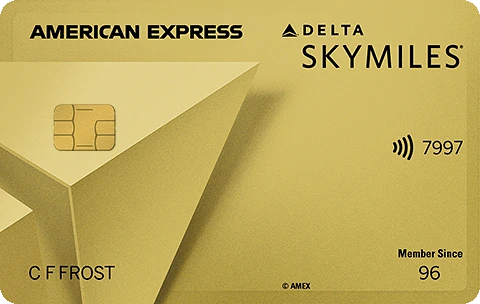
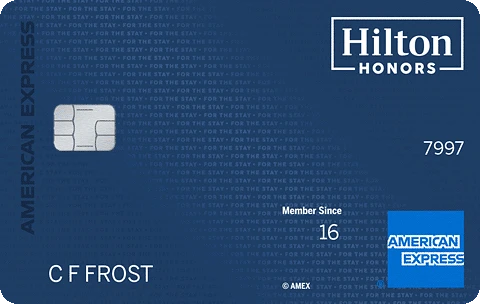
A cardholder opens the Amex Gold in January, the Delta Gold in March, the Hilton Surpass in June, and the Amex Platinum in August, meeting each welcome offer and then moving spending to the newest card. In September, an application for the Amex Business Gold shows the pop-up. Nothing was wrong with any single application; four bonuses in eight months, with three cards idle after their spending requirements, is the velocity and bonus-and-drop pattern.
The fix took four months: $1,500 a month of groceries and dining on the Gold, the Platinum used for every flight and hotel, autopay on all four, no applications, no cancellations. A re-test in January cleared, and the Business Gold's welcome offer — worth roughly $1,500 at 1.5 cents — posted in April. The cost of the pop-up was not a denial; it was a four-month delay and the need to keep four cards genuinely active.
Decision framework: what to do when you see the pop-up
| Situation | Do this |
|---|---|
| Pop-up on a card you have never held | Close the window. Spend normally on existing Amex cards for 3-6 months, apply for nothing, re-test monthly |
| Pop-up on a card you held years ago | Once per lifetime; only an NLL offer changes this. Watch the app and mailers for one, or pick a card you have not held |
| Pop-up, but you want the card's benefits regardless | Proceed only if the credits and lounges alone justify the fee — for the Platinum that means $895 of credits you would spend anyway |
| Pop-up on the personal version | Test the business version separately; eligibility is per card, though a strong velocity pattern usually blocks both |
| No pop-up today, strong offer expected in a few months | Keep usage steady and applications at zero until the offer appears, then re-test the week you apply |
| Pop-up after a recent cancellation | Expect a longer wait; closures right after bonuses are the pattern Amex weights most |
Common mistakes
- Clicking through. The card arrives, the fee posts, the bonus never does. The pop-up is the last free exit.
- Assuming one pop-up means all Amex cards are closed to you. It is per card. Test the others.
- Applying again next week. Each application feeds the velocity trigger. Wait, use the cards, re-test.
- Cancelling cards to "reset." Closures shortly after opening are the pattern Amex screens for, and a cancelled card still counts for once per lifetime.
- Meeting a spending requirement and never using the card again. Bonus-and-drop is the most common cause of jail for people who never held the card before.
- Calling to argue. Representatives cannot see or change welcome-offer eligibility. Time and usage are the only levers.
Editor's take
We think the pop-up is the most honest thing any card issuer does: Amex tells you the bonus is off the table before you spend an inquiry or a fee finding out, and the check is free to run for every card in the lineup. The trouble is that people treat it as a wall when it is a mirror. If you have never held the card and you are seeing the pop-up, Amex is describing your recent behavior — several bonuses, little ordinary spending, maybe a closure — and the cure is not a trick, it is three to six months of using the cards you already pay fees on like a normal customer. Our standing advice is to run the ten-minute test for every Amex card you care about twice a year, so a strong offer never catches you jailed.
Related reading
- Amex once-per-lifetime rule explained — the welcome-offer eligibility rule the pop-up enforces
- Amex once-per-lifetime rule explained — the first trigger, and the NLL exception
- Your first year with Amex — the pacing that avoids the pattern
- How to earn Amex Membership Rewards fast — the legitimate sources once you are clear
- Minimum spend strategy for welcome bonuses — meeting requirements on real spending
- Amex retention offers: how to ask — the alternative to cancelling a card you no longer need
Get weekly card offer alerts
Sunday digest of elevated bonuses. One email, zero spam.
Cards mentioned in this guide



Frequently asked questions
What is Amex pop-up jail?
Why am I getting the Amex pop-up if I have never had the card?
Can I check whether I am in pop-up jail without applying?
How long does Amex pop-up jail last?
What is a no-lifetime-language (NLL) Amex offer?
Related guides
Related news

industry · Jun 6, 2026
Apartment Collection by Hilton

amex · Jun 2, 2026
Amex 30% Avios Transfer Bonus: 1,000 MR = 1,300 Avios, Ends ~June 21 2026

amex · Jun 2, 2026
Amex Gold 60th Anniversary Refresh 2026: Who Wins?

amex · Jun 9, 2026
Amex Renames Green Card to "Classic Green" August 2026 — What Changes (Spoiler: Almost Nothing)
Cards in this ecosystem



Considering switching?