Best Credit Cards for H-1B Visa Holders 2026
H-1B visa holders can get U.S. credit cards, often within the first week of arrival. The fastest path is the Capital One Platinum Secured, which accepts your ITIN with no SSN required. After 6–12 months of U.S. credit history and an SSN, you can qualify for premium travel cards like the Chase Sapphire Preferred, Amex Gold, and Capital One Venture X. Newcomers with UK or Canada credit history can also use Nova Credit to apply for the Chase Freedom Unlimited or Freedom Flex on day one.
On this page▾

Topic Collection
Part of the New to America Collection
Explore all 37 articles
Quick answer
H-1B visa holders can get U.S. credit cards — often within the first week of arrival. The fastest path is Capital One Platinum Secured with your ITIN (no SSN required). Once you have 6–12 months of U.S. credit history and an SSN, you can qualify for premium travel cards including Sapphire Preferred, Amex Gold, and Venture X.
TL;DR: In 2026, H-1B visa holders can apply for U.S. credit cards using either a Social Security Number (SSN) or an Individual Taxpayer Identification Number (ITIN). Issuers that accept ITIN include American Express, Capital One, Citi, and Wells Fargo. Chase accepts SSN only but is accessible once you have one. Nova Credit's live credit-card path in 2026 is Chase, not American Express: a newcomer can use foreign credit history via Nova Credit to apply for the Chase Freedom Unlimited or Chase Freedom Flex — but only with credit history from the UK or Canada (Chase may add more cards and countries later). The older American Express × Nova Credit partnership ended in 2025, so there is no longer a Nova-based Amex shortcut. H-1B holders from other countries (India, Mexico, Germany, etc.) currently have no Nova credit-card shortcut and build via secured/starter cards — unless they already hold an American Express card issued in their home country, in which case Amex Global Transfer can move that relationship to a U.S. Amex. H-1B holders may report their full salary as income regardless of visa duration. H-4 EAD spouses may report their own employment income. Chase 5/24 counts foreign cards if reported to U.S. bureaus. An employer change on H-1B does not affect existing credit card accounts. Participating Nova issuers and countries change — verify the current list at novacredit.com.
Top picks at a glance
| Card | Best for |
|---|---|
| Capital One Platinum Secured | Month 0–6: build credit from zero, ITIN accepted |
| Freedom Unlimited | Day one for UK/Canada newcomers via Nova Credit foreign history |
| Quicksilver | Month 6–12: first rewards card, ITIN accepted |
| Sapphire Preferred | Month 12+: best mid-tier travel card once SSN established |
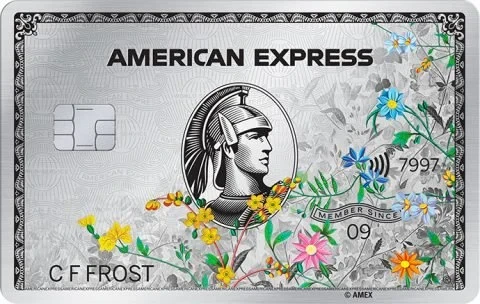
| Amex Gold | Month 12+: premium dining/travel rewards once SSN + U.S. history |
| Venture X | Month 18+: best flat-rate travel card for frequent flyers |
| Bilt | Any time: earn points on rent, ITIN accepted via Wells Fargo |
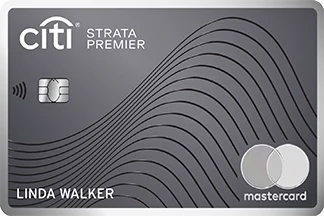
| Strata Premier | Month 12+: best transferable points for international routes |
H-1B basics: what you need to know before applying
SSN vs ITIN — which do you have?
Social Security Number (SSN): Issued by the Social Security Administration to individuals authorized to work in the U.S. As an H-1B visa holder, you are work-authorized and eligible for an SSN. Apply at any SSA office after your visa is stamped and you are physically present in the U.S. — bring your passport, I-94, and H-1B approval notice (I-797). SSN processing typically takes 2–4 weeks.
Individual Taxpayer Identification Number (ITIN): Issued by the IRS for tax purposes to people who need to file U.S. taxes but cannot get an SSN. Some H-1B holders arrive without an SSN (waiting for employer paperwork, SSA processing delays, or pre-employment period) and use an ITIN in the interim. ITIN processing takes 7–11 weeks via IRS Form W-7.
The key difference for credit cards: Chase requires SSN for all applications. American Express, Capital One, Citi, and Wells Fargo accept ITIN. Start with ITIN-friendly issuers and upgrade to Chase once your SSN is established. For a full breakdown of when each identifier matters, see SSN vs. ITIN for credit: what newcomers need to know.
Income reporting on applications
As an H-1B holder, you may report your full annual salary as income on credit card applications, regardless of how recently you started the job or how long your current H-1B period runs. Credit card applications ask for income, not job duration or visa validity. Do not underreport your income.
H-4 EAD spouses: If you hold H-4 EAD (Employment Authorization Document), you may report your own employment income. If you do not hold EAD, you can report household income where the issuer allows (American Express and Discover allow this; Chase does not for standalone applications).
Nova Credit: use your home-country credit history
Nova Credit translates credit reports from select countries into a U.S.-equivalent score. The American Express × Nova Credit partnership ended in 2025 — you can no longer apply for any Amex card using Nova Credit or a "no U.S. credit history" foreign-credit option. As of 2026, the live Nova Credit credit-card path runs through Chase:
- A newcomer can use foreign credit history via Nova Credit when applying for the Freedom Unlimited or Freedom Flex.
- This currently works only for credit history from the United Kingdom and Canada. Chase says more cards and countries may be added later — verify the current list at novacredit.com.
If you are a UK or Canada newcomer: apply for Freedom Unlimited or Freedom Flex via Nova Credit shortly after arriving, instead of waiting to build a U.S. credit history first.
If you are from any other country (India, Mexico, Germany, Brazil, Nigeria, Philippines, etc.): there is currently no Nova Credit credit-card shortcut. Build U.S. credit with a secured or starter card (see the Month 0–6 playbook below). The one exception: if you already hold an American Express card issued in your home country, you can use Amex Global Transfer to move that existing Amex relationship to a U.S. Amex card without a U.S. credit history — this is only for current foreign-Amex cardholders, not a general no-history path.
Nova Credit's underlying "Credit Passport" still exists for some lenders and landlords, but for credit cards specifically the live path in 2026 is Chase (UK/Canada only).
Month 0–6: building your foundation
You arrived in the U.S. on H-1B. Your U.S. credit history is zero. Here is the exact playbook:
Step 1 — Get an SSN or ITIN. Apply for your SSN at the SSA office as soon as you are authorized. If there is a delay, apply for an ITIN via IRS Form W-7 so you can start building credit immediately.
Step 2 — Open a U.S. bank account. Most credit card issuers require a U.S. bank account for verification. Chase, Bank of America, and Wells Fargo all allow non-citizen account opening with a passport and visa. Some newcomer-friendly issuers (such as Tomo) use bank account cash flow as a primary underwriting signal.
Step 3 — Apply for your first credit card. Choose based on what you have:
If you have ITIN or SSN and no U.S. credit history:
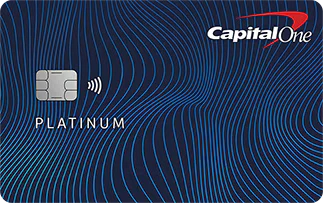
- Capital One Platinum Secured — $49–$200 deposit, $200 starting limit, automatic upgrade review after 6–12 months
If your home-country credit history is from the UK or Canada (Nova Credit):
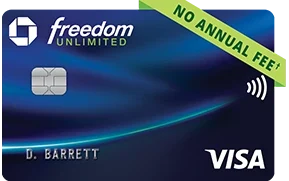
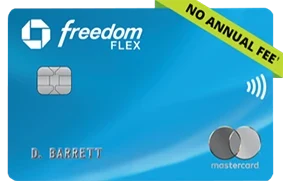
- Freedom Unlimited or Freedom Flex — apply using your UK or Canada credit history via Nova Credit, even with zero U.S. history. This is the only live Nova Credit credit-card shortcut in 2026; it does not cover other countries.
Step 4 — Set up autopay. Pay the full statement balance every month, automatically. The single biggest factor in building U.S. credit fast is an unbroken on-time payment history. Do not carry a balance — H-1B income is strong enough to pay in full.
Step 5 — Keep utilization below 10%. Use the card for 1–3 regular purchases per month (gas, groceries, subscriptions). Keep the balance below 10% of your credit limit when the statement closes. Do not max out the card. Credit utilization explained for newcomers covers exactly how this impacts your score.
What to expect by month 6: With consistent on-time payments and low utilization, most H-1B holders reach a FICO score of 650–700 within 6 months of opening their first card.
Month 6–12: adding your first rewards card
By month 6, you have a payment history and a credit score. Now add a rewards card.
Best options at 6 months:
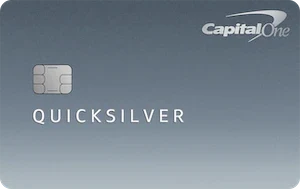
Quicksilver — No annual fee, 1.5% unlimited cashback on everything, ITIN accepted. This is the best "set and forget" rewards card for H-1B holders building credit.
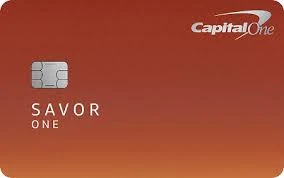
SavorOne — No annual fee, 3% back on dining and groceries, ITIN accepted. Best if you spend heavily on food.
Bilt — No annual fee, earn 1x points on rent (up to 100,000 pts/year), 3x dining, 2x travel. Issued by Wells Fargo (ITIN accepted). If you rent, this is the most valuable card in your wallet — earning points on your largest monthly expense at no cost.
Chase 5/24 note: Chase counts all credit card accounts opened in the past 24 months against your 5/24 count, including cards from foreign banks if they appear on your U.S. credit report. Cards issued by foreign banks typically do not appear on U.S. reports — but verify. If you are planning to apply for premium Chase cards (Sapphire Preferred, Sapphire Reserve), be deliberate about which non-Chase cards you open in the first 24 months. The Chase 5/24 rule explained guide walks through exactly how to plan your application sequence.
Month 12–24: premium travel cards
At 12–18 months with SSN established and FICO 700+, you qualify for the best travel credit cards in the U.S.
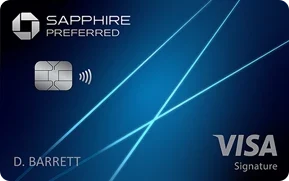
Sapphire Preferred — Best first premium travel card
- Annual fee: $95
- Welcome bonus: 60,000 Ultimate Rewards points after $4,000 spend in 3 months (worth $750+ in travel)
- Rewards: 3x on dining, 2x on travel, 1x on everything else
- Transfers: Chase Ultimate Rewards transfers 1:1 to United, Southwest, Hyatt, Marriott, British Airways, Air France/KLM, Singapore Airlines, and more
- Why H-1B holders love it: United MileagePlus transfers make this card ideal for India routes (United flies EWR–DEL, IAD–BOM, ORD–DEL, SFO–DEL). Hyatt transfers give excellent redemption value for hotel stays.
Important: Chase requires SSN and checks 5/24. Do not apply until you have SSN and are under 5 new card accounts in 24 months.
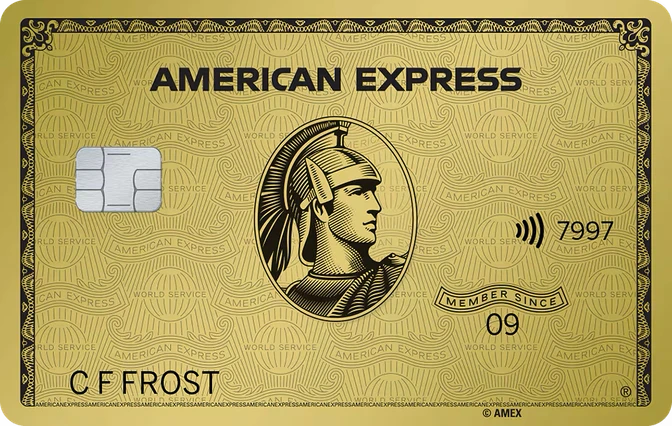
Amex Gold — Best premium dining and international travel
- Annual fee: $250
- Rewards: 4x at restaurants worldwide (including India, Mexico, Germany — relevant for H-1B travel), 4x at U.S. supermarkets (up to $25K/year), 3x on flights, 1x everywhere else
- Credits: $120 dining credit (Grubhub, Cheesecake Factory, etc.), $120 Uber Cash annually
- Net effective fee: ~$10/year after credits for most H-1B holders
- No Nova Credit shortcut: The Amex × Nova Credit partnership ended in 2025, so apply once you have an SSN and 6–12 months of U.S. credit history. If you already hold an Amex card from your home country, Amex Global Transfer can get you a U.S. Amex without U.S. history.
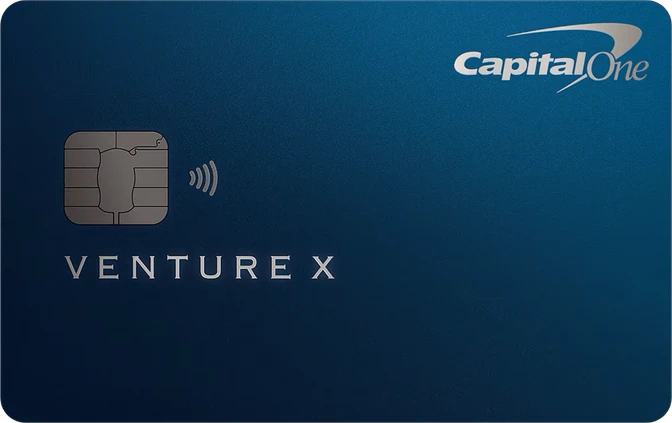
Venture X — Best flat-rate travel card
- Annual fee: $395
- Credits: $300 Capital One Travel credit (effectively reduces fee to $95), 10,000 bonus miles each anniversary (worth $100 in travel)
- Rewards: 2x on everything, 5x on hotels and rental cars via Capital One Travel, 10x on hotels via Capital One Travel
- Lounge access: Capital One Lounges + Priority Pass (1,300+ locations worldwide)
- Why it works for H-1B: The flat 2x rate on all spending is simple and valuable. Capital One accepts ITIN, so you can qualify earlier than Chase.
Choosing between the two: Both cards are realistic 12–18 month targets for a well-paid H-1B holder, and the right pick depends on how you travel. If you want simplicity and don't collect airline miles, once your credit clears the 700 mark it's worth comparing Capital One Venture X against Chase Sapphire Preferred side by side — Venture X wins on flat-rate simplicity and lounge access, while Sapphire Preferred wins if you plan to transfer points to United for India routes or Hyatt for hotels.
Visa status changes — what happens to your cards?
H-1B extension or transfer
Changing employers on H-1B does not affect your existing credit card accounts. Credit cards are not tied to your employer or visa status. You continue using all existing cards normally during an employer transfer. The new employer's I-797 approval is not required by credit card issuers — they do not monitor visa status.
H-1B extension pending: Credit cards already opened remain active regardless of whether your extension is pending or approved. For new applications, some issuers may ask for visa expiration date. Use your current I-797 expiration date. If asked about remaining U.S. residency intention, answer honestly — H-1B with pending extension is a valid, common status.
H-1B to green card (I-485 pending)
Once you file I-485 (Adjustment of Status), you have a valid work authorization document (EAD combo card or I-485 filing receipt in conjunction with existing H-1B). This does not affect credit card accounts or new applications. Report your income as usual.
After green card approval: Update your residency status with issuers if asked, but this is not mandatory. Your credit history carries over completely — nothing changes in your credit profile. With permanent resident status, you may qualify for products previously limited to citizens, though most premium credit cards in the U.S. have no citizenship requirement.
H-1B to H-4 (lost work authorization)
If you transition from H-1B to H-4 (and do not hold H-4 EAD), you lose work authorization. Existing credit card accounts remain open and usable — issuers do not cancel cards based on visa status changes. For new applications, you can report household income (where the issuer allows it). American Express and Discover allow inclusion of household income from a spouse; Chase requires the applicant to have access to the income themselves.
H-4 EAD: If you have H-4 EAD, you have work authorization and may report your own employment income on all applications.
H-1B spending patterns: best cards by category
H-1B holders tend to have distinct spending patterns. Here is the optimal card for each category:
Rent: Bilt — the only major card earning points on rent with no processing fee. Critical if rent is $2,000–$4,000/month.
Dining (U.S.): Amex Gold — 4x at restaurants worldwide is the highest dining multiplier available on a non-niche card.
Groceries: Amex Gold — 4x at U.S. supermarkets (up to $25K/year) beats every competitor.
India flights (and international routes generally): Sapphire Preferred for United transfer partners (United Economy Saver to India: ~70,000–80,000 miles roundtrip). Alternatively, Amex Gold for Air India via Aeroplan (Star Alliance) or British Airways Avios on partner metal.
Gas: SavorOne (3% back) or Quicksilver (1.5% flat).
Amazon / online shopping: Amazon Prime Visa (5% at Amazon with Prime) — requires SSN, issued by Chase.
Hotels: Sapphire Preferred for Hyatt transfers (best hotel points program in the U.S.; Hyatt category 1–4 properties give excellent value for short trips).
Common mistakes H-1B holders make
Applying to Chase before getting SSN. Chase requires SSN for all cards. A declined application leaves a hard inquiry. Wait until your SSN is in hand. Review the full list of newcomer credit card mistakes to avoid in your first year before applying anywhere.
Not using Nova Credit when you qualify. If your home-country credit history is from the UK or Canada and you arrive without U.S. credit history, you can skip the 12-month credit-building phase and apply for the Freedom Unlimited or Freedom Flex via Nova Credit immediately. (The old Amex × Nova path ended in 2025, and Nova's card shortcut now covers only the UK and Canada — newcomers from other countries build with a secured/starter card instead.) Many H-1B holders do not know this.
Reporting incorrect income. Report your full annual H-1B salary. Do not prorate it by months worked or reduce it because of upcoming visa renewal. Issuers look at current annual income, not visa duration.
Ignoring the Bilt card for rent. Paying $2,500/month in rent without the Bilt means losing 30,000 Bilt points per year — worth $600+ in hotel or airline transfers. The card is free.
Opening too many cards in year one. If you plan to apply for Sapphire Preferred in year 2 or 3, be under 5/24. Opening Capital One, Amex, Citi, and Bilt in year one is fine — none of those require being under 5/24. But opening 5+ cards in 24 months locks you out of Chase Sapphire products for 2 years.
Keeping the secured card too long. Capital One Platinum Secured is a stepping stone. Once you upgrade to an unsecured Capital One card (typically at month 6–12), product change or close the secured card to free up the deposit. Do not carry a secured card indefinitely. See secured vs. unsecured credit cards for newcomers to understand when it's time to move on.
Bottom line
H-1B visa holders are among the most creditworthy applicants in the U.S. — high income, stable employment, low default rates. The challenge is starting with zero U.S. credit history. The complete guide to building U.S. credit as a new immigrant maps out the entire journey in detail. The optimal path: start with Capital One Platinum Secured on day one (ITIN OK) — or, if your home credit history is from the UK or Canada, jump straight to the Freedom Unlimited or Freedom Flex via Nova Credit — add Bilt for rent as soon as possible, upgrade to Sapphire Preferred at month 12–18 once SSN is established, and add Amex Gold at month 12–24 once you have U.S. history (the Amex × Nova shortcut ended in 2025). Use the Amex application rules explained guide before applying for any Amex card to avoid common pitfalls. Within two years of arriving in the U.S., most H-1B holders can hold a full premium travel setup worth $2,000–$3,000+ in annual value.
Get weekly card offer alerts
Sunday digest of elevated bonuses. One email, zero spam.
Cards mentioned in this guide
Frequently asked questions
Can H-1B visa holders get a credit card without an SSN?
What is Nova Credit and which H-1B holders can use it?
Should I report my full H-1B salary on credit card applications?
Does changing employers on H-1B affect my credit cards?
How does Chase 5/24 apply to H-1B holders?
What is the best credit card for flying to India on H-1B?
Can I keep my U.S. credit cards if I leave the U.S. after H-1B?
Is the Bilt Mastercard worth it for H-1B holders who rent?
How long does it take an H-1B holder to qualify for Chase Sapphire Preferred?
Can H-4 visa holders (non-EAD) get credit cards in the U.S.?
Related guides
Related news

airlines · Jun 2, 2026
Credit Card Transfer Bonuses Mid-2026: H1 Drought Recap

airlines · Jun 2, 2026
Flying Blue Promo Awards June 2026: Best Europe Deal?

airlines · Jun 2, 2026
Aeroplan 2026: SQC Status and June 1 Devaluation

industry · Jun 2, 2026
Travel Rewards Devaluations 2026: Every Major Loyalty Program Change This Year