Best Credit Card Combinations (Stacks) of 2026
The best credit card combinations in 2026 are the Chase Trifecta (Sapphire Preferred or Reserve + Freedom Flex + Freedom Unlimited), the Amex Trifecta (Platinum + Gold + Blue Business Plus), and the Citi Budget Stack (Double Cash + Custom Cash + Strata Premier). Each stack layers a premium travel card over no-annual-fee earners so every dollar earns transferable points at its highest possible rate — the Chase stack tops out around Hyatt at 1.7–2.1 cpp.
On this page▾

Quick answer
The best credit card stacks in 2026 are the Chase Trifecta (Sapphire Preferred or Sapphire Reserve + Freedom Flex + Freedom Unlimited), the Amex Trifecta (Amex Platinum + Amex Gold + Blue Business Plus), and the Citi Budget Stack (Double Cash + Custom Cash + Strata Premier). Each combination layers a premium travel card over no-annual-fee earners to maximize points per dollar across every category.
TL;DR: The top credit card stacks of 2026 for US consumers are the Chase Trifecta (up to 5x on travel, 3x dining, 5% rotating categories, 1.5% base), Amex Trifecta (5x flights, 4x dining and groceries, 2x on all business spend), and Citi Budget Stack (5% custom category, 2% flat, with transferable points via Strata Premier). The Hyatt Maximizer pairing (Sapphire Preferred + World of Hyatt) extracts the highest hotel redemption value in the Chase ecosystem. The Capital One flat-rate stack (Venture X + Spark Cash Plus) offers simple 2x+ earning with no category management required.
Top picks at a glance
| Card stack | Best for |
|---|---|
| Sapphire Preferred + Freedom Flex + Freedom Unlimited | Best overall Chase Trifecta — travel, dining, rotating categories |
| Amex Platinum + Amex Gold + Blue Business Plus | Best Amex Trifecta — flights, dining, groceries, business spend |
| Double Cash + Custom Cash + Strata Premier | Best budget stack — transferable points with near-zero annual fees |
| Sapphire Preferred + World of Hyatt | Best Hyatt maximizer — hotel value up to 2.1 cpp |
| Venture X + Spark Cash Plus | Best flat-rate — simple 2x+ on everything, no category tracking |
Chase Trifecta: the most versatile US points stack
The Chase Trifecta is the most-recommended combination for US rewards beginners and intermediates because every card earns Ultimate Rewards (UR), all points pool under one login, and the redemption ceiling — Hyatt at 1.7–2.1 cpp — is among the highest in any bank ecosystem.
How the three cards divide earning duties:
-
Sapphire Preferred ($95/yr) or Sapphire Reserve ($795/yr): The "hub" card. CSP earns 3x on dining, 3x on online grocery, 3x on select streaming; CSR earns 3x on dining and 10x on hotels + car rental through Chase Travel. Holding either card is what unlocks 1:1 partner transfers — Freedom Flex and Freedom Unlimited alone earn cashback, not transferable UR. Not sure which anchor to hold? Our Sapphire Preferred vs Sapphire Reserve comparison weighs the $95 and $795 versions for a trifecta.
-
Freedom Flex ($0/yr): 5% cashback on rotating quarterly categories (up to $1,500/quarter). Q1 2026 categories historically include grocery stores and PayPal. Q4 often includes department stores. Also earns 3% on dining and 3% on drugstores permanently.
-
Freedom Unlimited ($0/yr): 1.5% on everything else, plus 3% on dining and drugstores. This is the base-layer card — every dollar that doesn't fit a higher category goes here. Never earn 1x on Chase when you can earn 1.5x by habit.
How pooling works: Redeem all three cards' "cashback" as UR points by moving balances to your Sapphire account. Then transfer 1:1 to Hyatt, United, Air Canada Aeroplan, Singapore KrisFlyer, British Airways Avios, or 10+ other partners. See the full Chase Ultimate Rewards guide for partner-by-partner transfer sweet spots.
Annual fee math: CSP version totals $95/yr. CSR version totals $795/yr but comes with $300 travel credit + Priority Pass + Global Entry ($795 − $300 = $495 effective). For travelers booking $300+/yr through Chase Travel, the CSR pays for itself in the first booking.
Who it fits: Anyone already in the Chase ecosystem, beginners who want one set of transfer partners to master, travelers who stay at Hyatt properties, and families booking domestic flights via United or Southwest (United transfers 1:1; Southwest transfers to Southwest Rapid Rewards 1:1).
The CSR upgrade math: If you already hold CSP and want to upgrade to CSR: the incremental AF jump is $700/yr ($795 − $95). The incremental benefits are $300 travel credit + 7x total on Chase Travel hotels vs CSP's 5x + Priority Pass airport lounge access. If you travel 4+ times per year and use lounges, the CSR upgrade nearly always wins on math alone.
Amex Trifecta: highest ceiling for premium travelers
The Amex Trifecta combines the two best consumer cards in the Membership Rewards ecosystem with a business card that earns 2x on every dollar, creating an unbroken floor of 2 MR per dollar across all spend.
The three cards:
-
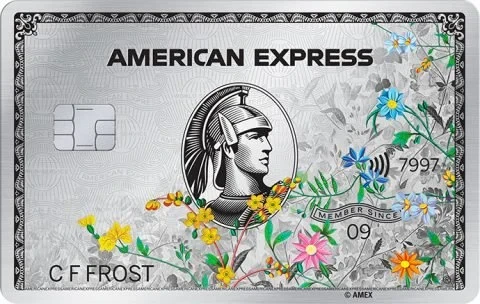
Amex Platinum ($895/yr): 5x MR on flights booked directly with airlines or via Amex Travel (up to $500K/yr). 5x on prepaid hotels via Amex Travel. $200 airline fee credit, $200 Uber Cash, $200 hotel credit, $155 Walmart+ credit, $189 CLEAR credit, Centurion Lounge access + Priority Pass. Effective annual fee after credits: roughly $295–$395 depending on how many credits you redeem.
-
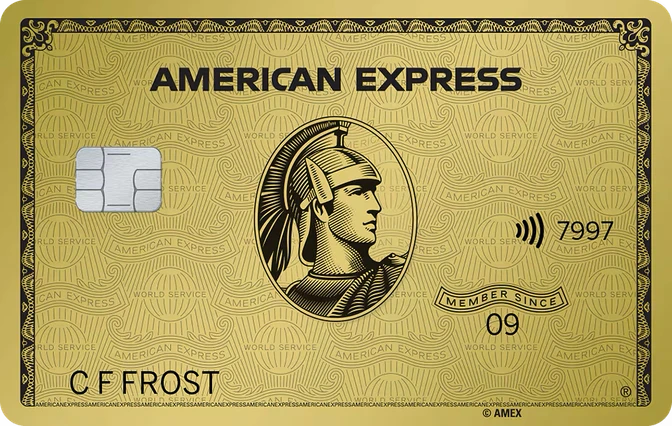
Amex Gold ($325/yr): 4x MR at US restaurants (no cap) and US supermarkets (up to $25K/yr). 3x on flights booked directly. The everyday workhorse of the Trifecta — dining and groceries are most households' top two categories. $120 dining credit (Grubhub, Cheesecake Factory, etc.) and $120 Uber Cash partially offset the fee.
-
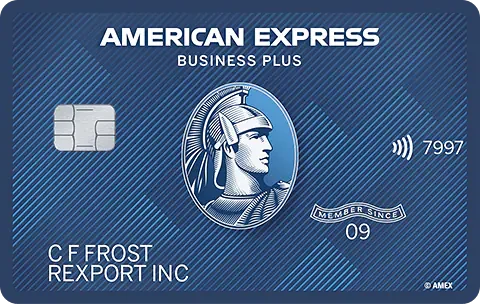
Blue Business Plus ($0/yr): 2x MR on all purchases up to $50K/yr (1x above). This is the critical piece: every dollar that doesn't earn 4x or 5x from the consumer cards earns 2x here instead of 1x. For a business owner or freelancer, this doubles the floor. Requires a business entity (sole proprietorship qualifies).
Category coverage:
- Flights: 5x (Platinum)
- Dining + groceries: 4x (Gold)
- Everything else: 2x (Blue Business Plus)
- Gaps: none above 2x
Transfer partners: Amex Membership Rewards has the deepest airline roster — Air Canada Aeroplan, Flying Blue (Air France/KLM), British Airways Avios, ANA, Singapore KrisFlyer, Delta SkyMiles, Avianca LifeMiles, Turkish Miles&Smiles. Hotel options include Hilton Honors (1:2 ratio) and Marriott Bonvoy (1:1).
Annual fee math: Gross $1,220/yr. After credits (Platinum $200 airline + $200 Uber + $200 hotel + Gold $120 dining + $120 Uber): $600/yr in credits against $1,220 gross = $620 effective if you use every credit. The Blue Business Plus is free.
Who it fits: Frequent flyers who book directly (not via OTAs), households with $500+/mo dining + grocery spend, business owners with miscellaneous vendor expenses, and anyone targeting Air Canada Aeroplan sweet spots (transatlantic business class at 55,000–65,000 ANA miles is accessible via Amex → ANA → partner redemption).
Amex vs Chase: Amex has more airline partners and a higher earning rate in dining/groceries. Chase has the Hyatt relationship (best hotel transfer in the US market) and the Freedom card duo to dramatically boost earning with no AF. Most advanced players hold both ecosystems — but for a single-ecosystem choice, Amex wins for premium cabin flyers; Chase wins for hotel loyalists and domestic travelers.
Citi Budget Stack: transferable points with minimal fees
The Citi stack is the best answer for the question: "I want transferable points but I don't want to pay $300+/yr in annual fees." Total fees: $95/yr (Strata Premier only).
The three cards:
-
Custom Cash ($0/yr): 5% ThankYou Points on your top-eligible spending category each billing cycle, up to $500/mo ($300/yr cap if groceries is your top category every cycle). Qualifying categories include grocery stores, restaurants, gas stations, select travel, and more. No-annual-fee 5% earning is the best category rate available outside of cards with $95+ annual fees.
-
Double Cash ($0/yr): 2% on everything (1% when you buy + 1% when you pay). The base earner. All purchases route here if they don't beat 2% elsewhere. With Strata Premier in the mix, these points become transferable ThankYou Points.
-
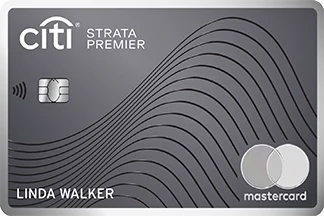
Strata Premier ($95/yr): 3x on hotels, 3x on restaurants, 3x on groceries, 3x on air travel, 3x on gas. Also the key that unlocks ThankYou Points transfers to airline partners — Air France/KLM Flying Blue, Turkish Miles&Smiles, Avianca LifeMiles, Wyndham Rewards, Choice Privileges, and more. Without Strata Premier, Custom Cash and Double Cash points are cash only.
Why this beats a flat-2% cash-back strategy: The Citi Trifecta strategy leverages ThankYou Points that transfer to Turkish Miles&Smiles at 1:1. Turkish redeems partner awards (United, Air Canada, etc.) at extremely low rates — Chicago to Istanbul business class at 45,000 miles round-trip, US domestic under 7,500 miles each way. At 1.5–2.5 cpp, $95/yr in Strata Premier annual fee is paid back within 5,000–6,000 transferred points.
Who it fits: Beginners not ready to commit to a $795 AF card, budget-conscious earners who want optionality to upgrade to partner transfers, and households where the top categories are groceries + restaurants (Strata Premier + Custom Cash cover both at 5% and 3% respectively).
Hyatt Maximizer: best hotel redemption value in the US market
Hyatt has the most valuable points of any major hotel program — consistently 1.7–2.1 cpp, versus Marriott Bonvoy at 0.7–0.9 cpp and Hilton Honors at 0.5–0.7 cpp. The Hyatt Maximizer pairing extracts maximum value from that premium.
The two cards:
-
Sapphire Preferred ($95/yr): Earns Ultimate Rewards (UR) at 3x dining, 3x online grocery, 5x Chase Travel. Transfers 1:1 to World of Hyatt. The primary point-generating engine.
-
World of Hyatt ($95/yr): 4x Hyatt points at Hyatt properties, 2x on dining, airline tickets, local transit, fitness clubs. Annual free night certificate at Category 1–4 Hyatt (worth $100–$200+ at standard rates). Companion free night after spending $15K/yr. Earns direct Hyatt points — no UR transfer needed for hotel spend.
How the stack works: Book all Hyatt stays on the World of Hyatt card to earn 4x Hyatt points at the property. Accumulate UR via CSP on dining and groceries, then transfer to Hyatt at 1:1 to pay for award nights at Category 5–7 properties where cash rates are $300–$600/night and award rates are 20,000–40,000 points/night (1.5–2.1 cpp).
Category 1–4 free night math: The World of Hyatt card's annual free night certificate at Category 1–4 covers properties from roughly $100/night (Hyatt Place / Hyatt House) to $200–250/night (select full-service Hyatt). The $95 AF is effectively paid back if you use the certificate for a $100+ property — a common scenario in secondary US cities.
2026 Hyatt ratio change note: Hyatt updated its award chart in 2026 — the 4:3 Hyatt point conversion ratio for certain Category 7 properties changed in June 2026. Dynamic pricing has expanded. The point values cited (1.7–2.1 cpp) reflect the post-change average across the full portfolio. Verify the specific property's current award rate before transferring points.
Who it fits: Anyone with a Hyatt loyalty preference, road warriors in US cities where Hyatt Place/Hyatt House are abundant (they are Category 1–3 and redeem well), and travelers who stay at Andaz, Park Hyatt, or Grand Hyatt properties where cash rates regularly exceed $400/night.
Capital One Flat-Rate Stack: zero category management required
For people who find category tracking exhausting, the Capital One flat-rate stack delivers 2x+ on everything with a simple rule: put all personal spend on Venture X, all business spend on Spark Cash Plus.
The two cards:
-
Venture X ($395/yr): 2x miles on all purchases. 5x on flights via Capital One Travel, 10x on hotels and rental cars via Capital One Travel. $300 Capital One Travel credit (applied automatically as statement credit for travel booked through Capital One Travel). 10,000 anniversary bonus miles each year (~$100 in travel value). Priority Pass Lounge access + Capital One Lounges. Effective AF after travel credit + anniversary miles: $395 − $300 − $100 = ~$0 for travelers who use the travel credit.
-
Spark Cash Plus ($150/yr, waived first year): Flat 2% cash back on all purchases, unlimited. No spending cap, no rotating categories. Charges are paid in full each month (charge card mechanics). Year-end $200 cash bonus after spending $200K+. 5% cash back on hotels and rental cars through Capital One Travel. Our Capital One Spark Cash Plus review breaks down the approval requirements and how the annual-fee rebate is earned.
Why this works: No ecosystem complexity. No transfer partner optimization. No annual category activation. 2x miles on Venture X transfer to Air Canada Aeroplan, Turkish Miles&Smiles, Flying Blue, and 15+ other partners at 1:1 — so the "flat-rate" label undersells the ceiling: transferred miles can redeem at 1.5–2.5 cpp.
Who it fits: Business owners who don't want to manage multiple cards, high-volume spenders (Spark Cash Plus has no spending limit), simplicity-seekers who want the best possible return without any optimization overhead, and anyone who values Priority Pass lounge access but can't stomach Amex Platinum's $895 AF. The Capital One Miles program covers all transfer partners in depth.
Beginner 2-card starter stack
If you're new to credit card rewards and overwhelmed by trifectas, start here. Two cards, simple rules, real value.
Recommended beginner pair: Sapphire Preferred + Freedom Unlimited
- CSP ($95/yr): 3x on dining, 3x on online grocery, 3x streaming, 5x Chase Travel. Sign-up bonus: 100,000 UR (worth ~$1,250–$2,000 in travel). Unlocks 1:1 partner transfers.
- Freedom Unlimited ($0): 1.5% everywhere else, 3% dining, 3% drugstores. Points pool automatically with CSP.
Simple rule: Use CSP for dining, groceries, travel. Use Freedom Unlimited for literally everything else. You will never earn less than 1.5x on any purchase. Upgrade to the full Trifecta (add Freedom Flex) when you're comfortable with rotating category activation. Before applying, understand the Chase 5/24 rule so you sequence cards correctly.
Alternative beginner pair for cashback-first earners: Active Cash ($0/yr, 2% flat) + Custom Cash ($0/yr, 5% top category). Total annual fee: $0. Combined earning: 5% on your top category (up to $500/mo), 2% on everything else. No partner transfers — pure cashback. Excellent for the first 1–2 years while building credit and deciding whether transferable points are worth the complexity.
Comparing all five stacks side-by-side
| Stack | Total annual fee | Best earning rate | Points currency | Transfer partners |
|---|---|---|---|---|
| Chase Trifecta (CSP) | $95 | 5x rotating (Freedom Flex) | Ultimate Rewards | Hyatt, United, Aeroplan, BA Avios |
| Chase Trifecta (CSR) | $795 ($495 net) | 10x Chase Travel hotels | Ultimate Rewards | Same as above |
| Amex Trifecta | $1,220 ($620 net) | 5x flights (Platinum) | Membership Rewards | Aeroplan, Flying Blue, ANA, BA |
| Citi Budget Stack | $95 | 5x top category (Custom Cash) | ThankYou Points | Flying Blue, Turkish, Avianca |
| Hyatt Maximizer | $190 | 4x at Hyatt (WoH card) | UR + Hyatt Points | Hyatt via UR transfer |
| Capital One Flat-Rate | $545 ($195 net) | 10x Capital One Travel hotels | Miles + Cash | Aeroplan, Flying Blue, Turkish |
Who should hold multiple ecosystems
Advanced earners often hold 2 ecosystems simultaneously — most commonly Chase + Amex. The logic:
- Chase covers Hyatt and United (both 1:1). Hyatt is the best US hotel transfer. United covers the vast majority of domestic US routes.
- Amex covers Air Canada Aeroplan and ANA. Aeroplan is the best program for transatlantic redemptions on Star Alliance (business class Europe at 55,000–75,000 miles). ANA is the best program for transpacific premium cabin (55,000 miles round-trip in business to Japan).
- Citi adds Turkish Miles&Smiles — the cheapest-per-mile Star Alliance redemption program for short-haul and some long-haul international routes.
Holding all three requires juggling 3 AF cards (CSP/CSR + Gold + Strata Premier = $315–$855/yr gross), but the transfer flexibility means you always have the right currency for any itinerary. Check out the best sign-up bonuses to time your applications when welcome offers are at record highs.
Bottom line
For most US earners in 2026, the Chase Trifecta with CSP is the right starting point: $95/yr, the broadest set of domestic transfer partners, and a simple upgrade path to CSR once your travel spend justifies it.** If you fly frequently and spend heavily on dining, add Amex Gold and gradually build toward the full Amex Trifecta. If annual fees are a barrier, the Citi Budget Stack (only $95/yr total) delivers transferable points that can unlock business-class flights through Turkish Miles&Smiles and Avianca LifeMiles — the best bang-per-fee ratio in this guide.
Get weekly card offer alerts
Sunday digest of elevated bonuses. One email, zero spam.
Cards mentioned in this guide






Frequently asked questions
What is the Chase Trifecta?
Can I combine Chase Freedom Flex points with Chase Sapphire Preferred points?
Is the Amex Trifecta worth the high annual fees?
What is the best 2-card combination for beginners?
How do Citi ThankYou Points work across the budget stack?
What is the Hyatt Maximizer stack and why is Hyatt so valuable?
Should I get Chase Sapphire Preferred or Reserve for a stack?
Can I hold cards from both Chase and Amex ecosystems simultaneously?
Is the Capital One Venture X worth it for a flat-rate stack?
How many credit cards is too many?
Related guides
Related news

airlines · Jun 2, 2026
Credit Card Transfer Bonuses Mid-2026: H1 Drought Recap

industry · Jun 2, 2026
Travel Rewards Devaluations 2026: Every Major Loyalty Program Change This Year

airlines · Jun 2, 2026
Aeroplan 2026: SQC Status and June 1 Devaluation

industry · Jun 2, 2026
Biggest Credit Card Changes 2026: Mid-Year Retrospective