Best No-Annual-Fee Chase Credit Cards 2026
The best no-annual-fee Chase credit card in 2026 for most people is the Chase Freedom Unlimited: $0 buys 1.5% on everything, 3% on dining and drugstores, and 5% on Chase Travel. Add the Freedom Flex for rotating 5%, or the Ink Business Cash and Ink Business Unlimited for business spend. Keep a no-fee card open forever to grow your average account age, and pair any of them with a Sapphire Preferred to make rewards transferable.
On this page▾
Quick answer
The best no-annual-fee Chase credit card in 2026 for most people is the Freedom Unlimited — $0 annual fee, 1.5% on everything, 3% on dining and drugstores, and 5% on Chase Travel. If you want bigger category wins, the Freedom Flex adds 5% on quarterly rotating categories (up to $1,500 per quarter) plus cell-phone protection. Business owners should hold the Ink Cash (5% on office supply and telecom spend) or the Ink Unlimited (1.5% flat). Every one of these cards charges $0, and each becomes far more valuable when paired with a Sapphire Preferred.
TL;DR: The best no-annual-fee Chase credit cards in 2026 are all $0-fee and earn Ultimate Rewards. Best overall no-fee: Chase Freedom Unlimited ($0 annual fee, 1.5% flat, 3% dining and drugstores, 5% Chase Travel). Best rotating: Chase Freedom Flex ($0 annual fee, 5% on quarterly categories up to $1,500, plus cell-phone protection). Best no-fee business: Chase Ink Business Cash ($0 annual fee, 5% on office supply stores and internet/cable/phone, 2% on gas and dining, with caps) and Chase Ink Business Unlimited ($0 annual fee, 1.5% flat on all business spend). Their rewards are cash back by default but convert to transferable Ultimate Rewards when paired with a Chase Sapphire Preferred, Chase Sapphire Reserve, or Chase Ink Business Preferred. Keeping a no-fee Chase card open forever grows your average account age and helps your credit score. All consumer Chase cards are subject to the 5/24 rule.
Best no-AF Chase cards at a glance
| Card | Annual fee | Headline earn |
|---|---|---|
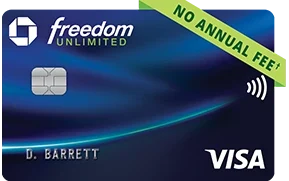
| Freedom Unlimited | $0 | 1.5% flat, 3% dining/drugstores, 5% Chase Travel |
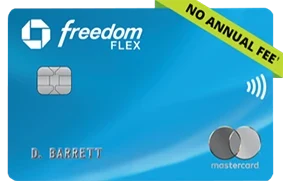
| Freedom Flex | $0 | 5% rotating (up to $1,500/qtr), 3% dining/drugstores |
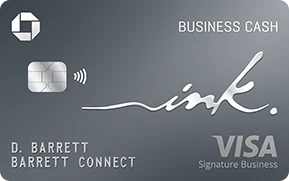
| Ink Cash | $0 | 5% office/telecom, 2% gas/dining (caps) |
| Ink Unlimited | $0 | 1.5% flat on all business spend |
Why a no-fee card is worth holding forever
A no-annual-fee card costs you nothing to keep open, which makes it the ideal card to never close. Length of credit history is roughly 15% of your FICO score, and your average account age climbs every year a card stays open. Closing a card you have held for a decade can shorten that average and ding your score — keeping a $0 card open avoids that risk entirely.
That is the quiet superpower of the Chase no-fee lineup. You can open a Freedom Unlimited as your first real rewards card, use it for everyday spend, and still have it open twenty years later anchoring your credit file — all while it earns at least 1.5% on every purchase. There is no fee math to justify, no annual "is this still worth it" decision. It simply earns and ages.
These cards also feed one Ultimate Rewards balance. Held alone, a Freedom or Ink card earns cash back. Pair it with a Sapphire Preferred, Sapphire Reserve, or Ink Preferred, and that same cash back converts into transferable Ultimate Rewards — points you can move 1:1 to partners like United, World of Hyatt, Marriott, Air Canada, and Southwest. A point worth 1 cent as cash can be worth 2 cents or more as a Hyatt night.
Best overall no-fee: Chase Freedom Unlimited
What it earns
The Freedom Unlimited has a $0 annual fee and earns 1.5% on every purchase, 3% on dining and drugstores, and 5% on travel booked through Chase Travel. It is the catch-all card that beats a flat 1% card everywhere and edges out a standard 2% card on dining and drugstores.
Who it is for
Anyone who wants one no-fee card that earns well without tracking categories or activating bonuses. Held on its own, it is a clean flat-rate cash back card — read the full Chase Freedom Unlimited review for all the details. Held alongside a Sapphire, its 1.5% becomes 1.5x transferable Ultimate Rewards — one of the best earn rates in the ecosystem for spending that has no other bonus.
The verdict
The default no-fee Chase card and the one most people should start with. If you only ever hold two Chase cards, make them this and a Sapphire Preferred.
Best rotating: Chase Freedom Flex
What it earns
The Freedom Flex also carries a $0 annual fee and earns 5% on quarterly rotating categories — historically grocery stores, gas, wholesale clubs, PayPal, Amazon, and more — on up to $1,500 in combined purchases each quarter after you activate. It also earns 3% on dining and drugstores and 1.5% on everything else, and it adds cell-phone protection when you pay your phone bill with the card.
Who it is for
Maximizers willing to activate categories every three months and shift spending toward whatever earns 5% that quarter. The $1,500 quarterly cap means up to $75 in bonus value per quarter at 5%. Like the Freedom Unlimited, its rewards convert to Ultimate Rewards when paired with a Sapphire.
The verdict
The best no-fee card for people who enjoy optimizing. Pair the Flex (rotating 5%) with the Unlimited (1.5% flat) to cover both targeted and everyday spending — or see our Freedom Unlimited vs. Freedom Flex comparison if you can only pick one.
Best no-fee business: Chase Ink Business Cash
What it earns
The Ink Cash has a $0 annual fee and earns 5% on the first $25,000 spent each year at office supply stores and on internet, cable, and phone services, plus 2% on the first $25,000 at gas stations and restaurants, and 1% on everything else. For a small business with real office and telecom spend, that 5% tier is hard to beat at zero fee. Since it earns nothing transferable on its own, the Ink Business Cash vs Sapphire Preferred comparison shows how the no-fee Cash card and a $95 Sapphire divide the earning and transfer roles.
Who it is for
Small business owners, freelancers, and side-hustlers whose spending clusters in office supplies and utilities. Because Chase business cards do not add to your 5/24 count, an Ink card is a smart way to keep earning Ultimate Rewards after you have filled your consumer slots.
The verdict
The strongest no-fee business earner for concentrated category spend. Pair it with a Sapphire or Ink Business Preferred to make its earnings transferable, following the Chase Sapphire trifecta strategy.
Best flat-rate business: Chase Ink Business Unlimited
What it earns
The Ink Unlimited has a $0 annual fee and earns 1.5% on every business purchase with no caps and no categories to track. It is the business twin of the Freedom Unlimited.
Who it is for
Business owners whose spending is broad rather than concentrated in the Ink Cash bonus categories. Held alongside the Ink Cash, the two cover both targeted and everyday business spend, and both feed the same Ultimate Rewards balance.
The verdict
The simplest no-fee business card in the Chase lineup. If your business spend does not fit the Ink Cash 5% buckets, the Unlimited earns a flat 1.5% with zero effort.
How to pick your no-fee Chase card
| If you... | Start with |
|---|---|
| Want zero fee and zero effort | Freedom Unlimited |
| Enjoy optimizing categories | Freedom Flex |
| Run a business with office/telecom spend | Ink Cash |
| Run a business with broad spend | Ink Unlimited |
Most people start with a Freedom Unlimited or Freedom Flex, then add a Sapphire Preferred once they want to unlock transfers. Apply for consumer cards while you are under 5/24, since that is the gate for every consumer Chase card — the Chase 5/24 rule explained covers exactly what counts and what does not. Business Ink cards do not count against 5/24, but most still require you to be under it to be approved.
Bottom line
The best no-annual-fee Chase credit card in 2026 for most people is the Freedom Unlimited — $0 buys 1.5% on everything, 3% on dining and drugstores, and 5% on Chase Travel. Add the Chase Freedom Flex for rotating 5% and cell-phone protection, and reach for the Ink Cash or Ink Unlimited if you run a business. None of them costs a cent to hold, so keep one open forever to grow your average account age. Pair any of them with a Sapphire Preferred and your cash back becomes transferable Ultimate Rewards — the cheapest path into the most valuable points any single issuer offers.
Get weekly card offer alerts
Sunday digest of elevated bonuses. One email, zero spam.
Cards mentioned in this guide
Frequently asked questions
What is the best no-annual-fee Chase credit card in 2026?
Why should I keep a no-annual-fee credit card open forever?
How do no-fee Chase cards earn transferable points?
Are no-fee Chase cards subject to the 5/24 rule?
Related guides
Strategy
Your First Year with Chase: A 12-Month Beginner Roadmap
11 min
Strategy
Chase Trifecta 2026: Sapphire + 2 Freedoms (Full Math)
14 min
Card Roundups
Chase Freedom Unlimited vs Freedom Flex (2026): Which $0-Fee Card Wins?
13 min
Rewards Programs
Chase Ultimate Rewards: The Complete 2026 Program Guide
12 min
Related news

chase · Jun 9, 2026
Chase Disney Inspire Visa Launch: $99 AF, $400 Welcome — Is It Worth a 5/24 Slot?

chase · Jun 2, 2026
Chase Ink Preferred 100K Returns: 2026 Ink Lineup

chase · Jun 2, 2026
Chase 20% Flying Blue Bonus May 2026: Retrospective
chase · Jun 2, 2026
Chase Sapphire Reserve 150K Welcome Offer 2026
Cards in this ecosystem

Considering switching?