How to Get a Credit Card Without an SSN: Complete ITIN Step-by-Step Guide
You don't need a Social Security Number to get a US credit card. Here's exactly which banks accept ITIN, how the application works, and what to expect on your path to 700+.
On this page▾

Topic Collection
Part of the New to America Collection
Explore all 37 articles
Oleksiy Petrenko arrived in the United States from Ukraine in March 2022 with his wife and two children. Within 60 days he had a bank account at a local credit union that accepted ITIN. Three months after receiving his ITIN from the IRS, he sat down at his kitchen table and applied for the Discover it® Secured card online.
The application asked for SSN or ITIN. He entered his ITIN. Fifteen minutes later: approved for a $300 secured card.
By month 18, Discover automatically upgraded him to the unsecured Discover it® Cash Back card with a $2,500 limit — no additional application required. His credit score at upgrade: 721.
This guide walks you through every step of that process, including which banks will say yes, which will say no, and the strategies that accelerate your timeline.
Banks That Accept ITIN — No SSN Required
Not all banks are ITIN-friendly, but enough of the major ones are that you have real choices. Here's where you stand:
Discover
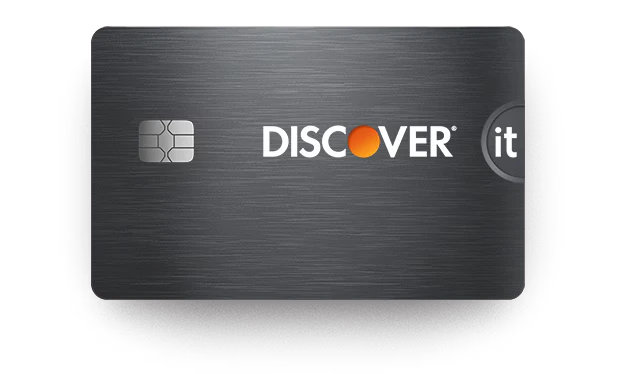
The gold standard for ITIN applicants. Discover explicitly accepts ITIN on their secured card application. The application asks for "SSN or ITIN" — just enter your ITIN. Approval rates for ITIN holders with no US credit history are high because the secured deposit eliminates most of the bank's risk. Discover also reports to all three credit bureaus, which is critical for building history quickly.
- Card: Discover it® Secured Credit Card
- Minimum deposit: $200
- Rewards: 2% cash back at gas stations and restaurants (up to $1,000 combined quarterly), 1% everywhere else — and Discover matches all cash back earned at the end of your first year
- Automatic upgrade: Discover reviews accounts starting at 7 months and typically upgrades to unsecured after 12–18 months of on-time payments
Capital One
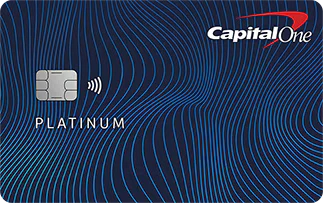
Capital One has ITIN-friendly products and has been one of the most immigrant-accessible issuers for years. Their Platinum Secured card accepts ITIN and has a $0 annual fee.
- Card: Capital One Platinum Secured
- Minimum deposit: $49, $99, or $200 depending on creditworthiness (no US credit history usually means $200)
- Rewards: None (this is a pure credit-builder card)
- Upgrade path: Capital One reviews for unsecured upgrade starting at 6 months
Citi
Citi accepts ITIN for their secured Mastercard. Citi is particularly useful for immigrants with thin files because their application process is often more lenient with limited credit history.
- Card: Citi® Secured Mastercard®
- Minimum deposit: $200
- Rewards: None
- Upgrade path: Citi graduates to unsecured after 18 months of responsible use
Bank of America
Bank of America accepts ITIN and has specific programs designed for immigrants and underbanked communities as part of their Community Homeownership Commitment. Their Customized Cash Rewards Secured card is available to ITIN holders.
- Card: Bank of America® Customized Cash Rewards Secured Credit Card
- Minimum deposit: $200–$5,000
- Rewards: 3% cash back in a category of your choice, 2% at grocery stores and wholesale clubs
Wells Fargo
Wells Fargo accepts ITIN for account opening and for their secured card. Branch-level support for ITIN customers varies by location — call ahead to confirm your local branch is experienced with ITIN applications.
HSBC
HSBC has strong international banking relationships and is comfortable with ITIN customers, particularly those with existing banking relationships in their home country. HSBC's Premier program is especially accessible for immigrants who can demonstrate international banking history.
Credit Unions
Many credit unions are the most flexible ITIN lenders of all. Credit unions are member-owned, community-focused, and are often more willing to work with non-standard ID situations. Specific ITIN-friendly credit unions include:
- Self-Help Federal Credit Union (offices in CA, FL, IL, WI)
- Latino Credit Union (Southeast US)
- Coopera-affiliated credit unions (nationwide network specifically serving Hispanic immigrants)
- Most community credit unions in areas with large immigrant populations
Banks That Generally Do NOT Accept ITIN
Knowing where not to apply saves you from hard credit pulls on a thin file:
| Bank | ITIN Policy | Notes |
|---|---|---|
| Chase | SSN required for credit cards | Chase will open checking accounts with ITIN but requires SSN for credit card applications. Exception: some Chase bankers in high-immigrant branches may exercise discretion. |
| American Express | SSN required for most US cards | Amex requires SSN for virtually all US-issued cards. Exception: the Global Transfer program (see below). |
| US Bank | SSN typically required | Limited ITIN acceptance; best to call before applying. |
| Barclays | SSN required | US Barclays cards require SSN. |
| Some regional banks | Varies | Regional and community banks vary widely — always call the specific branch. |
Important nuance on Chase: Chase will open a checking account with ITIN. Once you have 12+ months of account history with Chase and you obtain an SSN, Chase is one of the best issuers for moving up to premium travel cards. Many immigrants use Discover or Capital One to build credit while banking at Chase, then apply for Chase cards after getting their SSN.
The Nova Credit Option: Your Foreign Credit History Counts
If you're coming from one of these countries, you may be able to skip the secured card stage entirely using your existing foreign credit history:
Countries currently supported by Nova Credit:
- India
- Mexico
- United Kingdom
- Canada
- Australia
- South Korea
- Brazil
- Dominican Republic
- Nigeria
- Kenya
- Philippines
How it works: Nova Credit is a cross-border credit bureau that translates your home-country credit report into a US-equivalent format. Several major issuers — including American Express, JPMorgan Chase (for checking accounts), and a growing list of others — accept Nova Credit reports as an alternative to a US credit history.
Amex's Global Card Transfer program specifically allows holders of Amex cards in supported countries to transfer to a US Amex card without a US credit history or SSN. You apply through amex.com/globaltransfer with your foreign Amex card number.
The key limitation: Nova Credit doesn't replace the need for a taxpayer ID (SSN or ITIN) for the actual card application — it replaces the US credit history requirement. You'll still need an ITIN or SSN to complete the application.
Step-by-Step: Applying for Your First Credit Card with ITIN
Step 1: Gather Your Documents
Before you apply, have the following ready:
- Your ITIN letter from the IRS (the original letter showing your 9-digit ITIN)
- Valid passport or government-issued photo ID
- Proof of US address — utility bill, bank statement, or lease dated within 60 days (a P.O. Box is not sufficient)
- Proof of income — recent pay stubs, bank statements showing regular deposits, or a letter from your employer
- Social Security-sized card or document showing your ITIN (some banks accept a screenshot of your IRS letter, others want the original)
Step 2: Choose Your Bank
For a first ITIN credit card with no US credit history, we recommend this priority order:
- Discover it® Secured — best rewards, best upgrade path, explicitly ITIN-friendly online
- Capital One Platinum Secured — lower deposit options, 6-month upgrade review
- Citi Secured Mastercard — good option if Discover or Capital One declines
- Your existing credit union — if you already bank there, your relationship helps approval odds
Apply to only one card at a time. Each application triggers a hard credit pull. With a thin file, multiple hard pulls in a short period will hurt your score before it even gets started.
Step 3: Complete the Online Application
For Discover, the online application at discover.com takes about 10 minutes. Key fields:
- Name: exactly as it appears on your passport
- Date of birth: as on your passport
- Address: your current US physical address
- SSN/ITIN field: enter your 9-digit ITIN (format: 9XX-XX-XXXX, but enter without dashes in most online forms — check the field format)
- Annual income: include all sources — employment, freelance, investments. Include a spouse's income if you have access to it
- Monthly housing payment: your rent or mortgage amount
Step 4: If Applying at a Branch
Some ITIN applicants prefer to apply in person, particularly at banks where they already have a checking account. Here's what to say and bring:
What to bring:
- IRS ITIN letter (original)
- Passport
- Second form of ID (state ID, foreign national ID)
- Proof of address (utility bill or bank statement)
- Last 2 months of bank statements
What to say: "I'd like to apply for a secured credit card. I have an ITIN — I don't have an SSN. I understand your bank accepts ITIN for credit applications, and I'm ready to make the secured deposit today."
If the branch associate seems uncertain, ask to speak with the branch manager or a personal banker who handles international or immigrant accounts. In branches near large immigrant communities, there is almost always someone experienced with ITIN applications.
Step 5: Make Your Secured Deposit
Once approved, you'll need to fund your secured deposit. This becomes your credit limit.
Deposit strategy:
- The minimum ($200 for most cards) is sufficient for credit-building purposes — you don't need a high limit to build credit
- A $500 deposit gives you a $500 limit, which helps with credit utilization — keeping your balance below 30% of your limit ($150 on a $500 card vs. $60 on a $200 card) is easier and better for your score
- Never deposit more than you can afford to keep locked up for 12–18 months
What ITIN-Friendly Banks Actually Check
When banks don't require an SSN, they rely on different verification criteria:
| What they check | Why it matters |
|---|---|
| Valid government-issued ID (passport preferred) | Proves identity and nationality |
| ITIN or SSN | Satisfies CIP/BSA taxpayer ID requirement |
| US physical address | Confirms you're present in the US and establishes residency |
| Proof of income or employment | Demonstrates ability to repay |
| Bank account statements | Shows financial responsibility and US banking relationship |
| Existing US banking relationship | If you already bank there, it significantly increases approval odds |
| ChexSystems report | Banks check this for negative banking history (bounced checks, overdrafts) — clean ChexSystems is as important as credit history |
Notably absent from this list: US credit history. For secured cards, the deposit mitigates credit risk, so issuers are far less focused on your credit score (or lack thereof).
What Happens After Approval: Credit Bureau Reporting
Once your card is open and you make your first purchase, the bank begins reporting to credit bureaus monthly. Here's the timeline of what to expect:
Months 1–5:
- Your credit file is created (if you didn't already have one)
- You won't have a FICO score yet — FICO requires at least one account open for 6 months
- Focus: make one or two small purchases each month, pay the full balance before the due date
Month 6:
- You become FICO-scoreable. Your initial score will likely be in the 600–650 range — that's completely normal and is not a problem
- Check your score via your card's free credit score tool (Discover provides free FICO scores monthly)
Months 7–12:
- Score typically climbs to 650–690 with consistent on-time payments and low utilization
- Discover may begin its upgrade review process at 7 months
Months 13–18:
- Score typically reaches 680–720 for ITIN holders with clean payment history
- Most secured cards upgrade to unsecured in this window
- You may qualify for a second card — consider adding one more card to diversify your credit mix
Month 24+:
- Many ITIN holders reach 720–750+ at this stage
- You may qualify for travel rewards cards (if you now have an SSN) or mid-tier cash back cards
Common Rejection Reasons and How to Respond
Rejection reason 1: "Unable to verify identity" This typically means the bank couldn't match your ITIN to their system, or your application information didn't match IRS records.
- Action: Call the reconsideration line (every major issuer has one). Explain you have an ITIN, not an SSN. Offer to visit a branch with your IRS ITIN letter. Ask if your application can be manually reviewed.
Rejection reason 2: "Insufficient credit history" For secured cards, this is unusual (the deposit mitigates this), but it can happen.
- Action: Ask the reconsideration line to review your bank account history, employment history, and income. Sometimes providing additional income documentation resolves this.
Rejection reason 3: "Unable to verify address" Your stated address didn't match records.
- Action: Ensure your proof of address is dated within 60 days and shows your exact address as entered on the application.
Rejection reason 4: Negative ChexSystems record If you've had a bank account closed for cause (overdrafts, bounced checks), it may appear in ChexSystems.
- Action: Request your free ChexSystems report at chexsystems.com. Dispute any errors. If there is a legitimate negative record, wait until it ages off (typically 5 years) or consider second-chance bank accounts to rebuild your banking history first.
After a rejection: Wait at least 6 months before reapplying to the same issuer. Meanwhile, try a different ITIN-friendly bank or apply at a credit union, which typically has higher approval rates for non-standard applicants.
Frequently Asked Questions
Q: Can I apply for a credit card online with an ITIN, or do I have to go to a branch? Discover, Capital One, and Citi all accept ITIN applications online. Discover's online application is the smoothest — the SSN/ITIN field is clearly labeled, and the system processes ITIN without requiring branch verification. Bank of America and Wells Fargo may ask you to complete the process in-branch if their system can't verify your ITIN online.
Q: Will applying for a credit card affect my immigration case? No. Applying for and holding a US credit card, bank account, or paying taxes does not affect your immigration status or any pending immigration application. The financial system and immigration enforcement are legally separated. Credit inquiries appear on your credit report but are never shared with USCIS or ICE.
Q: How much of my secured deposit will I get back when I upgrade to unsecured? When your secured card is upgraded to unsecured or you close the account in good standing, 100% of your deposit is returned — typically credited to your account within 2–3 billing cycles. The deposit earns no interest while it's held.
Q: Can I get a second credit card while my first card is still secured? Yes, but wait at least 6 months. Opening too many accounts too quickly (multiple hard pulls in a short period) will temporarily lower your score and may trigger fraud flags. After 6 months of clean payment history, you can consider a second secured card from a different issuer to diversify your credit profile.
Q: I got a secured card 18 months ago but haven't been upgraded. What should I do? Call your issuer and ask directly: "Am I eligible for a credit line increase or upgrade to an unsecured card?" Some issuers do this automatically; others require you to request it. If you're declined for upgrade, ask what specific criteria you need to meet. Common requirements: 12+ consecutive on-time payments, utilization consistently below 30%, no returned payments. If you meet all criteria and are still denied, it may be time to apply for a new unsecured card at a different bank and close the secured card.
The path from ITIN to a 720+ credit score is well-worn. Hundreds of thousands of immigrants from Ukraine, Mexico, India, Nigeria, and dozens of other countries have made this exact journey. The steps are simple: get your ITIN, open one secured card, use it lightly, pay it in full every month, and let time do the rest.
Oleksiy did it in 18 months. You can too.
Related cards: Discover it® Secured · Capital One Platinum Secured · Citi Secured Mastercard
Related guides: What is an ITIN? Complete immigrant guide · Best secured credit cards for immigrants 2026
Get weekly card offer alerts
Sunday digest of elevated bonuses. One email, zero spam.
Cards mentioned in this guide
Related guides
Related news

amex · Jun 25, 2026
Amex Platinum vs Schwab Platinum: the same $895 card, with a cash-out

chase · Jun 10, 2026
Chase Hyatt Transfer Ratio 4:3: What It Means for Sapphire Preferred and Ink Business Preferred

chase · Jun 10, 2026
Chase to Virgin Atlantic: 30% Transfer Bonus — Book Delta Business Class for 18,000 Points

ihg · Jun 10, 2026
IHG Buy Points at 0.5¢ Extended Through June 30 — Best Price for InterContinental Stays