What Is an ITIN? The Complete Credit-Building Guide for Immigrants in the USA
An Individual Taxpayer Identification Number isn't just for taxes — it's your key to US banking, credit cards, and a credit score when you don't have a Social Security Number.
On this page▾

Topic Collection
Part of the New to America Collection
Explore all 37 articles
When Ana García arrived in the United States from Mexico in 2019 on a tourist visa, she had a stable remote job earning in USD. She was paying US taxes on that income. But she couldn't open a bank account, couldn't get a credit card, and couldn't start building the credit history that every American financial milestone requires.
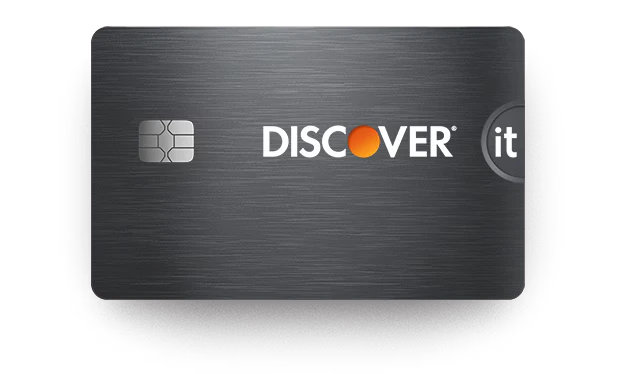
A friend told her about the Individual Taxpayer Identification Number — the ITIN. Six weeks after filing Form W-7, Ana had her number. Three months later, she had her first Discover it® Secured Card. Two years after that, her credit score was 742, and she was approved for the Chase Sapphire Preferred.
Ana's story isn't unusual. Millions of immigrants, visa holders, and non-resident aliens in the US have used an ITIN to build real financial lives — mortgages, car loans, rewards credit cards, the whole stack. This guide tells you exactly how.
What Is an ITIN?
An Individual Taxpayer Identification Number (ITIN) is a nine-digit tax processing number issued by the Internal Revenue Service (IRS) to individuals who are required to have a US taxpayer identification number but are not eligible to obtain a Social Security Number (SSN).
The format is always: 9XX-XX-XXXX — it always starts with the digit 9, which immediately distinguishes it from an SSN.
The IRS created ITINs in 1996 specifically to ensure that people earning income in the US — regardless of immigration status — could file taxes and comply with US tax law. The ITIN has no other purpose at the IRS level. It does not authorize you to work in the US, does not make you eligible for Social Security benefits, and does not change your immigration status in any way.
But here's what makes it powerful: US banks and credit bureaus accept ITINs. That means an ITIN is your gateway into the US financial system.
Who Needs an ITIN?
You may need an ITIN if you are:
- A non-resident alien required to file a US tax return (for example, if you earn rental income from US property or have US investment income)
- A resident alien (Green Card holder or substantial presence test) who is not eligible for an SSN
- An undocumented immigrant who earns income in the US and wishes to comply with tax law
- A visa holder earning US-sourced income — including H-1B, L-1, F-1, J-1, O-1, TN, and other visa categories whose family members (spouses, dependents) don't qualify for SSNs
- An international student on an F-1 or J-1 visa who has US-sourced scholarship or fellowship income that isn't covered by your visa's work authorization
- A DACA recipient (Deferred Action for Childhood Arrivals) who needs a tax ID but is not eligible for an SSN
- The spouse or dependent of a US citizen or resident who is not personally eligible for an SSN
One important clarification: if you are authorized to work in the US and eligible for an SSN, you must apply for an SSN instead of an ITIN. The IRS will reject an ITIN application if you're SSN-eligible.
ITIN vs. SSN: A Clear Comparison
People often confuse the two. Here is exactly how they differ:
| Feature | ITIN | SSN |
|---|---|---|
| Issuing agency | IRS (Internal Revenue Service) | SSA (Social Security Administration) |
| Who qualifies | Non-residents, resident aliens without SSN eligibility, undocumented immigrants | US citizens, permanent residents, certain authorized workers |
| Authorizes work in the US? | No | Yes |
| Grants immigration status? | No | No (but signals authorized status) |
| Accepted by credit bureaus | Yes — Equifax, Experian, TransUnion all track ITIN holders | Yes |
| Accepted by major banks | Yes — Discover, Capital One, Citi, Bank of America, Wells Fargo, many credit unions | Yes |
| Can build US credit history? | Yes | Yes |
| Access to Social Security benefits? | No | Yes (with sufficient work credits) |
| Format | 9XX-XX-XXXX (always starts with 9) | XXX-XX-XXXX (never starts with 9) |
| Expires? | Yes — after 3+ years of non-use, or based on middle digits | No expiration |
The bottom line: for the purpose of opening bank accounts and building credit, an ITIN functions almost identically to an SSN. The limitations are in areas like work authorization, Social Security benefits, and some government programs.
How to Apply for an ITIN: Step-by-Step
The application is filed using IRS Form W-7 (Application for IRS Individual Taxpayer Identification Number). Here's everything you need to know.
What You Need to Prepare
The form itself:
- IRS Form W-7, available free at irs.gov/w7
- Complete it carefully — errors are the #1 cause of delays
Identity and foreign status documents (original or certified copies only): You must submit documents that prove both your identity and your foreign status. The IRS accepts 13 types of documents, but the most common are:
- Passport (the only document that proves both identity and foreign status on its own)
- Foreign national ID card + birth certificate
- US visa + foreign national ID
Important: the IRS does not accept photocopies unless they are certified by the issuing agency. This is why most applicants submit their original passport.
A completed tax return (in most cases): For most applicants, a federal tax return must be attached to the W-7. The exception is if you qualify for one of the specific "exception" categories (such as a dependent of a US citizen, or someone with third-party withholding on US-source income like bank interest).
Three Ways to Submit
Option 1: Mail to the IRS Send your completed W-7, original supporting documents, and tax return (if required) to:
Internal Revenue Service ITIN Operation P.O. Box 149342 Austin, TX 78714-9342
The IRS will return your original documents within 60 days. Use certified mail with tracking — you're sending your passport.
Option 2: IRS Taxpayer Assistance Center (TAC) You can visit an IRS TAC in person with your documents and they will authenticate them on the spot, meaning you don't have to mail originals. Make an appointment at irs.gov/help/tac. Not all TACs offer ITIN processing — confirm before you go.
Option 3: Certifying Acceptance Agent (CAA) This is the method Ana García used, and it's the most convenient for most people. A CAA is an individual or business authorized by the IRS to review your documents, certify copies, and submit your W-7 on your behalf. You never mail your passport — the CAA certifies it. CAAs include:
- H&R Block locations (many US offices)
- Certain CPAs and tax attorneys
- Non-profit organizations serving immigrant communities
- Some banks (notably ITIN-specialist programs at community banks)
The IRS maintains a searchable CAA directory at irs.gov/individuals/international-taxpayers/acceptance-agent-program.
Timeline
- Standard processing: 6 to 11 weeks
- During peak tax season (January–April): can stretch to 14 weeks
- CAA applications are often faster because there are no documentation errors
Once approved, the IRS mails you a letter with your ITIN. Keep this letter in a safe place — it's your official record.
Why US Banks Accept ITIN
Many immigrants are surprised that major banks accept ITIN at all. The legal basis is clear:
Under the Bank Secrecy Act (BSA) and the Customer Identification Program (CIP) rules issued by the Financial Crimes Enforcement Network (FinCEN), banks are required to verify the identity of customers when opening accounts. The CIP rules explicitly state that a taxpayer identification number — which includes both SSNs and ITINs — satisfies this requirement.
The FDIC and the CFPB have both published guidance encouraging banks to serve unbanked immigrants. Many banks have created specific ITIN account programs as part of their Community Reinvestment Act (CRA) compliance — serving the unbanked immigrant community is a CRA credit.
In practice: when you walk into a Discover-accepting bank or apply online, the application form usually says "SSN or ITIN" in the taxpayer identification field. You enter your ITIN and proceed normally.
Which Credit Bureaus Track ITIN Holders?
All three major US credit bureaus — Equifax, Experian, and TransUnion — track credit history for ITIN holders. When you open a credit card, auto loan, or other credit account using your ITIN, the lender reports that account to the bureaus (or some of them) under your ITIN.
This means your credit history builds exactly the same way as it does for SSN holders. FICO scores and VantageScores apply the same scoring models regardless of whether the underlying tax ID is an SSN or ITIN.
One practical note: because your credit file is tied to your ITIN rather than an SSN, you may initially have a thin file (fewer accounts, shorter history). This is normal and is not a disadvantage specific to ITIN — any new US resident starts with a thin file. The solution is consistent on-time payment on a secured card, which is exactly the path Ana followed.
Common Mistakes That Delay ITIN Applications
The IRS rejects a significant number of W-7 applications due to preventable errors. The most common:
-
Submitting uncertified photocopies of documents. The IRS requires originals or certified copies. A regular photocopy — even a notarized one — is not accepted unless notarization is from the issuing agency.
-
Missing or incorrect tax return. Most applicants must include a federal tax return with their W-7. Forgetting this, or attaching the wrong year's return, causes automatic rejection.
-
Name mismatch. The name on your W-7 must match the name on your supporting documents exactly — middle names, hyphens, and accent marks included.
-
Wrong "reason" box checked. The W-7 has boxes a through h explaining why you need an ITIN. Checking the wrong reason category (or leaving it blank) triggers rejection.
-
Expired documents. Passports and national IDs must be valid (not expired) at the time of submission.
-
No US mailing address. The IRS mails your ITIN letter to a US address. P.O. boxes are not accepted — you need a physical US address.
ITIN Expiration Rules
This is something many ITIN holders don't know until it causes a problem:
ITINs expire under two scenarios:
-
Non-use: An ITIN not used on a federal tax return for 3 consecutive years expires automatically. If you go 2020, 2021, and 2022 without filing a US return with your ITIN, your ITIN expires as of December 31 of that third year.
-
Middle digit expiration schedule: The IRS has implemented a rolling expiration for ITINs based on the middle two digits. The following middle digit groups have already expired or are subject to renewal:
- Middle digits 70–88: expired in various years 2016–2020
- Middle digits 90–99: expired or expiring on rolling schedule
- All ITINs issued before 2013 with middle digits in these ranges require renewal
What expiration means in practice: An expired ITIN can still be used on a tax return — the IRS will process the return but may disallow certain credits (like the Child Tax Credit and Earned Income Credit) until the ITIN is renewed. For banking purposes, banks that have your ITIN on file typically continue to service your account, but you may face issues when applying for new credit.
To renew: File Form W-7 again, checking the "Renewal" box. You don't need to attach a tax return for a renewal — just supporting documents.
Frequently Asked Questions
Q: Can I use an ITIN to open a bank account? Yes. Major banks including Bank of America, Chase, Wells Fargo, Citibank, and many credit unions accept ITIN for account opening. Some banks have dedicated programs for ITIN customers. When you open an account, bring your ITIN letter from the IRS, a valid passport or government ID, and proof of address (utility bill, lease).
Q: Will getting an ITIN affect my immigration status or my chances of getting a green card? No. The IRS is legally prohibited from sharing taxpayer information with immigration enforcement agencies (with very limited national security exceptions). Getting an ITIN and filing taxes does not affect your immigration case. In fact, many immigration attorneys recommend filing taxes with an ITIN as it demonstrates good moral character, which is a positive factor in many immigration proceedings.
Q: How long does it take to build a credit score after getting my ITIN? You can have a FICO score after as little as 6 months of credit history — specifically, at least one account open for 6 months and reported to the bureaus within the last 6 months. With a secured card opened immediately after getting your ITIN, you could have a scoreable file within 6-7 months. Most ITIN holders with responsible use see scores in the 680–720 range within 18-24 months.
Q: If I eventually get an SSN, do I lose my credit history built under my ITIN? No — but you need to take action. When you receive an SSN, notify your bank and credit card issuers. They will update your file. The credit bureaus have processes to merge your ITIN-based credit history with your new SSN file. You must request this explicitly. Contact each bureau directly if your history doesn't transfer automatically.
Q: Can I get a mortgage with an ITIN? Yes. Several lenders offer ITIN mortgages — also called non-QM (non-qualified mortgage) loans. Lenders include Bank of America's Community Homeownership Commitment program, Citi, and many community banks and credit unions. Rates are typically 0.5–1.5% higher than conventional loans, and down payment requirements are higher (often 15–20%). But it is absolutely possible to buy a home with an ITIN and solid credit history.
The ITIN is not a workaround or a loophole. It is a legitimate IRS-issued taxpayer identification number that opens real doors in the US financial system. Millions of immigrants — from Mexico, Ukraine, India, Brazil, and dozens of other countries — have used it to build credit scores, buy homes, and achieve real financial security in America.
The first step is filing Form W-7. The rest follows.
Related cards: Discover it® Secured · Capital One Platinum Secured
Related guides: How to get a credit card without an SSN using only your ITIN · Best secured credit cards for immigrants 2026
Get weekly card offer alerts
Sunday digest of elevated bonuses. One email, zero spam.
Cards mentioned in this guide

Related guides
Related news

amex · Jun 25, 2026
Amex Platinum vs Schwab Platinum: the same $895 card, with a cash-out

chase · Jun 10, 2026
Chase Hyatt Transfer Ratio 4:3: What It Means for Sapphire Preferred and Ink Business Preferred

chase · Jun 10, 2026
Chase to Virgin Atlantic: 30% Transfer Bonus — Book Delta Business Class for 18,000 Points

ihg · Jun 10, 2026
IHG Buy Points at 0.5¢ Extended Through June 30 — Best Price for InterContinental Stays