How to Build US Credit as Immigrant: The 18-Month Roadmap
A new immigrant with zero US credit history can reach a 700+ FICO score in 12-14 months by opening a US bank account, getting an SSN or ITIN, and applying for one no-history-required card (Discover it Secured or, for renters, the Bilt Mastercard), then paying in full every month. If you held credit in the UK or Canada, Nova Credit can translate it on day one — but in 2026 the only live Nova card path runs through Chase (Freedom Unlimited or Freedom Flex); the Amex x Nova partnership ended in 2025. Do not apply for Chase Sapphire Preferred or Amex Gold on day one — both will deny without US history.
On this page▾

Topic Collection
Part of the New to America Collection
Explore all 37 articles
Quick answer
A new immigrant with zero US credit history can reach a 700+ FICO score in 12-14 months using a three-step sequence:
- Month 0: open a US bank account, apply for an SSN or ITIN, and apply for ONE no-credit-history-required card — typically the Discover it Secured Credit Card or the Bilt Mastercard if you rent.
- Months 1-6: use the card monthly, pay statements in full, and let the credit file thicken. Two FICO scores will start reporting around month 4-6.
- Months 6-18: add a second card (cashback or starter travel), keep utilization under 10%, and qualify for mainstream rewards cards by month 18.
If you held credit in the UK or Canada, Nova Credit can translate that foreign history into a US-approvable file on day one — but in 2026 the only live Nova credit-card path runs through Chase (the Chase Freedom Unlimited or Chase Freedom Flex), and only for UK and Canada credit history. The American Express x Nova Credit partnership ended in 2025, so Amex no longer reads foreign credit via Nova.
The biggest mistake new immigrants make: applying for Chase Sapphire Preferred or Amex Gold on day one because YouTube creators recommended them. Both will deny without a US credit history.
TL;DR: An immigrant with zero US credit history can reach a 700+ FICO score in 12-14 months using the secured-card-plus-on-time-payments path. As of 2026, the only live Nova Credit credit-card path runs through Chase (the Chase Freedom Unlimited or Chase Freedom Flex) and only for UK and Canada credit history. The American Express x Nova Credit partnership ended in 2025. Someone who already holds an Amex card issued in their home country can instead use Amex Global Transfer (a separate program, not Nova Credit) to get a US Amex. Personal credit scores in the US use the FICO 8 model on a 300-850 scale, with payment history (35%) and credit utilization (30%) the two largest factors.
Why this matters
Building US credit is the single highest-leverage thing a new immigrant can do in their first two years. A 750 FICO score versus a 620 means:
- Mortgage: lower rate on a $400K home saves $80,000-$120,000 over a 30-year fixed
- Auto loan: prime rate of 6% versus subprime 14% saves $4,000-$8,000 on a typical car
- Apartment rental: approval without a co-signer or 3-month deposit
- Phone, utilities, business accounts: approved without prepayment or higher deposits
- Credit cards: access to 60-100K+ point welcome bonuses worth $1,200-$2,000 in travel
This guide walks through the universal 18-month sequence that works for every immigrant regardless of country of origin, plus the specific Nova Credit shortcut for the UK and Canada, whose credit history can be translated to the US via Nova Credit's Chase path.
If you want country-specific notes (remittance corridors, transfer partners that matter for travel back home, language preferences), see the per-country playbooks: Ukraine, Mexico, India, China, Brazil, Philippines, Vietnam, or Russia. This guide is the universal mechanic; the country pages are the local context.
What is a US credit score and how does it work?
A US credit score is a 3-digit number (most commonly on the 300-850 FICO 8 scale) that lenders use to predict the probability you will repay a debt. Three private companies — Equifax, Experian, and TransUnion — collect data on your borrowing, and FICO and VantageScore are the two main scoring models that turn that data into a score.
The system is unique to a few countries (US, Canada, UK). Most of the world uses simpler default registries or no scoring at all. This is why your home country's "good payer" reputation does not transfer automatically.
What lives in your US credit file
Your credit file is built from accounts that furnish data to the bureaus. Not every account does:
- Always reports: US credit cards, US auto loans, US mortgages, US student loans, federal/state tax debts
- Sometimes reports: rent (only via rent-reporting services like Bilt, RentTrack, or Esusu), utility payments (only if delinquent), buy-now-pay-later (only at some lenders), phone bills (sometimes Verizon/AT&T, on delinquency)
- Never reports: foreign credit cards, foreign auto loans, foreign mortgages, foreign loans, your home country's credit score
The 5 FICO factors
FICO 8 uses 5 inputs, weighted as follows:
| Factor | Weight | What it means |
|---|---|---|
| Payment history | 35% | Did you pay on time? Any 30/60/90-day late marks crush the score. |
| Credit utilization | 30% | Total credit-card balance ÷ total credit limit. Keep under 10%. |
| Length of credit history | 15% | Age of oldest account + average age of all accounts. |
| Credit mix | 10% | Variety: credit cards, installment loans, mortgage. |
| New credit (inquiries + new accounts) | 10% | Each hard pull stings 3-5 points; effect fades after 12 months. |
The first two factors are 65% of your score — focus everything in the first 12 months on (a) never missing a payment and (b) keeping utilization low.
SSN vs ITIN
To open most US credit accounts, you need either:
- SSN (Social Security Number): issued to citizens, permanent residents, and certain visa holders (H1B, L1, F1 with work authorization). Apply at the Social Security Administration with your visa, passport, and a Form SS-5.
- ITIN (Individual Taxpayer Identification Number): for residents without SSN eligibility. Apply via IRS Form W-7. The ITIN-friendly card issuers in 2026 are: Capital One, American Express, Bank of America, Citi, and the fintech TomoCredit. (Amex accepts ITIN on direct applications.) Chase and Discover usually require SSN, though Discover has approved ITIN cases.
If you only have an ITIN, your starting card pool is smaller but still includes excellent options: the Capital One Quicksilver and the Bilt Mastercard accept ITIN. For a full breakdown of which issuers accept ITIN and what each ID unlocks, see the SSN vs. ITIN guide for newcomers.
The foreign credit history translation problem
Most immigrants arrive with strong credit history in their home country and assume it will at least partially count in the US. It does not. The US bureaus do not have data-sharing agreements with foreign credit reporting agencies. Your CIBIL score (India), Buró de Crédito file (Mexico), Equifax UK file, Schufa file (Germany), or Korea Credit Bureau file is invisible to US lenders.
The exception is Nova Credit, a credit-history translation service. As of 2026, the only live Nova Credit credit-card path runs through Chase — the Chase Freedom Unlimited or Chase Freedom Flex — and only for credit history from the UK and Canada:
- UK (Experian UK)
- Canada (Equifax Canada, TransUnion Canada)
Chase may add more countries later; always verify the current list at novacredit.com before relying on it. Credit history from India (CIBIL), Mexico, Brazil, Germany, Australia, South Korea, the Philippines, Ukraine, and everywhere else has no Nova card shortcut in 2026 — those newcomers follow the universal secured-card sequence below (or use Amex Global Transfer if they already hold a home-country Amex).
When you apply for a participating Chase card and grant Nova Credit permission, Nova pulls your UK or Canada report, translates it to a US-equivalent file, and forwards it to Chase. Chase then makes a credit decision as if you had US history.
Which cards use the Nova Credit path in 2026:
The only live Nova Credit credit-card path is Chase, and only for UK and Canada credit history:
- Chase Freedom Unlimited — Chase reads your translated UK or Canada file via Nova Credit.
- Chase Freedom Flex — same Nova Credit path, rotating-category cashback card.
The American Express x Nova Credit partnership ended in 2025 — Amex no longer reads foreign credit via Nova. Immigrants who already hold an Amex card issued in their home country can instead use Amex Global Transfer (a separate Amex program, not Nova Credit) to open a US Amex without US credit history. TomoCredit and SoFi remain fine to consider on their own cashflow/income underwriting, but neither is a foreign-credit-translation path. Chase may add more Nova countries later; verify at novacredit.com before applying.
What Nova Credit does NOT do:
- It does not create a US credit file. It only translates your home file for one approval decision. After approval, you still need to build your US file from scratch via on-time payments on the new card.
- It does not work for credit history outside the UK and Canada in 2026.
- It no longer works with American Express — the Amex x Nova partnership ended in 2025.
- It does not transfer your foreign score number directly — it translates the underlying data.
- It is one-time-use per application — not a permanent integration.
Caveat: Nova Credit's country list and card partners change over time. The 2026 path above is current as of June 2026; verify the current participating countries and cards at novacredit.com before relying on this path for a specific application.
The practical implication: if your credit history is from the UK or Canada, you can apply for the Chase Freedom Unlimited or Chase Freedom Flex via Nova Credit on day one instead of starting with a secured card. Newcomers from those countries and Australia can follow our tailored building US credit for newcomers from Canada, the UK, and Australia playbook, which spells out exactly when the Nova path applies to each. If you already hold an Amex card issued in your home country, you can use Amex Global Transfer to open a US Amex without US credit history. Everyone else — India, Mexico, Brazil, Germany, Australia, South Korea, the Philippines, Ukraine, and all other countries — follows the universal 18-month sequence below.
The universal 18-month build sequence
This sequence works for any immigrant in any visa status with any (or no) home-country credit history. The cards listed are starter recommendations — the actual approval depends on your specific situation, but the sequence is universal.
Quote-worthy: "The 18-month immigrant credit-building sequence works regardless of country of origin because it leverages two universal FICO mechanics — payment history (35% of score) and credit utilization (30%) — that account for two-thirds of your score. Everything else is secondary."
| Month | Action | Why |
|---|---|---|
| 0 (arrival) | Open a checking + savings account at a national bank (Chase, BofA, Citi) | Establishes a banking relationship; some banks count this when underwriting cards |
| 0 | Apply for SSN (if eligible) or ITIN | Required for almost all card applications |
| 0-1 | Apply for ONE secured or no-credit-history card | Starts the credit file |
| 1-2 | Activate card, set autopay for full statement balance | Eliminates the #1 cause of credit damage (missed payments) |
| 4-6 | First FICO score appears in your file | Usually around 700 if utilization is low and no missed payments |
| 6 | Apply for SECOND card (unsecured, cashback) | Adds credit limit, lowers utilization, builds credit mix |
| 6-12 | Use both cards, pay in full monthly, keep utilization under 10% | Maximizes the 30% utilization factor of FICO |
| 12 | Score should be 720-740 | Qualifies for most mid-tier travel cards |
| 12 | Apply for first travel card (Capital One Venture or Chase Freedom Unlimited) | Starts the points-earning chapter |
| 18 | Apply for premium travel card if desired (Chase Sapphire Preferred, Amex Gold) | Score should be 740+ at this point |
| 24 | Graduate or product-change starter cards | Keep oldest cards open for credit history length |
For a week-by-week checklist of every first-90-day step — banking, SSN/ITIN, card application, autopay setup — see the newcomer first 90-day financial checklist.
Month 0-1: the first-card decision
This is the single most important decision in the sequence. The card you pick now becomes your oldest account, which feeds the "length of credit history" factor for the next 30 years.
Best first-card options (any immigrant):
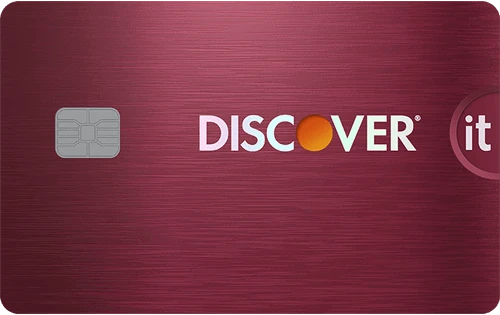
- Discover it Secured Credit Card — $200 minimum security deposit, refunded after 7 months of on-time payments. Reports to all 3 bureaus. Discover usually requires SSN.
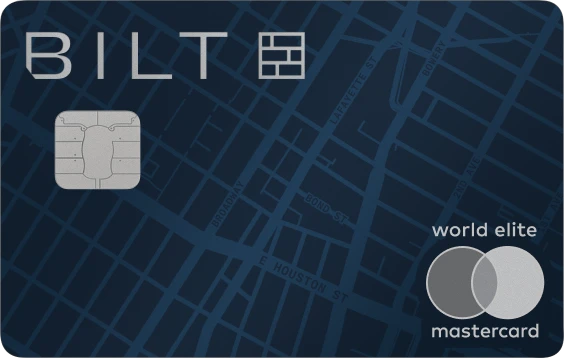
- Bilt Mastercard — unique because it earns rewards on RENT (every immigrant pays rent). No annual fee. Accepts ITIN. Bilt also reports rent payments to the bureaus, which thickens the file faster.
- Capital One Quicksilver — unsecured, accepts ITIN. Easier approval than premium cards. 1.5% cashback on everything. Capital One is the most immigrant-friendly mainstream issuer.
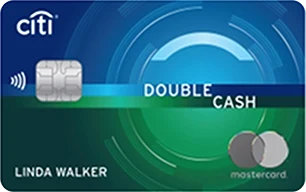
- Citi Double Cash — unsecured, 2% cashback, accepts ITIN. Stronger requirement than Quicksilver; only apply if you have at least a thin file.
- Chase Freedom Unlimited — unsecured, 1.5% cashback + bonus categories. Chase usually requires SSN and at least a thin US file. Best for immigrants who already have some US history (employer-sponsored bank relationship, authorized user history, etc).
Not sure whether to open a secured or unsecured card first? The secured vs. unsecured card comparison covers the tradeoffs. For the full step-by-step application walkthrough, see how to get your first US credit card with no credit history.
Special starter paths:
- UK or Canada credit history: apply for the Chase Freedom Unlimited or Chase Freedom Flex directly via Nova Credit. (If you already hold a home-country Amex, Amex Global Transfer is an alternative.) Skip ahead 12 months in the sequence.
- No SSN/ITIN yet: apply for TomoCredit or a Capital One secured card (Capital One Platinum Secured or Quicksilver Secured) — these underwrite on cashflow or a deposit and do not all require SSN. Limited rewards but starts the file.
- You rent and pay $1,500+/month: Bilt Mastercard is the obvious pick — you turn already-spent rent into points.
Month 1-6: the patience phase
Nothing dramatic happens here. Use the card for 1-3 small purchases per month. Pay the statement balance in full before the due date. Do NOT pay early (paying after the statement closes builds reporting; paying before reduces reported utilization but also reduces the "active use" signal). Aim to have the statement close with utilization between 1% and 9%.
Common-period mistakes that wreck the score:
- Charging up to the limit and paying in full — bureaus only see the statement-close balance, so a 90% statement balance reports 90% utilization even if you pay it off
- Setting autopay for the minimum (not the full statement balance) — accrues interest at 22-29% APR
- Closing the card after 6 months "because you got a better one" — destroys the length-of-history factor for the next 30 years
Month 6: the second card
At month 6, you have a thin but clean file. Now add a second card to:
- Triple your total credit limit (utilization math improves dramatically)
- Add credit mix (different issuer, different bureau coverage)
- Start earning real rewards (move beyond the secured-card cashback)
Best second-card picks vary by what you got first:
- If first card was Discover Secured → add Capital One Quicksilver (unsecured, simple)
- If first card was Bilt Blue → add Chase Freedom Unlimited (UR ecosystem, 1.5% everywhere)
- If first card was Quicksilver → add Discover it Cash Back (rotating 5% categories)
- If first card was via the Chase Nova path (UK/Canada) or Amex Global Transfer → add Chase Sapphire Preferred at month 6 (you already have strong file)
Month 12: the first mainstream travel card
By month 12 with no missed payments and utilization under 10%, your FICO is typically 720-740. Most mid-tier travel cards approve at 700+. The exact pick depends on goals:
- Travel back to home country regularly: Capital One Venture — 2x miles everywhere, simple redemptions
- Want premium travel rewards path: Chase Sapphire Preferred — $95 AF, 60K UR welcome bonus, transfer to Hyatt/United/Southwest
- High dining + grocery spend: Amex Gold — 4x at restaurants and US groceries, transfer to airlines/hotels
For the full Sapphire Preferred vs Sapphire Reserve decision, see the Chase Sapphire Trifecta guide or the direct Chase Sapphire Preferred vs Chase Sapphire Reserve breakdown.
Month 18-24: the graduation chapter
At month 18, your file is thick enough for premium cards (Amex Platinum, Chase Sapphire Reserve, Capital One Venture X). But be aware:
- Chase 5/24: Chase declines applicants with 5+ new cards in 24 months. Plan your application order — see the Chase 5/24 workaround strategy for the sequencing.
- Amex once-per-lifetime: Amex's OPL rule means you only get the welcome bonus once per card family — ever. Burning a 90K Amex Gold SUB on a new card with a low limit is wasteful. See Amex once-per-lifetime rule explained.
The 5 cards that approve new immigrants
| Card | Annual Fee | Requires SSN? | Approves ITIN? | Min credit score | Welcome bonus |
|---|---|---|---|---|---|
| Discover it Cash Back | $0 | Usually yes (some ITIN approvals) | Case-by-case | None for secured | Cashback match Year 1 |
| Bilt Mastercard | $0 | No (ITIN accepted) | Yes | None | 1x Bilt Day bonus monthly |
| Capital One Quicksilver | $0 | No (ITIN accepted) | Yes | 580+ | $200 cash after $500 spend |
| Citi Double Cash | $0 | No (ITIN accepted) | Yes | 670+ | $200 cash after $1.5K spend |
| Chase Freedom Unlimited | $0 | Yes (SSN required) | No | 670+ | $200 cash + 5% gas/grocery Y1 |
Bilt Mastercard — best for renters
Bilt is the only major card that rewards rent payments without fees. Every immigrant pays rent. The math: paying $1,800/month rent on Bilt = 21,600 Bilt points/year, transferable to Hyatt at 1:1 — worth $400-600/year in award nights at zero extra spend. Bilt accepts ITIN, requires no credit history, and reports rent payments to all 3 bureaus (thickens your file faster than any other card).
Capital One Quicksilver — best for mainstream credit-building
Quicksilver is the most immigrant-friendly mainstream card. Capital One approves ITIN, approves thin-file applicants, and has a pre-qualification tool that shows offers without a hard pull. After 6 months of on-time payments, Capital One often auto-upgrades to the Venture (the travel-card version).
Discover it Cash Back — best for credit history
Discover reports to all 3 bureaus, offers an unsecured card after 7 months of on-time payments on the secured version, and doubles all cashback earned in Year 1 (Cashback Match). The secured version requires a $200-2500 deposit, refunded as the card converts to unsecured.
Citi Double Cash — best for utility credit
Citi Double Cash earns a flat 2% (1% when you spend, 1% when you pay). After 12 months of on-time payments, Citi often auto-upgrades to higher-tier cards. Accepts ITIN.
Chase Freedom Unlimited — best for points ecosystem entry
Chase Freedom Unlimited earns 1.5% on everything plus 5% on gas + groceries in Year 1. Requires SSN and at least a thin file (usually 6+ months of US credit). The reason to bother: Chase Freedom Unlimited earns Ultimate Rewards that transfer to Hyatt, United, Southwest — see Chase Ultimate Rewards transfer partners for the value math.
Case study #1: Sofia from Mexico — 720 FICO in 14 months
Background: Sofia, 28, arrived in Houston in January 2025 on a TN visa to work as a software engineer. Had a strong Buró de Crédito file in Mexico but did not use Nova Credit (her employer-paid relocation agent steered her to the traditional path).
Month 0: Opened Bank of America checking. Applied for SSN with TN visa documents. SSN issued in 14 days.
Month 1: Applied for Discover it Secured with $500 deposit. Approved same day.
Months 1-6: Spent $200-400/month on the Discover card. Set autopay for the full statement balance. Never missed a payment.
Month 5: First FICO score appeared — 698.
Month 7: Discover converted the secured card to unsecured and refunded the $500 deposit. Sofia kept the card open (preserves credit history length).
Month 7: Applied for Capital One Quicksilver. Approved with $3,000 limit.
Months 7-14: Used both cards, kept utilization under 5%, autopay on full statement.
Month 14: FICO score 720. Applied for Chase Sapphire Preferred. Approved with $8,000 limit, earned the 60K UR welcome bonus.
Why this worked: Sofia did exactly two things well — never missed a payment, kept utilization low. The Buró de Crédito file in Mexico was irrelevant; the US sequence was the same as for someone with no home-country credit at all.
Note: Mexico is not a Nova Credit card country, so Sofia had no Nova shortcut. She could only have skipped ahead if she already held a Mexican Amex (via Amex Global Transfer); she did not, so the universal secured-card path was the correct call.
Case study #2: Raj from India — 740 FICO in 8 months (Amex Global Transfer path)
Background: Raj, 32, arrived in San Francisco in March 2025 on an L1 visa from his Indian employer. Had a CIBIL score of 780 (top tier) with 8 years of credit-card and home-loan history in India.
Month 0: Opened Wells Fargo checking. Applied for SSN.
Month 0: Raj had held an Amex card in India for years, so he used Amex Global Transfer (not Nova Credit) to apply for the US Amex Gold. Approved with $25,000 limit and earned the 90K MR welcome bonus.
Month 1-3: Used Amex Gold for all spending (dining, groceries, monthly subscriptions). Paid statement balance in full each month.
Month 4: Applied for Capital One Venture. Approved with $15,000 limit, earned 75K mile welcome bonus.
Month 8: FICO score 740. Applied for Chase Sapphire Preferred. Approved.
Why this worked: Because Raj already held an Amex card in India, Amex Global Transfer let him open a US Amex without US credit history — no Nova Credit involved (India is not a Nova card country). Amex recognized his existing global relationship and 8-year track record of on-time payments and approved immediately. After that, the US file built normally from the Amex Gold's monthly reporting.
Notes:
- Raj earned 165K+ points in 8 months (90K MR + 75K miles), worth $2,500-3,500 in travel.
- He could have applied for the Sapphire Preferred at month 6 instead of 8 — the 8-month wait was conservative.
- Chase 5/24 will become relevant by month 24 (he is at 2/24 currently). He plans to slow application velocity after his next Chase card.
Case study #3: Bohdan from Ukraine — 700 FICO in 12 months (Bilt-led path)
Background: Bohdan, 41, arrived in New York City in February 2025 on humanitarian parole. Ukraine has no Nova Credit card path, so he followed the universal-sequence Bilt path. Renting a $2,400/month apartment in Queens. Newcomers arriving from Ukraine can follow our dedicated building US credit for newcomers from Ukraine playbook, which adds parole-status and remittance context on top of this universal sequence.
Month 0: Opened Chase checking (cash bonus offer at the time). Applied for ITIN with passport + Form W-7 (SSN not available due to parole status).
Month 1: Applied for the Bilt Mastercard. Approved with $1,500 limit (low limit reflects thin file; that's normal).
Months 1-6: Paid rent through Bilt every month ($2,400 charged, $2,400 paid by statement close). Earned 28,800 Bilt points in 6 months. Used Bilt for occasional small purchases too.
Month 5: First FICO appeared — 710. The rent reporting (which Bilt does automatically to all 3 bureaus) thickened his file faster than the typical secured-card path.
Month 7: Applied for the Capital One Quicksilver. Approved with $3,500 limit.
Months 7-12: Continued Bilt for rent, used Quicksilver for groceries and gas, kept overall utilization under 5%.
Month 12: FICO score 700. He transferred his 60K accumulated Bilt points (now worth $1,000+ at Hyatt) to Hyatt for award nights in Krakow when visiting family.
Why this worked: Bilt is the only major card that turns rent into rewards AND reports rent to the bureaus. For a renter from a country with no Nova Credit card path — like Ukraine — this remains the fastest legal path to building a US file.
The fastest lever most people skip: being added as an authorized user
Of everything in this guide, one step moves a thin file faster than any other and costs nothing on the right card: being added as an authorized user on an established account belonging to someone who trusts you.
The account generally reports to your personal credit file including its age and payment history, which means you inherit years of history you did not have. Three conditions decide whether it helps:
- The account must have a clean payment record. A card the primary has paid late is a liability transferred to you, not a gift.
- The card should carry no authorized user fee. Mid-tier and no-fee cards typically charge nothing, while premium cards can charge as much as a mid-tier card's whole annual fee.
- You need your own account eventually. An authorized user card builds file depth but not your own borrowing record, so open a secured or entry card in parallel rather than treating this as the whole plan.
Removal is immediate and can drop the account from your file, so if you are relying on it, open your own card before that happens.
8 common mistakes that wreck the build
Mistake #1: applying for Chase Sapphire Preferred on day one
The Sapphire Preferred is the most-recommended starter travel card on YouTube. It is also the wrong card for a new immigrant. Chase declines applicants with no US credit history almost universally. The denial creates a hard inquiry that hurts the file you're trying to build.
Mistake #2: closing the secured card after it converts
When the secured card converts to unsecured, you get your deposit back. The temptation: close the card and "move on." Don't. Closing the card destroys 30 years of length-of-history value. Keep the card open; downgrade to a no-AF version if needed.
Mistake #3: maxing out utilization "because you'll pay it off"
The bureaus see your statement-close balance, not your daily balance. If you charge $1,800 on a $2,000 limit card and pay it off the day before the due date, the bureaus already reported 90% utilization. Keep statement-close balances under 10% of the limit.
Mistake #4: ignoring the Nova Credit (Chase) shortcut when you qualify
Only the UK and Canada have a live Nova Credit card shortcut in 2026, via the Chase Freedom Unlimited or Chase Freedom Flex. If your credit history is from the UK or Canada, always at least check that pre-qualification — if it works, you skip 12 months of the build. Immigrants from other countries who already hold a home-country Amex should instead check Amex Global Transfer for a US Amex.
Mistake #5: applying for 4 cards in 90 days
Immigrants sometimes panic and apply for 4-5 cards in a 90-day burst. This generates 4-5 hard inquiries (each -3-5 points), which on a thin file can drop your score by 15-25 points. Plus most issuers (Chase, Amex) have velocity rules — too many recent applications triggers automatic denial. Pace at 1 new card every 3-6 months for the first 24 months.
Mistake #6: not setting up autopay for the FULL statement balance
The single biggest score-killer is a missed payment. Set autopay for the full statement balance (not the minimum, not a fixed dollar amount). The full statement balance autopay means you never pay interest and never miss a payment regardless of life chaos.
Mistake #7: thinking ITIN means no credit cards
Many immigrants assume an ITIN locks them out of credit cards. False. As of 2026, Capital One, American Express, Citi, Bilt (Wells Fargo-issued), and the fintech TomoCredit all approve ITIN applicants. The mainstream cashback and travel cards are accessible. See the full list of cards that accept ITIN for ranked options and issuer-by-issuer notes.
Mistake #8: chasing welcome bonuses before the file can support them
The 60K Chase Sapphire Preferred welcome bonus and the 90K Amex Gold welcome bonus are amazing — when you can be approved. Applying for them before your file is ready means denial, hard pull, and a score drop. The 12-month wait until you're at 720+ is worth it; you'll get both bonuses, just later.
Country-specific quick references
| Country | Nova Credit available? | Notable corridor consideration |
|---|---|---|
| 🇲🇽 Mexico | No (use secured sequence; Amex Global Transfer if you hold a Mexican Amex) | Strong remittance use case — Capital One has lowest FX fees |
| 🇮🇳 India | No (use secured sequence; Amex Global Transfer if you hold an Indian Amex) | Universal sequence; existing Indian Amex enables Amex Global Transfer |
| 🇨🇳 China | No (not on Nova roster) | Universal sequence; consider TomoCredit if no SSN yet |
| 🇧🇷 Brazil | No (use secured sequence; Amex Global Transfer if you hold a Brazilian Amex) | Universal sequence |
| 🇵🇭 Philippines | No (use secured sequence; Amex Global Transfer if you hold a Philippine Amex) | Universal sequence |
| 🇻🇳 Vietnam | No (not on Nova roster) | Universal sequence; community-bank relationship can help |
| 🇺🇦 Ukraine | No (use secured sequence; Amex Global Transfer if you hold a Ukrainian Amex) | Humanitarian-parole arrivals use the universal Bilt/secured path |
| 🇷🇺 Russia | No (not on Nova roster) | Banking restrictions vary; universal sequence with extra documentation |
Decision framework: which path is right for you?
Ask these four questions in order:
1. Is my credit history from the UK or Canada? → Yes: apply for the Chase Freedom Unlimited or Chase Freedom Flex via Nova Credit on day one. If approved, skip ahead 12 months. → No: follow the universal 18-month sequence (or use Amex Global Transfer if you already hold a home-country Amex card).
2. Do I have an SSN or just an ITIN? → SSN: full pool of cards available, including Chase and Discover. → ITIN-only: stick with Capital One Quicksilver, Bilt, Citi, Amex, or fintechs.
3. Am I renting and paying $1,200+/month in rent? → Yes: Bilt Mastercard should be your first or second card — turn rent into rewards. → No: standard secured card or Discover it is the simpler start.
4. Is my goal cashback or travel rewards? → Cashback: Citi Double Cash + Discover it is unbeatable. → Travel: Bilt + Chase Freedom Unlimited → graduate to Chase Sapphire Preferred at month 12.
For a deeper card-comparison framework, use the /approval-predictor — it estimates your approval odds based on the file you describe.
Business cards for immigrants and newcomers
Once you have 6–12 months of US credit history, business cards become accessible — and they're particularly valuable for immigrants who do any freelancing, consulting, or entrepreneurial work.
Key fact: Business cards from Chase, Amex, and Capital One accept applicants using an SSN. If you have a valid SSN (not ITIN), you can apply for Chase Ink, Amex Business, and Capital One Spark cards — even as a newcomer with under 2 years of US credit history.
Best business cards for immigrants with SSNs:
- Ink Cash — $0 fee, 5x on internet/phone (common immigrant business expenses), easy to qualify once you have a Chase relationship
- Amex Business Gold — Amex has historically been more flexible for newcomers; known to approve applicants with shorter US credit history than Chase requires
- Blue Business Plus — $0 fee, 2x MR flat, excellent entry-level business card
ITIN note: Most major business cards require an SSN, not ITIN, for the applicant's personal credit check. If you only have an ITIN, start with personal cards, build credit, and apply for business cards once you obtain an SSN.
See also: Can I get a business credit card? | Business credit cards for sole proprietors
Related comparisons & guides
For the travel-points ecosystem you'll graduate into at month 12:
- Chase Ultimate Rewards Transfer Partners 2026 — what 60K UR are actually worth
- Chase Sapphire Trifecta 2026 — the 3-card Chase setup once you're past month 18
- Amex Trifecta 2026 — the Amex equivalent
For the rules that will affect you in years 2-3:
- Chase 5/24 Rule Explained — Chase declines applicants with 5+ new cards in 24 months
- Chase 5/24 Workaround Strategy — application sequencing to avoid the 5/24 trap
- Amex Once-Per-Lifetime Rule Explained — burn your welcome bonus once, lose it forever
For mid-tier card comparisons once you're past month 12:
- Amex Gold vs Citi Strata Premier vs Chase Sapphire Preferred — the three best $95-$325 AF travel cards
For the country-specific playbooks:
- Building US Credit hub — all 8 country playbooks
For the issuer hubs:
- Chase issuer hub — every Chase card, current offers, ecosystem rules
- Amex issuer hub — every Amex card, current offers, OPL/5-24-equivalent rules
- Capital One issuer hub — most immigrant-friendly mainstream issuer
- Bilt program hub — the rent-payment ecosystem
Frequently asked questions
Get weekly card offer alerts
Sunday digest of elevated bonuses. One email, zero spam.
Cards mentioned in this guide




Frequently asked questions
How long does it take to build US credit from scratch?
Can I get a US credit card without an SSN?
Does Nova Credit work for my country?
What is the best first credit card for a new immigrant?
How much should the security deposit on a secured card be?
Should I become an authorized user on my partner's card?
Will applying for too many cards hurt my immigrant credit-building?
Can I use my home country credit history at any US lender?
How do I check my credit score for free as an immigrant?
Should I take out a credit-builder loan in addition to credit cards?
Related guides
Strategy
Credit Card Strategy for New Immigrants: First-Year Playbook (2026)
12 min
Strategy
Newcomer's First 90 Days: A Financial Setup Checklist (2026)
15 min
Rules & Mechanics
How US Credit Scores Work: FICO and VantageScore Explained for Immigrants (2026)
15 min
Strategy
Best Credit Cards for People New to the US With No Credit History (2026)
12 min
Related news

chase · Jun 9, 2026
Chase Disney Inspire Visa Launch: $99 AF, $400 Welcome — Is It Worth a 5/24 Slot?

airlines · Jun 4, 2026
Alaska Atmos Members Day Launched

airlines · Jun 2, 2026
Credit Card Transfer Bonuses Mid-2026: H1 Drought Recap

bilt · Jun 2, 2026
Bilt Rent Day June 2026: TAP 25-125% Bonus Explained