How to Separate Business and Personal Expenses in 2026 (Why It Matters + How to Do It)
Mixing business and personal expenses risks your LLC liability shield and complicates every tax return. Here’s the simple setup that eliminates both problems.
On this page▾

Quick answer
Separating business and personal expenses is not just good accounting hygiene — it is a legal requirement for LLCs and corporations, a practical necessity for IRS audit defense, and the single biggest time-saver in business bookkeeping. Most small business owners know they should separate expenses, but the practical mechanics — which accounts, which cards, what to do when you accidentally mix — are less understood. This guide covers all of it.
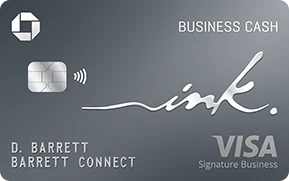
TL;DR: Separating business and personal expenses is required for LLCs and corporations to maintain the liability shield ("corporate veil"). Commingling funds — mixing personal and business transactions — can allow creditors to "pierce the corporate veil" and pursue personal assets. The minimum separation requirements: (1) separate business bank account, (2) dedicated business credit card, (3) never use personal card for business purchases, (4) never use business card for personal purchases. Recommended starter business cards: Ink Cash (no annual fee, 5% on office/internet), Blue Business Plus (2x MR, no annual fee), Spark Cash Plus (2% flat), Blue Business Cash (2% on eligible purchases, no annual fee).
Why it matters — more than most owners realize
1. IRS audit protection
The IRS can and does audit small businesses — particularly sole proprietors and S-corps filing Schedule C. When you mix personal and business expenses on a single card or account, the IRS examiner has to sort through every transaction to determine which ones were legitimate business deductions. Mixed records create:
- Extended audit scope — auditors who cannot cleanly separate personal and business may audit multiple years
- Disallowed deductions — if you cannot clearly document that a purchase was for business, the deduction is denied
- Penalties and interest — disallowed deductions increase taxable income retroactively, triggering penalties
A dedicated business card with clean records creates a defensible paper trail. If you deducted $18,400 in business meals last year, a single card statement proves it without ambiguity.
2. Liability protection for LLCs (the corporate veil)
An LLC's core promise is limited liability — your personal assets (home, car, savings) are protected from business creditors. But this protection has a condition: you must treat the LLC as a legally separate entity. Commingling personal and business funds is one of the main reasons courts "pierce the corporate veil" and hold owners personally liable — something our guide on how business cards affect personal credit covers in detail.
The standard: courts look at whether the owner operated the business as a genuine separate entity. Indicators include:
- Separate bank accounts and credit cards
- No personal purchases on business accounts
- Regular separation of business profits (paying yourself a salary or distribution, not just spending from the business account)
- Proper LLC minutes and records
Mixing funds does not automatically pierce the veil, but it creates vulnerability. When a creditor sues and wants to reach your personal assets, commingling is exhibit A in their argument.
3. Cleaner credit history
Business credit cards can report to business credit bureaus (D&B, Experian Business, Equifax Business) separately from your personal credit. When all business spending runs through a dedicated business card:
- Your business builds its own credit profile
- Your personal credit utilization stays lower (which helps your personal score)
- Lenders reviewing your business credit see a clean, business-only history
4. Easier accounting — every month, every year
With a dedicated business card and business bank account, monthly bookkeeping is dramatically simpler. Every transaction on the business card is a business expense by default. There is no "sort through 300 transactions and flag the 85 business ones" exercise. You import the statement, categorize, reconcile.
At tax time, your accountant gets a clean export instead of a shoebox of mixed receipts. Time savings: 5–10 hours per year for most small businesses; significantly more for high-volume operations. For a step-by-step look at using your card as a tax tool, see how to use a business card for taxes.
How to separate expenses — the practical setup
Step 1: Open a dedicated business bank account
A dedicated business checking account is the foundation. Every dollar your business earns should go into this account. Every business expense should be paid from it.
Options:
- Traditional banks (Chase Business Complete, Bank of America Business Advantage): established institutions with physical branches
- Online business banks (Mercury, Relay): no fees, no minimums, ideal for startups
- Credit unions: often lower fees, relationship-based
Bring your LLC or corporation documents, EIN, and government ID to open the account. For sole proprietors, a business bank account is still beneficial even though legal separation is less strict — it keeps finances clean and builds history.
Step 2: Get a dedicated business credit card
A dedicated business credit card ensures all business spending is captured on a single account, reportable to business credit bureaus, and separable from personal spending at a glance. For a deep dive into the best Amex business cards for this purpose, we cover top no-fee and premium options side by side.
No annual fee options (best for new or small businesses):
- Ink Cash: 5% on office supplies and internet/cable/phone, 2% on gas and dining, no annual fee
- Blue Business Plus: 2x Membership Rewards on all purchases up to $50,000/year, no annual fee
- Blue Business Cash: 2% cash back on eligible purchases up to $50,000/year, no annual fee
Rewards-optimized options for established businesses:
- Spark Cash Plus: unlimited 2% cash back, no preset spending limit
Step 3: Never use personal card for business
This sounds obvious, but it is the rule most commonly broken — particularly for online purchases, unexpected expenses, or when the business card is declined. The fix:
- Keep the business card in an easily accessible location (not buried in a wallet)
- Save the business card on business vendor websites (Amazon Business, Staples.com, etc.)
- If you accidentally use a personal card for a business expense, document it immediately and reimburse yourself from the business account — creating a paper trail
Step 4: Never use business card for personal purchases
The converse is equally important. Using a business card for a personal Netflix subscription or a family dinner creates a commingling record and may increase your personal tax liability (the IRS can treat business-paid personal expenses as income to you).
Exception: if you use a business card for a personal purchase accidentally, reverse it — pay the card from personal funds or document it as a personal draw from the business.
Step 5: Set up accounting software
Connect both your business bank account and business credit card to QuickBooks, Xero, or Wave. Transactions flow in automatically. You categorize business expenses monthly. The separation is enforced by the systems, not just by intent.
What to do if you've already mixed expenses
Many business owners reading this have mixed personal and business expenses for months or years. Here is how to untangle it:
Retroactive categorization
- Export all transactions from each account for the past year (or however far back you want to go).
- Tag each transaction as "business" or "personal" — in your accounting software or in a spreadsheet.
- For business expenses paid from personal accounts: document that you are owed a reimbursement from the business, and either transfer the money from the business account or write it off correctly.
- For personal expenses paid from business accounts: document them as owner draws or distributions (S-corp) or personal expense of owner (LLC/sole prop) — not as business deductions.
This retroactive exercise is uncomfortable but necessary. Going forward, clean separation prevents it from happening again.
When to involve an accountant
If you have multiple years of mixed records and significant business income, invest in a CPA to perform the retroactive categorization. The cost (typically $300–$1,500 depending on complexity) is almost certainly less than the tax risk of leaving it uncorrected. Once records are clean, see how to use business credit card expense management tools to prevent the problem from recurring.
The one-time setup cost
Setting up clean expense separation takes about 2–4 hours total:
- 30 minutes to open a business bank account
- 15 minutes to apply for a business credit card
- 30 minutes to set up QuickBooks or Wave and connect both accounts
- 45 minutes to update saved payment methods on your key vendor accounts
After that, the system runs automatically. The IRS audit risk, the LLC liability protection, and the 5–10 hours of annual bookkeeping saved are the return on those 2–4 hours. Once you have separation in place, building your business credit history is the next step — see how to build business credit from scratch for the full playbook.
Get weekly card offer alerts
Sunday digest of elevated bonuses. One email, zero spam.
Cards mentioned in this guide



Frequently asked questions
Does mixing personal and business expenses void my LLC protection?
What should I do if I accidentally used my personal card for a business expense?
Do I need a business bank account if I’m a sole proprietor?
Related guides
Strategy
How to Build Business Credit from Scratch in 2026 (Step-by-Step)
10 min
Card Roundups
Best Business Credit Cards for Points & Rewards 2026
14 min
Card Roundups
Best Credit Cards for Restaurant and Cafe Owners in 2026
10 min
Card Roundups
Best Credit Cards for Truck Drivers and Owner-Operators in 2026
10 min
Related news

amex · Jun 2, 2026
Amex 30% Avios Transfer Bonus: 1,000 MR = 1,300 Avios, Ends ~June 21 2026

chase · Jun 2, 2026
Chase Ink Preferred 100K Returns: 2026 Ink Lineup

amex · Jun 25, 2026
Amex Platinum vs Schwab Platinum: the same $895 card, with a cash-out

chase · Jun 10, 2026
Chase Hyatt Transfer Ratio 4:3: What It Means for Sapphire Preferred and Ink Business Preferred