How to Build Business Credit from Scratch in 2026 (Step-by-Step)
From LLC formation to your first business credit card: the 6-step framework for building a strong business credit profile.
On this page▾

Quick answer
Building business credit from scratch in 2026 takes 6–12 months to establish a foundation and 2+ years to reach a strong profile — but the steps are clear, sequential, and entirely within your control. Unlike personal credit, which flows through Equifax, Experian, and TransUnion, business credit lives at separate bureaus: Dun & Bradstreet (D&B Paydex score), Experian Business, and Equifax Business. Lenders and suppliers check these to decide whether to extend trade credit, open a business card account, or approve a lease — without touching your personal score.
TL;DR: Business credit is tracked by D&B (Paydex 0–100, 80+ = good), Experian Business, and Equifax Business — separate from personal FICO scores. Building it requires an EIN, a registered business entity, a DUNS number from D&B, net-30 vendor accounts, and eventually a business credit card such as Ink Cash or Blue Business Plus. The process takes a minimum of 6 months for an initial score; a strong profile requires 2+ years of consistent on-time payment history.
Step 1: Incorporate or form an LLC and get an EIN
Before any credit bureau will recognize your business as a separate entity, it must legally exist. That means:
- Choose a business structure. An LLC (Limited Liability Company) or corporation (S-Corp or C-Corp) creates legal separation between you and your business. A sole proprietorship does not — it is legally you, and any "business credit" you build collapses back onto your personal credit.
- Register with your state. File Articles of Organization (LLC) or Articles of Incorporation with your state's Secretary of State office. Costs range from $50 to $500 depending on the state.
- Obtain an EIN. An Employer Identification Number (EIN) is your business's Social Security Number for tax and credit purposes. Apply free in minutes at IRS.gov. You need it to open a business bank account, apply for a DUNS number, and most business credit cards.
Without a registered entity and EIN, you cannot build credit in your business's name. This step takes one to three days.
Step 2: Open a dedicated business bank account
A business checking account is the operational foundation of business credit. It signals legitimacy to lenders and helps you:
- Separate business and personal finances (critical for IRS audit protection and LLC liability protection — our business card vs personal card guide explains the legal and credit implications of this separation).
- Show cash flow — many lenders review bank statements when underwriting a business credit card or loan.
- Accept payments professionally under your business name.
Open the account at a bank or credit union that offers a dedicated business checking product. Bring your EIN, LLC or corporation documents, and government-issued ID. Some online banks (Mercury, Relay) cater specifically to startups with no minimum balance requirements.
Step 3: Get a DUNS number from Dun & Bradstreet
Dun & Bradstreet is the largest business credit bureau and maintains the Paydex score (0–100), which is the single most-checked business credit score when vendors evaluate trade credit. To appear in D&B's system, your business needs a DUNS number (Data Universal Numbering System).
- Register free at dnb.com under "Get a D-U-N-S Number."
- Standard registration takes up to 30 business days; accelerated processing is faster but paid.
- Your Paydex score will not exist yet — it takes at least two to three trade experiences reported to D&B before a score generates.
Also register with Experian Business and Equifax Business by adding your business information to their directories. This ensures all three bureaus have your business on file before you start building payment history.
Step 4: Establish net-30 vendor accounts
Net-30 accounts are the fastest on-ramp to a business credit score. These suppliers extend credit, let you buy now and pay within 30 days, and — critically — report your payment history to the business credit bureaus.
| Starter vendor | Reports to | Category |
|---|---|---|
| Uline | D&B, Experian Business | Shipping & packaging supplies |
| Grainger | D&B | Industrial supplies |
| Quill | D&B, Equifax Business | Office supplies |
| Summa Office Supplies | D&B, Experian Business | Office supplies |
| Crown Office Supplies | D&B, Experian Business, Equifax Business | Office supplies |
Strategy: Open three to five net-30 accounts. Make a small purchase each month — even $30–$50 of supplies you genuinely need — and pay the invoice in full before the due date. Paying early (before 30 days) earns you a higher Paydex score. D&B scores payments on a 1–100 scale: 80 means paid on time; 100 means paid early. Aim for 80+ before applying for a revolving business credit card.
After three to six months of reported net-30 activity, you will have enough trade experiences for D&B to calculate an initial Paydex score and for Experian Business and Equifax Business to build a profile.
Step 5: Get a starter or secured business credit card
Once you have a Paydex score (or even while building it, depending on the issuer), you can apply for a revolving business credit card. There are two paths:
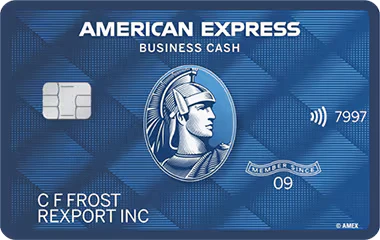
A. Apply for a card using your personal credit. Most business cards — including the Blue Business Plus, Blue Business Cash, and Spark Cash Plus — require a personal guarantee and pull your personal credit score. A personal score of 670+ is typically enough for starter cards; 720+ opens more options. This is the faster path and the most common for new small businesses — our how to get approved for a business credit card guide covers what to put in each application field.
B. Secured business credit card. Some banks (Capital One, Bank of America) offer secured business cards where you deposit collateral. This option works if your personal credit is below 670 or if you want to minimize personal credit inquiries. Secured cards typically graduate to unsecured within 12 months of on-time payments.
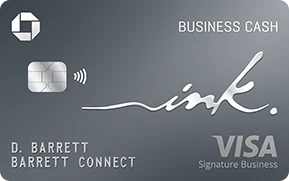
The Ink Cash is a strong starter card with no annual fee, 5% back on office supplies and internet, and reporting that helps establish revolving credit history — our Chase Ink Business Cash review covers the full earning structure.
Step 6: Pay on time and keep utilization low
Once your accounts are open, the most powerful levers for building business credit fast are:
- Pay every bill early or on time. A single late payment can crater a Paydex score from 80+ to 60s and stay on your report for years.
- Keep revolving utilization below 30% — ideally below 10%. High utilization signals stress and lowers your score just as it does on personal credit.
- Never close old accounts. Age of account history matters. Keep your oldest vendor and card accounts open and occasionally active.
- Diversify credit types. A mix of net-30 trade accounts, revolving credit cards, and eventually a term loan or line of credit builds a more robust profile.
Timeline: what to expect
| Month | Milestone |
|---|---|
| 0–1 | LLC/EIN obtained, business bank account opened, DUNS number requested |
| 1–3 | 3–5 net-30 accounts opened, first purchases made and paid |
| 3–6 | D&B Paydex score generated (typically 80+), Experian Business profile established |
| 6–12 | Apply for first business credit card; revolving history begins |
| 12–24 | Score strengthens; eligible for higher credit limits and premium cards |
| 24+ | Strong multi-bureau profile; eligible for business loans, lines of credit, commercial leases |
Personal credit vs. business credit: key differences
| Personal credit | Business credit | |
|---|---|---|
| Bureaus | Equifax, Experian, TransUnion | D&B, Experian Business, Equifax Business |
| Score range | FICO 300–850 | D&B Paydex 0–100; Experian Business 0–100 |
| Public visibility | Private | Public — anyone can check |
| Tied to SSN | Yes | No — tied to EIN and DUNS |
| Builds automatically | Yes (once accounts open) | No — vendors must report |
The critical difference: business credit is public. Suppliers, landlords, and partners can check your business credit without your consent. A strong business profile is a competitive asset that signals financial reliability to anyone you want to do business with. To understand how business card balances interact with your personal credit score during this process, see our guide on whether business cards affect personal credit.
Next card after the starter tier
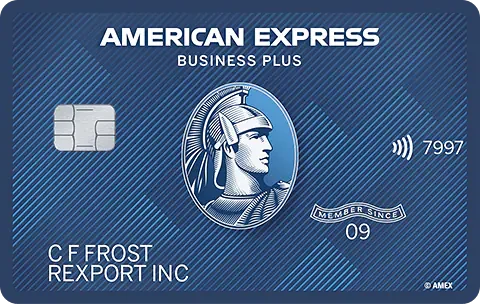
Once your business credit is established, you can graduate to rewards-optimized cards. The Blue Business Plus earns 2x Membership Rewards on all purchases up to $50,000/year with no annual fee — a strong no-fee upgrade. For higher spending, the Spark Cash Plus delivers unlimited 2% cash back with no preset limit, making it well suited to businesses with large monthly volumes. Our best Amex business credit cards roundup compares all the top Amex options once you reach this stage.
Get weekly card offer alerts
Sunday digest of elevated bonuses. One email, zero spam.
Cards mentioned in this guide
Frequently asked questions
Can I build business credit as a sole proprietor?
How long does it take to get a Paydex score?
Does a business credit card help build business credit?
Related guides
Strategy
How to Separate Business and Personal Expenses in 2026 (Why It Matters + How to Do It)
10 min
Card Roundups
Best Business Credit Cards for Points & Rewards 2026
14 min
Card Roundups
Best Credit Cards for Restaurant and Cafe Owners in 2026
10 min
Card Roundups
Best Credit Cards for Truck Drivers and Owner-Operators in 2026
10 min
Related news

amex · Jun 2, 2026
Amex 30% Avios Transfer Bonus: 1,000 MR = 1,300 Avios, Ends ~June 21 2026

chase · Jun 2, 2026
Chase Ink Preferred 100K Returns: 2026 Ink Lineup

amex · Jun 25, 2026
Amex Platinum vs Schwab Platinum: the same $895 card, with a cash-out

chase · Jun 10, 2026
Chase Hyatt Transfer Ratio 4:3: What It Means for Sapphire Preferred and Ink Business Preferred