How to Use a Business Credit Card to Simplify Your Taxes in 2026
A business card is your best tax tool: it centralizes deductions, integrates with QuickBooks, and keeps rewards points tax-free. Here’s how to use it right.
On this page▾

Topic Collection
Part of the Business Credit Cards Collection
Explore all 39 articles
Quick answer
Using a dedicated business credit card is one of the simplest things you can do to make taxes easier — and one of the most overlooked. When all business expenses flow through a single card, you have an automatic, timestamped record of every deductible purchase. No digging through bank statements, no mixed personal transactions to sort out, no shoe-box of receipts to reconcile. The card statement becomes your first draft of a Schedule C.
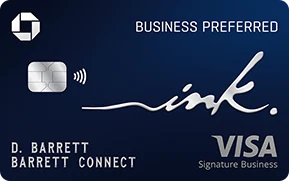
TL;DR: A business credit card simplifies taxes by centralizing deductible expenses on one statement. Key deductibility rules in 2026: business meals are 50% deductible, business travel (flights, hotels, car rental) is 100% deductible, office supplies and equipment are 100% deductible, the annual fee on a business card is 100% deductible as an ordinary and necessary business expense, and rewards points/cash back are generally NOT taxable income (treated as a discount/rebate). Employee card spend is deductible in the same categories. Cards with strong expense-tracking integrations include Amex Business Gold, Ink Preferred, and Spark Cash Plus.
Why a dedicated business card is a tax tool, not just a rewards card
Most small business owners think of a business credit card primarily as a way to earn points or cash back. That is understandable — the welcome bonuses are substantial. But the tax-time benefit is arguably more valuable, especially for sole proprietors and S-corps filing Schedule C or Form 1120-S.
Here is what a dedicated business card does for your taxes:
- Creates a clean audit trail. Every purchase is date-stamped, merchant-tagged, and categorized. If the IRS audits you, you have a paper trail for every deduction you claimed.
- Forces separation of business and personal expenses. The moment you stop using your personal card for business, your monthly reconciliation goes from "sort through 200 transactions and flag the business ones" to "download one statement and categorize."
- Feeds directly into accounting software. Most major business cards offer direct data feeds to QuickBooks, Xero, and FreshBooks. Transactions land pre-categorized in your accounting software, reducing manual data entry.
- Makes deductible expenses impossible to miss. When your annual fee hits, your software captures it as a deductible business expense. When you fill up the company car, it shows up in transport. Nothing falls through the cracks.
What's deductible — and what isn't
| Expense category | Deductibility | Notes |
|---|---|---|
| Business travel (flights, hotels) | 100% | Must be away from tax home overnight |
| Business meals (client dinners, team lunches) | 50% | Must have business purpose; keep notes |
| Office supplies | 100% | Pens, paper, printer ink, shipping materials |
| Software & subscriptions | 100% | CRM, accounting software, project management tools |
| Advertising & marketing | 100% | Search ads, social media ads, print |
| Internet & phone (business portion) | 100% (business %) | Must allocate personal vs business use |
| Annual card fee | 100% | Deductible as ordinary and necessary business expense |
| Home office | 100% (calculated) | Must use IRS simplified or actual method |
Business meals: the 50% rule
Business meals are 50% deductible as of 2026. This applies when:
- You or an employee is present
- There is a clear business purpose (client meeting, team discussion)
- The meal is not "lavish or extravagant"
The 100% restaurant deduction from the COVID-relief era expired after 2022. In 2026, it is back to 50%. Keep notes on who attended and the business purpose — either in your accounting software's note field or in a dedicated expense report.
Annual fee deductibility
Your business card's annual fee is a deductible business expense — classified as an "ordinary and necessary" expense for operating your business. This applies to:
- The primary cardholder's annual fee
- Employee card annual fees (where charged, such as the Amex Business Platinum's $175 per employee card block)
The deduction does not apply to personal credit card fees on non-business cards.
Rewards points are NOT taxable income
Here is one that surprises many business owners: credit card rewards — points, miles, and cash back — are generally not taxable income. The IRS treats them as a discount or rebate on the purchase price, not as income. This is especially relevant when choosing between a business card vs a personal card for company expenses.
This applies to:
- Sign-up bonuses earned by meeting a spending threshold (treated as a rebate on spend)
- Ongoing cash back and points earned from purchases
Exception: If you receive a cash bonus without meeting a spending requirement — some card promotions offer $50–$100 simply for opening an account — that amount may be reported on a 1099 and treated as income. In practice, this is rare for business cards.
Employee card rewards: Points earned on employee cards belong to you, the business owner. They are not taxable to the employee.
Categorizing card spend: tools and workflows
QuickBooks integration
Both Amex Business Gold and Ink Preferred offer direct QuickBooks Online integration. Transactions from your card automatically sync to QuickBooks, where they appear as uncategorized expenses. You then review and assign each transaction to the correct expense category (meals, travel, supplies, etc.) once — and QuickBooks learns your patterns over time, auto-categorizing repeat merchants. For a complete look at tracking tools, see our business credit card expense management guide.
Expensify for receipt capture
Expensify works alongside your credit card statement to capture receipts at the point of purchase. Employees photograph receipts with the Expensify app; the app reads the receipt using OCR, matches it to the card transaction, and attaches it automatically. At month-end, your statement entries all have supporting documentation already attached.
Wave (free alternative for solopreneurs)
Wave is a free accounting platform that connects to most business credit cards via direct bank feed. For sole proprietors or single-member LLCs with straightforward finances, Wave's free tier handles categorization, reporting, and basic tax prep without a monthly fee.
Dext (formerly Receipt Bank)
Dext focuses on receipt capture and feeds into QuickBooks and Xero. It is particularly useful for businesses with high volumes of small receipts — contractors, field-service businesses, retail.
Monthly reconciliation workflow
A sustainable tax-time routine is built on monthly reconciliation, not year-end panic — and the foundation is keeping business and personal spending cleanly apart, as explained in our guide to separating business and personal expenses. Here is a simple monthly workflow:
- On the last day of the month: Download or sync your card statement to your accounting software.
- Within the first week of the following month: Review all uncategorized transactions. Assign each to an expense category. For meals, add a note about attendees and business purpose.
- Flag any personal charges that accidentally ended up on the business card. Pay yourself back (or document the personal-use allocation).
- Reconcile the card balance against your accounting software's running total.
- File receipts for purchases over $75 (IRS requires substantiation for individual expenses over $75 for travel and entertainment — though good practice is to keep all receipts).
This routine takes 30–60 minutes per month. At tax time, your accountant gets a clean, categorized export instead of a shoebox.
Employee card spend and taxes
Employee card expenses are deductible in the same categories as your own spending — for the full strategy on maximizing employee card value beyond just taxes, see best Amex business credit cards. The key differences:
- Reimbursable vs. direct charge: If employees use company cards directly (not personal cards with reimbursement), the expense flows directly to your P&L as a business expense. No reimbursement workflow needed.
- Accountability: Require employees to submit receipts or use an expense management tool (Expensify, Dext) so you have documentation for every deduction.
- Meals: Employee team lunches charged to the business card are 50% deductible — same rule as client meals.
Best cards for tax-efficient expense management
The Amex Business Gold offers direct QuickBooks integration, year-end summary reports, and categorized spend reports by employee — making it easier to allocate deductions. The Ink Preferred provides detailed merchant-category reporting and integrates with most major accounting platforms. The Spark Cash Plus offers simple 2% cash back which also means simple accounting: no multi-tier category tracking required. For cash-back-focused tax tracking, our Chase Ink Business Cash review shows how the 5x office/internet categories translate directly into deductible spend.
Get weekly card offer alerts
Sunday digest of elevated bonuses. One email, zero spam.
Cards mentioned in this guide


Frequently asked questions
Is the annual fee on a business credit card tax-deductible?
Are credit card sign-up bonuses taxable income for a business?
Can I deduct the full cost of a business meal on my credit card?
Related guides
Related news

chase · Jun 10, 2026
Chase Hyatt Transfer Ratio 4:3: What It Means for Sapphire Preferred and Ink Business Preferred

chase · Jun 10, 2026
Chase to Virgin Atlantic: 30% Transfer Bonus — Book Delta Business Class for 18,000 Points

airlines · Jun 4, 2026
Alaska Atmos Members Day Launched

hyatt · Jun 3, 2026
Hyatt Added Perk for Globalists, Explorists and Cardholders