Hybrid Booking: Combining Cash Fares, Points, and Portals on One Trip
Price every flight leg and hotel night in both cash and points, divide cash by points, and use points only where the result beats your floor: about 1 cent for bank points in a portal, about 2 cents for a partner transfer. Book one-way awards where space exists and cash fares under about $250, use Hyatt Points + Cash or Hilton Points & Money to stretch a short hotel balance while keeping elite nights, and apply portal points partially only to the leg with no award option.
On this page▾

Topic Collection
Part of the Sweet Spots Collection
Explore all 65 articles
The most expensive mistake in points travel is not a bad redemption — it is treating a trip as one decision. A five-night trip for two has at least six separately priced pieces: two flights each way, the hotel nights, and the ground costs. Each piece has its own cash price and its own award price, and the ratio between them swings from 0.6 cents per point to 4 cents on the same itinerary. Hybrid booking means pricing every piece both ways and paying with whichever currency is cheaper for that piece.
This guide covers the four tools that make a hybrid trip possible — split itineraries, the hotel and airline "points plus cash" rates, partial payments through the card portals, and paying cash on the one leg where status credit matters — then works a real two-traveler trip through all of them.
Quick answer
Price every flight leg and every hotel night in both cash and points, divide the cash price by the points required, and pay with points only where that number clears your floor — 1.0-1.5 cents for bank points redeemed through a portal, about 2 cents for a transfer to an airline or hotel partner. Use one-way awards for the direction with space, cash fares where the sale price is under about $250, Hyatt Points + Cash and Hilton Points & Money to stretch a hotel balance while still earning elite nights, and the Chase, Capital One, or Amex portals to cover an odd leg partially with points at a fixed 1 cent.
- Split the itinerary: one-way awards and one-way cash fares are priced independently; the outbound with award space and the return on a $189 sale are two different decisions
- Points plus cash rates: Hyatt Points + Cash (half the points plus a property-set cash copay), Marriott Cash + Points, Hilton Points & Money (slider from 5,000 points), Delta Pay with Miles (5,000-mile steps at 1 cent, Delta Amex required)
- Portal partial payments: Chase Travel, Capital One Travel, and Amex Travel all let you apply some points and pay the rest by card — Amex needs at least 5,000 points, and the Business Platinum rebates 35% on flights
- Cash where status matters: direct bookings earn elite nights and hotel points; portal and award-only stays often do not
💡 Pro tip — Write the floor on a sticky note before you open any booking site: 1 cent for your portal, 2 cents for transfers. Every hybrid decision below is that number applied to one leg at a time; the sticky note stops the "I have the points, so I will use them" reflex that turns a $189 flight into a 25,000-mile flight.
The floor and the ceiling: the only two numbers you need
Every rewards currency you hold has a floor — the value you can always get without any award availability — and a ceiling — the best you realistically get through a partner transfer. Hybrid booking is choosing, leg by leg, whether the award price sits above the floor.
| Currency | Floor (always available) | Realistic ceiling (transfers, best use) |
|---|---|---|
| Chase Ultimate Rewards | 1.0¢ in Chase Travel; up to 1.5¢ with a Points Boost on Sapphire Preferred, up to 2.0¢ on Sapphire Reserve | 2-4¢ via Hyatt, Flying Blue, Aeroplan, Singapore |
| Amex Membership Rewards | 1.0¢ in Amex Travel; about 1.54¢ effective on flights with the Amex Business Platinum 35% rebate | 2-4¢ via ANA, Virgin Atlantic, Flying Blue, Avios |
| Capital One miles | 1.0¢ via Travel Eraser or Capital One Travel | 1.5-3¢ via Turkish, Avianca, Flying Blue |
| Hotel points held directly | Whatever a Points + Cash rate implies at that property | 2-2.5¢ (Hyatt), 0.5-0.7¢ (Hilton, Marriott, IHG) |
| Airline miles held directly | Pay with Miles at 1¢ (Delta, with a Delta Amex) | 1.5-5¢ on partner premium cabins |
The test for any single leg: cash price ÷ points required. Below the floor, pay cash and keep the points. Between floor and ceiling, use points only if you have no better planned use. Above the ceiling, book the award immediately — it will not last.
Key takeaway: a $189 fare against a 25,000-mile award is 0.76 cents per mile — below every floor in the table. The same points on a $780 fare at 25,000 miles is 3.1 cents. Same trip, opposite answers, one leg apart.
Tool 1 — Split the itinerary
Almost every airline program prices one-way awards at half a round trip, and award space is rarely symmetric: the outbound may have saver seats while the return has none for weeks. Booking the trip as two one-ways lets you take the award in the direction that has space and a cash fare in the other.
Three rules make splits work:
- Compare each direction to its own cash fare. Sale fares are usually one-directional too; a $189 outbound with a $420 return is a cash-out, award-back trip, not a cash round trip.
- Price the award in every currency you hold. The same New York-Los Angeles seat might be 12,500 Avios through British Airways on American, 25,000 miles through the operating carrier, or a $220 cash fare covered by 22,000 points in a portal. The award availability explainer covers why those three numbers differ.
- Consider a positioning flight when the award departs from somewhere else. A $79 cash hop to the airport with the business-class award often beats a 40,000-mile premium; the positioning flights guide has the math.
Two cautions. Two one-ways are two tickets: a delay on the first does not obligate the second carrier to rebook you, so leave a buffer or book both on the same airline where you can. And include award taxes and fees in the comparison — a transatlantic award with $300 in surcharges is a different cents-per-point calculation than one with $6.
Tool 2 — Points plus cash rates inside the programs
The hotel and airline programs themselves sell hybrid rates, and they are often the best use of a small balance:
| Program | What it is | Why it matters |
|---|---|---|
| World of Hyatt Points + Cash | Roughly half the points of a free night plus a cash copay set per property; standard rooms and most suites | Counts as an elite-qualifying night and earns points on the cash portion; a 12,000-point Category 4 night becomes 6,000 points plus cash |
| Marriott Bonvoy Cash + Points | Fixed point-and-cash combinations offered at some properties on some dates | Treated as an award stay, so it still earns elite nights; useful when a balance is short of a full night |
| Hilton Honors Points & Money | A slider on every standard-room award: apply any amount from 5,000 points in 1,000-point steps, pay the rest in cash | The most flexible of the three; the implied value per point varies by property and date, so check it each time |
| Delta Pay with Miles | Apply miles in 5,000-mile steps at a fixed $50 per 5,000 (1 cent) to any Delta cash fare | Requires a Delta co-brand Amex such as the Delta Gold; useful for clearing a small SkyMiles balance |
| JetBlue Cash + Points | Split a TrueBlue booking between points and cash | Same idea for a small TrueBlue balance |
The Hyatt version deserves the most attention: because Points + Cash nights count toward Globalist and earn points on the cash portion, a traveler working toward status can pay half in points, keep the night credit, and avoid the "award nights count but earn nothing" trade-off. Book Hawaii hotels with points works a Points + Cash example at a Category 6 resort.
Tool 3 — Partial payments through the card portals
All three major bank portals let you apply points to part of a booking and charge the rest:
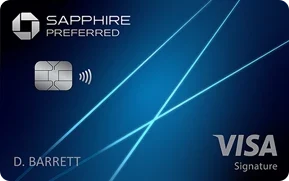
- Chase Travel (Sapphire Preferred, Sapphire Reserve, Ink cards): choose points, cash, or a mix at checkout. Points are worth 1.0 cent flat, or more on bookings that carry a Points Boost offer — up to 1.5 cents on the Preferred and Ink cards, up to 2.0 cents on the Reserve. Portal bookings earn 5x on the Preferred and 8x on the Reserve.
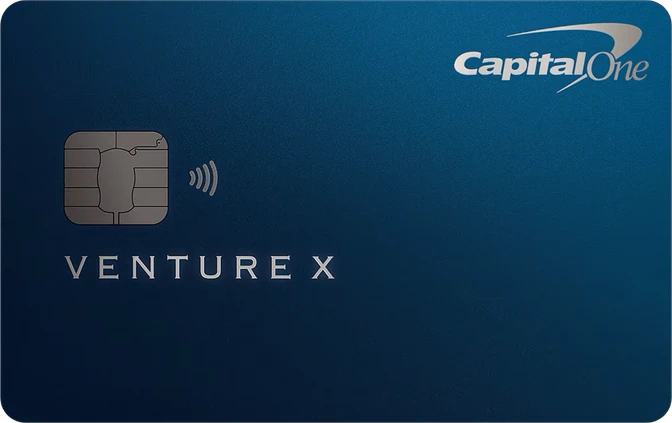
- Capital One Travel (Venture X, Venture): edit the number of miles applied before you confirm, at 1 cent each, or book on the card and erase the charge with miles within 90 days at the same rate. Venture X earns 5x on flights and 10x on hotels booked through the portal.
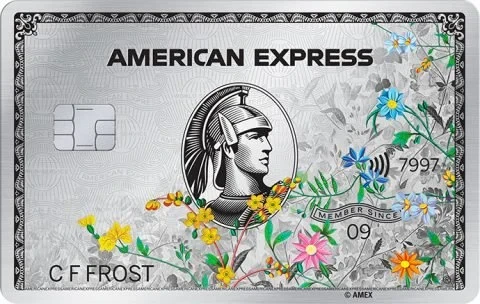
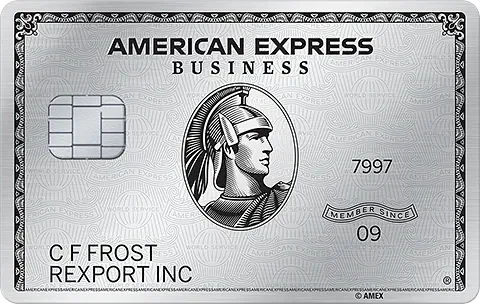
- Amex Travel (Amex Platinum, Gold, Green, Amex Business Platinum): pay with card, points, or both; at least 5,000 points must be applied. Points are worth 1 cent on flights, and the Business Platinum rebates 35% of points used on premium-cabin fares on any airline or economy fares on its selected airline, which lifts the effective floor to about 1.54 cents.
The portal is the right tool for exactly one job in a hybrid trip: the odd leg that has no award space and a cash price too high to ignore, where 1-2 cents per point beats holding points you have no other plan for. It is the wrong tool for hotels you want status credit from — see the next section — and for any award that clears 2 cents.
Tool 4 — Pay cash on the leg that earns status
Two things only a direct, paid booking reliably does: earn elite-qualifying nights and hotel points, and count toward a status challenge or a promotion. Award nights at Hyatt, Hilton, and Marriott earn elite nights but not points; portal stays booked through Chase Travel or Amex Travel are usually treated as third-party bookings that earn neither. In a five-night stay, that argues for paying cash on the nights that push you over a status threshold and using points or Points + Cash for the rest — and for putting the cash nights on the card with the best hotel earn, like the 4x direct-hotel rate on the Reserve or the 4x at Hyatt on the World of Hyatt.
Key takeaway: the four tools answer four different questions — direction (split), balance size (points plus cash), the awkward leg (portal), and status (cash). A hybrid trip uses most of them.
Worked example: five nights, two travelers, one hybrid plan
A couple with 90,000 Ultimate Rewards on a Sapphire Preferred, 40,000 Hyatt points, and 60,000 Capital One miles books five nights in a mid-size US city in March. Working values: UR at 1.5 cents, Hyatt at 2 cents, Capital One at 1 cent.
| Piece | Cash price (2 travelers) | Points option | Cents per point | Decision |
|---|---|---|---|---|
| Outbound flights | $378 ($189 each, sale fare) | 25,000 miles each (50,000) | 0.76¢ | Cash — below every floor |
| Return flights | $840 ($420 each) | 26,000 UR each via a partner (52,000) | 1.6¢ | Transfer — clears the transfer floor only if no 2¢+ use is planned; here it is |
| Hotel nights 1-2 (Category 4 Hyatt) | $440 ($220 per night) | 12,000 Hyatt points per night (24,000) | 1.8¢ | Points — close to Hyatt's working value |
| Hotel nights 3-4 (same Hyatt) | $440 | Points + Cash: 6,000 points plus about $110 per night | ~1.8¢ on the points portion, and the nights still count toward status | Points + Cash — spends 12,000 points, keeps 4,000 in reserve, keeps 2 elite nights |
| Hotel night 5 (boutique, no award option) | $260 | Chase Travel: 26,000 UR at 1¢, or 17,300 UR with a 1.5¢ Points Boost | 1.0-1.5¢ | Cash on the Reserve-style 4x rate, or the portal only with a Boost |
| Ground (transit, one car day) | $120 | Capital One Travel Eraser: 12,000 miles at 1¢ | 1.0¢ | Miles — the Eraser is exactly what a 1-cent currency is for |
Totals: $378 + $220 + $260 = $858 in cash, plus 52,000 UR, 36,000 Hyatt points, and 12,000 Capital One miles. All-cash would have been $2,478. All-points — forcing the outbound onto miles at 0.76 cents and the boutique onto the portal — would have burned about 150,000 points of mixed currencies for the same trip. The hybrid plan spent $858 and 100,000 points, kept 38,000 UR and 48,000 miles for a trip where they clear 2 cents, and banked four elite nights.
Decision framework: which currency pays for which piece
| The piece | Pay with | Unless |
|---|---|---|
| A domestic economy leg under $250 | Cash on a 2x-5x travel card | An Avios short-haul award under 10,000 points beats it |
| A leg with saver business-class space | Transferred points at 2¢+ | The award carries $300+ in surcharges that pull it below 2¢ |
| A leg with no award space and a $400+ fare | Portal points at 1-2¢, partially if the balance is short | You have a 2¢+ award planned for those points within 12 months |
| Hotel nights at a Hyatt Category 1-4 | Hyatt points at 2¢+, or Points + Cash on a short balance | The cash rate is under about $150, where Points + Cash usually wins |
| Hotel nights at Hilton or Marriott | Cash on a 4x-6x hotel card, or Points & Money to clear a balance | A 5th-night-free award (Hilton, Marriott) lifts the value above 0.7¢ |
| The night that crosses a status threshold | Cash, booked direct | The program counts award nights toward the threshold (Hyatt, Hilton, Marriott do) |
| Small leftover balances (under 15,000) | Points + Cash, Pay with Miles, or a portal partial payment at 1¢ | — |
Common mistakes
- Spending 25,000 miles on a $189 fare. The most common hybrid error is not pricing the cash fare at all. Below 1 cent per point, the points are worth more in your account.
- Booking hotel nights through a portal when you are chasing status. Portal stays generally earn no elite nights and no hotel points. Pay the status nights direct.
- Comparing an award to cash without the award's taxes. A 50,000-point transatlantic seat with $320 of surcharges is a 50,000-point-plus-$320 seat. Add the fees before you divide.
- Transferring points for the return before the outbound is settled. Transfers are one-way. Book the cash leg, confirm the award seat is bookable, then transfer the exact amount.
- Forgetting that two one-ways are two tickets. A misconnect on ticket one is your problem on ticket two. Leave three hours, or keep both on one airline.
- Ignoring Points + Cash because the balance is "not enough for a free night." Half the points plus cash is the tool for exactly that balance, and at Hyatt the night still counts toward status.
Editor's take
The cleanest trips we have booked in the last year were about 40% cash, and that number surprises people who assume the goal is to pay nothing. The goal is to pay the least per piece — and the piece with a $189 sale fare is cheaper in dollars while the piece with a business-class saver seat is cheaper in points, sometimes by a factor of five. The tools above exist because the programs know this too; Hyatt's Points + Cash and the portals' partial payments are the issuers meeting you halfway. Our one hard rule: price everything both ways before you book anything, and write the floor down first. Every other decision in this guide follows from that number.
Related reading
- Chase Travel portal vs transfer partners — where the 1.0-2.0 cent portal values come from
- Positioning flights: the award strategy — the cash hop that unlocks the award
- Award availability explained — why the same seat prices differently in three programs
- Transfer bonuses explained — when a bonus changes the ceiling
- How to redeem Chase Ultimate Rewards for maximum value — the transfer-side ceiling for UR
- Capital One miles value guide — the Travel Eraser and portal math
Get weekly card offer alerts
Sunday digest of elevated bonuses. One email, zero spam.
Cards mentioned in this guide

Frequently asked questions
When should I pay cash instead of using points for a flight?
Do Hyatt Points + Cash stays count toward elite status?
Can I pay for part of a Chase Travel or Amex Travel booking with points?
Do hotel stays booked through a credit card portal earn elite nights?
Is booking two one-way tickets riskier than a round trip?
Related guides
Rules & Mechanics
Chase Travel Portal vs Transfer Partners (2026)
13 min
Strategy
Positioning Flights: The Cheap Trick That Unlocks Better Award Tickets
9 min
Rules & Mechanics
Why the Flight You Want Has No Award Seats: Award Availability Explained
10 min
Rules & Mechanics
Transfer Bonuses Explained: When 20-30% Extra Actually Changes the Math
9 min
Related news

industry · Jun 2, 2026
Travel Rewards Devaluations 2026: Every Major Loyalty Program Change This Year

airlines · Jun 2, 2026
Credit Card Transfer Bonuses Mid-2026: H1 Drought Recap

airlines · Jun 2, 2026
Aeroplan 2026: SQC Status and June 1 Devaluation

industry · Jun 2, 2026
Biggest Credit Card Changes 2026: Mid-Year Retrospective